Photo: NHL.com player action photo, Dylan Garand.
Scoring, goaltending and standings figures here are from ESPN's official game summary, cross-checked against NHL.com's recap of the game. Every season has a night where the plan dies. For the New York Rangers, it was Friday in Washington: a 3-1 loss that cost them far more than two points. Igor Shesterkin, the franchise goaltender, a Vezina Trophy winner and the single player most responsible for this team's ceiling, went down with a lower-body injury. On Saturday, the club made it official — Shesterkin is out for the season.
There is no softening that sentence, and the Rangers did not try. What they did instead was play a hockey game on Sunday night, at home, against a Vancouver Canucks team sliding in the wrong direction — and they played it like a group that had decided, collectively, that the obituary portion of the season was cancelled. New York 6, Vancouver 2. First game of the rest of the season: won.
Garand's Calm First Night on the Job
Dylan Garand did not steal this game, and that is precisely the point. The new No. 1 stopped 19 of the 21 shots he faced, handled his crease without drama, and gave his teammates the one thing a team in shock needs most from its goalie: nothing to worry about. Vancouver tested him lightly early, and when the Canucks pushed, Garand was square, quiet and on time.
Context matters here. Garand is not a veteran insurance policy signed for exactly this emergency; he is a young goaltender whose career just changed in a weekend. The jump from backup to season-long starter is the hardest promotion in hockey, because the position forgives nothing and the schedule forgives less. Sunday was one game, against a struggling opponent, in a building that adores him right now. But first impressions in a crisis are not nothing — ask any team that has watched a season wobble because the new goalie looked nervous before the fans did. Garand looked like he belonged to the job. The Rangers will take that foundation and build.

Photo: Reuters via Minute Media, Dylan Garand coverage.
Six Goals, and the Help Came From Everywhere
If Garand supplied the calm, the skaters supplied the noise. Tye Kartye scored 27 seconds into the game — before some fans had found their seats — finishing a play set up by J.T. Miller and Alexis Lafreniere, and the Garden exhaled all at once. Kartye added his second late in the second period, again from Miller, restoring a lead the Rangers would never give back. His first two goals of the season, on the night his team most needed somebody new to be a headline.
Will Cuylle matched him. Cuylle scored in the second period from Noah Laba, then closed the scoring in the third from Eeli Tolvanen and Braden Schneider — also his first two goals of the season. Lafreniere contributed a goal and an assist, his goal coming on the power play early in the third. Gabe Perreault had a goal and an assist, tipping one home in the third off feeds from Adam Fox and Mika Zibanejad. Miller and Zibanejad each finished with two assists. Count it up and Sunday's scoresheet reads like a roster-wide refusal to fold: goals from the top of the lineup and the middle of it, points from eleven different Rangers.
The third period deserves its own line. New York scored three times in the final twenty minutes, and the pattern is becoming a Garden signature: the Rangers have now outscored opponents 9-1 in third periods at home this season. Teams protecting a new goalie are supposed to sit back. This team attacks. That instinct — playing in front of Garand instead of collapsing around him — may be the most important tactical fact of the post-Shesterkin era so far.
The Other Side of the Ice
Vancouver's night was the mirror image. Jake DeBrusk answered Kartye's opener in the first period, and defenseman Elias Pettersson tied the game 2-2 in the second with a short-handed goal — a jolt that briefly suggested the Canucks might turn the Rangers' emotional evening into a trap game. Instead, Kartye's second goal arrived 89 seconds later, and the third period buried them. Kevin Lankinen allowed six goals on 25 shots in a performance that will read harshly in the box score and felt no kinder in person. It was Vancouver's fourth straight loss, and a team that arrived looking for a spark left still looking.
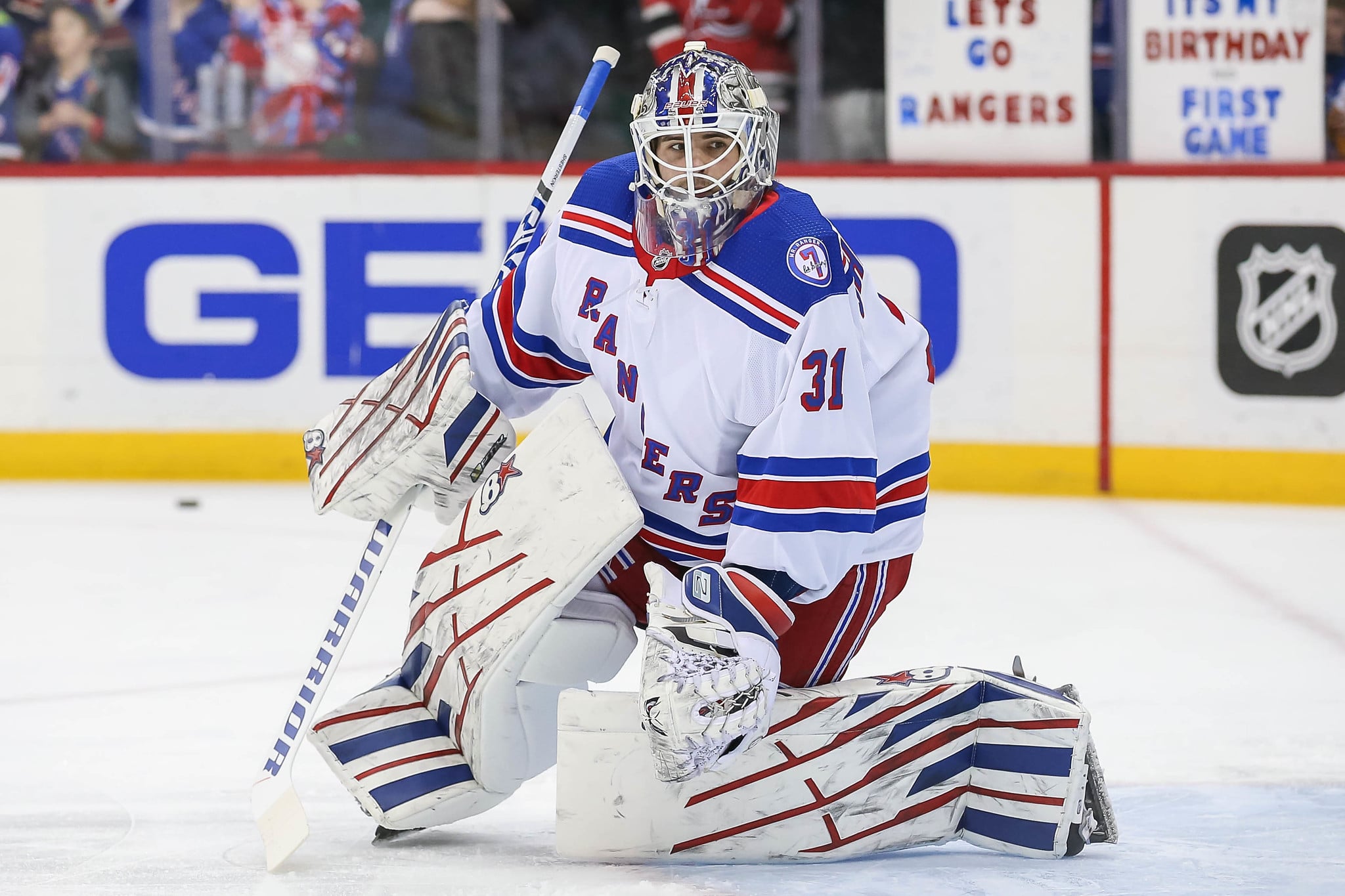
Photo: The Hockey Writers, Igor Shesterkin coverage.
The Message From the Bench
Head coach Mike Sullivan spent the weekend preaching the only sermon available to him: the next man up, the standard unchanged, the expectations exactly where they were when Shesterkin was healthy. Coaches say these things because they have to, but Sullivan's version came with an edge of genuine belief behind it — this roster, he has made clear in substance, was not built to be a one-man show, and it does not get to act like one now. Sunday's performance was the first piece of evidence for his argument. One game does not prove a philosophy. It does, however, give a locker room something true to point at the next time the standings get tight and the crease gets busy.
The Narrow Path, Mapped Honestly
Now the hard part, because honesty is the whole exercise. Losing a goaltender of Shesterkin's caliber for an entire season sinks most teams, and the reasons are structural: elite goaltending erases mistakes, steals standings points on bad nights, and lets a coach run his bench without fear. All of that is gone. What the Rangers have instead is a narrower path — real, but narrow.
It runs through three things Sunday showcased. First, structure: a team that outscores opponents 9-1 in home third periods is a team whose details hold late in games, and detail is what replaces star goaltending over a long season. Second, home form: at 4-0-0 at the Garden, New York has a fortress to bank points in while Garand finds his full-season footing. Third, scoring depth: when Kartye and Cuylle are your two-goal scorers, your margin for error is wider than the standings page suggests.
The next month will stress all three. Garand's workload is now a season-long management problem — he cannot start every night, which means the Rangers' other crease options will decide games too, and back-to-backs will become miniature referendums on the whole plan. The schedule will stop offering struggling visitors. And hovering over everything is the trade market: if New York is still in the race as the deadline approaches, a veteran goaltender becomes the most obvious rental in hockey, and the Rangers' front office will have to decide what Garand's development is worth against what a proven playoff goalie costs. Sunday bought them time to make that decision calmly. That is no small prize.
For one night, though, the story is simple. The worst news of the Rangers' season arrived on Saturday. On Sunday, their season answered back — 6-2, at home, with a new man in net and eleven names on the scoresheet. The path is narrow. After Sunday, it is also visibly, undeniably there.
More hockey is on our NHL coverage, the Sports front and the Previously news front.