
ST. PETERSBURG, Fla.
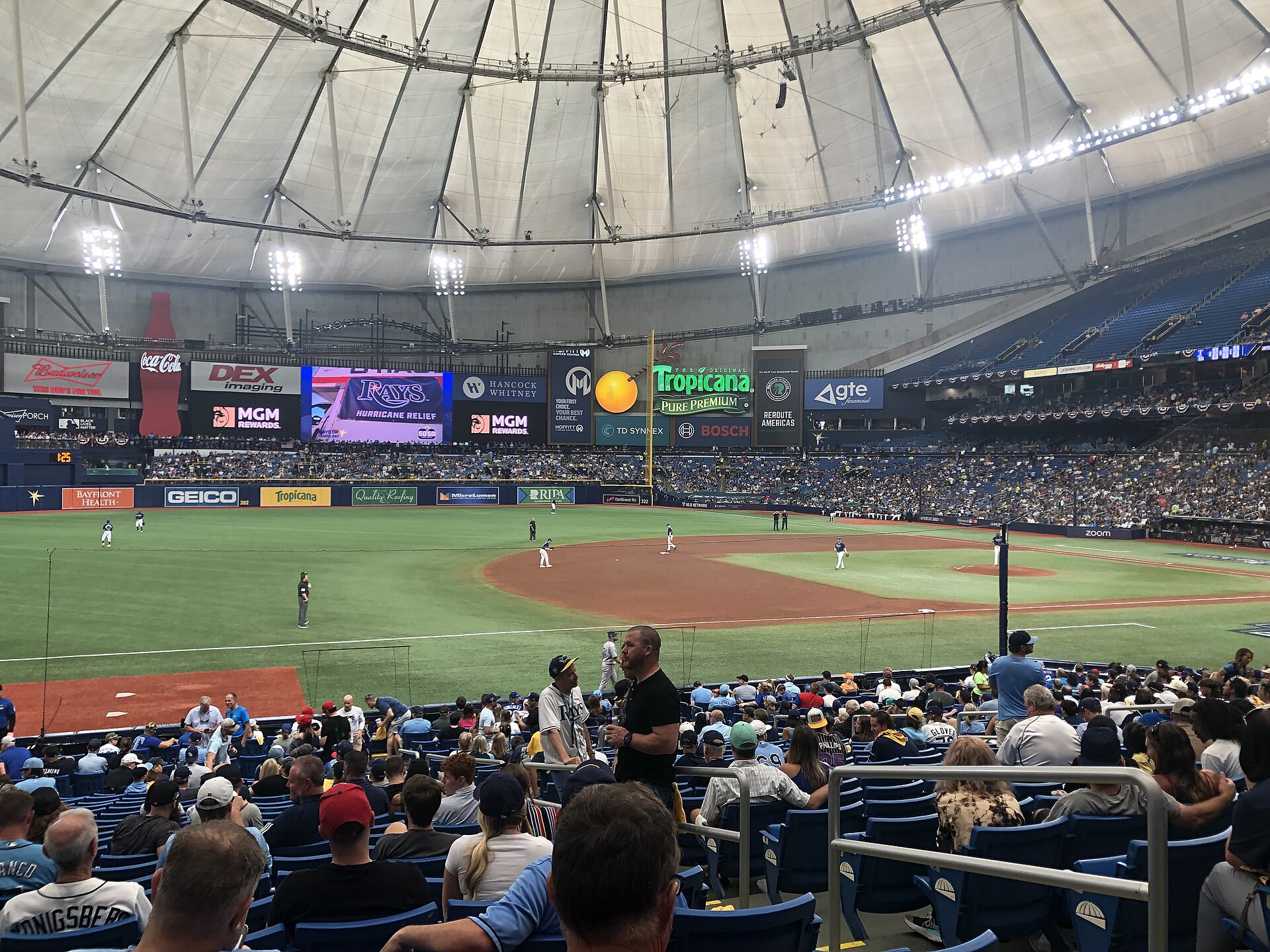
There was no mystery about what was coming, and it did not matter. Freddy Peralta stood on the Tropicana Field mound on Tuesday night and threw the same pitch, over and over, harder than he has ever thrown it, until the Cleveland Guardians ran out of innings to solve it. Six scoreless frames, 99 pitches, one plan. The Tampa Bay Rays beat the Guardians 3-1 in Game 2 of the American League Championship Series, and the best-of-seven series that Cleveland threatened to run away with is tied 1-1 heading to Ohio.
The numbers behind the outing are startling enough to read twice. According to MLB researcher Sarah Langs, whose pitch-tracking notes were cited by Sports Illustrated’s Fastball coverage, 71 of Peralta’s 99 pitches were four-seam fastballs — a 71.7 percent usage rate that stands as his highest in any game since June 11, 2019. ESPN reported the same shape to the night: roughly 72 percent fastballs, the most he has thrown in a game since 2019, with the pitch averaging a career-high 96.9 miles per hour, about 2.6 mph above his season average. He touched 99.4 mph in the fifth inning, the hardest pitch of his career. Cleveland’s hitters went 3-for-17 against the fastball, and every one of the hits was a single.
A One-Pitch Pitcher, On Purpose
Most starters who lean on one pitch that heavily get timed up by the third trip through the order. Peralta instead got stronger, finishing his night by striking out rookie Petey Halpin to end the sixth inning with his 99th pitch. His final line — six innings, four hits, two walks, six strikeouts, no runs — almost undersells how one-sided the confrontation was. The Guardians fouled off heaters, swung under heaters and watched heaters clip the top of the zone. The breaking ball and changeup appeared just often enough to be rumors.
Peralta, as ESPN reported, made no apology for the approach afterward, saying he trusts his fastball and was simply letting it go. Rays pitching coach Kyle Snyder, quoted by ESPN, leaned into the nickname the ballpark itself had been using all night: he is “Fastball Freddy” for a reason, Snyder said, noting the plan became more power than art as the game went along. Manager Kevin Cash joked that the public-address announcer had tipped the Guardians off before the first pitch. Cleveland knew. It changed nothing.
Through two postseason starts, Peralta now owns a 0.84 ERA across 10.2 innings with a .179 batting average against, and Reuters noted Tuesday was his eighth consecutive outing allowing one earned run or fewer. In a short series, that is the kind of ace performance that rearranges everything behind it.

The Deadline Bet That Keeps Paying
It is worth remembering where Peralta was four months ago. He arrived from the New York Mets at the trade deadline carrying a 4.99 ERA across 22 starts, the kind of mid-rotation arm contenders add for depth rather than October headlines. In Tampa Bay’s hands he became something else entirely: a 3.25 ERA across 10 starts down the stretch for a club that finished as the American League’s No. 1 seed with 98 wins, then a sweep of the New York Yankees in the Division Series, and now the pitcher who kept the Rays from falling into a 2-0 hole at home.
Sportsnet’s coverage of Game 2 made the same point from the other dugout: Cleveland’s own deadline additions drove its Game 1 win, and Tampa Bay’s answered in kind 24 hours later. Peralta cost the Rays three prospects. On Tuesday, he looked like the best trade of the summer by either league.
Four Minutes That Flipped the Game
For three innings, Cleveland rookie Parker Messick matched Peralta zero for zero, and the Guardians even appeared to have escaped the fourth with their third double play of the night. Tampa Bay challenged, Victor Mesa Jr. was ruled safe at first, and the inning that decided the series’ shape stayed alive. Chandler Simpson beat out an infield chopper to put runners at the corners. Then Ben Williamson, according to Sportsnet’s account, sent an 84.9 mph grounder at third baseman José Ramírez — as routine a play as the sport offers.
Ramírez explained afterward, in reporting carried by the Akron Beacon Journal, that the ball caught the lip where the turf meets the dirt and took a bad hop. It skipped through his legs and into left field. Mesa scored, both runners moved up, and on the very next pitch Liam Hicks — a deadline addition himself, picked up from Miami — lined a two-run single into right-center for a 3-0 lead. All three runs were unearned. ESPN noted it was only the seventh time since 1913 that a team has allowed three or more unearned runs in a postseason game. Messick’s final line, three runs in five innings with none of them earned, deserved a better fate.
A Catch, a Wag, and a Closed Door
Tampa Bay’s defense made sure the gift was not returned. In the fifth inning, third baseman Junior Caminero went up and snared a sharp Steven Kwan liner, then — as Reuters described it — flashed a finger wag in the manner of Dikembe Mutombo, the Hall of Fame shot blocker whose signature celebration told shooters exactly what Caminero was telling Cleveland: not in here. The crowd of 32,125 loved it, and the highlight will live on every series montage from here to the World Series.
Cleveland’s only answer came in the seventh, when rookie Chase DeLauter ripped an RBI double down the right-field line to cut the margin to 3-1 and put runners at second and third. That was the end of the threat. Left-hander Ian Seymour struck out Jo Adell to strand them, worked a clean eighth, and closer Bryan Baker finished a perfect ninth for his fourth save of the postseason, on the heels of a regular season in which he led the majors with 41. Between them, Seymour and Baker retired the final seven Guardians they faced, and Tampa Bay’s bullpen structure — length from the starter, leverage from the lefty, silence at the end — held for the second straight night.
What Thursday Now Holds
The series shifts to Progressive Field for Game 3 on Thursday, October 15, and it travels as a best-of-five rather than a rescue mission. Cleveland gets its crowd and its pitching depth at home, but it also carries the memory of an inning it handed away. Tampa Bay gets the proof that its October formula works on the road’s doorstep: ride the hot starter, run the bases hard enough to force mistakes, and let the bullpen close the building.
Two games in, neither lineup has erupted and neither bullpen has cracked. What has separated the teams so far is one bad hop and one pitcher who decided the simplest plan was the best one. Keep up with the rest of the postseason on Previously’s sports hub, read how the Rays got here in our ALCS preview and the Division Series sweep of the Yankees, and check the numbers behind the series in the Stats Hub.