
MONDAY, OCTOBER 26, 2026
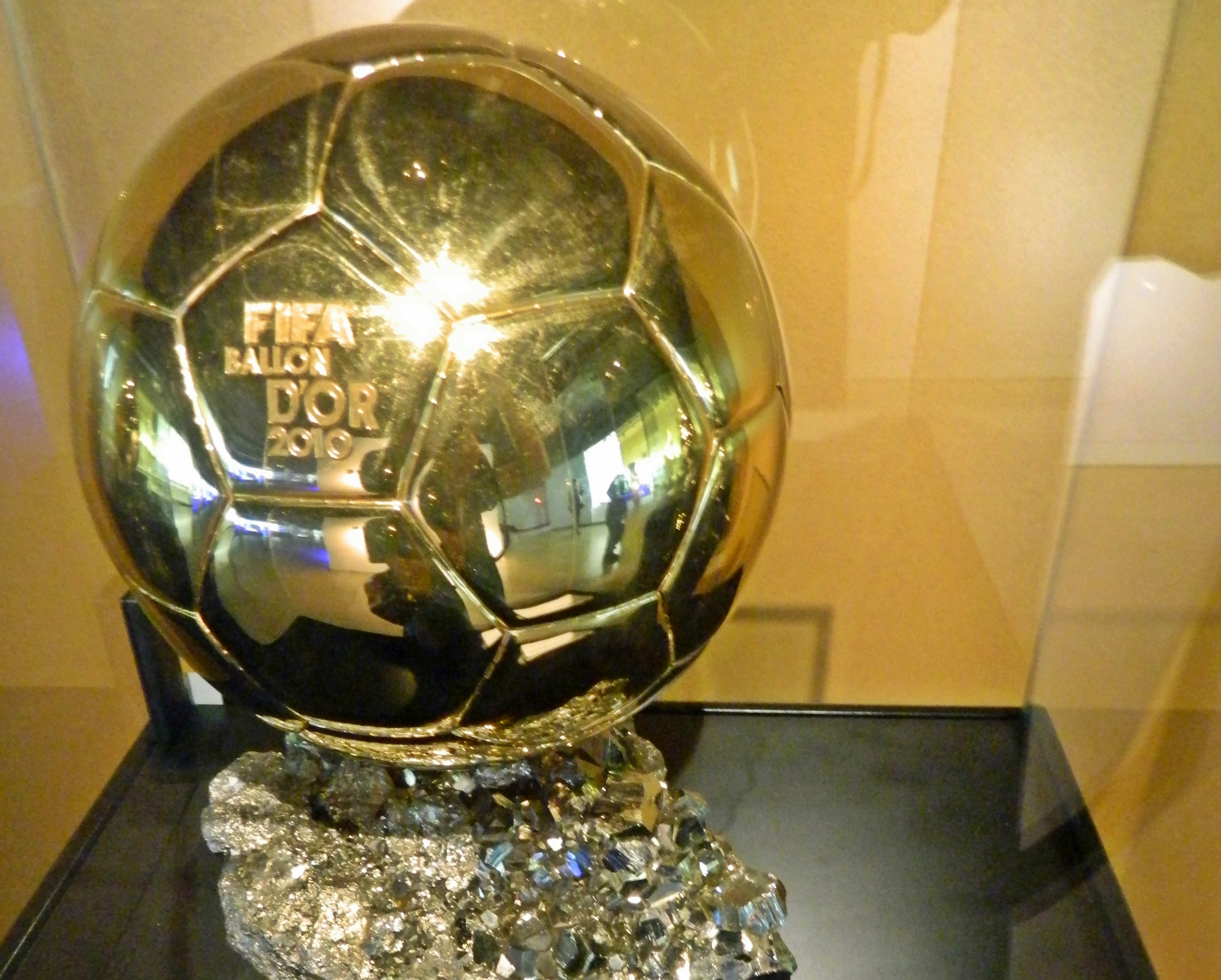
Let’s rewind the tape to Monday afternoon in London, because the Ballon d’Or had one job. One. The whole product — seventy years of it — is a secret kept until a theatre reveal: an international jury of journalists votes, the ballots close at the end of September, and the name stays locked away until the ceremony. On Monday, hours before that ceremony at the London Palladium, the award’s own website published the winner. Then it published another one. Then another. Harry Kane won the 2026 Ballon d’Or on ballondor.com. So did Kylian Mbappé. So did Lamine Yamal. Three coronations, in writing, with the tributes already written — and then the site spent the rest of the afternoon taking its own headlines down.
17:15 — Harry Kane wins the Ballon d’Or (for about twenty minutes)
It started, as these things now do, with the favourite. Shortly after 17:15 GMT on Monday, an article began circulating from the award’s official website titled “Harry Kane wins the 2026 Ballon d’Or” — the version fans captured carried the fuller headline, “Harry Kane wins 2026 Ballon d’Or. Here are his best and most meaningful strikes from a 61-goal season.” BBC Sport opened its account of the afternoon with the only honest sentence available: “For a moment, it seemed as though Harry Kane’s dreams of winning the Ballon d’Or had come true.”
Understand why the moment landed. Kane was not a random name on a stray page; he was the bookmakers’ favourite, coming off a season in which he scored 73 goals for club and country inside the award’s eligibility window, and he was chasing a piece of history — no Englishman has won the Ballon d’Or since Michael Owen in 2001, and Owen is now the only living English winner. England fans did what England fans do: they celebrated, loudly, in public, immediately. The widespread sharing of the article, BBC Sport reported, caused confusion online, with some wondering whether France Football — the organisers of the award — had fallen short at the final hurdle of keeping the winner under wraps. They had. Just not the way anybody first thought.
Then the same website crowned Mbappé. And Yamal. And started on the women’s award.
Because the Kane article was not a leak. It was a shelf. Fans who kept digging on the Ballon d’Or website found the other coronations sitting right beside it: “Kylian Mbappe wins 2026 Ballon d’Or for consistency personified at the very highest level,” and “Lamine Yamal wins the 2026 Ballon d’Or and sets an unprecedented record.” The Mbappé tribute, in the passages captured before it vanished, declared that “a record-breaking World Cup and another welter of goals for Los Blancos has brought Kylian Mbappe his first Ballon d’Or triumph” — which would indeed have been his first: for all his years at the top of the sport, Mbappé has never won the award, his best finish third in 2023. He arrived in London on Monday straight from scoring his 100th Real Madrid goal in El Clásico, and for a few minutes on Monday afternoon, his own coronation was just sitting there on the internet.
The Yamal article was the boldest of the three, because it did the maths out loud: at 19, Yamal “has just become the youngest winner in the history of the Ballon d’Or,” taking a record that had belonged to Ronaldo Nazário, who won at 21 years and 92 days — even Lionel Messi, the article noted, was 22 years and 160 days old when he first won it in 2009. Yamal finished second in last year’s voting as an 18-year-old and helped Spain win the World Cup this summer; the case writes itself, which is presumably why somebody had already written it. By some accounts of the takedown, Yamal’s page lingered the longest of the three. And the shelf went deeper still: BBC Sport reported that a similar piece had been penned for Messi himself, and that versions existed for the women’s award too — London City Lionesses star Alexia Putellas and Barcelona’s Ewa Pajor, two of the favourites for Monday night’s other big prize. Five winners, one afternoon, one website.
Gone before 17:40. The screenshots were not.
The clean-up was fast and it was not fast enough. Just before 17:40, the articles about Kane and Mbappé had been removed from the website; USA Today’s account has all three taken down within minutes of going live. Whether the removal was intentional damage control or the left hand discovering what the right hand had published remained, in BBC Sport’s careful phrasing, unclear. What was not unclear was the arithmetic of the internet: the pages lived for minutes, and the screenshots will live forever. The chaos was not even confined to the winner pages — OneFootball’s live blog of the evening noted that the Ballon d’Or’s own live blog went offline for a stretch and spat out results before the official rankings were confirmed. Organisers were reported to be in shock at the leak, with an investigation launched into how the articles got out. Somebody at France Football had a Monday.
The explanation: everybody’s coronation was pre-written
To the organisers’ credit — and this desk keeps the credit on the record, because the record is the whole show — they did not pretend it hadn’t happened. A statement appeared on the Ballon d’Or website shortly before the ceremony: “Portraits of some Ballon d’Or nominees prepared by ballondor.com were inadvertently published online. These articles had been prepared in advance for all nominees in the event of a win. They do not, in any way, reveal the podium, which remains unknown to everyone at this time.”
Read that middle sentence again, because it is the whole story wearing a suit. Prepared in advance, for all nominees. Thirty men made the final shortlist, thirty women made theirs — which means that somewhere in that website’s machinery sat a finished, publish-ready coronation for every single one of them, each written in the past tense about a future that hadn’t happened, waiting for one name to become true. That is not a scandal; every newsroom on earth pre-writes the obvious outcomes, this one included. The scandal is only the button. And it is not even a new button: as Sportbible noted, on the day the nominations were announced, profiles for several women’s players who had not yet been announced were uploaded to the same website and quickly removed. The site had rehearsed this exact mistake in the same season.
The secrecy was the show — which is why this is funny
Context is what separates a typo from a donkey, so here is the context. This was not any edition of the award: it was the 70th, moved to London for the first time to honour Sir Stanley Matthews, the English winger who won the very first Ballon d’Or in 1956. The vote had closed at the end of September. The ceremony — hosted by Kate Scott and Thierry Henry at the London Palladium, with the men’s winner expected late in the evening — is built entirely out of suspense: the rankings counted down from 30, the final ten held back, the envelope last. Reports before the ceremony even said the organisers had stopped telling the winner in advance, so that the reaction on the night would be real. Every part of the machine exists to protect one name for one moment. And on the afternoon of the biggest night in the award’s history, the machine’s own website published three names, with tributes, before the red carpet had finished filling up.
Fair’s fair — the players didn’t publish anything
So the target stays where it belongs, because this desk punches up and punches accurately. Harry Kane did not publish his coronation. Kylian Mbappé did not publish his. Lamine Yamal, Alexia Putellas and Ewa Pajor are guilty of nothing except being good enough that an institution pre-wrote their victory laps — the three men were, on the bookmakers’ Sunday-night prices, the three favourites in order, and any one of them winning on Monday night would have surprised nobody in the building. The donkey here is not a footballer. It is a publishing process at the most secretive institution in the sport, which spent a month guarding a secret and then posted it in triplicate. If the envelope at the Palladium names Kane, Mbappé or Yamal, the screenshots will age from blunder to prophecy, and the website will have been right all along — once, out of three tries, entirely by accident.
File this one in The Rewind collection, next to this morning’s entry — a man restarting a song seven times in Jakarta until the crowd learned it. London’s entry needed no restarts. The website got it wrong three times in one take, and the ceremony still had to go ahead and pick a fourth version of the truth: the real one. Keep it with Previously’s soccer coverage for the name that actually gets read out tonight.
THE VERDICT — After review: the Ballon d’Or spent seventy years perfecting a secret, then spoiled it three times on its own website in a single afternoon.
Sources · 8 sources
- Ballon d’Or website blunder causes confusion BBC Sport (Keifer MacDonald), via AOL Sports · Oct 26, 2026
- Did the Ballon d’Or website accidentally reveal the winner in advance? USA Today · Oct 26, 2026
- Ballon d’Or 2026 live updates: winners, results and award ceremony USA Today · Oct 26, 2026
- Ballon d’Or organisers issue statement after error goes viral hours before ceremony Sportbible · Oct 26, 2026
- Complete chaos over the Ballon d’Or: organisers suddenly leak top three in huge blunder Yardbarker · Oct 26, 2026
- Ballon d’Or chaos as official website names three different winners TNT Sports · Oct 26, 2026
- Ballon d’Or chaos as France Football accidentally reveal ‘winner’ articles OneFootball · Oct 26, 2026
- 2026 Ballon d’Or: Who will claim soccer’s top individual awards? theScore · Oct 26, 2026