
The vineyard that ended with the harvest
Start with what the vineyard itself decided. By 1945 the Romanée-Conti vineyard was still planted with its old, ungrafted vines — original French rootstock that had survived phylloxera, the blight that forced almost every other great European vineyard to replant onto American roots. That survival is the whole foundation of this wine's legend. The vines in the ground in 1945 were not descendants of the vineyard's historic planting, grafted onto hardier stock. They were the planting itself, still on its own roots, still working the same soil in the old way.
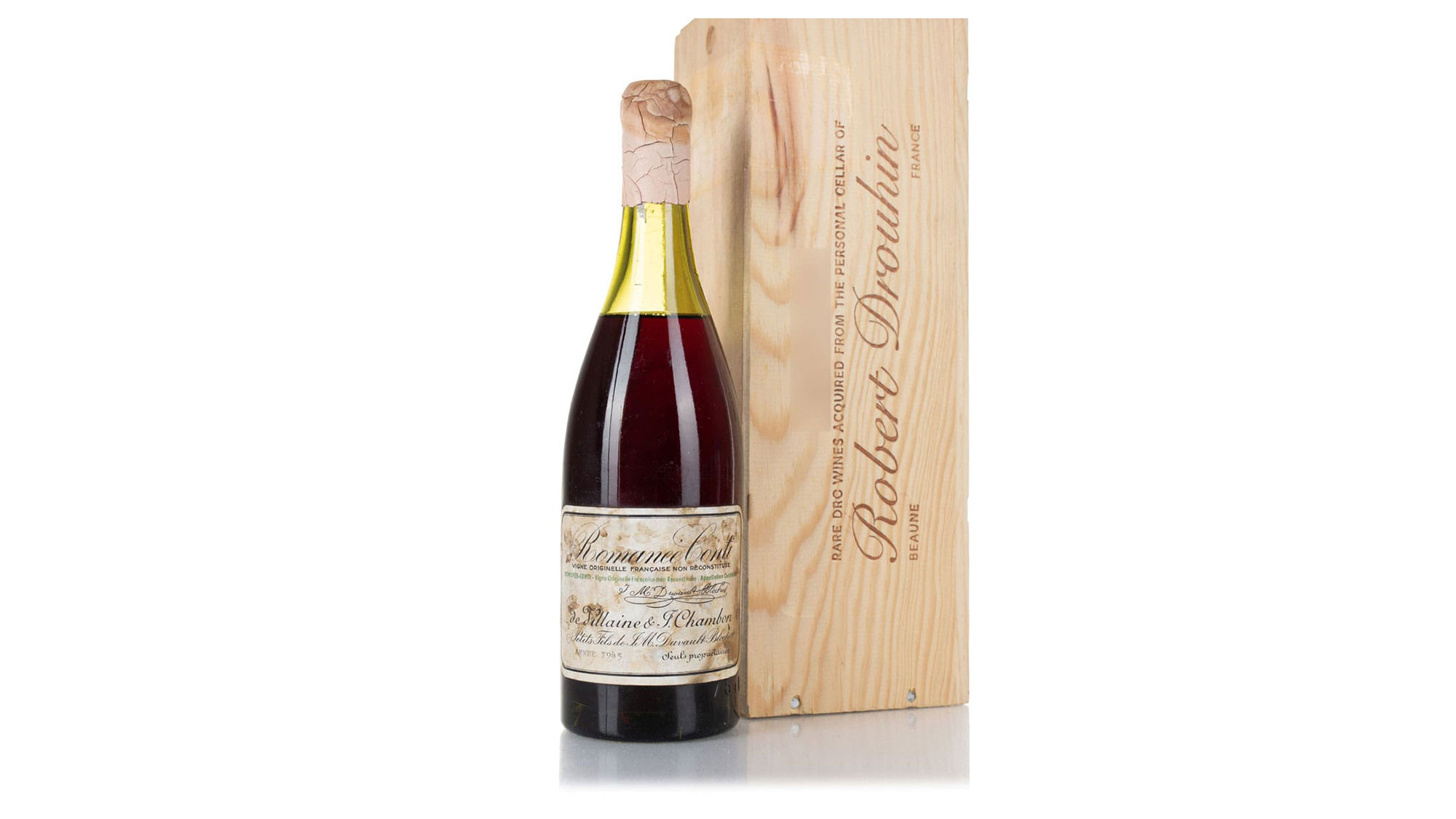
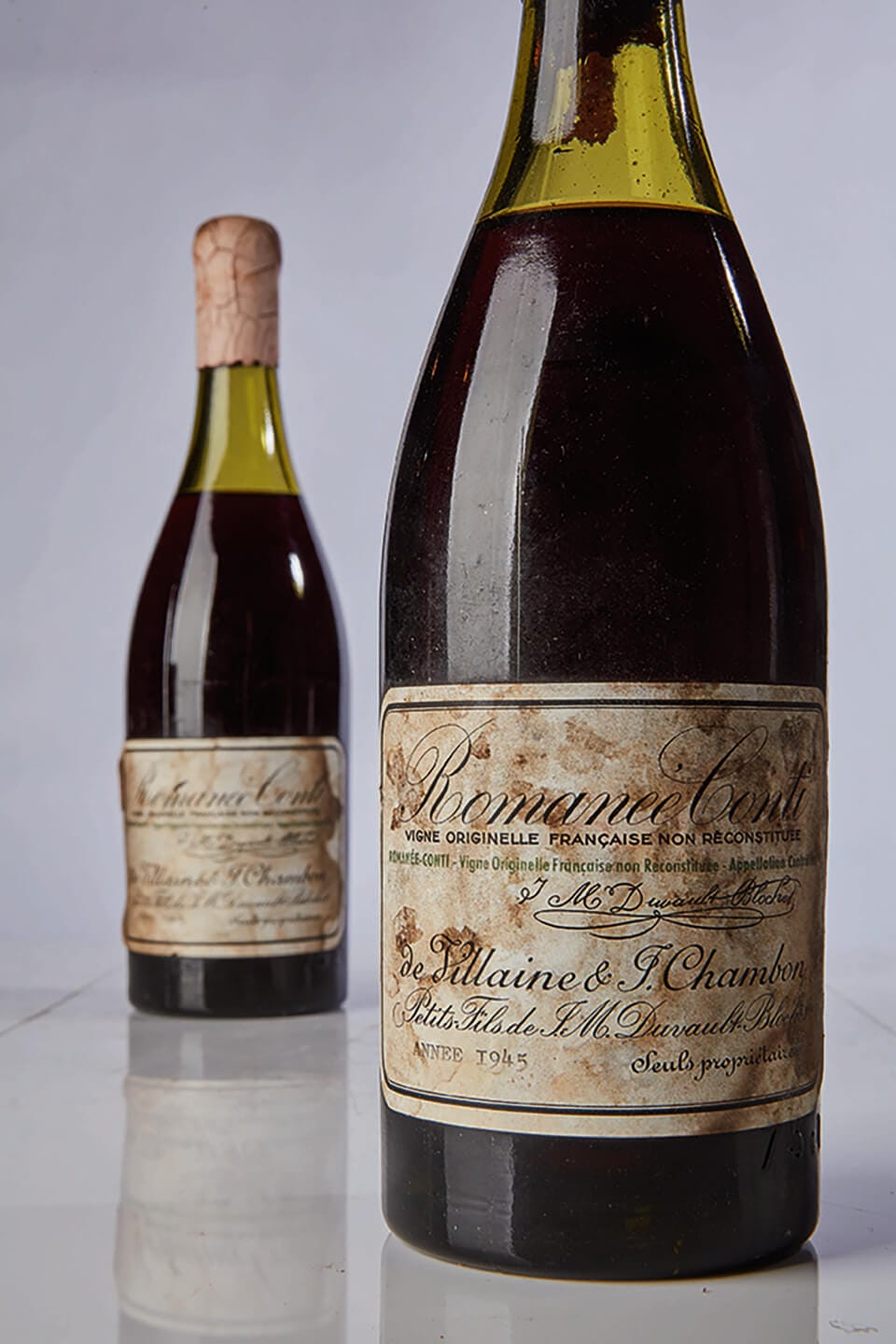
By then they were exhausted, and barely producing. A healthy great vineyard turns a harvest into thousands of bottles; the 1945 harvest at Romanée-Conti yielded roughly two barrels — about 600 bottles in total. The bottles said so themselves: the label of the 1945 carries the words "Vigne Originelle Française Non Réconstituée" — the original French vine, not reconstituted — a declaration, printed on the wine itself, that what was in the bottle came from the old planting and from no other. And then the decision that closed the account was carried out: the old vines came up straight after the harvest. The vineyard was replanted in 1947, and no Romanée-Conti was made again until 1952. Christie's, in its lot notes for this vintage, puts it plainly: the last of the pre-phylloxera vintages, and only 600 bottles produced. There is no later edition of this wine coming, no second pressing of the idea. What was bottled in 1945 is all of it there will ever be, and every bottle opened or lost since has only made the survivors rarer.
A cellar nobody had to take on faith
Scarcity alone doesn't explain what happened next, because plenty of rare wines stay merely expensive. Provenance did the rest. The two bottles Sotheby's offered in New York on 13 October 2018 had spent more than fifty years in the personal cellar of Robert Drouhin, patriarch of Maison Joseph Drouhin. He and his father Maurice had acquired their wines directly from the Domaine, mostly while the family firm was its exclusive distributor for France and Belgium.
Read that chain slowly, because in this market the chain is the product. One owner. One cellar. A direct line to the producer, with no dealer, no broker and no anonymous resale in between. Fine wine at this level trades in a market haunted by counterfeits of exactly this wine — the great Burgundies are among the most faked bottles in the world — and a bottle whose entire life can be accounted for, from the Domaine's own door to a single Burgundy cellar, answers the only question that matters before any other is asked: is it real? The Drouhin bottles did not need their history argued. It was printed, in effect, on the case they travelled in.
The afternoon the record fell twice
The sale made the value of that history visible. The Drouhin offering ran to 100 lots, sold out completely, and totalled $7,303,599 — more than five times its high estimate. A result like that says the room was not really bidding on wine in the ordinary sense. It was bidding on certainty, in a category where certainty is the scarcest thing on offer.
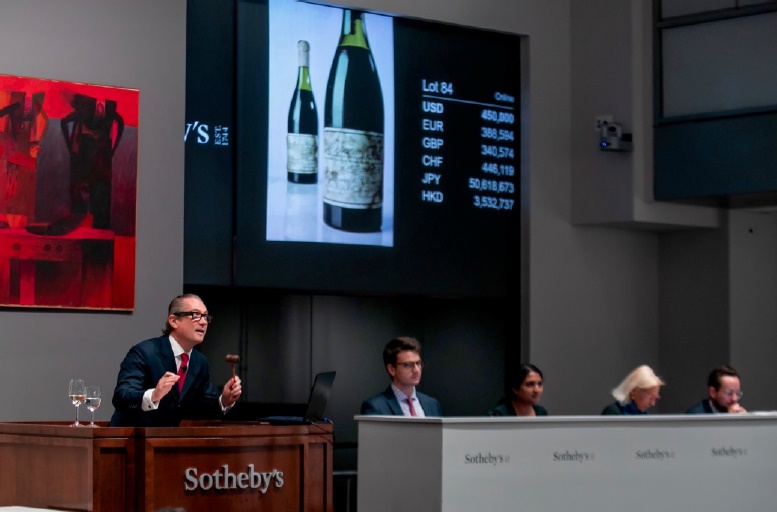
The two 1945 bottles were lots 84 and 85, each estimated at $22,000–$32,000. Lot 84 sold for $558,000 to a private collector in Asia. Lot 85, moments later, sold for $496,000 to a private collector in the United States. Each figure is worth setting against the estimate it replaced: the high estimate for either bottle was $32,000, and the room paid more than fifteen times that, twice, back to back.
Both bottles broke the previous world auction record for a single bottle of wine of any size — $310,700, set in 2007 by a jeroboam of 1945 Mouton-Rothschild — one after the other, in the same sale. Records in this world usually fall one at a time, years apart. Here the record was set, announced, and then beaten again before the sale had moved on, by the very next lot, from the same cellar and the same vintage. The 1945 was not competing with the rest of the wine world that afternoon. It was competing with itself.
The bottle that came back and raised its own record
Most record stories end there, with the number frozen at the moment of the sale. This one did not. In March 2026, at Acker's La Paulée auction, a 1945 Romanée-Conti from the same Drouhin cellar sold for $812,500 — reported by Acker and the wine press as the same bottle that set the 2018 record, kept in professional storage between sales. That is the current mark for a bottle of wine at auction.
The detail that matters is the continuity. This was not a different rarity surfacing from an unknown cellar and asking the market to trust a new story. It was the Drouhin provenance, tested once in public in 2018, returning to the room with its history now including the record itself — and the market paid substantially more for it the second time. The 1945 didn't just set the record once. It came back and raised its own.
Previously's Take
The 1945 is a closed account: a vineyard in a form that cannot be remade, bottled 600 times. Every bottle opened or lost makes the survivors rarer in a way no new release can dilute. The Drouhin bottles added the one thing rarer than the wine — a history nobody had to take on faith.
The numbers
Sources · 4 sources
- Sotheby's — sale N09921 results, New York, 13 October 2018 (lot prices, buyers, total)
- Christie's — Romanée-Conti Vintage 1945 lot notes (600 bottles, last pre-phylloxera vintage)
- Decanter, October 2018 — auction record report
- Acker La Paulée reporting, 2026 — The Drinks Business; VinePair; Elite Traveler ($812,500; same bottle as 2018)
Photographs: VinePair · Sotheby's · Sotheby's