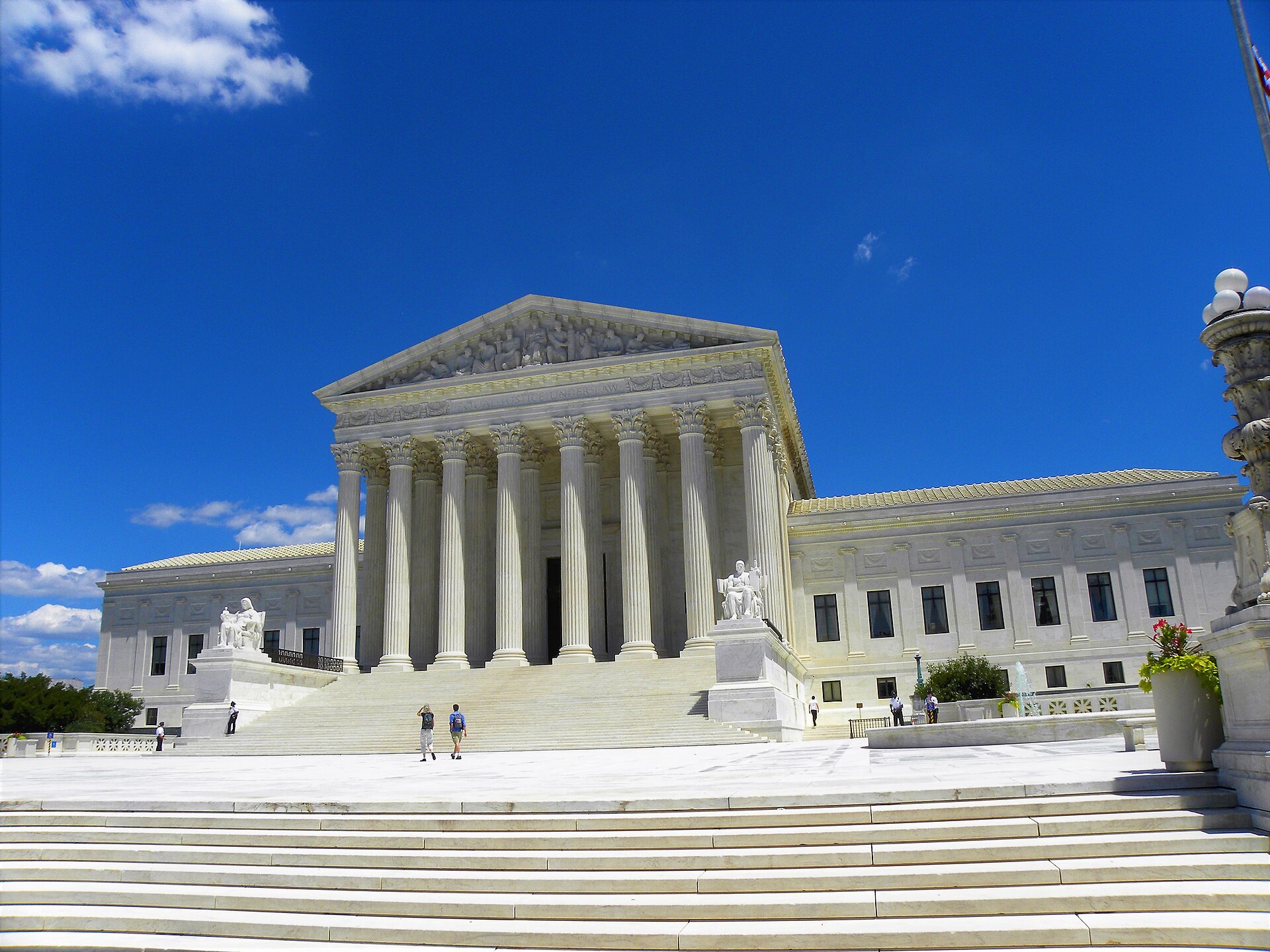

Five hundred and twenty-four dollars and sixty cents. That is the parking-ticket debt at the center of a case the Supreme Court decided on Monday not to decide — and for Ryan O'Donnell, USA Today reported, the cost of that debt was his Toyota, sold by the City of Chicago without clearing what he owed and without giving him any of the proceeds. On Oct. 19, the Supreme Court declined to decide whether Chicago's parking enforcement practices violate the Constitution's ban on governments taking someone's property without fair compensation, USA Today reported. The refusal leaves in place a lower-court ruling for the city, and it leaves drivers in Chicago — and anyone watching how far a city can go over unpaid tickets — with the same rules that took O'Donnell's car.
The second name in the case is, if anything, harder to shrug off. The city also took Michael Goree's Chevrolet, USA Today reported, because a co-signer of his car loan had outstanding ticket debt on a different vehicle. Read that again slowly: a different person, a different vehicle, the same result. O'Donnell and Goree filed a class action against the city, according to USA Today, arguing that the enforcement scheme crosses the line the Fifth Amendment draws around private property. Lower courts ruled against them, and on Monday the highest court in the country let those rulings stand without taking the case up.
How Chicago's scheme works
The mechanics matter here, because the mechanics are the story. In Chicago, the city can take any vehicle of a driver who racks up three unpaid parking tickets, or two in one year, USA Today reported. If the owner cannot pay the tickets plus the cost of towing and storing the car, the city can sell it. That escalation — ticket, tow, storage fees, sale — is what the Chicago-based 7th U.S. Circuit Court of Appeals was reviewing when it sided with the city. The appeals court said the city's rules serve a punitive purpose and are a legitimate extension of police enforcement power, USA Today reported. "Without this graduated forfeiture scheme, vehicle owners who repeatedly violate the traffic code could evade punishment," the court ruled last year, in language USA Today quoted.
Law.com, in its case digest of the 7th Circuit's decision in O'Donnell v. City of Chicago, described the same reasoning from the other side of the bench: the district court dismissed the drivers' claims, ruling that the forfeiture scheme was not a taking, and the appellate court agreed, holding that the scheme is a legitimate exercise of police power rather than eminent domain. According to Law.com, the courts distinguished between the government's power to punish and enforce its traffic laws and its power to seize property for public use, which is where the Constitution's compensation requirement bites. That distinction — punishment on one side, taking on the other — is the whole ballgame in this case, and for now the punishment side is winning.
The warning attached to the refusal
A refusal to hear a case is usually the quietest thing the Supreme Court does. This one came with a statement attached, and the statement is the part worth reading twice. Justice Sonia Sotomayor said in a statement joined by Justice Neil Gorsuch that she has "serious concerns" about the 7th Circuit's conclusion, USA Today reported. But Sotomayor said she agreed with her colleagues that the court should not take up the issue now, before more lower courts have weighed in on when a state's police powers override the just-compensation requirement. "I again encourage courts considering this issue to take care that due deference to state police powers does not eclipse constitutional rights," she wrote, in a line USA Today quoted from the statement.
That pairing — Sotomayor and Gorsuch, justices who agree about very little on the public stage — is its own signal. When those two names land on the same sentence about property rights, it usually means the underlying question is not finished, only postponed. The statement reads less like a door closing and more like a marker being put down: bring us a fuller record, let more courts wrestle with this, and the question may come back wearing a different case number. For Chicago drivers in the meantime, none of that changes what happens at three unpaid tickets.
The 2023 ruling the drivers say controls this
The drivers' strongest card, their lawyers argued, is a recent one. Lawyers for the men who lost their cars said the 7th Circuit's decision is at odds with the Supreme Court's 2023 ruling about unpaid property taxes, USA Today reported: if a house is sold to pay outstanding taxes, the court held, the government cannot keep any surplus funds beyond what it is owed. The logic seems straightforward from the driver's seat. If a county cannot pocket the extra equity in a house sold over a tax bill, why can a city sell a car over $524.60 in parking tickets, keep everything, and not even apply the proceeds against the debt?
The 7th Circuit's answer, as Law.com summarized the decision, is that a parking-enforcement forfeiture is punishment for violating the traffic code, not a tax sale — and punishment has historically operated under different constitutional rules than revenue collection. According to Law.com, the appellate court emphasized that the scheme aims to enforce compliance with traffic laws and concluded it did not violate the Takings Clause. USA Today reported that the drivers' lawyers countered that taking property worth vastly more than the fines is devastating and counterproductive, and pointed to the human math underneath the legal math: towing and storage charges grow by the day, so the longer a car sits impounded, the harder it becomes for the owner to ever afford getting it back, and the more likely the city ends up selling a vehicle over a debt that started in the hundreds of dollars.
What Monday's decision does — and does not — settle
Let us be precise about what happened, because "Supreme Court declines" headlines can sound more final than they are. The court did not rule that Chicago's scheme is constitutional. It declined, on Oct. 19, to decide the question at all, USA Today reported, which leaves the 7th Circuit's pro-city ruling as the governing law in that circuit and leaves every other circuit free to see the issue differently. That is exactly the opening Sotomayor's statement points at: more lower courts weighing in is the stated reason for waiting, and it is also how the issue eventually forces its way back onto the docket.
For Chicago, the practical effect is immediate and simple: the graduated forfeiture scheme the 7th Circuit described stays in force. Three unpaid tickets — or two in a year — can still set the tow in motion, and a driver who cannot cover the tickets, the towing and the storage can still lose the car entirely. For everyone else, the case is a reminder of something easy to forget until it happens to you: the most consequential government action in an ordinary person's life is rarely a dramatic raid or a headline prosecution. Sometimes it is a stack of parking tickets, a tow truck, and a bill that grows while you try to figure out how to pay it. On Monday, the Supreme Court looked at that sequence, heard serious concerns from two of its own members — and decided the country needs to argue about it a while longer first.
Sources · 3 sources
- USA Today — Supreme Court won't hear case about unpaid parking tickets
- Law.com — Decision: O’Donnell v. City of Chicago
- U.S. Supreme Court — Docket No. 25-1098 — brief in opposition (case filing)