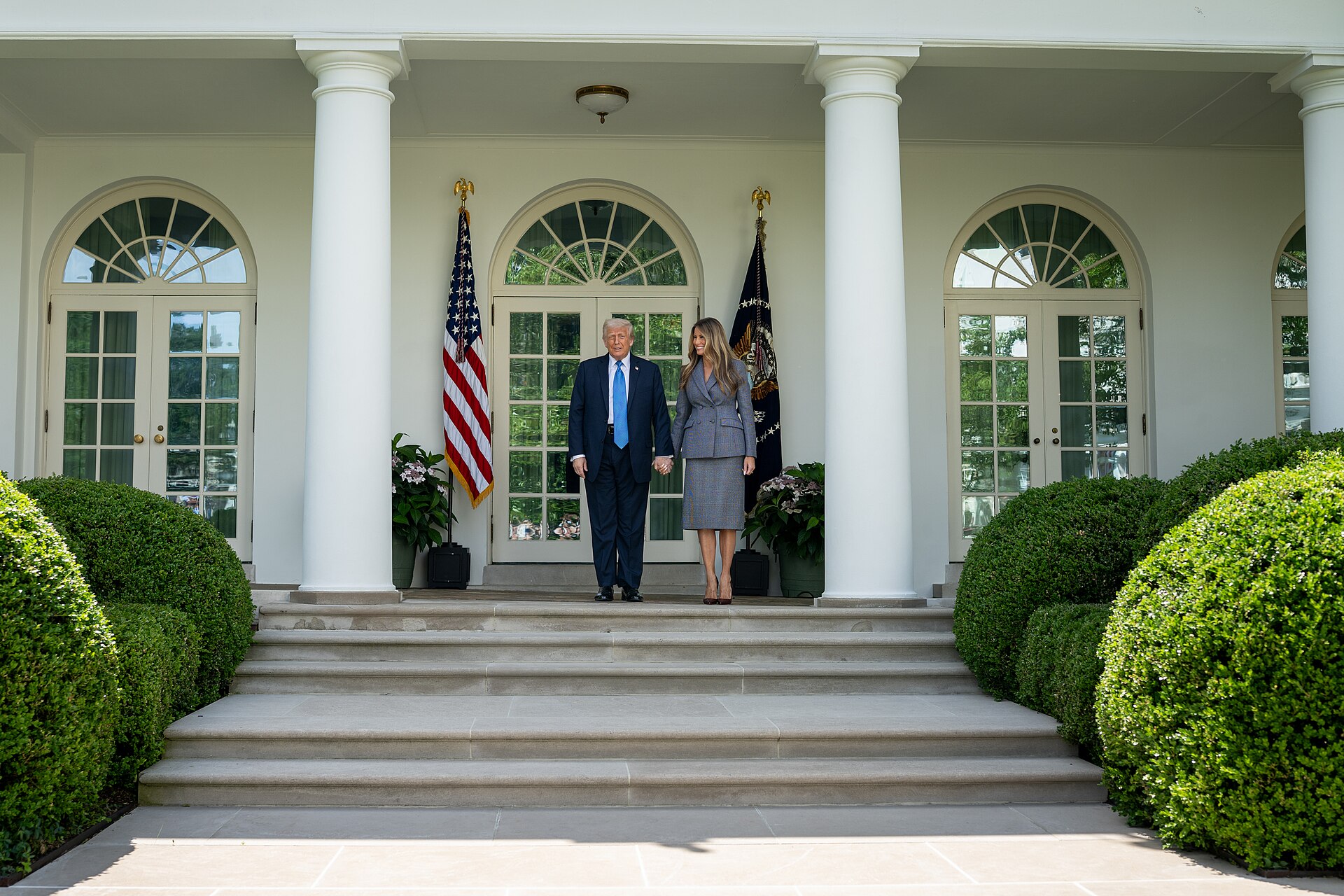

Two weeks before Americans decide who controls Congress, President Donald Trump has hit the lowest approval rating of his political career. A Reuters/Ipsos poll that closed on Monday found that just 31% of Americans approve of the job Trump is doing in the White House — down one percentage point from two weeks earlier, and the lowest level recorded in either of his two presidential terms.
It is the kind of number that makes down-ballot candidates reach for the antacids. It is not simply that the president is underwater; it is how deep the water is, and how close the election is. The November 3 midterms will determine control of both the House of Representatives and the Senate, and a president polling at 31% is, historically speaking, a heavy anchor tied to his party’s ankle. Candidates in swing districts will now spend the final fortnight doing arithmetic they hoped to avoid: how much distance from the top of the ticket is enough, and how much is too much for the base to forgive?
A Generic-Ballot Gap That Keeps Growing
The detail in the poll that will worry Republican strategists most is the generic ballot. Asked which party they would vote for if the congressional elections were held today, 47% of registered voters picked Democrats and 35% chose Republicans. That 12-point Democratic advantage is the widest Reuters/Ipsos has measured during this election cycle, and it could bolster Democratic hopes of seizing control of both the House and the Senate.
A word of caution, because it matters: a generic ballot is a national mood ring, not a district-by-district forecast. As Reuters itself notes, these polls provide a view of overall public sentiment but do not capture all the nuances of the state-by-state and district-by-district contests that actually determine control of Congress — contests in which Republicans hold some structural advantages. A 12-point national lead does not translate mechanically into a 12-point sweep. But direction and scale still count, and right now both are pointing the same way. With early voting already opening in Florida and ballots going out across the country, the window for changing the mood is closing by the day.

For Republicans, the stakes of losing either chamber are concrete rather than theoretical. A Democratic House or Senate would complicate Trump’s agenda for the last two years of his term, handing committee gavels, subpoena power and the legislative calendar to an opposition that has made no secret of its eagerness to use all three. Every close race in the country just became, in part, a referendum on whether that happens.
Gas Prices and the Economy Are Doing the Damage
Reuters reported that Americans’ worries about high gasoline prices sat at the center of the slide. That tracks with how presidential approval usually moves. Voters may not follow every procedural fight in Washington, but they keep a precise, running ledger of what it costs to fill a tank and stock a refrigerator — and when those numbers hurt, the president’s numbers hurt. It is the oldest law in American politics, and it does not care which party holds the White House.
It is also worth separating this single poll from the broader averages, because honest numbers deserve honest labels. USA Today reported on Monday that the RealClearPolitics average — which blends many surveys — put Trump at 38.9% approval against 59.3% disapproval. The New York Times polling average stood at 37% approval and 61% disapproval, while Nate Silver’s Silver Bulletin average showed 37.5% approval and 59.9% disapproval. So no, the average does not say 31%. What it says is that every major aggregator has the president deep in negative territory, and the newest Reuters/Ipsos survey is the harshest reading of the bunch — a low outlier, perhaps, but one sitting on top of a consistently grim trend rather than contradicting it.

How the Poll Was Conducted
The survey was conducted online over four days and gathered responses from 1,679 U.S. adults, including 1,279 registered voters. The margin of error was 2 percentage points for all respondents and 3 percentage points for registered voters. That means the one-point dip from two weeks earlier is, on its own, within the noise — the record-low headline rests on the level itself, the lowest point Reuters/Ipsos has recorded for Trump across both of his terms, rather than on any single survey’s movement. Read it as a floor being tested, not a cliff being fallen off.
Midterm elections are, by tradition, dangerous territory for the party holding the White House. Voters treat them as a report card on the president, and presidents sitting in the low 30s tend to receive the kind of report card you hide from your parents. Reuters’ own guide to the midterms notes that control could hinge on a small set of competitive Senate races, including contests in Maine, Ohio, North Carolina, Iowa and Georgia — which is precisely why one national number gets pored over in campaign headquarters a thousand miles from Washington. A wave does not need to be nationwide to change who holds the gavels; it just needs to arrive in the right ten places.
What Happens in the Next Two Weeks
Republicans still have two weeks, a formidable spending operation, and those structural map advantages working for them. Polls have been wrong before, in both directions, and a single survey — even a record-setting one — is a snapshot, not a verdict. Campaigns also know the president’s most loyal voters have a habit of showing up in November in numbers that October surveys struggle to model.
But campaigns would rather spend the final fortnight explaining away a good poll than a bad one, and this is a very bad one: a record-low president, a double-digit generic-ballot deficit, and an electorate telling pollsters its central concern is the price of getting to work and feeding a family. The verdict arrives on November 3. Until then, the number to watch is whether 31% was the floor — or just the latest step down. Follow the day’s other developments in tonight’s news wrap-up and across Previously News.