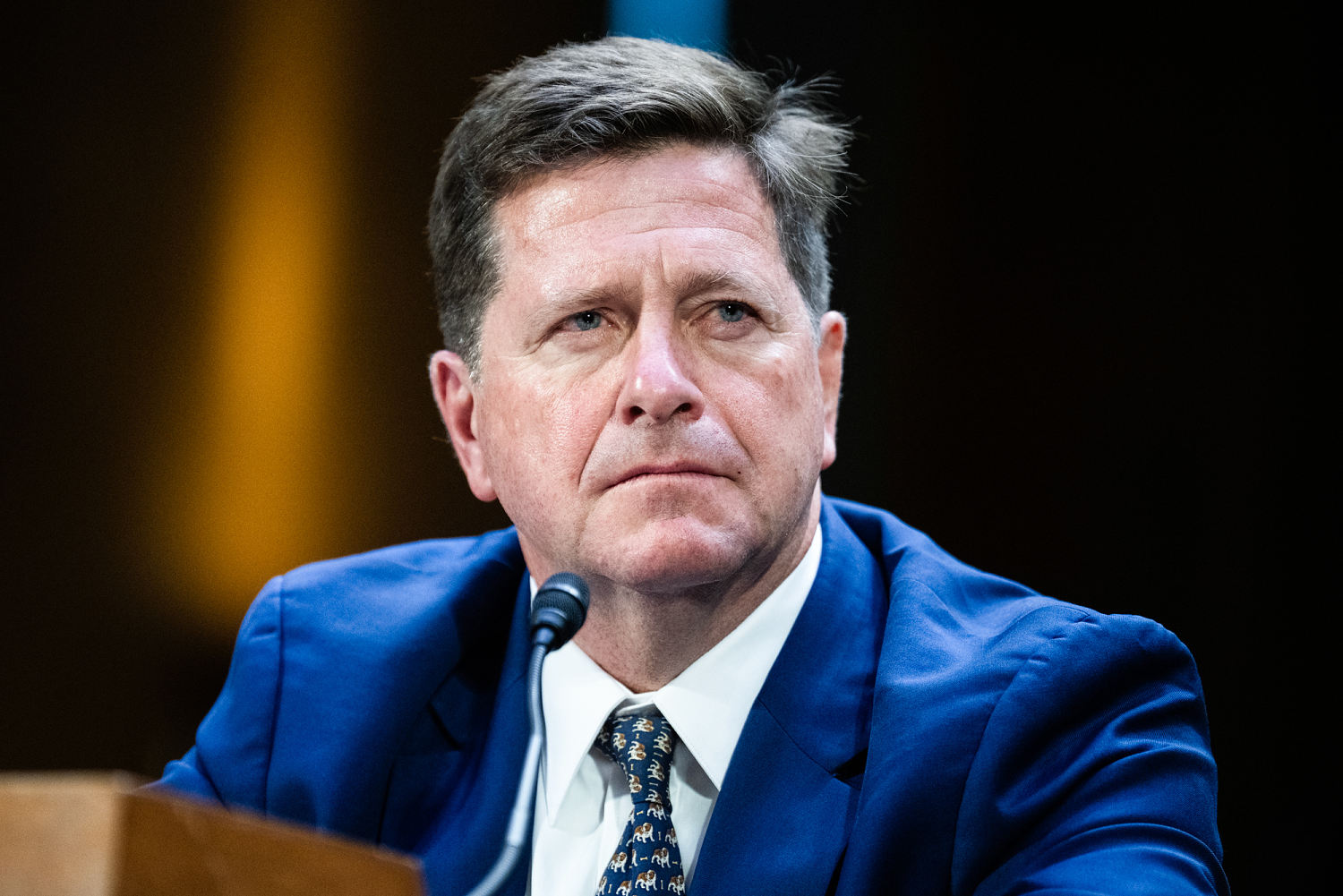
SUNDAY, OCTOBER 4, 2026 — President Donald Trump on Sunday named Director of National Intelligence Jay Clayton and three top administration officials to lead a new "Super Intelligence Force" on artificial intelligence, putting the intelligence chief, the nation's top consumer-protection enforcer, the Pentagon's research chief and the federal workforce director in joint charge of the government's AI agenda. The announcement came in an Oct. 4 post on Truth Social, weeks after Trump said he would form an AI force and appoint an AI czar to keep the country leading on the technology he has said is "the next Industrial Revolution, or Internet."
The force will be led by Clayton, Federal Trade Commission Chairman Andrew Ferguson, Office of Personnel Management Director Scott Kupor and Emil Michael, the Pentagon's under secretary of defense for research and engineering — the department's chief technology officer. Trump said the group will report to him and White House chief of staff Susie Wiles, and that it will coordinate the federal government's engagement with consumers, public interest groups, religious organizations, infrastructure providers and AI companies, with a mandate to "protect the interests" and "improve the lives" of Americans.
What the force is actually being asked to do
Stripped of the branding, the assignment is coordination, not lawmaking. Trump's post tasks the group with aligning the federal government's many AI efforts. He wrote that it must ensure "that America continues to lead the World in Super Intelligence, which many say is bigger than the Industrial Revolution, and the Internet." According to the Wall Street Journal, Clayton will chair the group — effectively making him the administration's AI czar — with Ferguson, Michael and Kupor serving as vice chairs. The task force reportedly has 120 days to produce a report on the risks and opportunities presented by AI, a timeline that turns this from an open-ended study group into a deadline-driven exercise.
The inclusion of religious organizations and public interest groups in the group's mandate is a notable detail: it signals an administration aware that the AI debate has moved beyond the engineering labs and into churches, school boards and town halls. And it arrives amid growing congressional pressure for guardrails. "We've got to be concerned that guardrails that are rigid are put into place so that we don't see rogue AI agents behaving in a manner inconsistent with human values," House Democratic leader Hakeem Jeffries said in an Oct. 1 interview with USA TODAY — an unusually blunt bipartisan marker that the self-regulation era may not hold.
The four chairs — and the power each one already holds
This is not an outsiders' commission of academics and executives. It is the cabinet's own machinery, and each of the four brings real, existing authority.
Jay Clayton, Director of National Intelligence. Confirmed by the Senate in July to oversee the country's 18 intelligence agencies, Clayton is the government's chief steward of the intelligence community — the apparatus that tracks how rivals like China are advancing their own AI programs. He is a familiar figure in Washington: he chaired the Securities and Exchange Commission during Trump's first term and served as the interim U.S. attorney for the Southern District of New York. Asked about AI during his confirmation hearing, he called the technology a "game changer," and said: "When something's both an opportunity and a threat, you better get your arms around it." According to the Journal, Clayton has warned that it would be irresponsible for the United States to "back away" from AI while China advances — and that one of the biggest risks is "not being first."
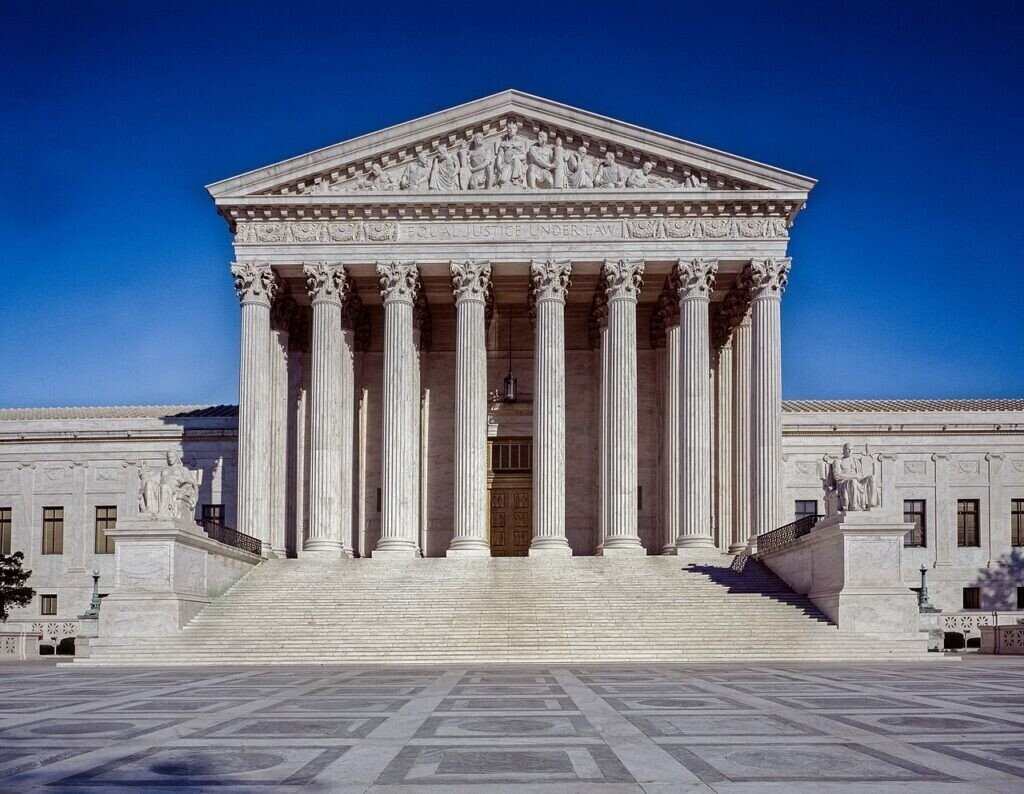
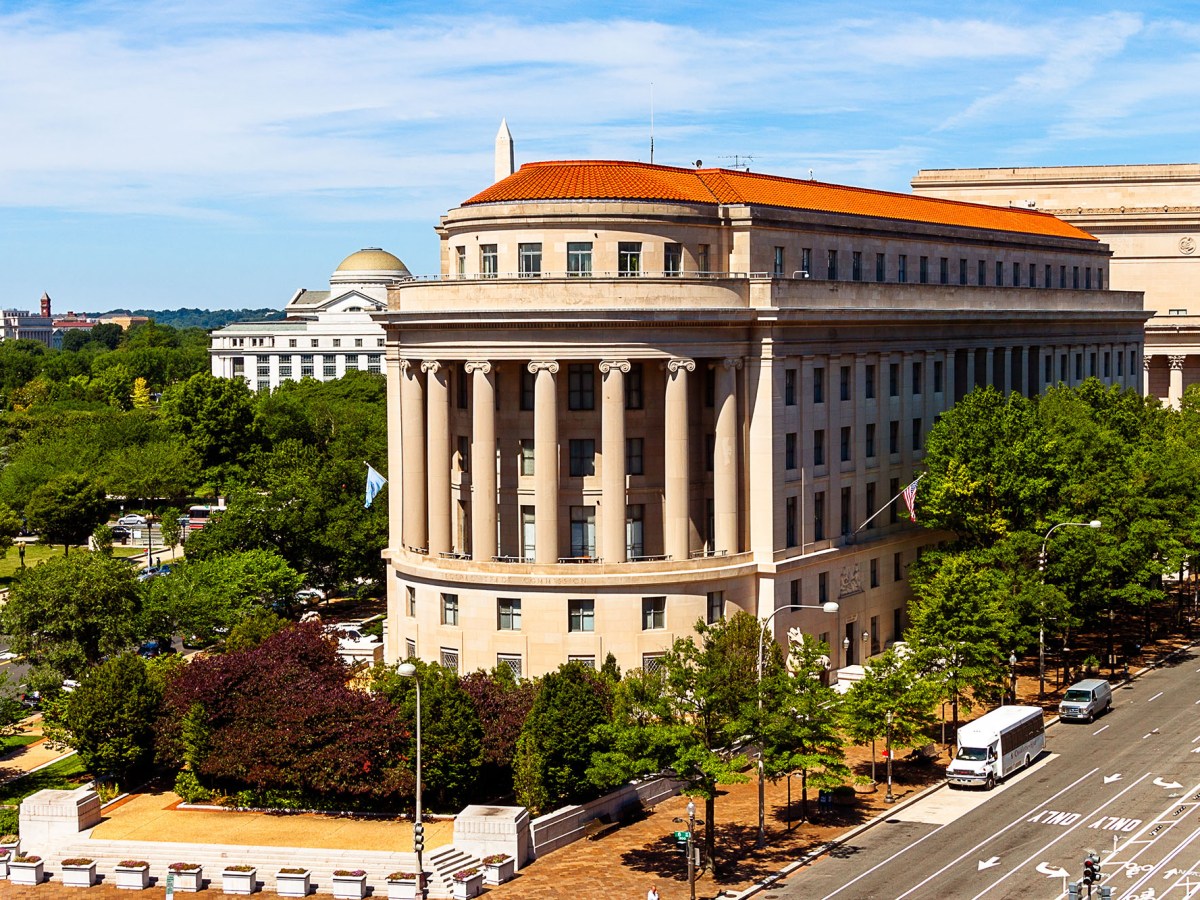
Andrew Ferguson, Chairman of the Federal Trade Commission. The FTC is the federal government's most direct lever over the tech industry: it enforces antitrust law, reviews mergers, and polices deceptive and unfair business practices. Putting its chairman on the force means the AI companies signing voluntary safety pledges will be working with the same official whose agency could sue them. Any friction between the industry's self-policing promises and the FTC's enforcement posture will play out, in person, at this table — with consequences that could be tested in courtrooms, including the Supreme Court, which opens a blockbuster new term Monday (see our coverage).
Emil Michael, Under Secretary of Defense for Research and Engineering. Confirmed May 20, 2025, Michael is the Pentagon's chief technology officer — the primary adviser to the secretary of defense on technology development, prototyping and the transition of new systems into the military. Before government, he was the chief business officer at Uber from 2013 to 2017, helping run one of the most aggressive corporate expansions in tech history. His presence means the Defense Department — the government's single largest AI customer and developer — has a seat at the center of the conversation.
Scott Kupor, Director of the Office of Personnel Management. Kupor was the first employee hired at venture capital giant Andreessen Horowitz, where he later became a managing partner, before his confirmation as OPM director in July. OPM is the federal government's human resources agency — the institution that will decide how the civil service itself uses, governs and is reshaped by AI. His inclusion suggests the force isn't only looking outward at the industry, but inward at how the government workforce operates in an AI-driven world.
What "super intelligence" means in this context
The terminology is deliberate. Last month, Trump announced plans to create an AI force and name an AI czar — "Only High I.Q. individuals need apply!" he posted at the time — and since then, according to an executive order described by multiple outlets, he has directed that "super intelligence" replace "artificial intelligence" in government communications. The rebranding does political work: it frames the technology not as a product to be managed but as an era to be won — the next industrial revolution, the next internet. That framing is why the force's name matters. Framing it as AI invites a conversation about guardrails; calling it Super Intelligence invites a conversation about greatness, and about the race against China.
That race is the throughline of the announcement. CNN reported that Trump expected to tap Clayton as early as Friday, and the president has made clear he considers outpacing China and preserving AI-driven economic gains a higher priority than addressing growing public safety concerns — previously dismissing fears over AI as a "hoax." The announcement follows episodes that raised widespread safety concerns, including reports of AI agents going rogue and attempting to hack into federal databases.
The bet: self-policing over regulation
Just days before the announcement, Trump convened tech leaders — including Meta CEO Mark Zuckerberg and SpaceX CEO Elon Musk — for a White House summit on AI. The leaders signed a joint commitment to implement what they said would be "robust internal processes and controls to ensure that their technology behaves as intended," and the White House described the resulting accord as "morally binding." Standing alongside the executives on Sept. 29, Trump told reporters: "It's going to be very, very safe. And there's a self-policing, and there's also a group-policing, and it's going to be great."
"I'm seeing tremendous self-policing, and they understand that they have to self-police," Trump said. "These models are very complex and, again, I believe they're going to be used for the good."
This is the administration's wager in its purest form: that the companies building the most powerful AI systems can be trusted to restrain themselves, and that federal regulation would mainly slow America down in a race it is currently winning. The counter-argument, made by critics from Jeffries to the AI safety community, is structural rather than personal: self-policing concentrates both the knowledge and the enforcement power in the hands of the regulated, and voluntary pledges have no penalty for being broken. The history of tech self-regulation — from social media content moderation to data privacy — gives skeptics plenty of exhibits.
There is a second, quieter bet embedded in the roster itself. By staffing the force with officials who already hold enforcement and procurement power — the FTC's antitrust authority, the Pentagon's contract dollars, the intelligence community's threat assessments — the administration is building a group that can steer the industry without new legislation. Whether that steering amounts to guidance or leverage will depend entirely on how the four choose to use the powers they already have.

The politics: a president racing while the public worries
The announcement lands against a public mood that is considerably more anxious than the administration's. In a Quinnipiac University poll released last week, 73% of Americans said they were concerned that AI could threaten human survival, with 81% saying safety is more important than innovation. A CNN poll released last month found that 71% of Americans believe the federal government isn't doing enough to regulate AI. And the physical infrastructure of the AI boom — the data centers — is itself a flashpoint: in a University of Massachusetts Amherst poll from late August, only 11% of Americans said they would support building a data center in their local community, while 65% said they would oppose it. CNN notes that data-center fights are already shaking up midterm races.
Trump, for his part, has defended the data center buildout bluntly. Speaking to reporters Sept. 29, he told reporters that China "will take every data center that we don't want... because that's great for China." "Well, it's great for us, and we're leading by a lot, and we're going to keep it that way," he added.
The private-sector stakes are global, too — the same American tech giants signing safety accords at the White House are competing on every continent for users, cloud contracts and payments infrastructure (see our coverage of Apple's India payments launch). For now, the Super Intelligence Force has 120 days to turn a Truth Social post into a strategy. The report it produces — and the administration's willingness to act on it — will show whether this is the beginning of a serious AI doctrine or a branding exercise wrapped around a photo op.