
LAS VEGAS
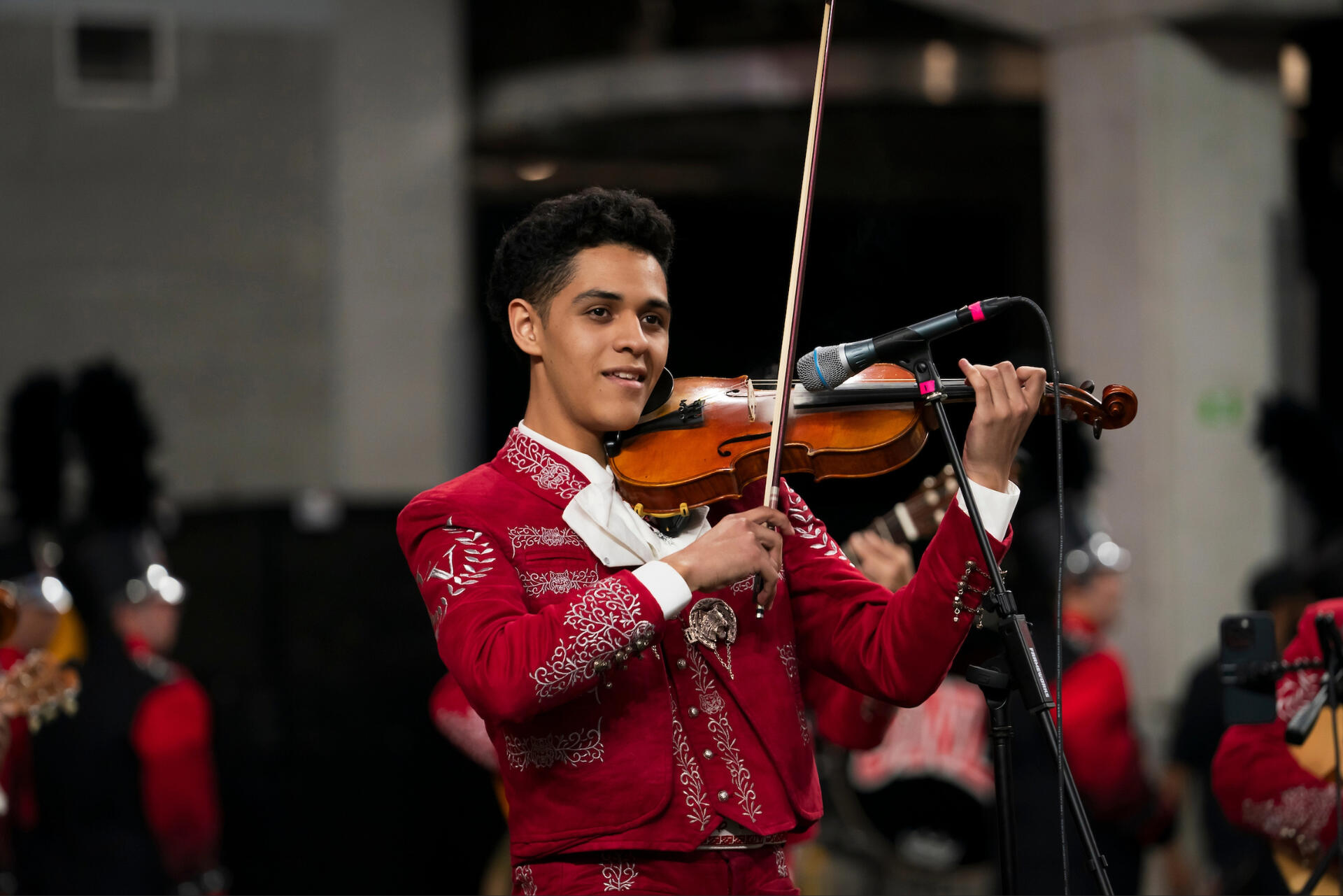
Photo: UNLV — mariachi performance at the University of Nevada, Las Vegas.
Mariachi is not background music in Las Vegas anymore. It is the main event — in school auditoriums, in theaters, and, increasingly, in the classrooms where the next generation of players is learning it. This fall, that reality has a new address: the University of Nevada, Las Vegas, where a new minor in mariachi is training students not just to perform the traditional Mexican style, but to teach it.
NPR reported on the program on Sunday, October 18, in a segment that put Las Vegas at the center of a national shift. Thousands of high school students who once might have joined band, orchestra or choir now take mariachi classes instead, NPR reported, with teachers forming and leading high school mariachi bands in border states like Texas and anywhere with large Latino populations. The music has become so popular, NPR said, that demand for teachers has outstripped the supply — and UNLV's minor was built to help close that gap.
“It's so busy in the world of mariachi right now, especially in Las Vegas,” Stephen Blanco, UNLV's director of mariachi, told NPR.
A minor built to produce teachers
This is not a performance trophy to hang next to a music degree. UNLV's own description of the Minor in Mariachi says it is designed to offer instruction in mariachi history, performance skills, arranging, and instructional methods — the teaching side is written into the degree itself. Students in the minor are expected to demonstrate mariachi arranging skills and appropriate instructional methods for a school classroom, perform at the level expected by the School of Music's Mariachi Area, identify prominent figures and works in mariachi history, and work well in different ensemble settings, according to UNLV's program page.
UNLV's News Center describes the minor as three components: core classes such as Fundamentals of Mariachi and Mariachi Songs and Styles; ensemble participation; and applied lessons in voice and the student's chosen instrument. “The new minor in mariachi education was created with music education majors in mind,” Blanco told UNLV. Blanco added, in the same UNLV account: “At this time, there are more teaching jobs than educators to teach them.” The Associated Press, in its own reporting on the program, put the curriculum at 22 credits and noted that students study more than 70 mariachi songs over a semester in one class, discussing their lyrics and style — repertoire they are expected to be ready to perform and to pass on.
Why Las Vegas, why now
The demand underneath the degree is easiest to see in the Clark County School District. The Associated Press reported that CCSD boasts one of the largest mariachi programs in the United States, with about 6,000 students taking part, and that the district program has grown significantly since its inception in 2002. In recent years, AP reported, it has become increasingly difficult to find enough mariachi teachers, according to Jeffrey Williams, the director of CCSD's Fine and Performing Arts Department. NPR heard the same pressure from Blanco, who pointed to Clark County public schools directly: “We have new programs opening every single year, and it is sometimes difficult to find teachers to fill gaps. And that's another reason why we started this.”
Las Vegas High School shows what one strong program looks like. Blanco founded the mariachi program there in 2018 with just 50 students, according to UNLV; today, more than 200 students are enrolled in mariachi at the school, and its top ensemble, Mariachi Joya, has received Certificates of Congressional Commendation, been recognized by the governor, and performed at the 2021 presidential inauguration. AP reported that about 350 students are in the Las Vegas High program overall, and that a first-place trophy from the 2026 Mariachi Extravaganza Las Vegas sits in front of Blanco's classroom. In a city where Latinos comprise more than a third of the population, AP noted, school mariachi is not a niche elective — it is one of the largest youth music pipelines in Southern Nevada.
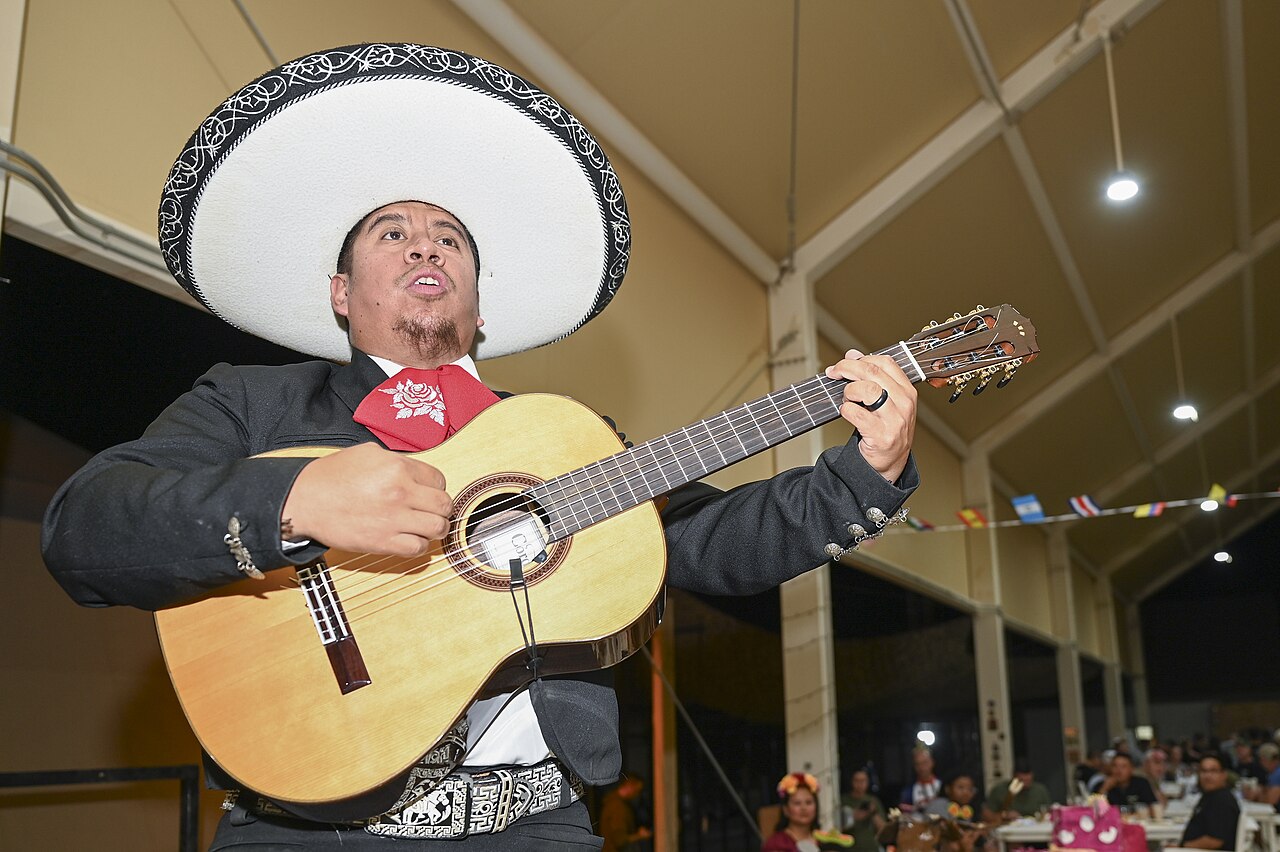
And the music does not stop at the school doors. “If you go out today, there's going to be mariachi somewhere on the Strip,” Blanco told AP. Blanco told NPR that some people might expect a mariachi band to stay in the background — matching outfits, guitars, violins and trumpets strolling the sidelines of a bigger celebration — but that in Las Vegas, mariachi is often the headline. Blanco told NPR: “A lot of the times it's, hey, there's an event happening tonight in a beautiful theater, and it's all about mariachi onstage, to be celebrated in that way.”

The first student through the door
Every new degree needs a first believer, and UNLV's mariachi minor has a fitting one. Violinist Axel Rodriguez Olivas started learning mariachi under Blanco a few years ago when he was still in high school, NPR reported. “Ever since then, I just loved it,” Rodriguez Olivas told NPR. “You know, I've loved playing every single second of it.” UNLV's News Center tells the fuller arc: the only musician in his family, he grew up listening to norteño music, signed up for a high school mariachi elective as a sophomore wanting the trumpet, and was placed in a violin class instead. “I originally didn't want the violin… But fate chose the violin for me and it's been fun,” he told UNLV. In four years he went from beginner to student director of Mariachi Joya.
The program's origin story runs through that high school ensemble. Blanco brought Rodriguez Olivas and other musicians from the Las Vegas high school group to a music convention in California, NPR reported, where the incoming director of UNLV's School of Music heard them play. As Blanco told NPR: “My high school group was performing, doing a great job. And this man walks up to me, and he says, you guys are from Las Vegas. I just took a job as the director of the School of Music at UNLV, and we need to make this happen at the university level.” When the mariachi program opened at UNLV, Rodriguez Olivas became the first student to declare the minor, NPR reported — and, per AP, the 20-year-old is now set to become the first student to graduate with it.
A bridge home
For Rodriguez Olivas, the minor is about more than a credential. He told NPR that mariachi serves as a bridge to his Mexican American family: “We actually find ourselves talking more about mariachi music than we ever have in the past, ever since, you know, I started learning the instruments and started practicing the music. It's connected my family and I'm sure other families as well.” He told AP much the same thing: “It connects me to my roots. My family is from Mexico, so you know it kind of brings that conversation with my parents, other family members and friends as well.”
Blanco's own path makes the same point from the teacher's side. Despite his Hispanic heritage, Blanco told NPR his interest in mariachi is relatively new — growing up in Detroit, he said, “It was sometimes present in my grandparents' living room on the radio. But other than that, it's not really prevalent there.” He went on to build one of the country's model school programs in Las Vegas, and now, through the university ensemble Mariachi Revolución and the minor he oversees, he is training the teachers those programs need. UNLV says graduates of the minor can pursue careers as K-12 music educators, community ensemble directors, or cultural arts advocates — and that by graduation, students will be trained in mariachi arranging and equipped with the instructional skills to lead school-based programs.

What it means for Southern Nevada schools
The practical stakes are straightforward. Every year, Clark County opens new mariachi programs, and every year, principals go looking for teachers who can actually lead one — someone who knows the repertoire, the instruments from violin and trumpet to guitarrón and vihuela, and how to teach all of it to a room full of teenagers. Until now, that supply mostly produced itself, one passionate high school director at a time. A university minor changes the math: it gives the pipeline an institution, a curriculum, and a credential.
UNLV is still a rarity in doing it. AP reported that Blanco's 22-credit curriculum joins only a few universities in Texas that offer such training, and UNLV describes its School of Music as one of the first in the nation to offer a robust slate of mariachi classes, starting in 2024. Rodriguez Olivas, for his part, told NPR he is open to leaving Nevada to teach but is leaning toward staying close to home to give back: “In a way, I'm not only doing this for myself but for future generations. So I'm kind of also trying to think about the future for other students, kind of pave that path for them so that they can do whatever they'd like with mariachi music.” He told UNLV the same thing in plainer terms: “I want to go back into the [school] district. I want to teach people the beautiful music of mariachi. I hope to pass on the tradition.”
That is the whole idea of the degree, stated by its first graduate-in-waiting: Las Vegas taught him the music, and Las Vegas gets the teacher back. For more Las Vegas coverage, see our look at this fall's new Las Vegas dining openings, and for the city's other big stages, our Golden Knights coverage from this week.