
WASHINGTON
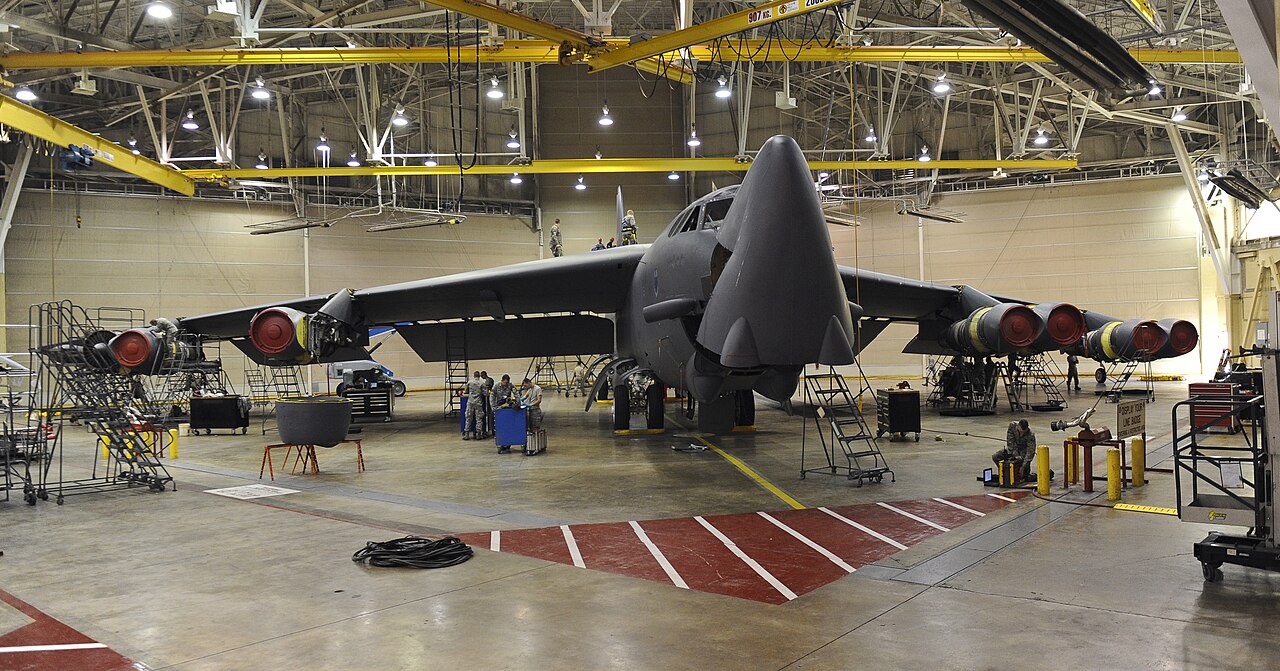
The bombers were meant to be seen. Three U.S. Air Force B-52H Stratofortresses lifted off from Barksdale Air Force Base in Louisiana on Wednesday, October 15, flew south into the Caribbean and spent roughly two hours tracing slow orbits in international airspace off the Venezuelan coast, near the Los Roques archipelago, according to Air Data News. Their transponders stayed on the whole way. Anyone with a flight-tracking app could watch them go.
Air Data News reported that the three aircraft operated under the call signs BUNNY01, BUNNY02 and BUNNY03 and remained visible on radar throughout the mission. Aerospace Global News, which also tracked the flight, described the bombers orbiting within the Venezuelan-controlled Maiquetía Flight Information Region near Los Roques — airspace administered by Caracas but, at the distance the bombers flew, still international. The same outlet reported that the B-52s were later confirmed to have been escorted by U.S. Marine Corps F-35B Lightning II fighters forward-deployed to Puerto Rico.
A demonstration with a name
The Air Force has since given the mission a formal label. According to Air & Space Forces Magazine, Air Forces Southern said the Stratofortresses flew into U.S. Southern Command's area of responsibility and linked up with F-35B fighters from Marine Fighter Attack Squadron 225, while tanker aircraft from MacDill Air Force Base in Florida provided refueling support. In captions released with official photographs, the 2nd Bomb Wing said such bomber attack demonstrations support the collective defense of the Western Hemisphere and signal U.S. commitment to the region's security. The magazine noted that the photos show the F-35s carrying AIM-9 Sidewinder missiles, while the bombers appeared to carry no weapons externally.
It was the second time in about a week that long-range American bombers had been sent to make a point off Venezuela. Aerospace Global News reported that a later B-1B Lancer mission followed the B-52 flight by less than ten days, with the B-1Bs ranging closer to the Venezuelan coastline than the Stratofortresses had. President Donald Trump publicly dismissed reports that the additional bomber flights were meant to ratchet up pressure on Caracas, calling them not accurate, while adding that his administration is, in his words, not happy with Venezuela for a lot of reasons.
The buildup behind the bombers
The bomber flights sit on top of a much larger military presence. Air Data News put the U.S. footprint in the Caribbean at around 10,000 troops, with assets including F-35 fighters and MQ-9 Reaper drones based in Puerto Rico; recent imagery, the outlet reported, has shown MQ-9s armed with Hellfire missiles. Air & Space Forces Magazine reported that the Marine Corps F-35s have been based in Puerto Rico since September. Air Data News also noted the presence of U.S. special operations forces in the region, the deployment of the special operations ship MV Ocean Trader, and Army helicopters observed near Trinidad and Tobago.
Layered onto the deployment is a lethal campaign at sea. According to Air & Space Forces Magazine, the United States has carried out a series of acknowledged airstrikes since September 2 against boats the Trump administration says were smuggling drugs in international waters. Air Data News put the count at six strikes as of October 16, and both outlets reported that U.S. officials say at least 27 people have been killed. A sixth strike on October 16 was the first in which there were survivors, an incident first reported by Reuters, according to Air & Space Forces Magazine. Trump said on October 15 that the administration was now looking at operations on land as well, arguing that the sea routes were under control.
Pressure on Maduro, questions at home
The explicit target of the pressure is Venezuelan President Nicolás Maduro. Both Air Data News and Air & Space Forces Magazine reported that Maduro has been charged in the United States in connection with an alleged conspiracy to smuggle cocaine and weapons into the country, that the White House regards him as an illegitimate leader who should step down, and that the administration is offering $50 million for information leading to his arrest. Trump has also confirmed, on the record, that the CIA is conducting covert operations inside Venezuela and that actions on Venezuelan territory are under consideration.
Not everyone in Washington is persuaded. Air Data News reported that legal experts and some U.S. lawmakers have questioned the legality of striking suspected trafficking boats in international waters, raising concerns about international law and the rules of engagement, and Air & Space Forces Magazine noted that the administration has yet to publicly provide proof that the boats it destroyed were carrying drugs. There is also a leadership change coming at the top of the command running the region: Air Data News reported that the imminent retirement of Admiral Alvin Holsey, the chief of U.S. Southern Command, has been announced by the Secretary of Defense, setting up a transition while the operations continue.
For now, the signal from Wednesday's flight is the one the Air Force appears to have intended. A bomber that first flew in the 1950s, escorted by the newest fighters in the Marine Corps inventory, spent two hours flying in plain sight off Venezuela's coast — close enough to be watched from Caracas, far enough to stay in international airspace, and conspicuous enough that the whole world could follow along on a phone screen. More of the day's world coverage is in our report on Istanbul's record floods, and the full morning file is on the Previously news hub.