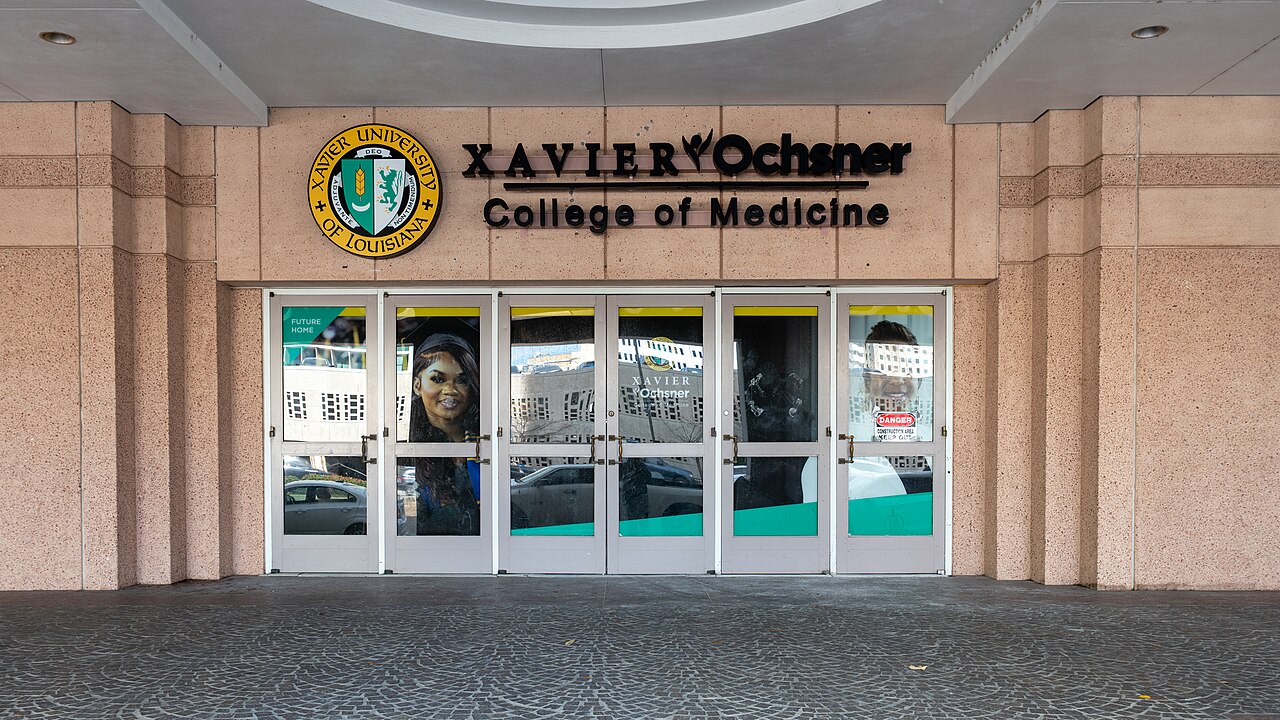

Xavier University of Louisiana has spent a century sending its graduates out into medicine. Now it will train doctors of its own. The Xavier Ochsner College of Medicine has received preliminary accreditation from the Liaison Committee on Medical Education, the body that accredits programs granting medical degrees in the United States, clearing the New Orleans school to begin recruiting the first class in its history.
The decision, announced on October 14, puts the college on track to become the nation's fifth historically Black medical school. It will join Howard University College of Medicine, the Morehouse School of Medicine, Meharry Medical College and Charles R. Drew University of Medicine and Science. It will also stand alone in its region: no other HBCU college of medicine operates in the Gulf South.
Applications are set to open through the American Medical College Application Service in the coming weeks, and the inaugural class is expected to start in the summer of 2027. Students will spend their first two years at Benson Tower in the New Orleans BioDistrict, then move into clinical clerkships at Ochsner facilities for their third and fourth years.
The milestone did not arrive quickly. Xavier and Ochsner Health formed the college in 2024, building on years of working together through efforts such as the Ochsner-Xavier Institute for Health Equity and Research, Xavier's physician assistant program and its genetic counseling program. The college earned candidate status in October 2025 and hosted an accreditation survey visit in June 2026 before the committee concluded it had met the requirements for preliminary accreditation.
For Xavier, the new school is a natural extension of a record that long predates it. The university, founded under the vision of St. Katharine Drexel and known as the nation's only historically Black Catholic university, has built a reputation as one of the leading institutions in the country for sending African American students on to medical school. Generations of Xavier graduates have gone elsewhere to earn their medical degrees. The next generation will be able to earn one without leaving New Orleans.
University president Reynold Verret framed the moment as an opening of doors, saying the school is expanding who will have the opportunity to become a physician. Leonardo Seoane, the college's president and founding dean, has described its mission as preparing future physicians to pursue excellence with purpose, with training rooted in the communities those physicians will serve.
The need is not abstract, and Louisiana feels it as sharply as almost any state in the country. Sixty of the state's 64 parishes are federally designated Health Professional Shortage Areas. Nationally, the Health Resources and Services Administration projects the United States could face a shortage of more than 141,000 physicians by 2038. HBCU medical schools carry an outsized share of the answer: they train nearly 70 percent of the nation's Black physicians, and their graduates are more likely to practice in the communities with the greatest need.
That is the bet behind this school. A medical college planted in New Orleans, run by a university with a century of experience preparing Black students for careers in science and health, paired with the region's largest academic health system, is designed to produce doctors who stay close to the places that need them most. The shortage numbers describe a national problem, but they are lived parish by parish, clinic by clinic, and family by family.
The projected footprint goes beyond the classroom. By 2040, the college is expected to generate $152.5 million in economic impact across Louisiana, including $122 million in New Orleans, and to support more than 1,185 jobs statewide. Physicians trained at the school are projected to contribute an additional $2.9 billion to the national economy by that year.
There is also a longer history sitting underneath the announcement. For decades, the list of historically Black medical schools in America stayed at four, even as the country's population grew and its physician workforce fell further behind demand. Xavier's college breaks that standstill. It is the first new entry in that group in years, and it arrives in a region that had never had one at all.
Plenty of work remains. Preliminary accreditation is a beginning, not a finish line: the college must recruit its first students, teach its first classes and move through the remaining stages of accreditation as that first class advances. The students who arrive in the summer of 2027 will be pioneers in the plainest sense, the first to test everything the school has promised.
The verdict is simple. This is what making history actually looks like — not a slogan, but a door that was closed for a very long time finally opening. Xavier spent a hundred years proving its students could become doctors anywhere. Starting in 2027, they can become doctors at Xavier, in New Orleans, at the only HBCU medical school in the Gulf South — and the communities waiting on those physicians cannot get them soon enough.