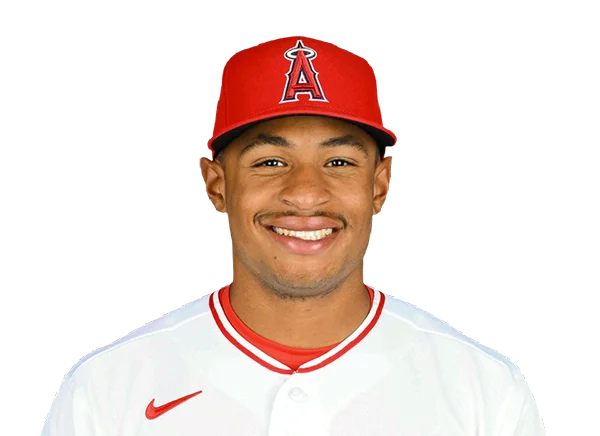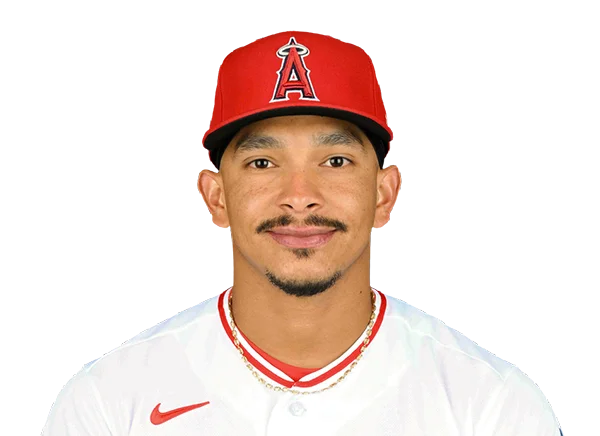
The Los Angeles Angels have had four names and one constant: they've always been the other team in Southern California. Founded in 1961 by singing cowboy Gene Autry — whose number 26 is retired — the franchise has been the California Angels, the Anaheim Angels, the Los Angeles Angels of Anaheim, and back to the Los Angeles Angels. Through every rebrand, Angel Stadium in Anaheim, opened in 1966, has been home.
The early decades had their icons: Nolan Ryan threw four of his record seven no-hitters in an Angels uniform, and the late-'70s and early-'80s clubs with Ryan, Rod Carew and Reggie Jackson kept knocking on October's door without breaking through — the 1986 ALCS collapse against Boston, one strike away from the pennant, remains the franchise's original heartbreak. Then came 2002, and everything changed: the Rally Monkey, the never-say-die comebacks, Troy Glaus's MVP performance, and a seven-game World Series triumph over the Giants — still the only championship in franchise history, won by a team that refused to lose.
The modern Angels are defined by the two greatest talents of their generation wearing the halo at once — and by the October baseball that never came with them. Mike Trout, the three-time MVP and the best player of the 2010s, has spent his entire career in Anaheim. Shohei Ohtani won MVPs in 2021 and 2023 doing things no player had ever done — elite pitching and elite hitting, simultaneously — before departing after 2023. Two generational superstars, zero playoff wins together: the cruelest math in baseball.
What defines the Angels is the gap between the talent and the trophy case — one ring, from 2002, in over six decades. The halo still shines over the Big A. The question that has haunted this franchise since Gene Autry's day remains: when does the other team in town finally get its second parade?
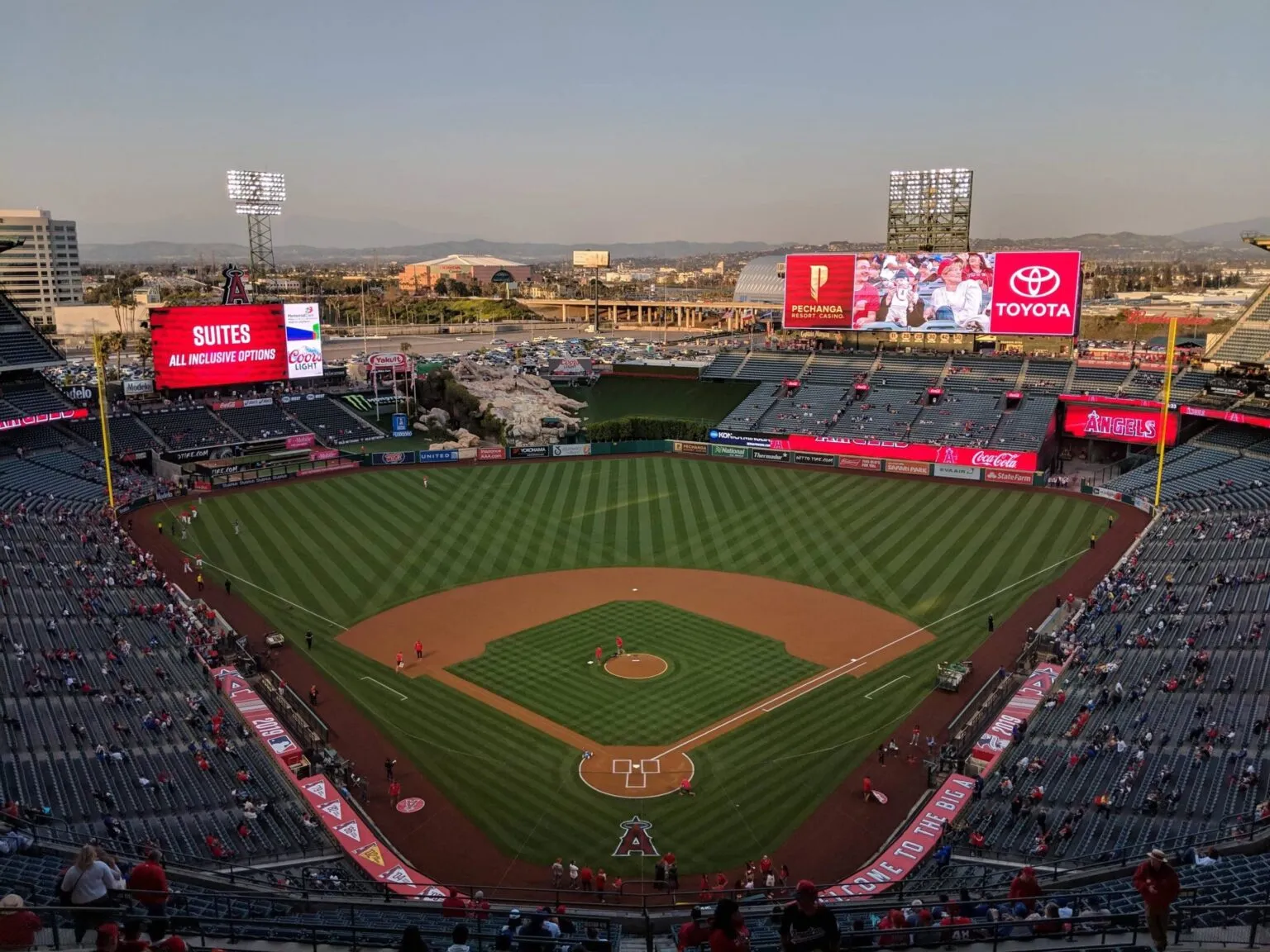
The 2026 season: rock bottom, officially. The Angels finally did the one thing no Angels team had ever done: lose 100 games. A 7-3 season-ending loss to Seattle on the final Sunday sealed a 62-100 record — the worst season in the franchise's 65-year history, and the end of a lonely distinction. The Angels had been the only team in Major League Baseball to never endure a 100-loss campaign. Now every club has. They finished last in the AL West for the third straight year with the league's worst record — only the Rockies were worse in all of baseball — closed the year on a ten-game losing streak, and extended two miserable streaks: twelve consecutive seasons without a playoff appearance, eleven straight losing seasons.
And yet the story of the season, strangely, was hope wearing a halo. Mike Trout — the three-time MVP, the best player of the 2010s, the man whose $426.5 million contract runs through 2030 — played 142 games, his most since 2016, made the All-Star team, and hit .242/.382/.421 with 22 home runs and 54 RBIs. The MVP-level destroyer of old is gone, but a healthy, productive Trout changes everything about this franchise's math. "When I'm right at the plate, I feel like I can still be the MVP like I used to be," Trout said in September. Then he dropped a stunner: Trout personally approached interim GM John Mozeliak and asked to move out of center field — to left field and more designated-hitter at-bats starting in 2027 — a self-aware, team-first concession to his 35-year-old body that no one saw coming.
Around him, a young core is finally taking shape. Shortstop Zach Neto hit .239/.330/.436 with 27 home runs and 77 RBIs — essentially the team's co-MVP — and at 25 he is either the cornerstone of the rebuild or the club's best trade chip this winter. Outfielder Wade Meckler hit .300. Nolan Schanuel, Christian Moore and Kyren Paris represent the next wave of bats, while Vaughn Grissom settled in at first. The deadline brought the white flag on the present: Jo Adell was dealt to Cleveland and pitcher José Soriano — 9-6 with a 3.29 ERA at the time — went to Toronto on August 3.
The most exciting development of all took the mound. Walbert Ureña, all of 22 years old, emerged as a legitimate ace: a 2.97 ERA over 148 innings with 142 strikeouts, fronting a rotation that also features veteran Yusei Kikuchi, Reid Detmers and young arms like Caden Dana, George Klassen and Sam Aldegheri. For a franchise that has never developed enough pitching, Ureña looks like the real thing — the kind of homegrown frontline starter the Angels have chased for a decade.
Manager Kurt Suzuki, the former catcher, preached learning over lamenting as the losses mounted: "We're trying to get better every single day. They're going to learn from this." The winter ahead is enormous — a permanent GM, the Trout position change, decisions on Neto, and the eternal question of how to build a winner around a generational player before time runs out. Twelve years without October baseball is an organizational failure no single season can explain. But 2026, for all its historic misery, at least offered something the last few years haven't: a healthy Trout, a real ace, and a direction. The halo still shines over the Big A. The second parade remains the goal — and for the first time in a while, there is a path you can actually see.
Related on Previously: MLB Rewind · Los Angeles Dodgers · Texas Rangers · Houston Astros · Seattle Mariners · San Francisco Giants