Three days in March changed everything for Kennesaw State. As the No. 6 seed in the 2026 Conference USA tournament, the Owls ripped off three straight wins — 79-73 over Sam Houston, 96-87 over Western Kentucky, and a 71-60 strangling of Louisiana Tech in the title game — to punch the program’s second-ever ticket to the NCAA tournament. They did it the hard way and the fun way: freshman Trey Simpson dropping 26 on WKU, Frankquon Sherman bullying his way to 19 points and 10 boards, Jaden Harris burying four threes in the final, and a defense that held Louisiana Tech to 26.3 percent shooting and a ghastly 2-of-28 from deep. For a program that only joined Division I in 2005, it was the validation of the Antoine Pettway project — and a warning to the rest of C-USA that the Owls aren’t going anywhere.
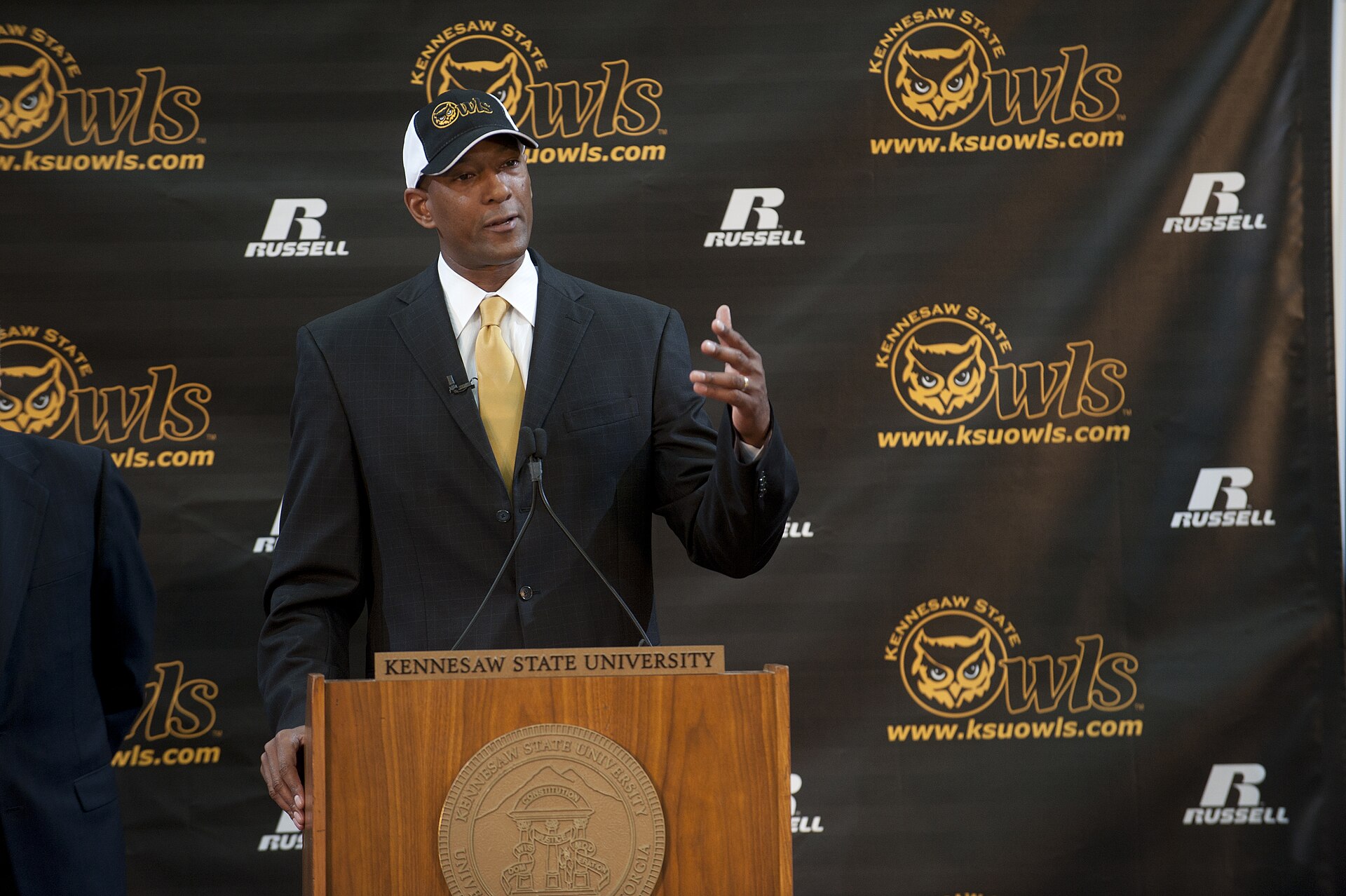
The Pettway story is one of the best coaching arcs in the mid-major ranks. Hired on April 7, 2023, after Amir Abdur-Rahim left for South Florida, Pettway arrived with a résumé built over 15 years as an Alabama assistant — working under Anthony Grant, Avery Johnson, and Nate Oats, serving as offensive coordinator for a Crimson Tide team that averaged 81.8 points a game, seventh nationally. He was known as an elite recruiter and an offensive mind. What he’s become at Kennesaw State is a program-builder: he now holds the best winning percentage of the program’s Division I era at 53.1 percent, and he’s been a finalist for the Ben Jobe Award, given to the top Black coach in college basketball. Year one was a reset (15-16). Year two was a leap (19-14, a tie for fourth in the Owls’ debut C-USA season). Year three was a championship and a dance. That’s a trajectory.
The 2023 run remains the program’s founding myth. Abdur-Rahim’s Owls went 26-9, won the ASUN tournament, and drew 14-seed duty against 3-seed Xavier — then damn near pulled the upset, falling 72-67 in a game KSU led late. It announced Kennesaw State as a real Division I program, not a transitional curiosity. Pettway’s achievement is arguably harder: he rebuilt on the fly after Abdur-Rahim’s departure, navigated the move from the ASUN to the deeper waters of Conference USA, and still got the Owls back to March within three years. The 2026 team didn’t sneak in — it won three games in three days, the last two against higher seeds, with defense and toughness.
The roster Pettway has assembled for 2026-27 blends the championship core with the next wave. Jaden Harris, the senior guard from Atlanta, was the title game’s sharpshooter — 18 points on 4-of-6 from three against Louisiana Tech — and his steady hand sets the tone. Braedan Lue, the 6-foot-9 sophomore forward from Douglasville, Georgia, gives the Owls a double-figure scorer with size and skill. Amir Taylor, the 6-foot-9 freshman from Pittsburgh, announced himself in March with 23 against Sam Houston and 17 in the final, living at the free-throw line (9-of-11) when the game slowed down. R.J. Johnson, the redshirt sophomore from Huntsville, Alabama, is the engine — 20 points and 6 assists against Sam Houston, a guard who defends and creates. Frankquon Sherman’s 6-foot-7, 220-pound frame gives KSU its enforcer. Add Davin Cosby Jr., Chase Clemmons, Ramone Seals, Perry Smith Jr., and a freshman class headlined by Trey Simpson and Darius Washington III, and the Owls have the kind of depth that wins in March.
The system is pure Pettway: up-tempo offense, spacing, perimeter shooting, and a willingness to play through adversity. That last part mattered in 2025-26 — the Owls went 7-2 down the stretch without leading scorer Simeon Cottle, the senior guard whose absence could have sunk the season. Instead, the supporting cast grew up in real time, and by March, Kennesaw State was playing its best basketball. That’s coaching. That’s culture.
The building is the KSU Convocation Center — 4,600 seats in the Atlanta suburbs, intimate and loud when the students show up. Kennesaw State will never out-glamour Georgia or Georgia Tech in its own metro, but the Owls have something neither of those programs can claim right now: a recent conference championship, an NCAA tournament appearance, and a coach on the rise. In the crowded Atlanta sports landscape, winning is the only marketing that matters, and the Owls are winning.
Conference USA is the right-sized stage. This is a league where programs can build real momentum — Liberty, Louisiana Tech, Western Kentucky, and Middle Tennessee all take basketball seriously, and the league tournament is annually one of the best weeks in the mid-major calendar. The Owls’ 2024-25 debut (19-14, 10-8, fourth place, a quarterfinal win over New Mexico State before falling to Liberty in the semis) proved they belonged. The 2025-26 title proved they could rule it. The 2026-27 question is whether they can sustain it — turn one championship into an era.
The program’s history is still being written, which is what makes it fun. Before 2023, Kennesaw State’s Division I existence was mostly quiet: a few decent ASUN seasons, nothing that moved the needle nationally. Now the Owls have two NCAA appearances in four years, a conference title in a new league, and a coach with a top-25 job trajectory if he keeps winning. Recruits notice. The portal notices. Atlanta’s deep talent pool is right there.
What defines Kennesaw State right now is momentum with substance. The 2026 C-USA tournament run wasn’t a fluke — it was a veteran, well-coached team peaking at the perfect moment, winning with defense in the final after winning with offense in the semis. Pettway’s Owls play hard, play fast, and play for each other. The rest of Conference USA spent the offseason game-planning for them. For a program that didn’t exist in Division I twenty years ago, that’s the whole story: the Owls have arrived, and they’re just getting started.