The La Salle Explorers won a national championship — in 1954, Tom Gola's team cut down the nets and put a small Philadelphia school on top of the entire sport. In a city that treats college basketball as a birthright, the '54 banner is immortal: the Explorers' place among the Big 5's proudest, and a reminder that this program once stood above everyone.
The Gola era was the golden age, and Gola is the program's everything: the Hall of Fame player who led La Salle to the 1954 title and back to the championship game in 1955, the coach who later returned to lead his alma mater, and the namesake of the Explorers' home arena. Under Ken Loeffler, Gola's teams didn't just win — they made La Salle a national power in the sport's formative years, and the program's place in college basketball's early history is foundational.
The decades that followed had their own flashes. Paul Westhead — before he reinvented basketball at Loyola Marymount — coached in North Philadelphia. Speedy Morris brought the program into the modern era. And the 1990 team, built around Lionel Simmons and his "L-Train" brilliance, was the modern peak: Simmons' scoring exploits made the Explorers must-see television and carried La Salle back to the national stage.
The 2013 Sweet 16 run was the program's modern March magic. A 13 seed that nobody invited to the party, La Salle rode Tyrone Garland's "Southwest Philly Floater" — the running one-hander that beat Ole Miss at the buzzer and became a city-wide catchphrase — into the second weekend. It was Cinderella in a Big 5 uniform, and it announced the Explorers to a new generation.
Then came the changing of the guard. Fran Dunphy, the Philadelphia institution who steadied the program for three seasons, retired after the 2024-25 campaign. In March 2025, La Salle hired Darris Nichols — the rising coach from Radford, and, fittingly, the younger brother of associate head coach Shane Nichols — to write the next chapter. Nichols arrived with a reputation as a program-builder, and he walked into a job that needed building.
Year one was the teardown: a 9-23 record, 5-13 in the Atlantic 10, and a roster turned almost entirely over. The portal giveth and the portal taketh away, and last season it mostly took — leading scorer Jaeden Marshall graduated, and a wave of transfers departed for Monmouth, Northern Kentucky, Stephen F. Austin and Quinnipiac. What remained was the hardest part of a rebuild: a young core, a new system, and a fanbase that knows exactly what winning looks like because it has seen it.
Year two is the test. Nichols' 2026-27 roster is being assembled the modern way — through the portal and the high school ranks at once — and the non-conference schedule he announced is exactly what a rebuilding program needs: competitive, tough, and rooted in the region. It opens with an exhibition against Neumann on October 27, then goes straight into the deep end: at Houston on November 2, against a Cougars program that has reached six straight Sweet 16s and played for the 2025 national title.
From there, it's a Philadelphia basketball lover's dream. The Explorers will barely leave the city for a month — homecoming against LIU on November 7 at John E. Glaser Arena, a road battle at Villanova on November 10 and a home date with Temple on November 15 in Big 5 pod play, three straight home games against Coppin State, Penn and Penn State Brandywine, then the Cathedral Classic at the Palestra against Bucknell on November 27. December brings a first-ever meeting with Wofford — the alma mater of associate head coach Shane Nichols — on December 1, the Big 5 Classic at Xfinity Mobile Arena on December 5, and road trips to Monmouth and Stony Brook.
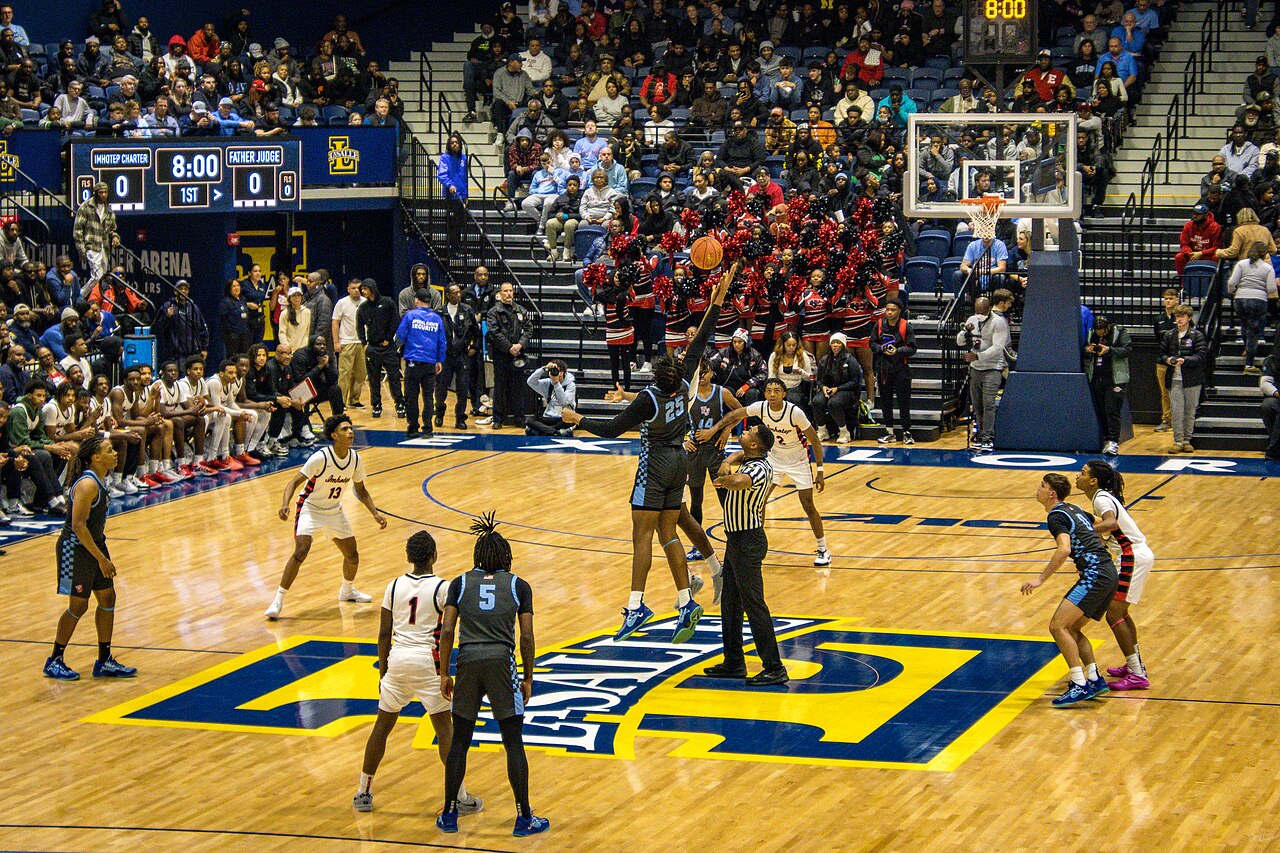
The home is part of the identity. John E. Glaser Arena — the building generations knew as Tom Gola Arena — seats 3,400 and packs the Explorer faithful into one of the most intimate gyms in Division I. It is Big 5 basketball at its purest: close, loud, and proud, the kind of place where a rebuilding team can steal a game it has no business winning.
That Big 5 identity is the program's lifeblood. La Salle doesn't just play in Philadelphia — it belongs to Philadelphia's basketball soul, the smallest of the city's powers and, on the right night, the scrappiest. The Villanova and Temple games aren't just schedule filler; they are the season's emotional center, the nights the tiny gym shakes.
The Atlantic 10 is unforgiving, and nobody is pretending the climb is short. But the formula is the historic one: defend the little gym, win the city games, and let the portal do the rest. Darris Nichols' second season isn't about the record as much as it is about the direction — whether the Explorers are building toward something, or just treading water in a league that punishes standing still. The 1954 banner hangs as both inspiration and expectation: this program has been to the very top, and it intends to go back.