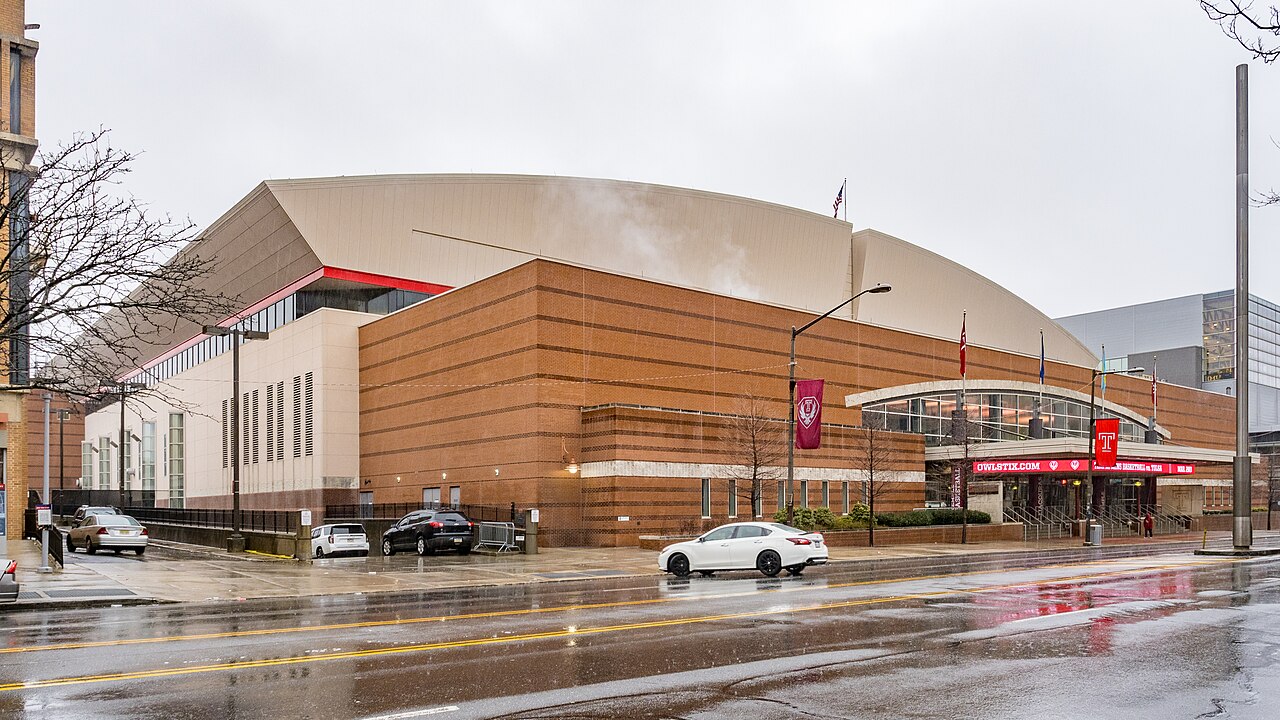
Temple basketball is stuck in the most uncomfortable place in sports: not bad enough to blow up, not good enough to matter. The 2025-26 season was the latest exhibit — a 16-16 finish, 8-10 in the American Conference, a first-round conference tournament exit — and the third straight .500-ish campaign of the Adam Fisher era. The Owls started 11-5 and 3-0 in league play, then lost eight of their last ten, finished 2-8 in February and March, and limped into the conference tournament as the 10 seed. The fan base is restless. The "fire Adam Fisher" tweets are a genre now. And yet the administration just extended him through 2030. Somebody in North Philadelphia believes. The question hanging over the Liacouras Center is whether that belief is vision or inertia.
To be fair to Fisher, the extension — reported by ESPN in November 2025, adding two years to the five-year deal he signed in 2023 — was earned on a longer view. His first season produced the most improbable run of the AAC tournament era: a 16-20 Temple team that caught fire in March and reached the conference championship game before falling to UAB. Year two brought real progress, 17-15 with a 9-9 league mark and a January upset of regular-season champion Memphis. Fisher, the former Penn State associate head coach under Micah Shrewsberry and Miami assistant under Jim Larrañaga, was a respected young hire — a TopConnect rising-star selection, a Villanova graduate-manager under Jay Wright during the 2009 Final Four run. He inherited a program that Aaron McKie's four seasons had left drifting, and his first three years (49-51 overall, 22-32 in conference) at least pointed in a direction.
But direction isn't destination, and Temple fans measure their program against a different standard. This is the school of John Chaney — 516 wins, 17 NCAA tournaments, the matchup zone, the 1988 Elite Eight team that spent six weeks at No. 1. The school of Fran Dunphy's 270 wins and six straight 20-win seasons. The Owls have won 2,026 games all-time, one of the great totals in college basketball history. And they haven't won an NCAA tournament game since 2013, haven't reached the tournament at all since Dunphy's final team lost in the 2019 First Four, and have won 20 games exactly once in the last decade. Seven full seasons without March. For a program that used to own March in Philadelphia, that's not a slump — it's an identity crisis.
The 2025-26 collapse had a particular cruelty to it. This was supposed to be the breakthrough year — the roster had talent, the non-conference start was promising, and close losses to St. Joe's and Memphis suggested a team learning how to win. Then February arrived and the Owls forgot. They went 1-4 against fellow Owl teams (three losses to Florida Atlantic — on the road, at home, and on a neutral floor), split with Rice, and watched the season dissolve into the same late-winter fog that has swallowed recent Temple teams. When your season ends with your own fans debating whether the coach should survive a contract extension, the problem isn't one bad month. It's that the bad months keep coming.
The portal took its toll, too. Aiden Tobiason — the wing who broke out as a sophomore at 15.3 points per game, declared for the 2026 NBA Draft, tested at the G League Elite Combine, and withdrew — didn't come back to North Broad. He transferred to Syracuse, where he'll play for Gerry McNamara with 2027 draft buzz. Losing your best young player to a conference rival's rebuild stings in a way that goes beyond one roster spot; it's a referendum on where the program stands. Fisher's fourth year will be defined by who he brings in to replace that production and whether he can build a team that doesn't fade when the calendar turns.
And yet — the case for patience isn't nothing. The American Conference is winnable; Memphis left for the new-look landscape, and the league's hierarchy is fluid. The Liacouras Center, when it's full and loud, remains one of the great atmospheres in the sport — 10,000 seats in the heart of North Philadelphia, a building that has hosted Big 5 wars for decades. Temple's brand still means something to recruits in the Northeast corridor. Fisher is 49-51, but he's also the coach who took a 16-20 team to a conference final, who beat Memphis, who got the extension because the people who watch practice every day see something the record doesn't show yet.
The 2026-27 season is the prove-it year, and everyone knows it. Year four is when a coach's program is supposed to look like his program — his players, his system, his culture, no more inherited excuses. Temple doesn't need to win the league to change the conversation; it needs to win 20 games, finish in the top four, and play meaningful basketball in March — the exact things John Wildhack demanded across town at Syracuse before making his change. The Owls have the history, the building, the city, and a coach with a contract through 2030. What they don't have is time. In North Philadelphia, patience is a virtue the fan base ran out of a while ago. This season, Adam Fisher has to give them a reason to find it again.