
NC State basketball is one of the great legacy programs in the sport — two national championships, the 1974 team that ended UCLA's dynasty with David Thompson soaring above everyone, and the 1983 Cardiac Pack, Jim Valvano's miracle run through the ACC and NCAA tournaments that ended with Lorenzo Charles' dunk against Houston and Valvano sprinting across the court looking for somebody to hug. The Wolfpack's history is the history of March itself. Which is exactly why the last two years in Raleigh have felt like whiplash.
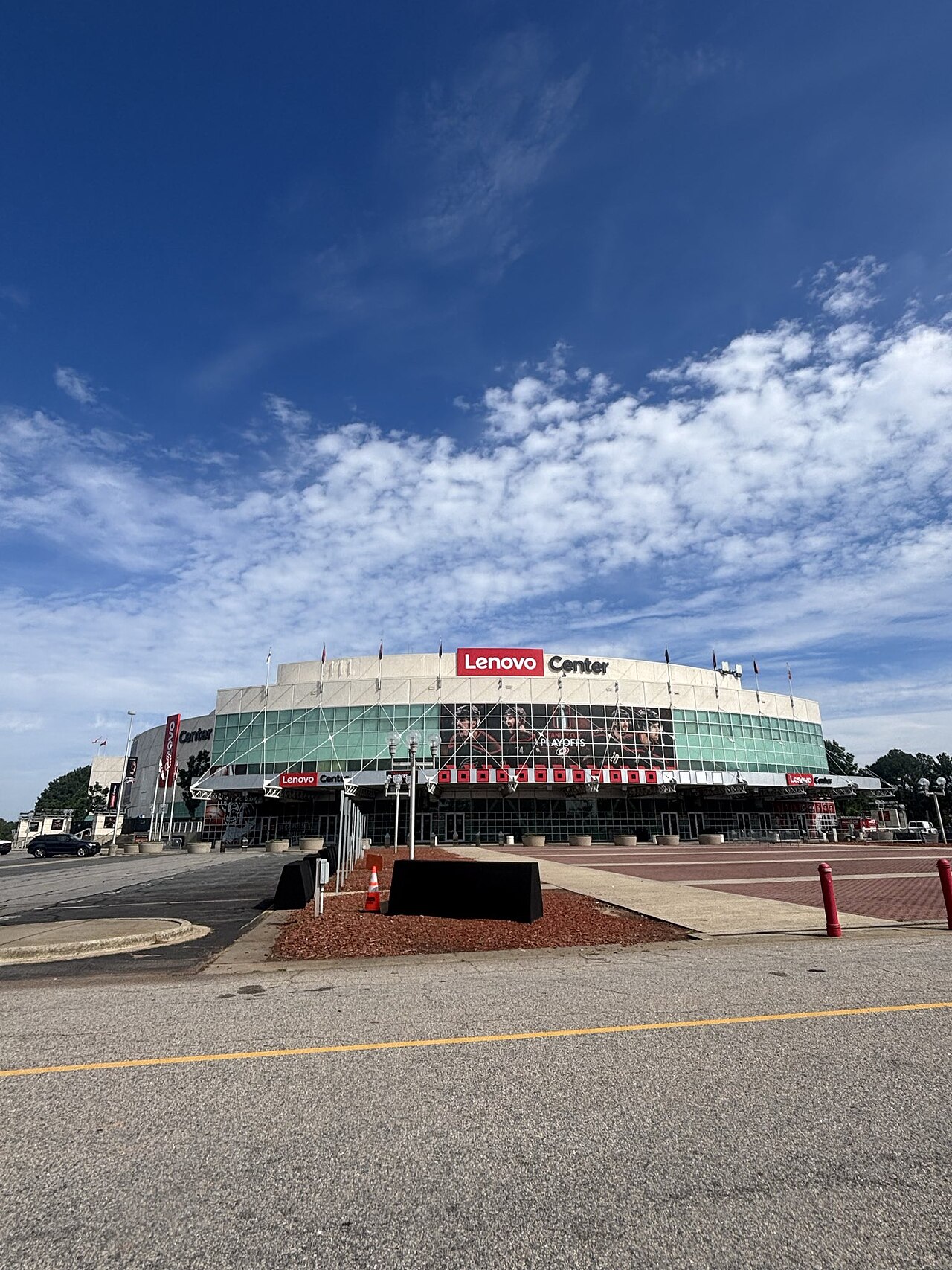
The 2025-26 season was Year One of the Will Wade experiment — and then, just like that, it was the only year of it. Hired in March 2025 after Kevin Keatts was let go following a season that missed the ACC Tournament entirely, Wade rebuilt the roster through the portal and had the Wolfpack roaring by midseason: 18-6 overall, 9-2 in the ACC, the program's best conference start in 20 years. The Lenovo Center was packed — 15,724 a night, third in the ACC — and for two months NC State looked like the league's story.
Then the floor fell out. The Pack lost eight of their final ten games, including three blowout losses to the league's elite — a 41-point demolition at Louisville, two maulings by Virginia, a 29-point loss to Duke — and a trio of gut-punch close losses that flipped a promising season into a disappointment. They stumbled into the NCAA Tournament as a First Four team and lost 68-66 to Texas in Dayton on a Tramon Marks game-winner. Twenty wins and a tournament berth is a turnaround on paper; in Raleigh it felt like a season that got away.
Wade's postgame assessment in Dayton was brutal and revealing. "This will be the worst team we have at NC State," he said, questioning the roster's mentality and fit: "We had a lot of guys here that were pretty comfortable, lived a good life being here. That's just not how I am." He promised a portal overhaul built on "an insatiable will to win" — and then, weeks later, he was gone, returning to LSU after one season. The Wolfpack had hired a proven winner, watched him win 20 games, and still ended up back at square one.
The answer was a homecoming. Justin Gainey — a former NC State point guard, one of the most respected assistants in the country, and the longtime right hand of Tennessee's Rick Barnes — was hired to stabilize the program. It's a bet on culture over chaos: Gainey knows what the Wolfpack standard is supposed to feel like because he played in it, and his task for 2026-27 is the same one Wade named in Dayton — find players who fit, who defend, who treat winning like oxygen. The portal class he assembles will define the season before a ball is tipped.
The pieces to build around exist. Senior guard Quadir Copeland was the team's heartbeat in the First Four loss to Texas (16 points, 8 rebounds, 3 assists), and sophomore guard Paul McNeil Jr. — who called the late-season collapse "the most difficult thing you can go through, not getting over the hump" — has the talent to be a centerpiece if the fit around him improves. But Gainey's first roster will be judged the way all NC State rosters are judged: not by the record in November, but by whether this team is still playing its best basketball in March.
The deeper context is the ACC itself, which has rarely been more top-heavy. Duke and Virginia operated on a different level than the Pack last season — the blowouts proved it — and closing that gap is a multi-year project, not a one-portal-class fix. What NC State can control is the building: the Lenovo Center crowds were elite even in a disappointing year, the fan base is starving for a team that matches its energy, and the program's history proves Raleigh is a place where special seasons happen. Valvano's ghost still walks those halls; the 1983 standard — heart, belief, and a team that refuses to die — is the bar every Wolfpack team is measured against.
For 2026-27, the story is simple and high-stakes: a beloved former player takes over a proud program at a crossroads, with a fan base that has seen the ceiling (1974, 1983, and the 2024 Final Four run under Keatts that feels like a lifetime ago) and the floor (missing the ACC Tournament). Gainey's mandate is to make the Wolfpack tough again — to build the kind of team Wade described wanting but never got to finish. In Raleigh, they don't ask for miracles every year. They just ask for a team that plays like it understands what the jersey means.
And the setting matters: the Lenovo Center has become one of the loudest big-game environments in the ACC when the product matches the crowd, a far cry from the program's old Reynolds Coliseum days but carrying the same DNA. Protect the home floor — the thing Wade called "non-negotiable" from his first press conference — and the rest of the rebuild gets a whole lot easier.


