The North Carolina Tar Heels are college basketball royalty — six national championships, 21 Final Fours, and a shade of blue recognized on every continent. And in the spring of 2026, the bluest blood in the sport did something it almost never does: it started over. Hubert Davis is out. Michael Malone — the man who coached the Denver Nuggets to the 2023 NBA championship — is in, taking his first college head coaching job at age 54. Carolina basketball has a new architect, and the most tradition-bound program in America is about to find out what that means.
The Davis era ended with a paradox. In five seasons he went 125-54, won 20 or more games every year, captured the 2024 ACC regular-season crown, reached four NCAA Tournaments and played for the national championship in 2022 — and it wasn't enough. The Tar Heels failed to survive the first weekend of the NCAA Tournament in each of the last two seasons, and at Carolina, the standard isn't winning. It's winning in April. Davis, under contract through 2030, was dismissed anyway. The 2025-26 team went 24-9 and finished fourth in the ACC at 12-6 before bowing out in the first round, and that was the end of it.
Now it's Malone's program. He arrives with a 510-394 NBA record, a championship ring, and a reputation as one of the great player-development coaches of his generation — but he hasn't coached a college game since he was an assistant from 1994 to 2001, back when he played his own college ball at Loyola (Maryland). His introductory press conference on April 7, 2026, inside the Smith Center, was the most scrutinized hiring rollout in recent college basketball memory. He kept Sean May, Pat Sullivan and Eric Hoots from Davis's staff — Carolina men to steady the transition — and then went to work on the hardest part: the roster. Only five players from last year's squad returned.
The championships tell the story of the sport itself, and they are the standard Malone inherits. In 1957, Frank McGuire's Tar Heels beat Wilt Chamberlain's Kansas in triple overtime for the title. In 1982, a freshman named Michael Jordan hit the jumper that beat Georgetown and launched the modern era. In 1993, Dean Smith's team survived Chris Webber's infamous timeout to beat Michigan. Roy Williams added titles in 2005, 2009 and 2017 — the last an exorcism of the 2016 title-game heartbreak, when Marcus Paige's double-clutch three tied Villanova with seconds left and Kris Jenkins answered with a buzzer-beater for the ages.
Dean Smith, who won 879 games and two titles in Chapel Hill, invented the modern program: the Four Corners, the point zone, the idea that the team is the star. Roy Williams, his protégé, brought the fast break back home. The player lineage is unmatched: Jordan, James Worthy, Phil Ford, Sam Perkins, Tyler Hansbrough — "Psycho T," the most beloved Tar Heel of his generation, who led the 34-win 2009 juggernaut that demolished Michigan State in the title game — Vince Carter, Antawn Jamison, Raymond Felton and Sean May, who powered the 2005 title that started the Williams era's championship run.
The Carolina-Duke rivalry is the fiercest in American sports, full stop, and its latest indelible chapter belongs to Davis: the 2022 run, when the eighth-seeded Tar Heels stunned Duke 81-77 in the Final Four — ending Mike Krzyzewski's career — behind Caleb Love's heroics and Armando Bacot's dominance, before falling to Kansas in the title game. Beating Duke in Coach K's finale is the stuff of legend. Malone's first taste of it comes February 13, 2027, at Cameron Indoor Stadium, and nobody in Chapel Hill needs to be told what that date means.
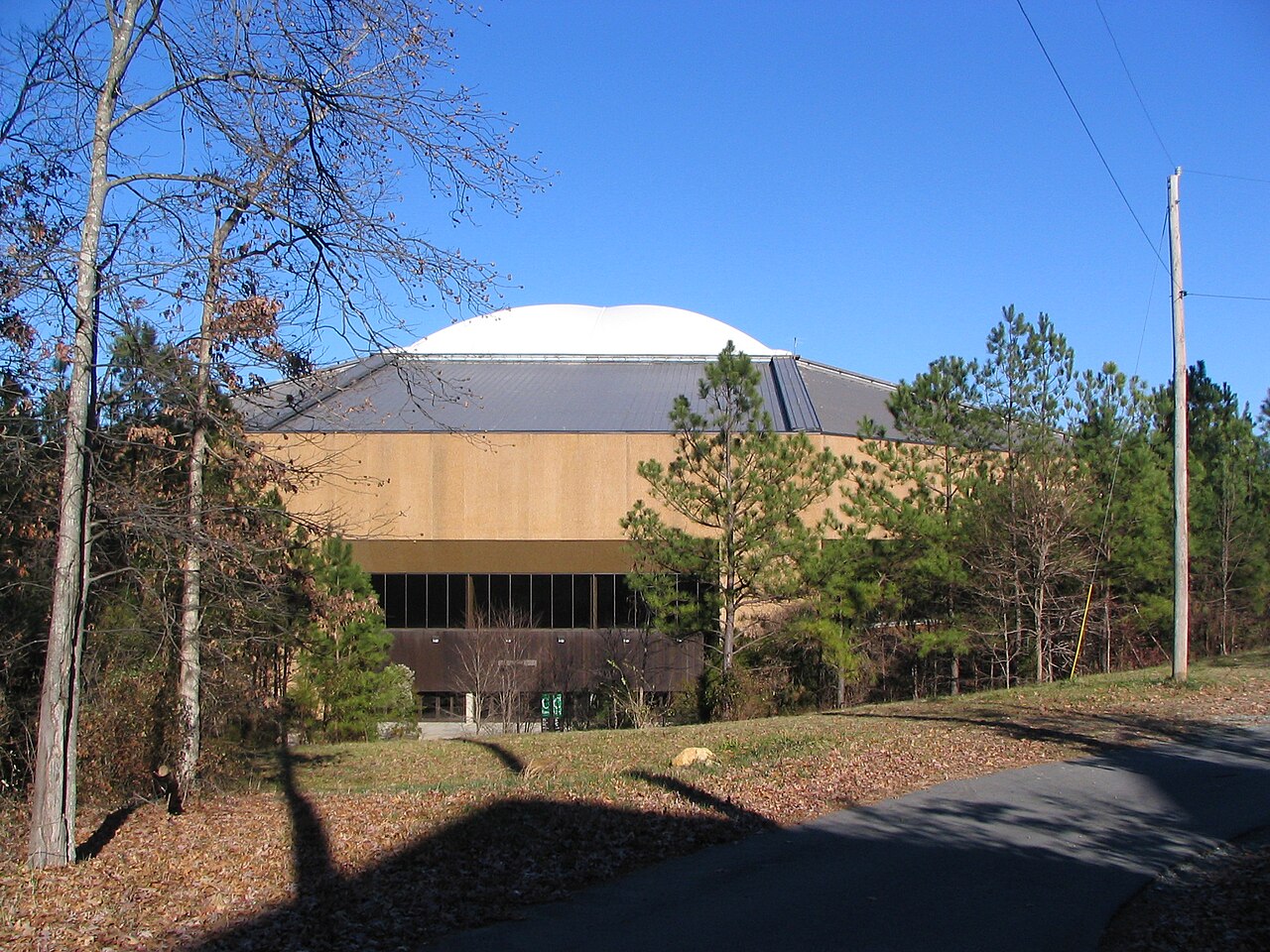
The Dean E. Smith Center — the Dean Dome — seats 21,750 in Carolina blue, and when the Tar Heels are rolling, the building hums with a century of expectation. This is not just a program; it's a way of life in Chapel Hill. The question hanging over the building this season is whether an NBA champion's methods translate to teenagers — whether Malone's demanding, detail-obsessed, veteran-honed approach can win over a roster that skews young and a fan base that measures everything against banners.
The 2026-27 roster is the fascinating part. Of the five returners, sophomore guard Derek Dixon is the cornerstone: the 6-foot-5 guard opened last season on the bench, took over the point when Kyan Evans struggled, and unlocked the backcourt's three-point shooting — 38.1 percent from deep in the regular season, 42.9 percent in the conference and NCAA tournaments. Seth Trimble brings the program's institutional memory. Luka Bogavac, Caleb Wilson and Henri Veesaar — who broke out at Carolina after a limited role at Arizona — round out the veteran core. Then comes the cavalry: a 2026 recruiting class ranked seventh nationally by 247Sports, headlined by Dylan Mingo, the 6-foot-5 do-everything guard ranked ninth in the class. The way-too-early projection has Dixon and Mingo forming one of the best young backcourts in America. That's the bet, anyway — youth, talent, and an NBA champion teaching them how to be pros.
What defines Carolina is the standard, and the standard just got a new enforcer. Six banners, 21 Final Fours, a rivalry that stops the sport cold, and now a coach who has won at the highest level of basketball on earth trying to prove he can win at the level where he started. In Chapel Hill, excellence isn't the goal — it's the baseline. Michael Malone didn't come to Chapel Hill to lower it.


