
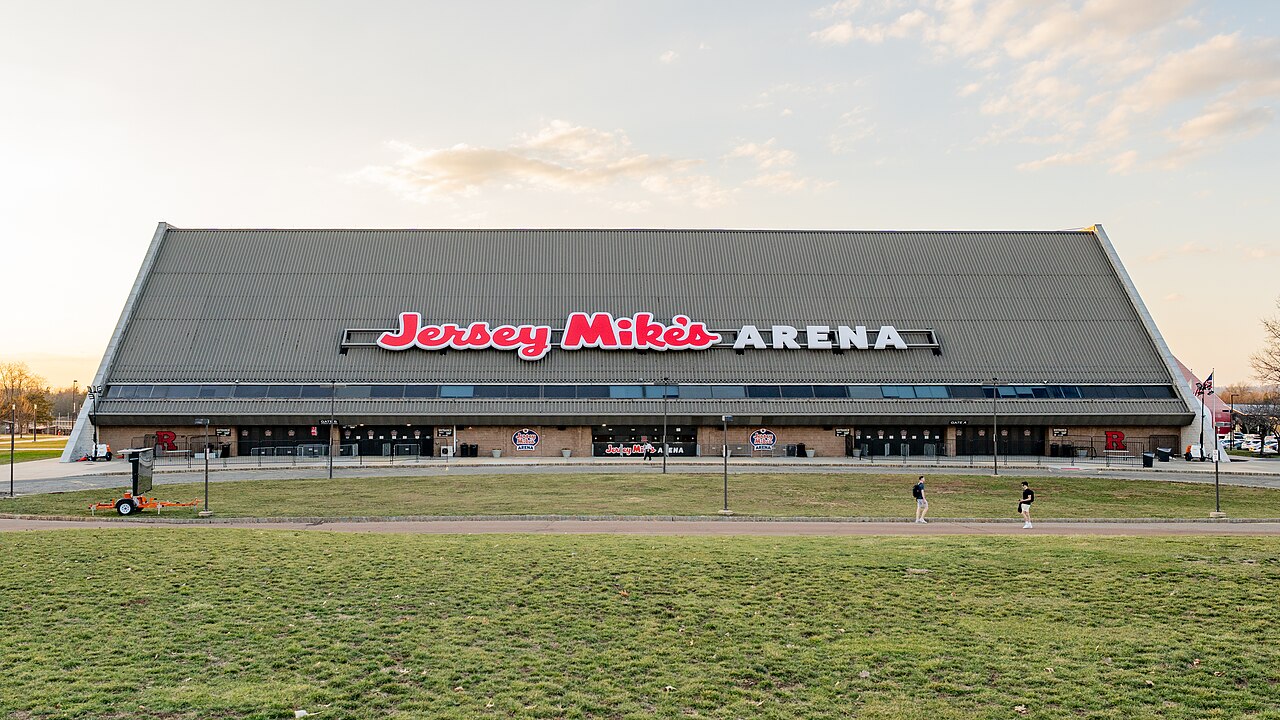
Rutgers basketball has always been a sleeping giant with a complicated relationship with sleep. The Scarlet Knights were born in the same place as college football itself — Rutgers is the birthplace of the sport — but the basketball program spent most of the modern era wandering the wilderness: a proud 1976 Final Four under Tom Young, long decades of losing, and then, under Steve Pikiell, the most improbable resurrection in the Big Ten. Back-to-back NCAA tournaments in 2021 and 2022, the first since 1991. The RAC rocking. Jersey Mike's Arena shaking. It was real, and it was earned.
That history is worth remembering now, because the 2026-27 season begins under a shadow. Pikiell, in his 11th season, announced this fall that he has cancer, underwent surgery, and will open the season away from the sideline while he finishes treatment — remaining involved with the program as much as he's able, with no set timeline for a full return. Associate head coach Brandin Knight, in his 11th season on the staff and sixth as associate head coach, is running the program. Knight arrived with Pikiell in 2016 after eight years at Pittsburgh, where he also played. The program is in steady, trusted hands — but this is a season that transcends wins and losses.
The recent past explains why expectations keep snapping back. The 2024-25 season was supposed to be the breakthrough: two top-five NBA draft picks in Dylan Harper (No. 2 overall) and Ace Bailey (No. 5), the most talent the program had ever assembled. The Knights went 15-17 and missed the postseason. Last season was the hangover — 14-20 overall, 6-14 in the Big Ten, 125th on KenPom. Eight scholarship players left. The roster that walked off the floor in March bore almost no resemblance to the one that will open in November.
But this is not last year's roster, either. Six players are back, and the core of the rebuild is the backcourt. Tariq Francis, the senior guard, led the team at 17 points per game and earned All-Big Ten honorable mention — he is the undisputed engine, the scorer who makes everything else possible. Jamichael Davis, the captain and leader (7.5 ppg), and Darren Buchanan Jr. (8.1 ppg), the team's best defender, bring the toughness that has defined the Pikiell era. Sophomore guards Lino Mark (5.9 ppg) and Kaden Powers (6.1 ppg) showed real promise as freshmen — Mark's speed and shot-making, in particular, could be one of the season's biggest storylines. Redshirt freshman center Gevonte Ware is back after sitting out most of last season, and the staff believes he showed enough in practice to earn a real opportunity.
The transfer portal did the rest. Darin Smith Jr. arrives from Central Connecticut State, where he averaged 20.7 points per game — a proven scorer who should form a dangerous combination with Francis. RaSheed Jones (14.8 ppg at Coastal Carolina) gives the backcourt another veteran weapon. Will Sydnor (13.9 ppg at Manhattan) is the versatile, high-IQ forward Pikiell praised for impacting the game on both ends. Christian Gurdak, the sophomore center from Virginia Tech, brings a high motor and major-conference rebounding; Pikiell has called his efficiency and rebounding proven. Dorin Buca, the senior from Kansas State, adds frontcourt depth. And the international pipeline — a deliberate new direction for the program — delivered Mervedi Miteo, the 6-foot-10, 260-pound forward-center from the Democratic Republic of Congo who played for Gran Canaria in Spain's top league after coming through Real Madrid's youth development program, and who averaged 6.3 points and 3.8 rebounds at the 2025 FIBA AfroBasket tournament. At 17, he is one of the youngest players on a Big Ten roster.
The projected starting five tells the story of the rebuild: point guard Lino Mark, shooting guard Tariq Francis, forward Will Sydnor, forward Darren Buchanan Jr., and center Christian Gurdak — with Darin Smith Jr. as the first scoring option off the bench and RaSheed Jones in a significant role. It is bigger, more versatile, and more skilled than anything Pikiell had a year ago. The questions are the ones every rebuilt roster faces: can it defend at a Big Ten level, can it gel by January, and can it win on the road in a league that punishes newcomers?
The identity, though, hasn't changed. Pikiell built Rutgers on defense — tough, scrappy, switch-everything defense — and on Jersey Mike's Arena, where the RAC tradition turned a football-school gym into one of the loudest buildings in college basketball. The sellouts, the court-storming, the belief that Rutgers could beat anyone at home: that's the culture this roster inherits. One preseason outlook projected 18-14 overall and 8-12 in Big Ten play — a modest but meaningful step forward, built around the backcourt scoring of Francis and Mark, Gurdak's interior presence, and the lineup flexibility the new forwards provide.
And then there's the future, which is arriving fast. The 2027 recruiting class is already ranked 18th nationally and sixth in the Big Ten, with three commits: four-star guard RJ Moore Jr. from Charlotte, four-star forward Brandon Woodard from Bishop McNamara in Maryland, and four-star combo guard Korey Francis from Monsignor Bonner in Pennsylvania — who committed specifically because of his relationship with Pikiell. The pipeline is the healthiest it has been in years.
The 2026-27 Scarlet Knights open the season with their coach fighting a different battle, and that will define this team as much as any lineup. Rutgers has always been at its best when it had something to rally around — the 2021 drought-breaker, the 2022 encore, the RAC at full throat. This season, the rally is for Pike. The wins will matter. The fight will matter more.


