In March of 2017, the South Carolina Gamecocks authored one of the great Cinderella runs in the history of the NCAA tournament, and nothing that has happened since — good or bad — has escaped its shadow. As a seventh seed, Frank Martin’s ferocious defensive team stormed through the bracket: a 93–73 dismissal of Marquette, an 88–81 stunner over second-seeded Duke, a 70–50 suffocation of Baylor, and a 77–70 takedown of Florida in the Elite Eight. Senior guard Sindarius Thornwell was a March immortal, pouring in points like the tournament was built for him, and when the Gamecocks finally fell 77–73 to Gonzaga in the national semifinal, Columbia, South Carolina, had lived two weeks at the center of the basketball universe. It was the program’s first Final Four. Ever.
To understand what 2017 meant, you have to understand what came before it. South Carolina basketball has always fought for oxygen in a football-mad state, and the program’s March history before Martin was mostly scar tissue. The Gamecocks were a force in the early 1970s under Frank McGuire — Tom Owens, John Roche, Kevin Joyce, three straight NCAA appearances from 1971 to 1974 — but the move from the ACC to independence and eventually the SEC came with decades of wandering. The program’s most infamous moment arrived in 1997, when a South Carolina team seeded second in the East Regional lost 78–65 to 15-seed Coppin State in the first round — one of the great upsets in tournament history, and a wound that never fully closed. The next year, as a three seed, the Gamecocks lost to 14-seed Richmond. March had a way of humiliating Columbia.
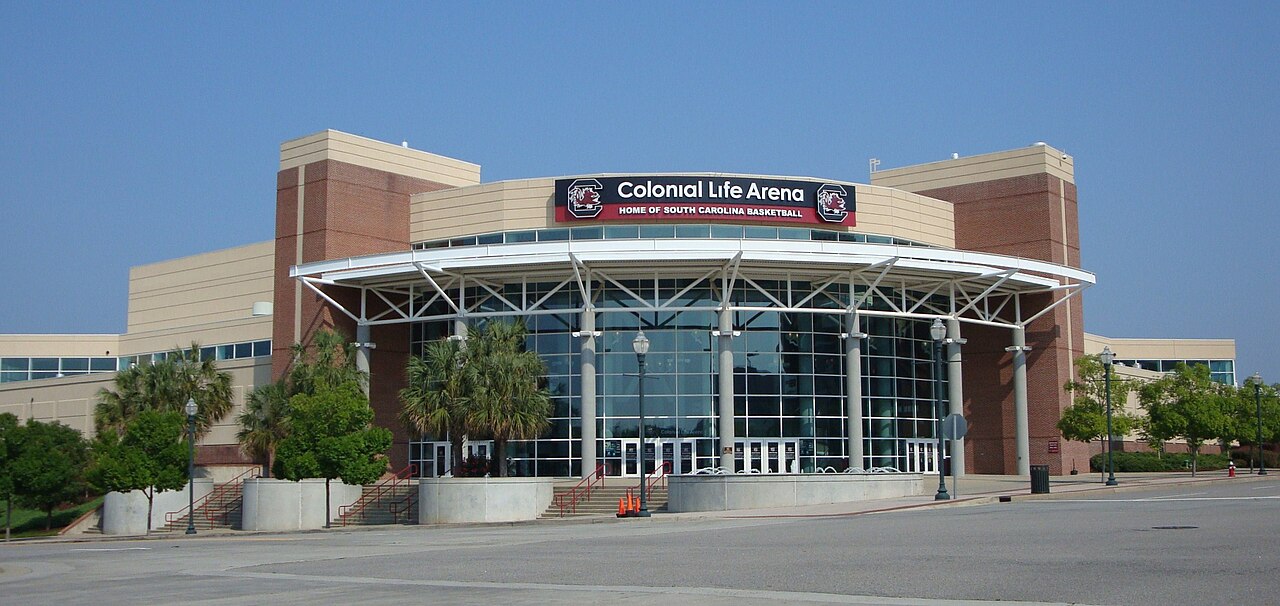
That’s why 2017 landed like it did. Martin’s rebuild — he arrived in 2012, all intensity and defensive religion — produced a team that defended like its life depended on it and rode a senior-laden core to the sport’s final weekend. The Gamecocks held tournament opponents to miserable shooting, turned every game into a street fight, and let Thornwell cook. When the Final Four banner went up in Colonial Life Arena, it rewrote the program’s self-image: proof that South Carolina could play with anyone, on the biggest stage, in the sport’s loudest month.
The decade since has been a study in how hard it is to bottle that lightning. Martin never got back to the tournament and was let go in 2022, and the program turned to Lamont Paris — the Chattanooga coach who’d built a mid-major winner — to start over. Year one was a teardown: 11–21, 4–14 in the SEC. Year two was the breakthrough: 26–8, 13–5 in the league, a tie for second in the SEC, a school-record-tying win total, an NCAA bid as a six seed, and SEC Coach of the Year honors for Paris. For one winter, Columbia believed again.
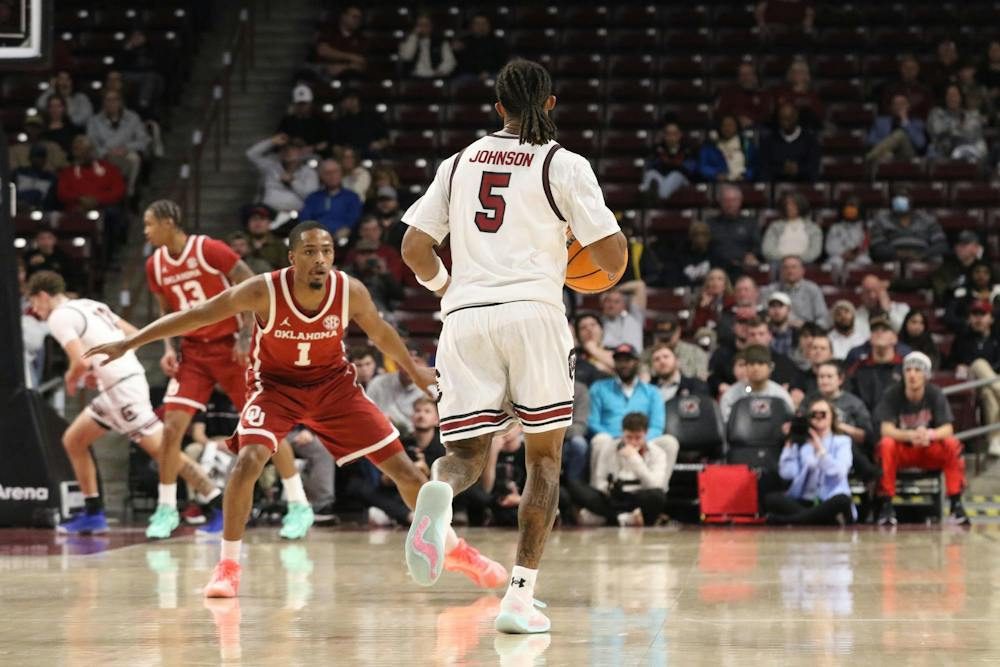
And then the bottom fell out. The 2024–25 Gamecocks collapsed to 12–20 and 2–16 in the SEC — dead last in the deepest, most brutal conference in America. Last season brought only marginal improvement: 13–19, 4–14 in the league, a 14th-place finish, and a roster about to lose three of its four leading scorers — Meechie Johnson Jr., Kobe Knox, and Mike Sharavjamts — to exhausted eligibility. Paris is 62–67 overall at South Carolina, 23–49 in SEC play, and the 2023–24 magic increasingly looks like the outlier rather than the arrival.
And yet: Paris is back. In March 2026, South Carolina confirmed he would return for a fifth season in 2026–27 — a decision that came with the understanding that the program’s NIL resources would grow and the roster would be rebuilt aggressively through the transfer portal. In the modern SEC, where Kentucky, Alabama, Florida, Tennessee, and Auburn operate like NBA franchises with student sections, standing pat is a death sentence. The Gamecocks have to portal like their season depends on it, because it does.
The building gives them something to sell. Colonial Life Arena seats 18,000, and when it’s full and loud — the way it was in 2017, the way it was during the 2023–24 renaissance — it’s one of the great home courts in the conference. The 2026–27 SEC slate brings Alabama, Arkansas, Auburn, Florida, Georgia, Texas A&M, and Texas to Columbia, with road trips to Kentucky, Tennessee, LSU, and Oklahoma. There are no nights off in this league. There never are.
What defines South Carolina basketball right now is the distance between two poles: the 2017 miracle and the 2–16 winter. The program has seen the mountaintop — Duke, Baylor, Florida, three giants slain in succession, Thornwell immortal — and it has seen the floor of the SEC. The question of the Paris era’s fifth season is whether the portal rebuild can find the defense-and-toughness formula that made both 2017 and 2024 work. In Columbia, they don’t just remember the Final Four. They measure everything against it.