Xavier basketball is the great "almost" of the Big East — a program with everything except the one thing it wants. The Musketeers have knocked on the Final Four door for decades: the 2004 Elite Eight, falling to Duke; the 2008 Elite Eight, falling to UCLA; the 2017 Elite Eight, falling to Gonzaga. Three different teams, three different eras, one shared heartbeat. Xavier has been one of the most consistently excellent programs of the 21st century, and the last great frontier of its history is a single weekend in April it has never quite reached.
The coaching tree tells the story of a program that does things right. Skip Prosser built the modern foundation, Thad Matta raised the ceiling, Sean Miller turned Xavier into a national brand, and Chris Mack kept it humming through the transition into the Big East in 2013. After a fallow stretch under Travis Steele and Sean Miller's second act, the program turned to Richard Pitino in March 2025 — and the Pitino era is now the most interesting experiment in the Big East.
Pitino arrived from New Mexico, where he led the Lobos to two straight NCAA Tournaments, and inherited a full rebuild. Year one went about as expected: a 15-18 record, a 10th-place Big East finish, and a non-conference stretch so ugly it included a 19-point blasting at Iowa and home scares from Marist and Le Moyne. But there was steel in the finish. Xavier took St. John's and Villanova to overtime in a one-week February stretch, then stormed into the Big East Tournament as the 10 seed and picked off Marquette. It was the portrait of a team that was tougher than its talent — and a coach who knew exactly what he was building.
Now comes year two, and Pitino has done what Pitino does: rebuilt the roster from scratch with a portal class that ranks among the Big East's best. The 2026-27 Musketeers feature seven transfers, four freshmen and just five returners — but the newcomers have real pedigree. Guard Chance Westry arrives from UAB, where he led the American Conference with 177 assists; he's the lone true point guard on the roster and one of the country's best playmakers when healthy. Guard Tru Washington comes from Miami, but he already knows Pitino's system from their shared time at New Mexico. Forward Ruben Dominguez, in from Texas A&M, shot 40 percent from deep and gives the frontcourt real spacing. Center Mike Nwoko arrives from LSU as the anchor — and, in a revealing moment of the NIL era, Pitino testified under oath in an NCAA eligibility lawsuit that Nwoko would be the highest-paid player on the roster, inside a team budget of "a little over $14 million" for the season.
The most important holdover is Jovan Milicevic, the 6-foot-10 junior sniper who finished second on the team with 408 points while shooting 43 percent from three — a genuine Big East star who chose to stay. Fifth-year man Filip Borovicanin, meanwhile, is at the center of one of college basketball's biggest stories: a plaintiff suing the NCAA over an additional year of eligibility, fighting a ruling that could decide whether he's a starter or a spectator. Pitino has said he'd welcome him back if granted the year. Also back: Gabriel Pozzato, Kason Westphal, Henry Thole and Michael Wolf, plus freshmen Kalek House, Asher Elson, Gedeon Basson and Harrison Aligbe — and forward Rolyns Aligbe, who transferred in alongside his younger brother.
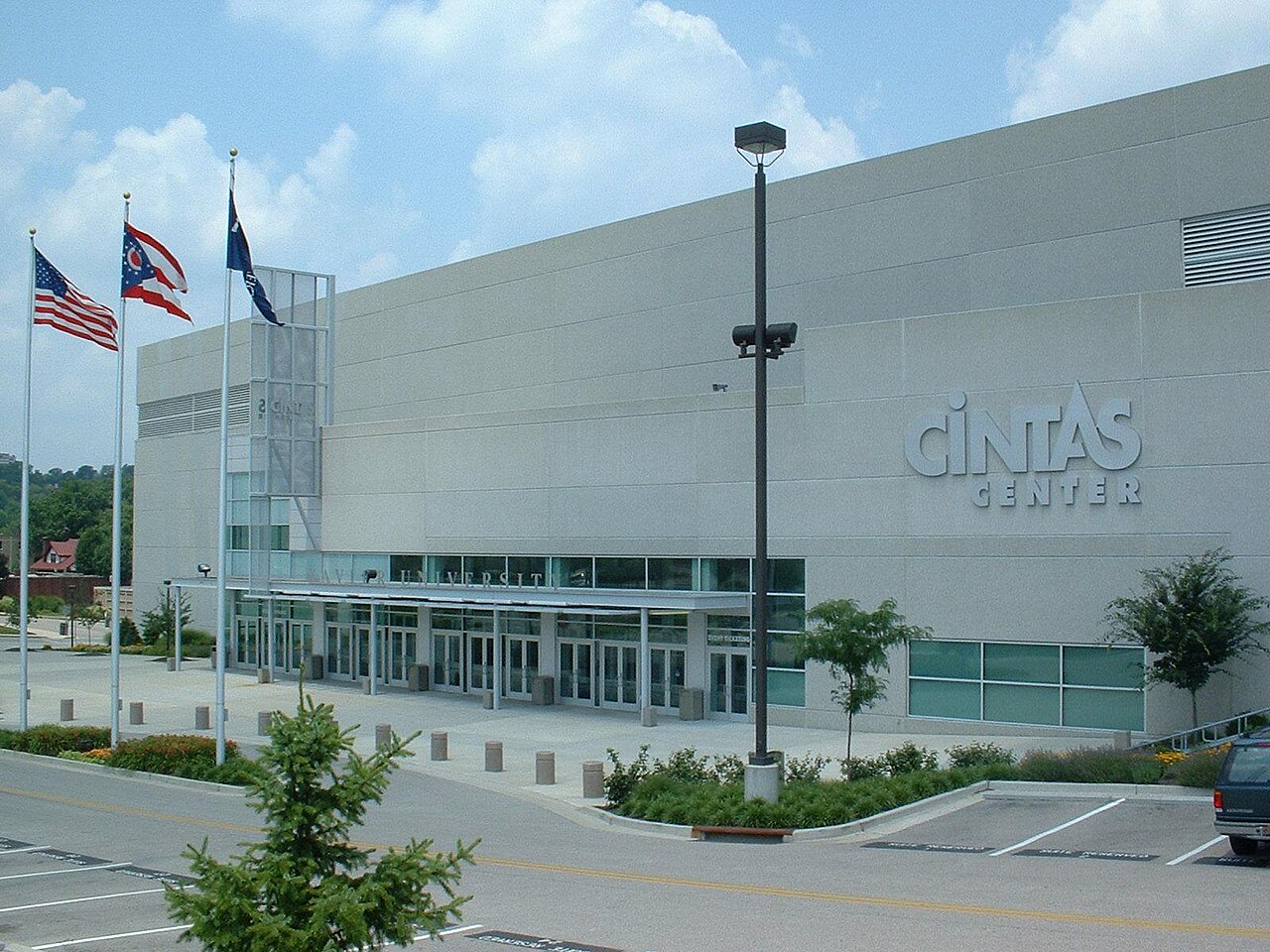
The schedule gives this new group a stage. The second year of the Pitino era opens at Cintas Center on November 2 against Mount St. Mary's — a rematch of the 2025 NCAA Tournament's First Four at UD Arena, where both teams advanced on the same day before Xavier's run ended. The Musketeers head to the Bahamas for the Battle 4 Atlantis, drawing Texas A&M and Virginia, host Iowa to finish a home-and-home, and renew the 94th Skyline Chili Crosstown Shootout against Cincinnati at Fifth Third Arena on December 5. Cintas Center was a fortress last year at 12-6 overall — and in the Big East, where the noise never stops, a fortress is everything.
The ghosts are still there, of course. David West's number, the Trevon Bluiett threes, the Cintas Center roar that has made Cincinnati a genuine basketball town. The program's identity is built on toughness, player development and a chip that never quite disappears — the mid-major soul that survived the Big East invitation. Pitino, for his part, seems to understand that soul better than the critics who mocked his first roster as a collection of mid-major players. His answer, delivered in year one with a team that was supposed to be irrelevant, was to make Xavier the toughest out in the conference every single night.
Year two is when the plan gets judged. The talent is better, the budget is bigger, and the goal is the same one that has defined this program for forty years: one weekend in April, the door that has never quite opened, and the feeling that this time — finally — might be the time.