
SEOUL / TOKYO
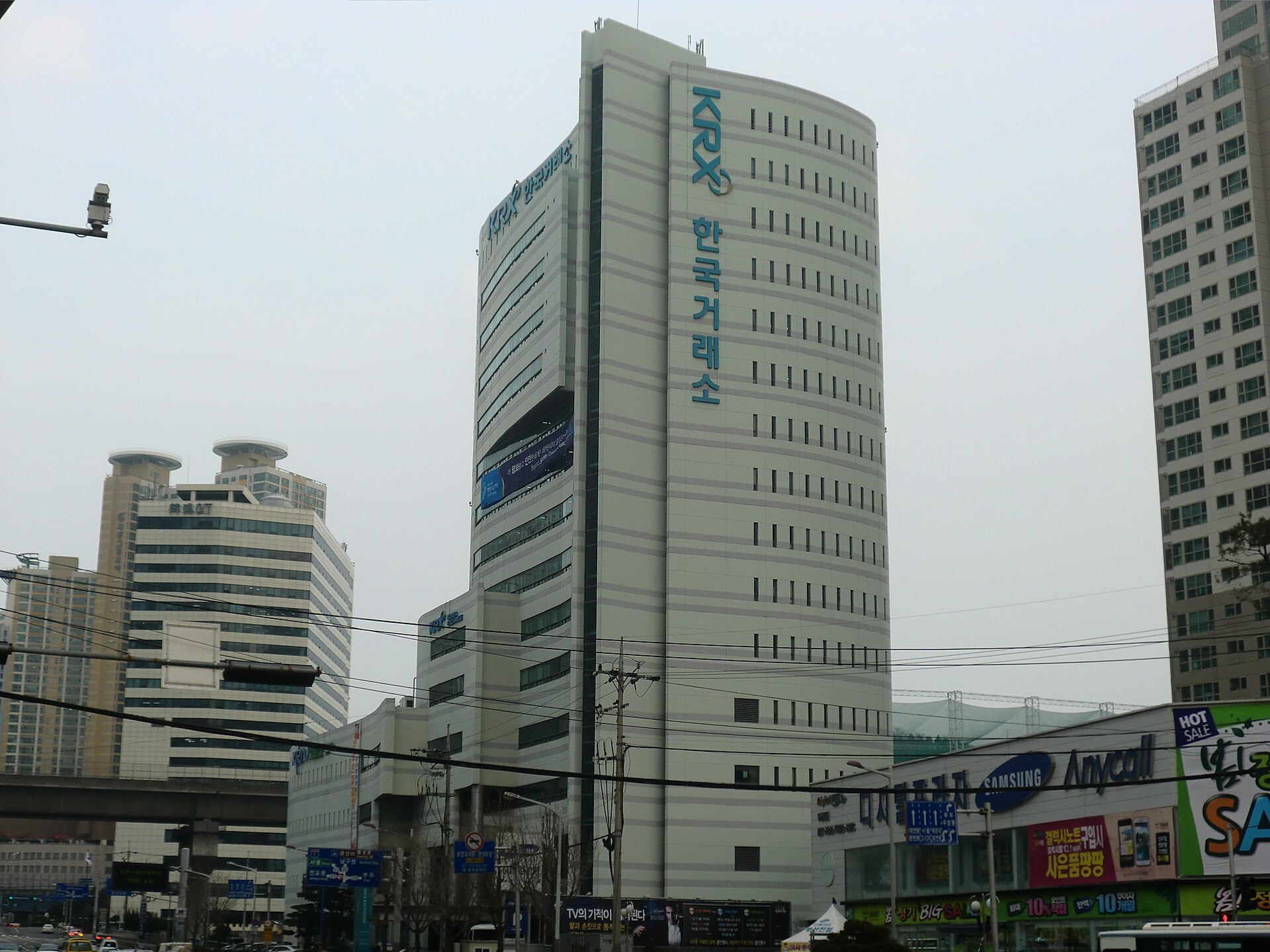
The trade that carried Asia's markets all year ran headfirst into an American inflation number on Thursday, and it did not survive the collision. By the close in Seoul, South Korea's benchmark KOSPI had fallen 7.7% to 5,548.78, after dropping about 8% during the session, AP reported. In Tokyo, the Nikkei 225 lost 4.8% to finish at 64,489.06. Reuters reported that MSCI's broadest index of Asia-Pacific shares outside Japan tumbled 3.3%, a regional rout with one very clear center of gravity: the semiconductor and artificial-intelligence names that investors had spent months piling into.
This was not a slow drift lower. It was the kind of session where the biggest, most celebrated companies on the continent led the way down — which tells you less about those companies' order books than about how crowded, and how borrowed, the trade behind them had become.
The chip giants took the heaviest hits
In Seoul, Samsung Electronics fell roughly 9.3% to 9.5%, while its memory-chip rival SK Hynix plunged 11.4%, according to Reuters and AP reporting. In Tokyo, chip-equipment maker Tokyo Electron dropped 7.3%, SoftBank Group — the market's loudest AI investor — fell 9.4%, and memory maker Kioxia lost about 11.2%. Taiwan's TSMC eased about 2% to 2.2% ahead of its earnings report, a comparatively mild move that still dragged the island's Taiex index down 3%.
The damage spread well beyond chip country, just more quietly. Hong Kong's Hang Seng index fell 1% to 24,071.25 and the Shanghai Composite lost 1.4% to close at 3,713.22, AP reported. Australia's ASX 200 barely moved, down 0.1%, a reminder that markets without a giant AI complex had far less to unwind. S&P 500 e-mini futures pointed to more pain ahead in New York, down 0.5% during the Asian session.
An inflation print lit the fuse
The trigger came from Washington, not Asia. U.S. consumer prices rose 3.7% in the year to September, up from 3.4% in August and hotter than economists expected, while core inflation — the measure the Federal Reserve watches most closely — rose 0.3% on the month against a 0.2% forecast. For markets that had spent the year assuming cheaper money was a matter of time, the print landed like a bucket of cold water.
Wall Street had already spent Wednesday bracing. U.S. stocks fell for a third straight day, with the S&P 500 down 1.1%, the Nasdaq down 1.9% and the Dow Jones Industrial Average off 0.1%. A closely watched semiconductor gauge fell for a sixth consecutive session. Nvidia lost 3.2%, Broadcom 3.1% and AMD 5.7%, Reuters reported, while Oracle and CoreWeave — two names deeply exposed to the cost of financing enormous data-center build-outs — were also hit as rate expectations shifted.
By Thursday, futures markets tracked by CME FedWatch priced roughly a 31.6% chance that the Fed will raise rates by a quarter point at its Oct. 28 meeting, up from 22.1% just a day earlier. San Francisco Fed President Mary Daly added to the mood on Wednesday, signaling that more rate increases are likely needed to finish the inflation fight — though not necessarily at the Oct. 27–28 meeting itself. One in three is not a certainty. But for an AI trade financed on the assumption that money only gets cheaper, it is more than enough to change the math.
A repricing, not a rejection of AI
The most useful way to read Thursday, analysts said, is as a repricing rather than a repudiation. Charu Chanana of Saxo argued, in remarks reported by Reuters, that the selloff reflects investors recalculating the cost of capital that underpins the AI boom — not a sudden loss of faith in demand for AI itself. The chips are still wanted. The data centers are still being built. What changed overnight is what it costs to borrow the money to build them, and how much risk investors are willing to carry while they wait for the returns.
JPMorgan analysts made a similar distinction, according to Reuters: the inflation data triggered the move, but technology drove it, with the financing risks around AI spending and the timing of big tech IPOs at the center of investors' worries. That is a subtle but important split. A demand problem would take quarters to fix. A financing problem can ease the moment rates expectations do — which is also why rallies built on cheap money can fall this fast when the expectation cracks.
How far the unwind has to run
Some perspective on the violence of the move: the KOSPI crossed 9,000 in June, an all-time high powered by exactly the AI optimism that unwound on Thursday, AP noted. A close near 5,549 means the index has given back an enormous share of that run in a matter of months. Investors who bought the top of the AI trade in Asia are now sitting on the year's most painful lesson in what leverage and momentum do on the way down.
Money looking for shelter behaved the way it usually does. Gold rose about 1% to around $4,145 an ounce, while Brent crude fell nearly 2% toward $104 a barrel, caught between growth worries and the same rate shock hitting everything else. Neither move was dramatic on its own; together they sketched a market hedging, not panicking — yet.
What happens next runs through two dates. TSMC's earnings, due imminently, will give investors their first hard read on whether AI chip demand is holding up under the new rate reality — and the company's guidance will matter more than its backward-looking numbers. Then comes the Federal Reserve on Oct. 28, where a hike that was barely priced a week ago is now a live possibility. Thursday's other overnight developments are collected in our Nightly News Wrap-Up for October 15, and the same global tech rout was on the agenda as EU leaders met in Brussels on Thursday. For the full day's coverage, see our news index.
For now, Asia has delivered its verdict on the hot inflation print, and Europe and New York are next in line. The AI story did not end on Thursday. Its financing just got more expensive — and markets, as they do, sent the bill to the most crowded room first.