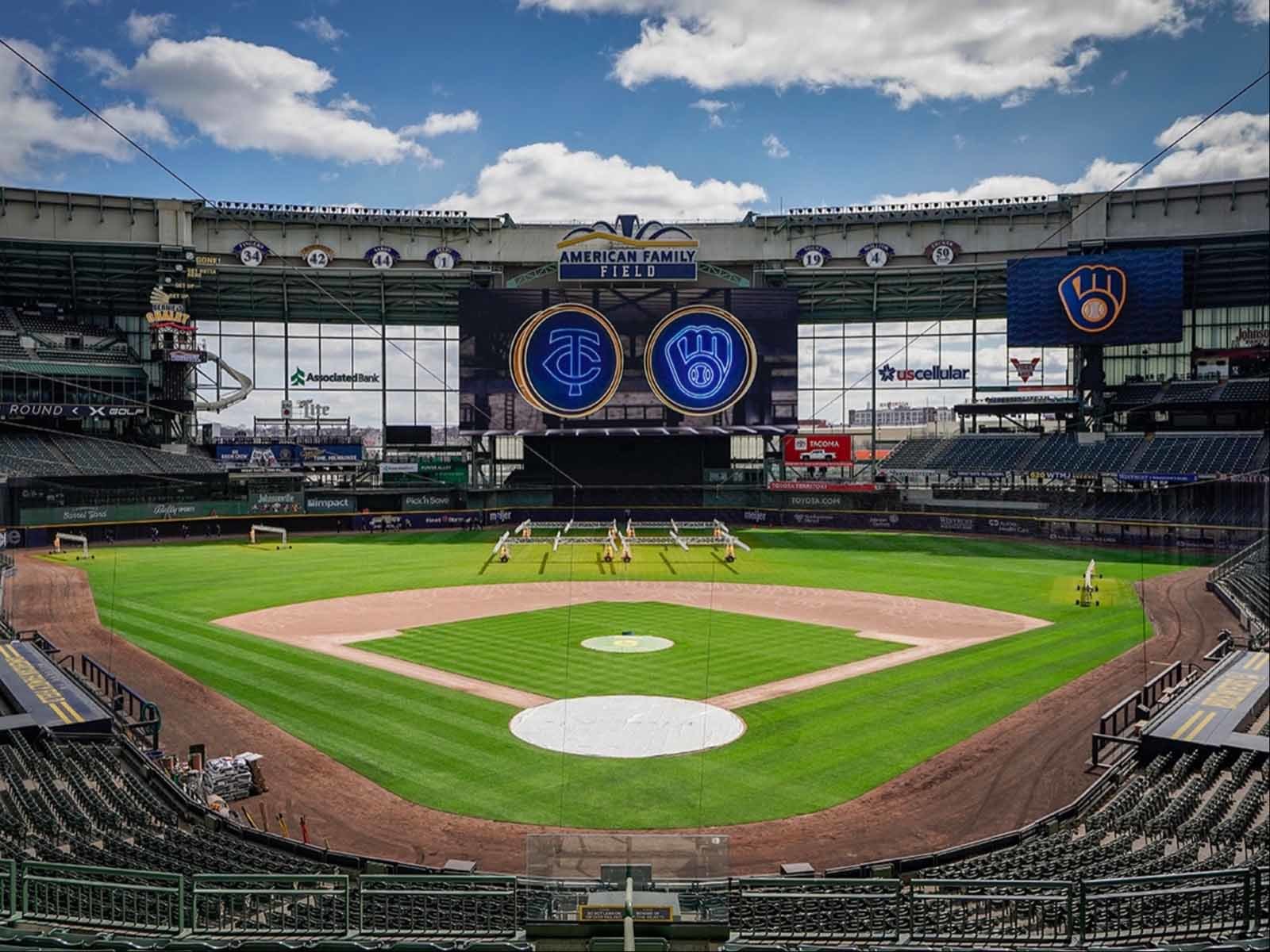

There is a particular sound a ballpark makes when 42,617 people all hold their breath at once, and American Family Field made it on Sunday night. Mookie Betts lifted a ninth-inning fly ball toward the warning track with the tying runs aboard, the crowd rose, and for one long second the Los Angeles Dodgers looked like they were about to do what they always seem to do to Milwaukee in October. Then the ball settled into a glove, the Brewers had a 2-1 win in Game 1 of the National League Championship Series, and Milwaukee got to exhale a sigh that has honestly been building since 2018.
That is not an exaggeration, either. This was the Brewers' first postseason win over the Dodgers since 2018. Los Angeles had won seven straight postseason meetings between the clubs, including sweeping last year's NLCS. Seven straight. At some point a streak like that stops being a matchup and starts being a mental block, the kind a franchise carries into every October until somebody finally breaks it. On Sunday, in a tight, tense, beautifully pitched game, Milwaukee finally broke it.
How a 2-1 Game Was Won, Inning by Inning
The Dodgers struck first, taking a 1-0 lead in the second inning on an Andy Pages RBI single. In a building that has seen this movie before, you could feel the worry start to hum: here we go again, Los Angeles ahead early, Los Angeles in control. But this Milwaukee team — a 103-win team, remember, not some happy-to-be-here underdog — did not blink.
Brice Turang tied the game in the fourth with a solo home run off Tarik Skubal, a swing that did more than even the score. It told the whole ballpark, and maybe the Dodgers too, that this series was going to be different. An inning later, the Brewers manufactured the winning run the old-fashioned way: Garrett Mitchell worked a walk, Cooper Pratt moved him over with a sacrifice bunt, and Luis Lara delivered the tiebreaking RBI single in the fifth. Walk, bunt, single, lead. It is not flashy, and in October, against a team this talented, it is absolutely gorgeous.
From there, the game became a story about pitching, and both starters deserve their flowers. Jacob Misiorowski went 4 1/3 innings for Milwaukee, allowing one run on five hits with three walks and five strikeouts across 94 pitches — not a masterpiece, but exactly the kind of competitive, bend-without-breaking start a team needs to get a game to its bullpen with a lead in reach. Skubal, for Los Angeles, went five innings and allowed two runs on five hits with two walks and seven strikeouts. It was only his second loss in eight postseason starts, which tells you both how good he usually is in these games and how fine the margins were on Sunday. Milwaukee did not beat a bad version of Skubal. They beat a good one, narrowly, and earned it.
The Bullpen Is the Story of Milwaukee's October
If you want one number to explain why the Brewers believe this October ends differently, it is this: across five playoff games, Milwaukee's bullpen has thrown 23 2/3 innings and allowed exactly one run. One. That is not a hot streak, that is a weapon, and Game 1 was a full demonstration of it. Four Brewers relievers combined for scoreless work after Misiorowski exited, each one handed a slightly different fire to put out.
DL Hall coaxed a double play out of Freddie Freeman, the kind of at-bat that can flip a whole game if it goes the other way. Abner Uribe escaped trouble in the sixth. Aaron Ashby gave Milwaukee two full innings of calm in the late going. And Trevor Megill closed it with a save that was anything but calm: two walks in the ninth, the tying runs on, and Betts driving one all the way to the warning track before it died. Saves do not have to be pretty to count, and a closer who survives Betts at his most dangerous has earned his handshake line. When your bullpen is this reliable, every close game tilts a little more in your favor as the innings pass — the Dodgers spent the last four innings of Game 1 learning that in real time.
Los Angeles Has Plenty to Fix — and the Talent to Fix It
For the Dodgers, the box score from Game 1 is a study in frustration. They grounded into three double plays. They stranded nine runners. They went 1-for-6 with runners in scoring position. And after the sixth inning, they did not record a single hit. Any one of those lines can lose you a game in October; all four together is a small miracle of a final score as close as 2-1.
And yet, nobody serious is writing this team off after one night. Los Angeles is chasing a third straight championship, something no club has done since the 1998-2000 Yankees, and teams on runs like that do not panic over a one-run road loss in a series opener. The talent that produced those nine stranded runners is the same talent that usually cashes two or three of them in. The Dodgers' task in Game 2 is straightforward to describe and difficult to do: lift the ball against a bullpen that has forgotten how to give up runs, and stop letting Milwaukee's relievers dictate the terms of every late inning.
A Little History for Your Game 2
The stakes around this series are richer than one win. The Brewers are one of five clubs that have never won a World Series, and their last trip to the Fall Classic was in 1982 — a drought old enough to have its own kids in the stands on Sunday. This is also the first NLCS matchup of 100-win teams since the 1976 Reds-Phillies series, a reminder that this is not a fluke pairing. These were the National League's two best teams across the full season, and Game 1 played exactly like it: one run, decided late, with the crowd living and dying on every pitch.
Game 2 arrives quickly, Monday at 5 p.m. ET in Milwaukee on FOX and FS1, and the pitching matchup is a gift for anyone who loves a good storyline. Los Angeles turns to Yoshinobu Yamamoto, its big-game arm, in a spot where the Dodgers would love to even the series before it shifts west. Milwaukee hands the ball to rookie Logan Henderson — and if you think this Brewers team, of all teams, is scared of trusting a young pitcher in a huge spot, you have not been watching their bullpen work all month. Demand is matching the moment, too: standing-room tickets are starting from $166, because Milwaukee knows exactly how rare a 2-0 NLCS lead opportunity is.
Our Take
Game 2 feels enormous for a second game, and it should. A Milwaukee win puts the defending champions in a 2-0 hole and turns this from a series into a genuine crisis for Los Angeles. A Dodgers win erases Sunday in one evening and sends things west all even, with the pressure landing right back on the Brewers. There is no outcome tonight that feels small. That is the joy of this matchup — two 100-win teams, a ballpark that will be shaking by the fifth inning, and a rookie on the mound with nothing to lose. Settle in early for this one. Stay with the full postseason picture in our Sports section, catch up on the rest of the day in News, and keep the celebration going afterward with and Games.