€3.8 million net starting price. Bugatti, Tourbillon launch announcement, Molsheim, 20 June 2024. "Net" is Bugatti's own framing: the figure is before taxes.
This is a manufacturer's starting price, not an auction result, not a completed transaction, and not an on-the-road price. No Tourbillon has a public resale result in the sources checked, because — see below — no customer delivery is confirmed.
250 cars planned, hand-assembled at the Bugatti Atelier in Molsheim. Bugatti said in September 2024 reporting that all 250 build slots were allocated shortly after the reveal. An allocation is a place in a queue, not a delivered car.
Delivery status — UNCONFIRMED, stated exactly: Bugatti's 2024 announcement planned first customer deliveries from 2026. That plan is not proof of deliveries, and this draft does not use it as proof.
In the current reporting checked for this pass (through 12 November 2026), no source — Bugatti's own newsroom included — confirms that a first customer car has been delivered or handed over. What the record does show: configuration of the first customer cars began in 2025; Bugatti opened a new Molsheim facility, La Manufacture, in July 2026 to support Tourbillon production preparation; Bugatti's September 2026 technical release on the V16's sound reported acoustic homologation work completed while its own footnote still stated the model "is currently not subject to directive 1999/94/EC, as type approval has not yet been granted"; and Top Gear's 25 October 2026 film is a passenger ride in a development car with Bugatti CEO Mate Rimac driving, whose coverage frames the first customer handovers as the next thing to watch.
Secondary dossiers variously phrase the plan as "from 2026" or "from Q4 2026." Until Bugatti confirms a handover with a date, the honest sentence is: deliveries were planned from 2026; as of November 2026 they are not confirmed to have begun.
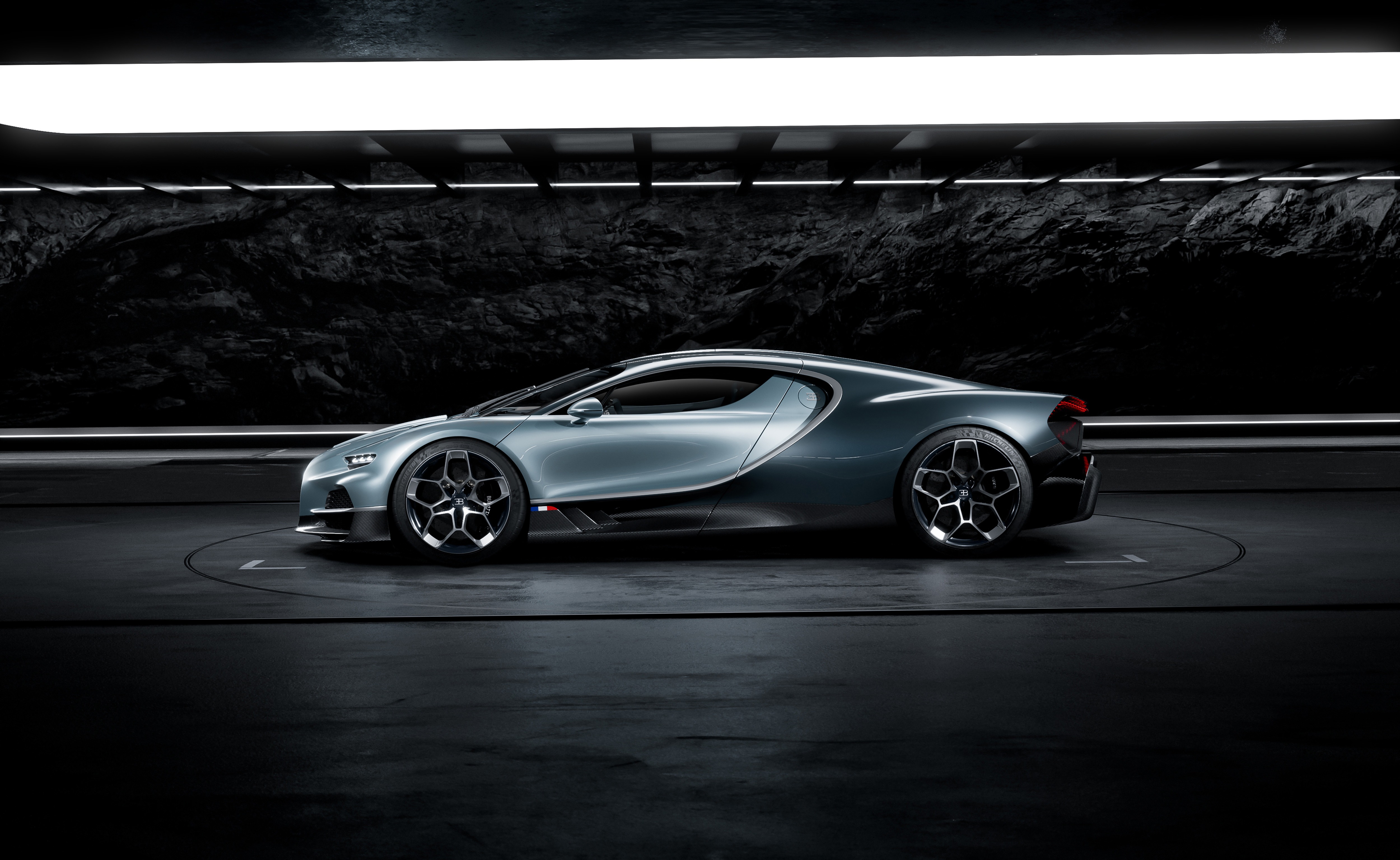
The exact object
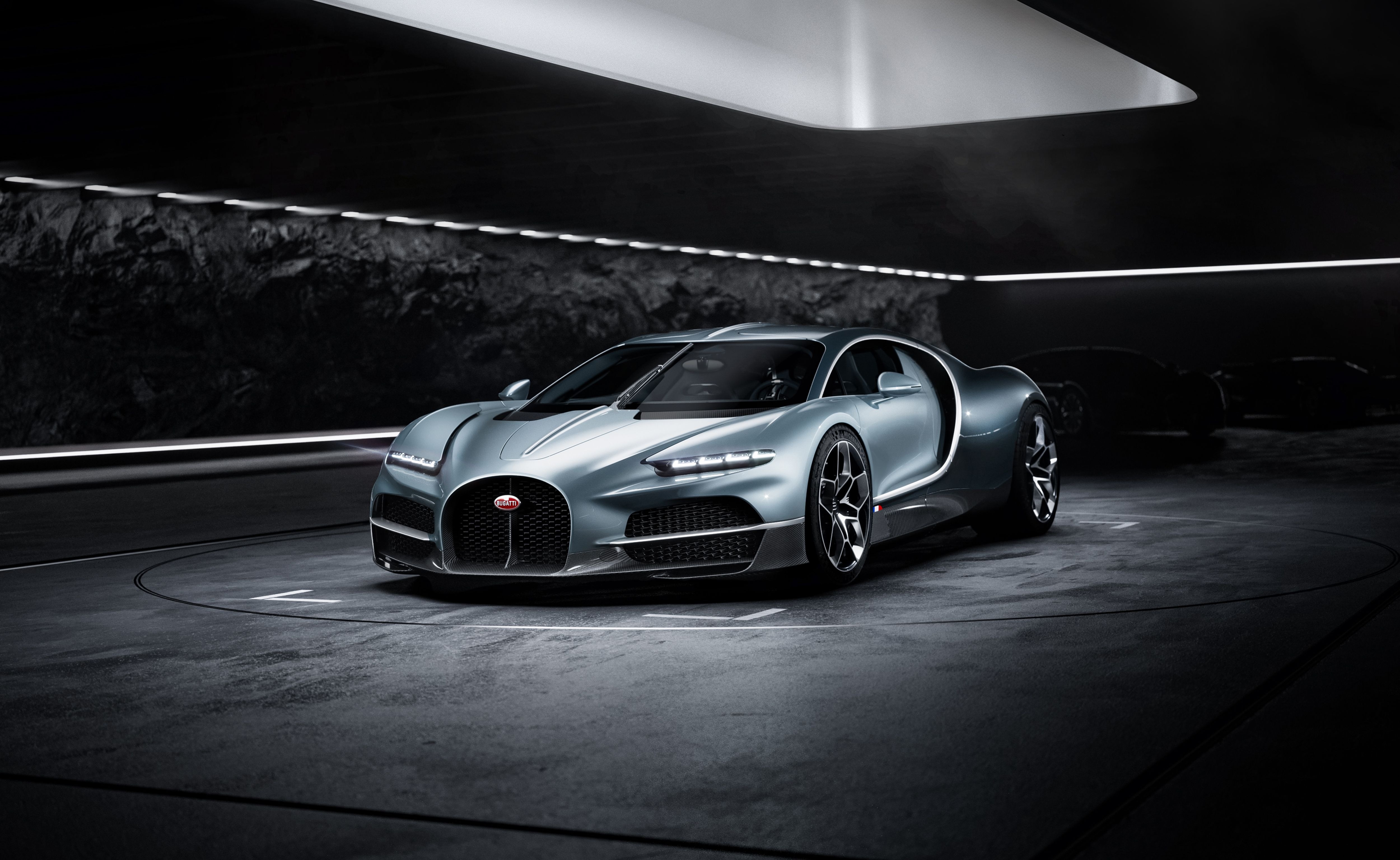
The Tourbillon replaces the Chiron outright — new platform, new engine, new hybrid system. Nothing carries over from the W16 car.
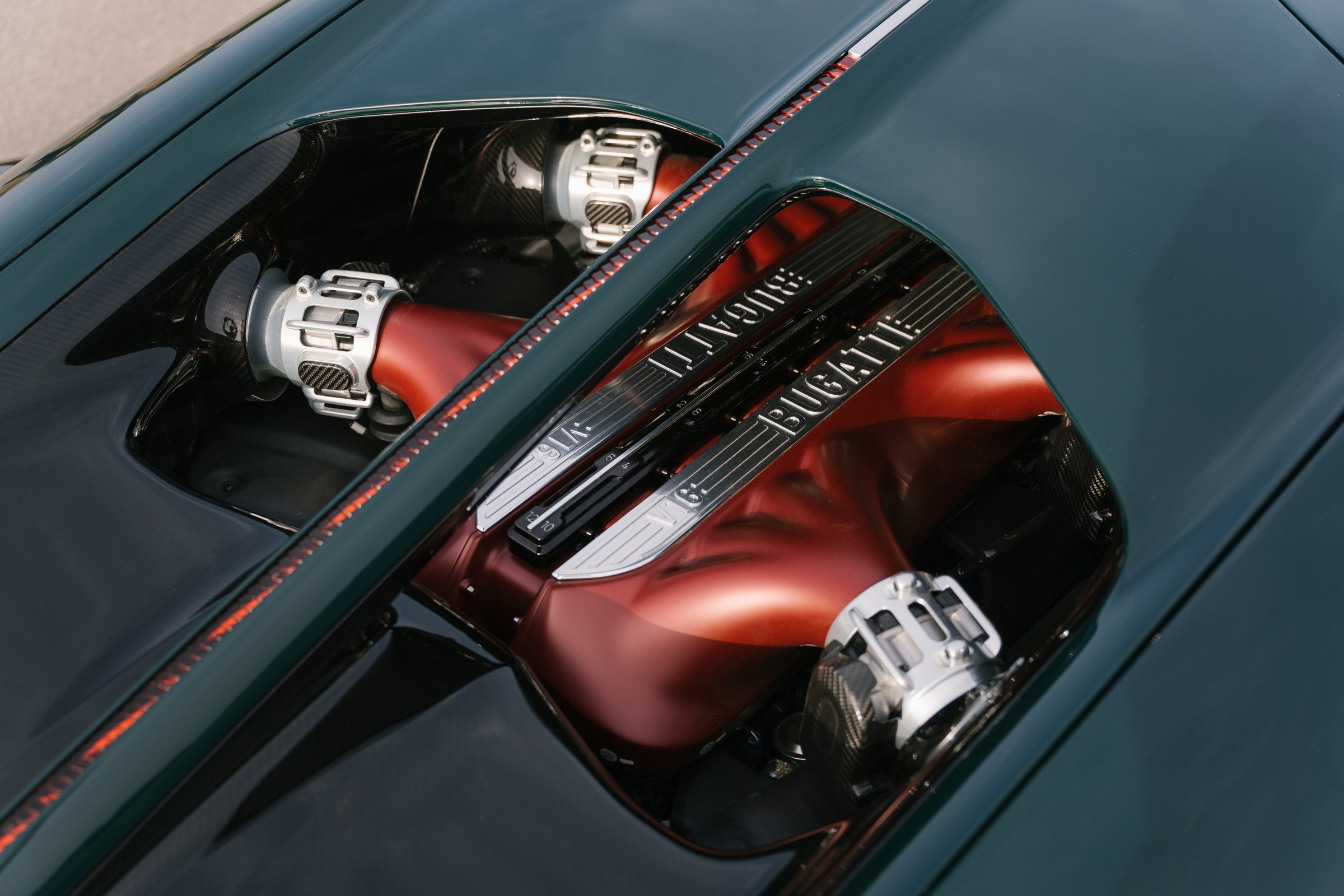
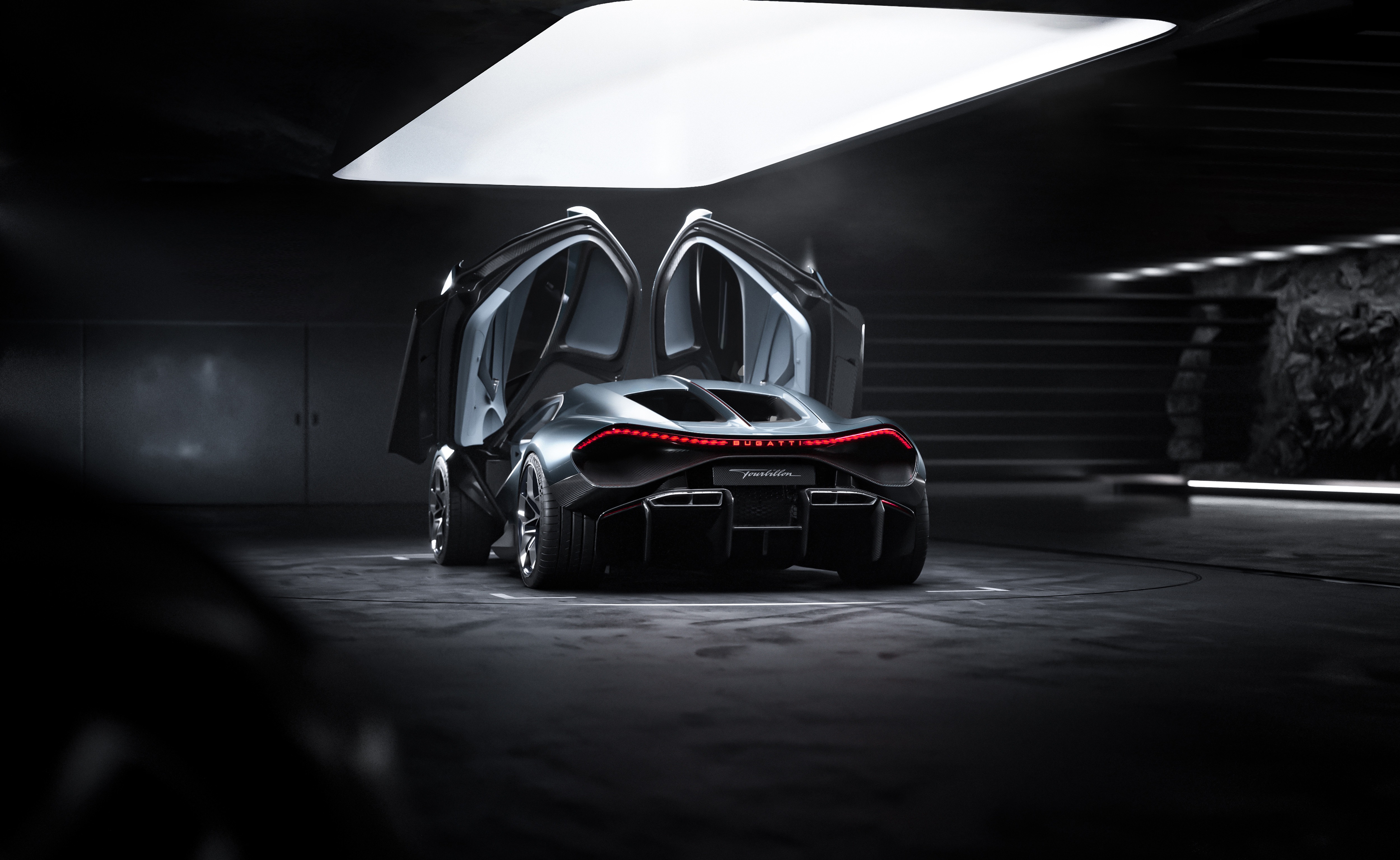
The engine is the headline: an 8.3-litre naturally aspirated V16 developed with Cosworth, rated by Bugatti at 1,000 PS on its own, revving to 9,000 rpm, and weighing 252 kg. No turbochargers. Around it, three electric motors add 800 PS — two on the front axle, one at the rear — fed by a 25 kWh, 800-volt battery packaged into the carbon structure, for a combined 1,800 PS (1,775 hp) and a quoted electric range of more than 60 km.
Drive is all-wheel drive through a new eight-speed dual-clutch gearbox. Bugatti quotes 0–100 km/h in 2.0 seconds, a 380 km/h limiter as standard and 445 km/h with the Speed Key, and a DIN weight under 1,995 kg — lighter than the Chiron it replaces. Treat every one of those figures as a manufacturer claim: with type approval still not granted in Bugatti's own September 2026 footnote, there is no independently verified figure from a final customer car yet.
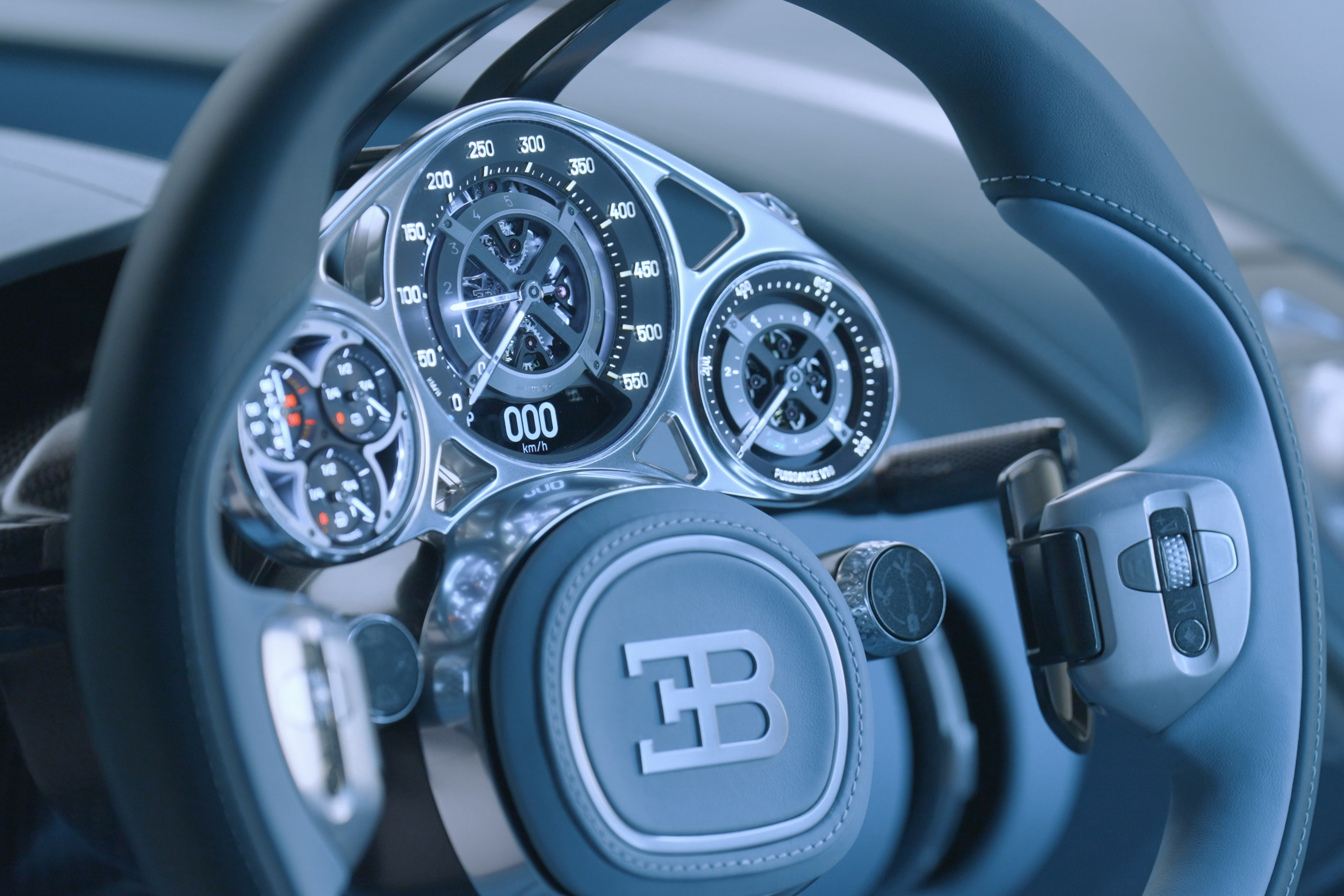
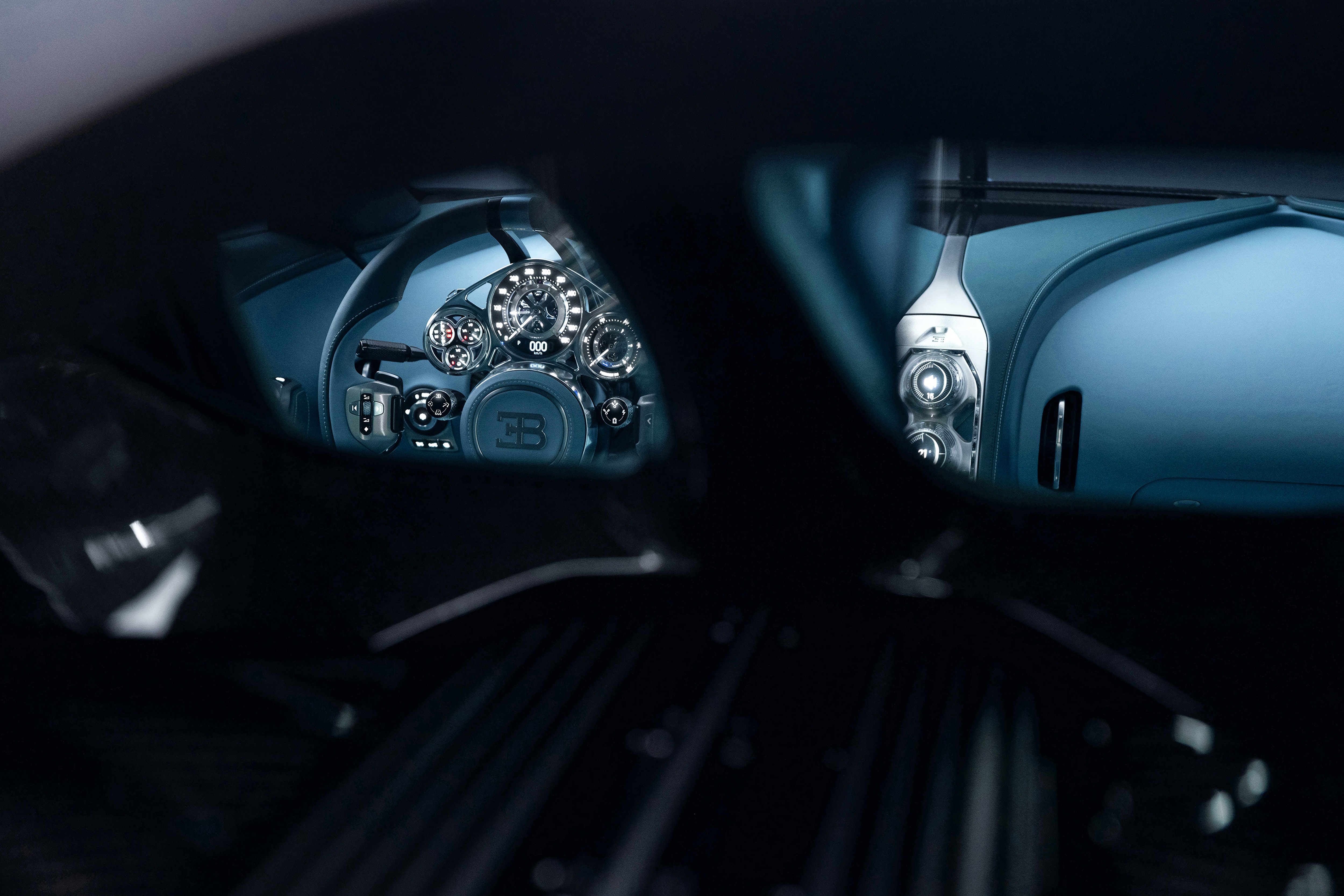
Inside is the part the price story should slow down for. The instrument cluster is completely analogue and mechanical, designed and built with Swiss watchmakers: more than 600 components, constructed from titanium with sapphire and ruby, built to tolerances Bugatti states as 50 microns at the largest and 5 microns at the smallest, weighing 700 grams. The cluster stays fixed in place while the steering-wheel rim rotates around it. The centre console is crystal glass and aluminium. There is no large screen to date the cabin — that is the stated design intent, and it is why the car is named for a watchmaking mechanism rather than an engine part.
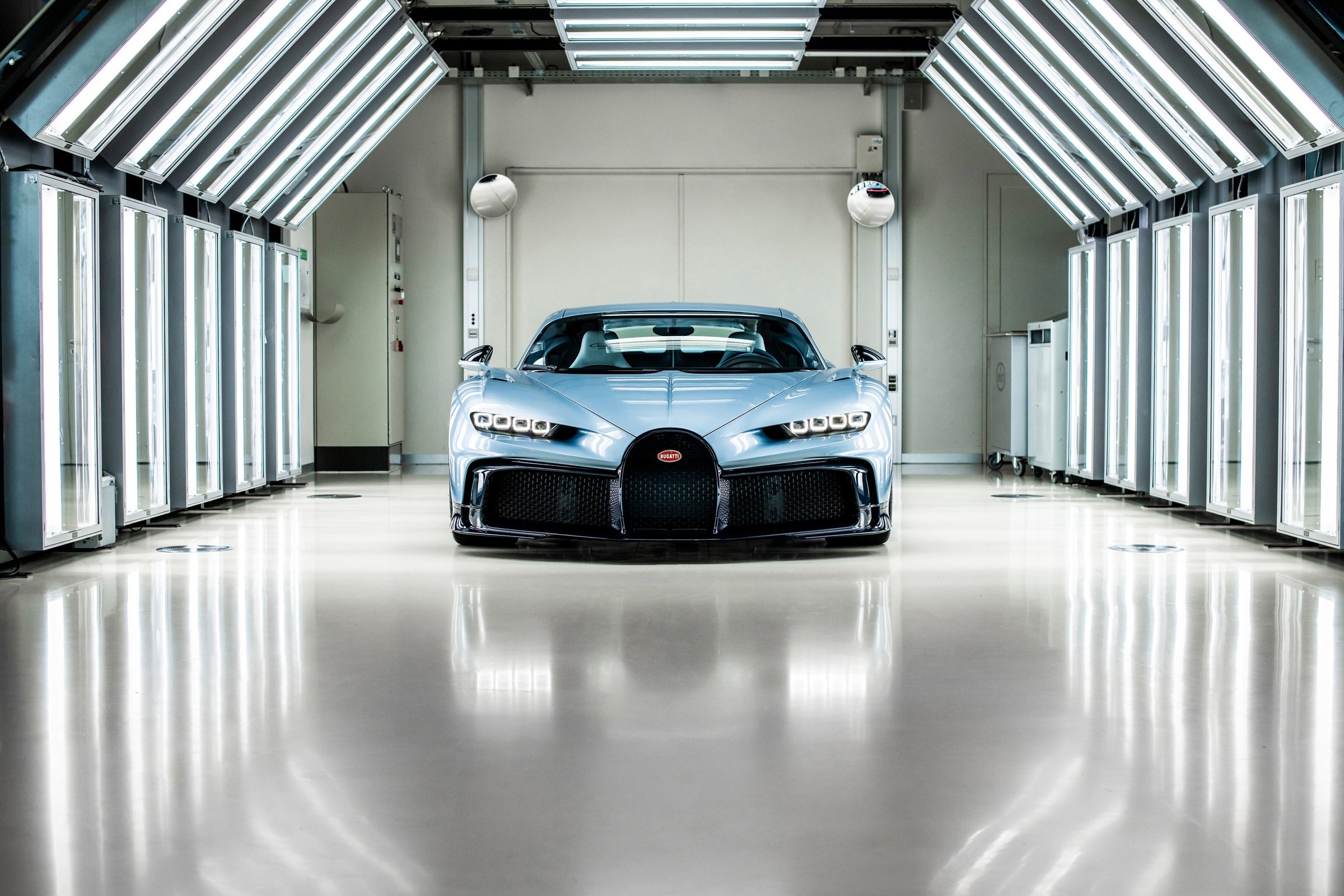
Look for the right details in a photograph: the skeletonised mechanical cluster behind the wheel, the crystal console, the V16 car in Molsheim launch specification. A render passed off as a customer car would fail this story twice — wrong object status, and a delivery claim the reporting does not support.
The premium, explained concretely
Three separate costs are stacked in the €3.8 million, and the story keeps them apart.
The engine programme. A clean-sheet, naturally aspirated V16 is a development programme almost no manufacturer will fund at any volume; at 250 cars, that programme's cost is divided 250 ways before a single car is assembled. Cosworth's involvement, a 9,000 rpm redline and a 252 kg engine are the concrete outputs of that spend.
The hybrid system. Three motors, an 800-volt architecture and a structural 25 kWh battery are a second powertrain engineered alongside the first — plus the homologation work that, on Bugatti's own September 2026 account, was still being completed more than two years after the reveal. Time in validation is part of what the starting price carries.
The watchmaking. A 600-plus-component mechanical instrument cluster, built by Swiss watchmakers in titanium and gemstone to 5-micron tolerances, is not an automotive part bought from a supplier catalogue. It is a commissioned mechanism, one per car, in a run of 250.
What the premium does not rest on, in this draft: performance figures from customer cars (none verified), a resale market (none exists yet), or scarcity beyond the stated 250-car cap and Bugatti's allocation claim. If a delivered car later trades publicly, that becomes a separate, dated story.
The ordinary counterpart
The comparison car is a current series-production luxury sports car priced in the same European, before-tax framing: the Ferrari 296 GTB, reported European starting price around €269,000 before taxes, depending on country and specification.
- €3,800,000 ÷ €269,000 ≈ 14.1. One Tourbillon at its net starting price costs about fourteen 296 GTBs at theirs.
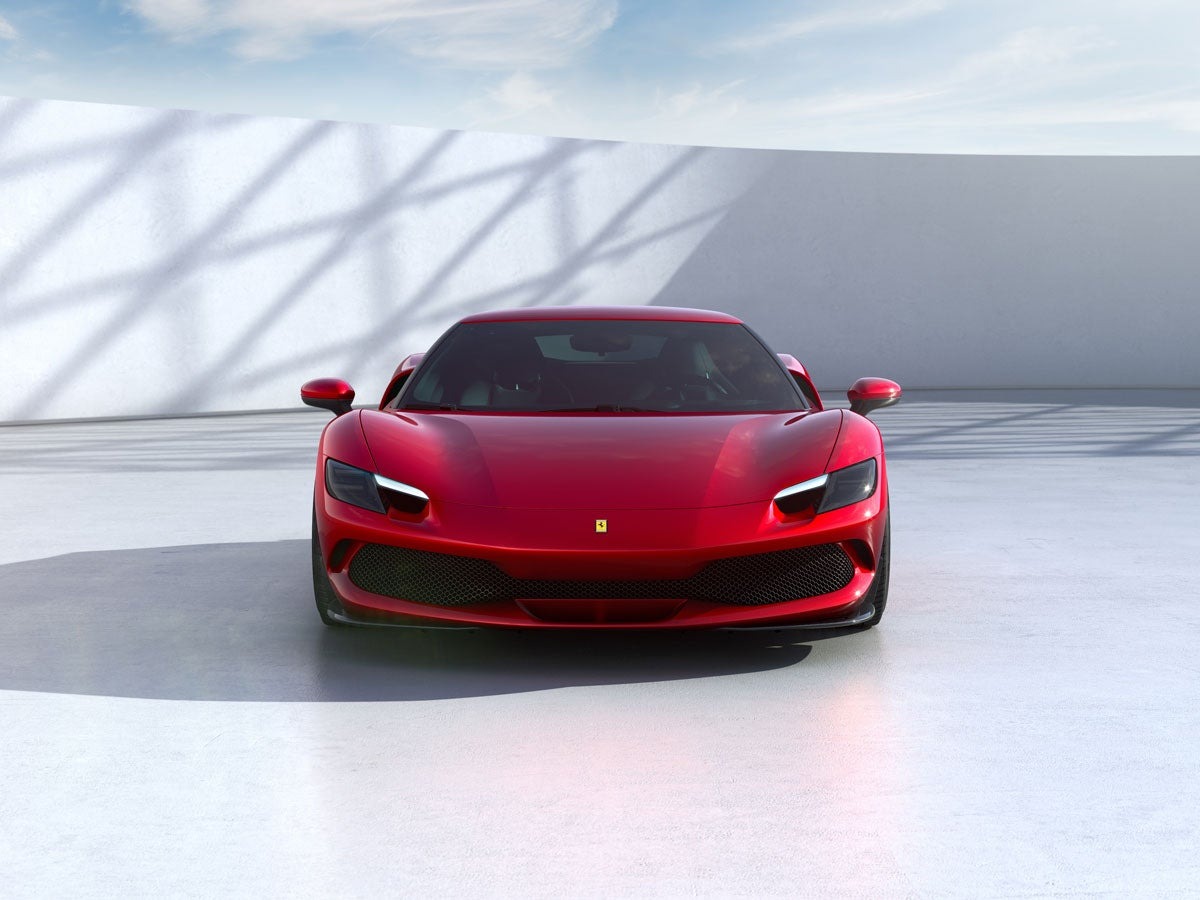
Label the comparison honestly: the 296 GTB is a twin-turbo V6 hybrid built in far larger numbers, not a 250-car hypercar, and the €269,000 figure comes from secondary reporting of Ferrari's European pricing, not from a Ferrari price list retrieved in this pass — it must be re-checked against a current Ferrari source on publication day, and the 14.1 line redone if it has moved. The comparison measures the step from a series luxury sports car to a capped, hand-assembled flagship in the same tax framing. It does not compare speed, and it does not imply the Ferrari is fourteen times less car.
What the price includes — and what it does not
Included at €3.8 million net:
- One Tourbillon in base specification, hand-assembled in Molsheim — the starting point before personalisation.
Not included — every one of these sits outside the €3.8 million:
- Taxes. The price is net. VAT / sales tax is charged on top at the buyer's market rate. As arithmetic illustration only — not a Bugatti quote — French VAT at 20% on €3.8 million would add €760,000, for €4.56 million before any option is chosen.
- Options and personalisation. Trim programmes such as Équipe Pur Sang and individual specification are extra; Bugatti has not published a ceiling, and no "typical" final price is claimed here.
- Registration, delivery and insurance. None is in the starting figure; none is quantified in the sources checked.
- Servicing. Contemporary dossiers report a four-year maintenance package for first customers, with details to become clear at first deliveries. That is a reported intention, not a term this draft can state as included — Bugatti must confirm it, and until deliveries are confirmed it cannot be described as something an owner has received.
Sources · 5 sources
- Bugatti Newsroom — 'The Bugatti Tourbillon: an automotive icon Pour l'éternité,' 20–21 June 2024: €3.8 million net starting price, 250 cars, V16/hybrid specification, mechanical cluster, deliveries then planned from 2026
- Bugatti Newsroom — 'Sound of a New Era: the Bugatti Tourbillon's V16,' September 2026, and releases to 8 October 2026: acoustic homologation; 'type approval has not yet been granted' footnote still current; 'Our production plan is full until 2030' (30 September 2026)
- Top Gear — 'Flat Out In The 1800hp V16 Bugatti Tourbillon!', 25 October 2026, and Ollie Marriage's written report: development car, Rimac driving; production starting 'in a few weeks'; handovers framed as still to come
- Bugatti Newsroom / 2026 reporting — La Manufacture, Molsheim (opened July 2026) and configuration of the first customer cars from 2025: production preparation, not deliveries
- Ferrari 296 GTB European pricing, secondary reporting — around €269,000 before taxes (counterpart; re-checked 12 November 2026)