

PHOENIX
Homebuilding in the Phoenix metro is about to get a factory floor, robots and artificial intelligence in a combination the region has not seen at this scale before. D.R. Horton, described in Promise Robotics' announcement as America's largest homebuilder by volume, has entered a multiyear agreement with Toronto-based Promise Robotics to support production of more than 1,250 homes, according to Promise Robotics' October 13 announcement and Real Estate Daily News reporting published October 16 that also drew on the Phoenix Business Journal.
The headline number is the homes. The more important detail for the East Valley may be where the work is expected to happen. Promise Robotics expects to have a homebuilding plant running in the East Valley in 2027, Real Estate Daily News reported, with manufacturing planned to begin in early 2027 at a Phoenix metro factory. According to the Phoenix Business Journal, as reported by Real Estate Daily News, the company has secured approximately 16,000 square feet in the Gilbert area. That footprint is compact by traditional factory standards, which is part of the point: this is presented not as a sprawling industrial plant built around one builder, but as a production hub designed to serve builders through a service model.
What the agreement actually does
Under the agreement, D.R. Horton will access Promise Robotics' Factory-as-a-Service capabilities, according to the company's October 13 announcement. Real Estate Daily News summarized the model the same way: builders get access to automated production without owning or operating factories themselves. In practical terms, the platform is described as translating existing home designs into production plans and robotic instructions, then coordinating manufacturing with onsite installation. The house design still starts with the builder. What changes is how parts of that design are turned into work a factory can carry out in a coordinated, repeatable way.
Promise Robotics said in its announcement that the agreement makes D.R. Horton the first major U.S. homebuilder to use its integrated production platform as the company expands its U.S. manufacturing network. That first-mover status matters in an industry that tends to move carefully. Homebuilding is local, cyclical and dependent on trades, permits, land and weather. A national builder putting more than 1,250 homes through a robotic production platform is a test that other builders will be able to read: either the schedules and consistency improve in a way that is hard to ignore, or the model stays a promising experiment.
Why D.R. Horton says it is doing this
D.R. Horton expects the partnership to improve construction schedules, expand capacity and increase operational consistency, according to Real Estate Daily News. In its own announcement, the company framed the decision in similar terms, with Brad Conlon, its senior vice president of strategic growth and innovation, saying the builder is always looking for innovations that can help it improve how it builds, with a focus on cycle times, production capacity, consistency and predictability. Promise Robotics' integrated platform, he said in paraphrase, gives the company a new capability to support those goals.
Those are not abstract goals in the Phoenix metro. Demand for housing across the Valley has repeatedly run into the same constraints: how quickly homes can be started, framed, finished and delivered, and how reliably a builder can repeat that process across communities. A factory model promises a different kind of control. Work that is sensitive to conditions on a job site can, in part, be planned and produced in a controlled setting, then coordinated with installation on site. The companies are careful not to describe this as robots replacing the entire build. The announcement describes production support — robotic manufacturing, factory operations and onsite installation working as one coordinated process — not a house rolling off an assembly line finished and ready for a moving truck.
Why Gilbert, and why the East Valley
The Gilbert location, as reported, puts the plant in one of the Phoenix metro's most closely watched growth corridors. Gilbert and the wider East Valley have spent years adding homes, schools, employers and infrastructure, and they sit within reach of construction activity across a large part of the metro. A factory there does not need to serve only Gilbert addresses to matter to Gilbert. If components and production capacity are organized in the East Valley, the effects — jobs, supplier activity, truck movements and builder schedules — will be felt locally even when the finished homes rise in other Valley communities.
Real Estate Daily News also reported, citing the Phoenix Business Journal, that Promise Robotics is recruiting a Phoenix metro plant manager to hire, train and supervise employees, and that the job listing indicates the facility will serve multiple homebuilders. That detail is worth underlining. D.R. Horton may be the first major U.S. builder announced for the platform, but the facility, as described in that reporting, is not presented as a single-builder shop. A multi-builder plant fits the Factory-as-a-Service idea: production capacity is the product, and more than one builder can buy into it without each one building, staffing and operating a factory of its own.
At the same time, some basic facts remain undisclosed. Promise Robotics declined to disclose its investment or anticipated staffing, according to Real Estate Daily News reporting on the Phoenix Business Journal. Readers should treat early enthusiasm accordingly. A 16,000-square-foot footprint, a plant-manager search and a multiyear agreement for more than 1,250 homes are concrete steps. They are not yet a public headcount, a dollar figure, or a guarantee about how quickly production will ramp once manufacturing begins in early 2027.
What this could mean for Valley homebuilding
The broader question is whether factory-based production can change the math on speed and consistency without changing what buyers ultimately purchase. The homes supported by this agreement are still D.R. Horton homes, designed by the builder and installed and finished through a construction process on site. What Promise Robotics is selling, according to its announcement, is infrastructure: a way for builders to access advanced production without taking on the cost, complexity and risk of developing and operating that infrastructure themselves. The announcement also placed the Phoenix factory within a wider U.S. expansion, describing it as a step in building a production network that can support builders across multiple markets.
For Phoenix, that network language matters. The metro is not being treated as a one-off demonstration site in the companies' public descriptions; it is described as an early U.S. manufacturing location, expected to begin production in early 2027, in a system designed to be repeated across geographies. If the Gilbert-area plant performs, the Valley could become a reference point other markets copy. If it struggles, it will still provide an unusually public test of where robotic manufacturing helps homebuilding and where the old job-site constraints reassert themselves.
There are also workforce questions that neither company's announcement, as reported, fully answers yet. A plant manager role charged with hiring, training and supervising employees points to human jobs around the robotic systems, not a lights-out factory with no people in it. How many jobs, what skills they require, and how factory roles interact with the trades who install and finish homes on site will become clearer as recruiting expands and the 2027 start approaches. For now, the most accurate description is the narrow one: a new kind of production job is being created in the Gilbert area, tied to a facility whose staffing scale the company has not disclosed.
Previously will follow the build-out as more specifics become public. Readers catching up on Arizona coverage can browse the Previously news index, read our recent story on Arizona Snowbowl's snowmaking and planned November 20 opening, or check a recent Las Vegas business story, SAHARA's crypto cage launch, for how another Southwest industry is testing a new production and payments model in public.
For Gilbert and the East Valley, the calendar is now the story to watch. Early 2027 is when manufacturing is planned to begin, according to both the company announcement and Real Estate Daily News. Between now and then, the signs of progress will be ordinary and telling: hiring beyond the plant-manager search, visible fit-out at the Gilbert-area space, and any additional builders named for a facility that, by its own job listing as reported, is meant to serve more than one. The robots, in other words, are not arriving as a spectacle. They are arriving as a factory schedule — and in homebuilding, schedules are everything.
Sources · 2 sources
- Real Estate Daily News — D.R. Horton Partners with Toronto-based Promise Robotics as Gilbert Area Factory Targets 2027 Launch (Oct. 16, 2026)
- Promise Robotics — Announcement of multi-year commercial agreement with D.R. Horton (Oct. 13, 2026)
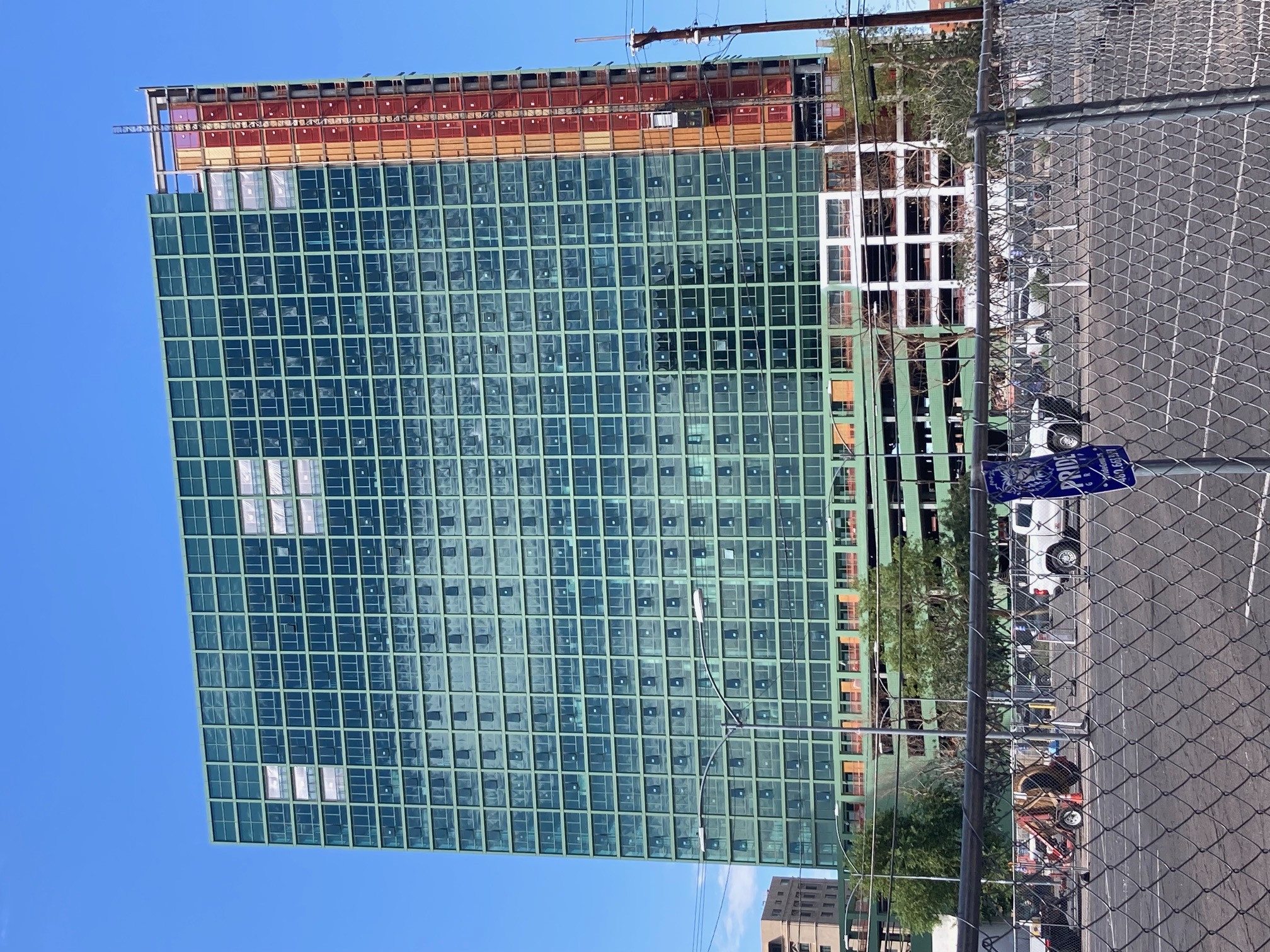
Metro: Phoenix · Gilbert, Arizona. Photo: file photo of construction in Phoenix, via Wikimedia Commons.