
Walk the Encore Esplanade at the Wynn — past the restaurants, past the shopping, past everybody dressed for a night they're trying to make expensive — and one of the calmest rooms on the Strip has a gorilla in it.
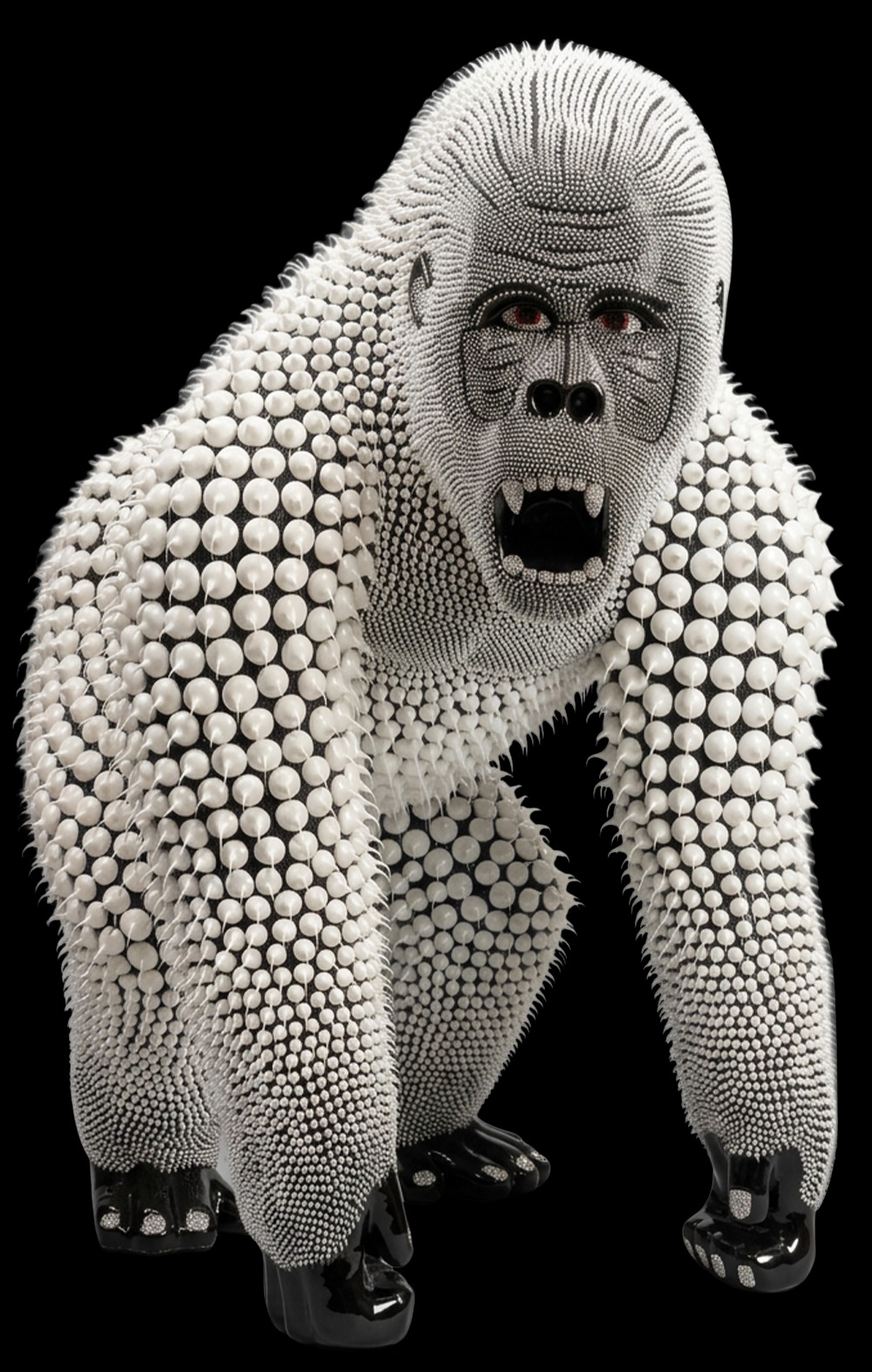
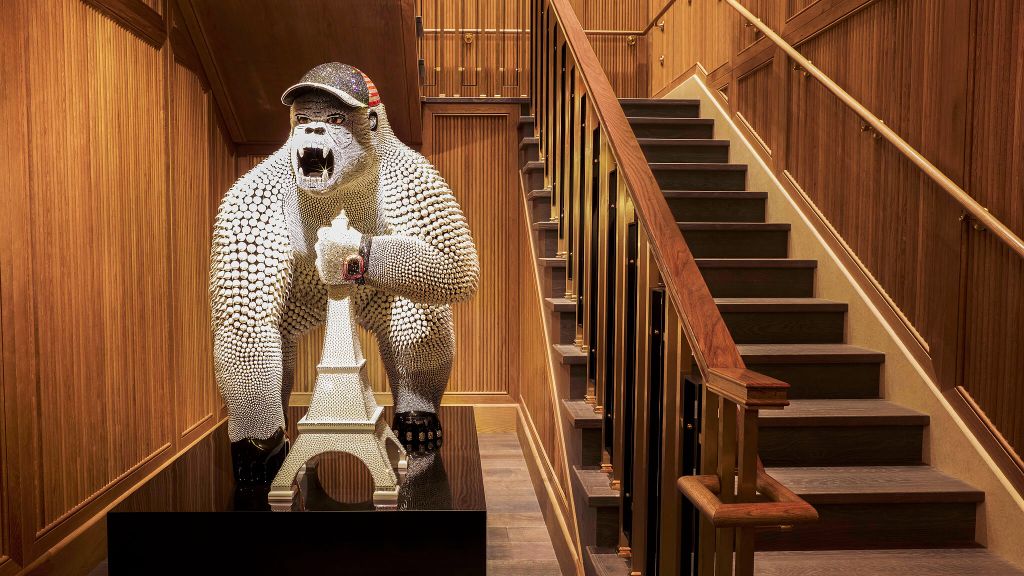
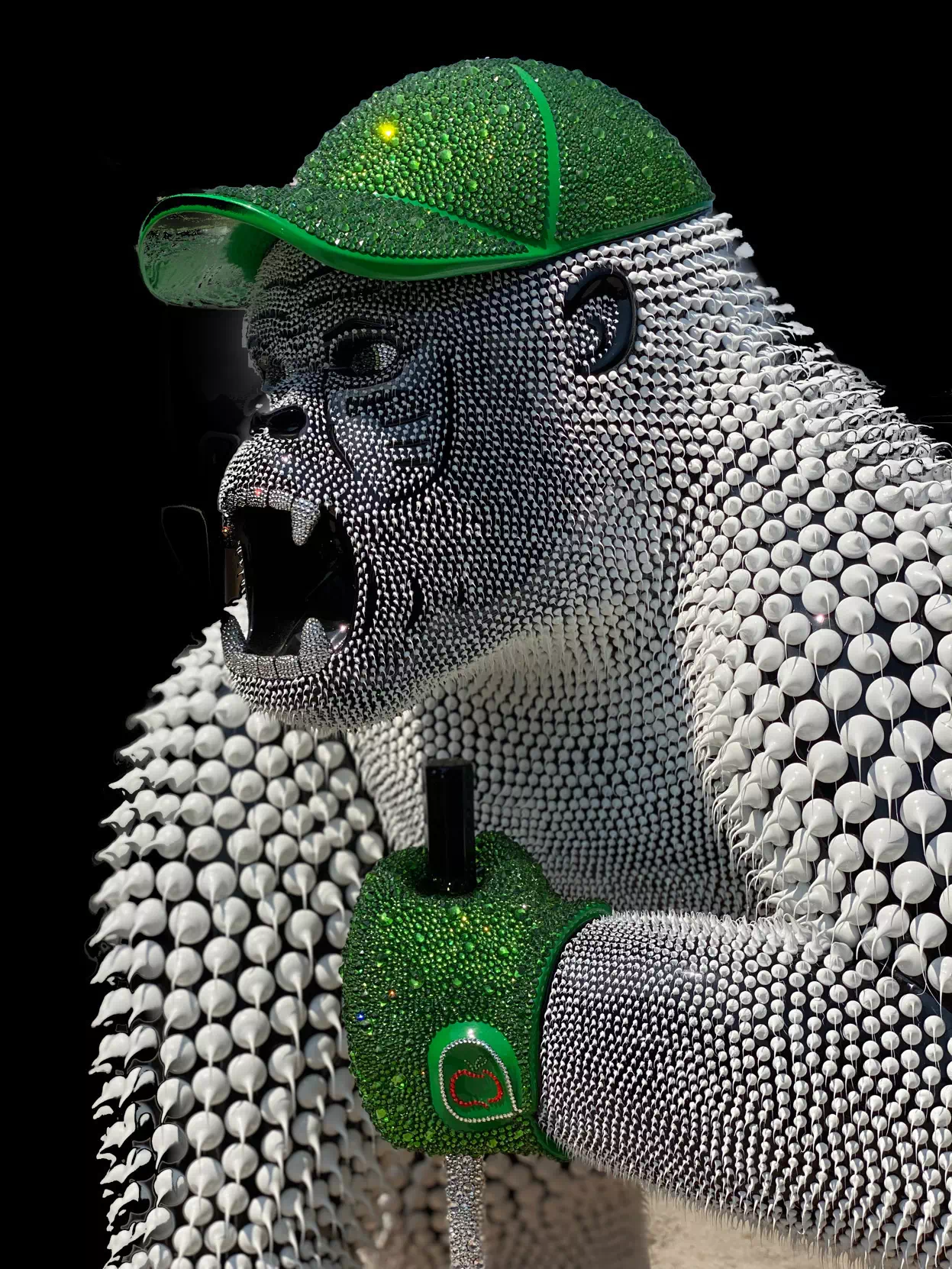
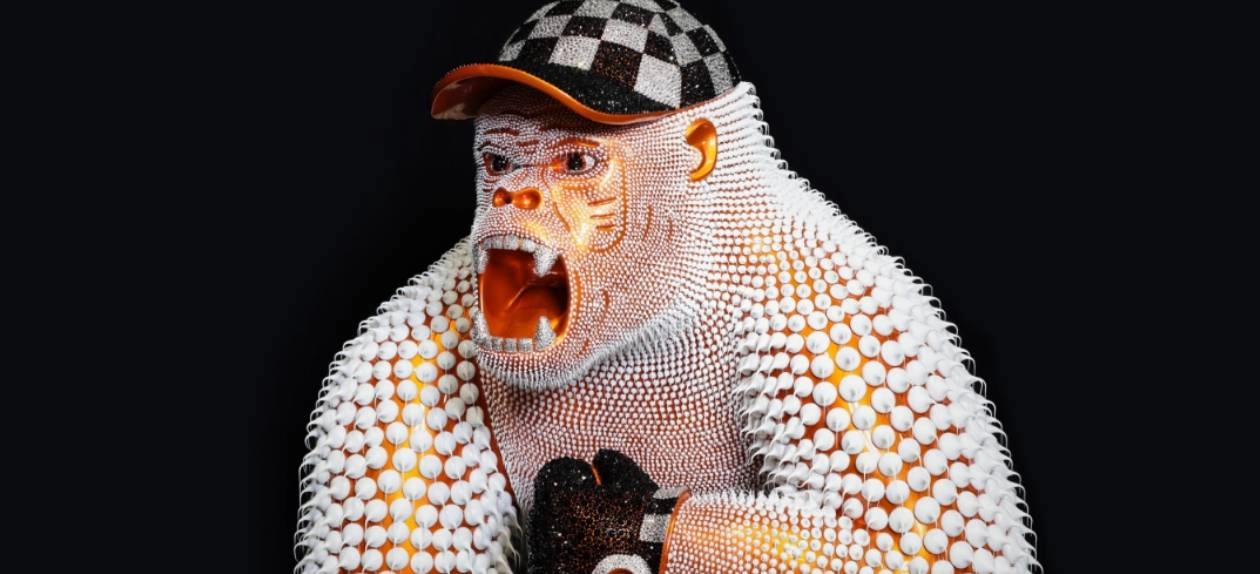
He's on all fours behind the glass at Eden Gallery, mouth open, mid-roar, and he is covered. Not painted. Not beaded. Covered — thousands of silicone points in shifting white patterns, big pearl studs rolling down the arms, fine grain across the face, Swarovski crystals worked into the teeth, the nails, down where the light catches. The eyes burn red-amber. The whole animal throws light back at the chandeliers like it's arguing with them. Eden's catalogue calls him Gorilla Black on Four Legs — and Black is the catalogue word, because the animal himself photographs pearl-white. The name is the first trick he plays on you. Everybody who works that floor just calls him the gorilla, the way you'd talk about a regular. A famous one.
The man who built him is Eddy Maniez, born in Grasse, France, in 1969, and the gorilla is only the front door. Get past him and there's a whole zoo — a crocodile, turtles, an octopus the size of a room, fish the color of a Klein painting — all of it built the same impossible way, one dot at a time, by hand.
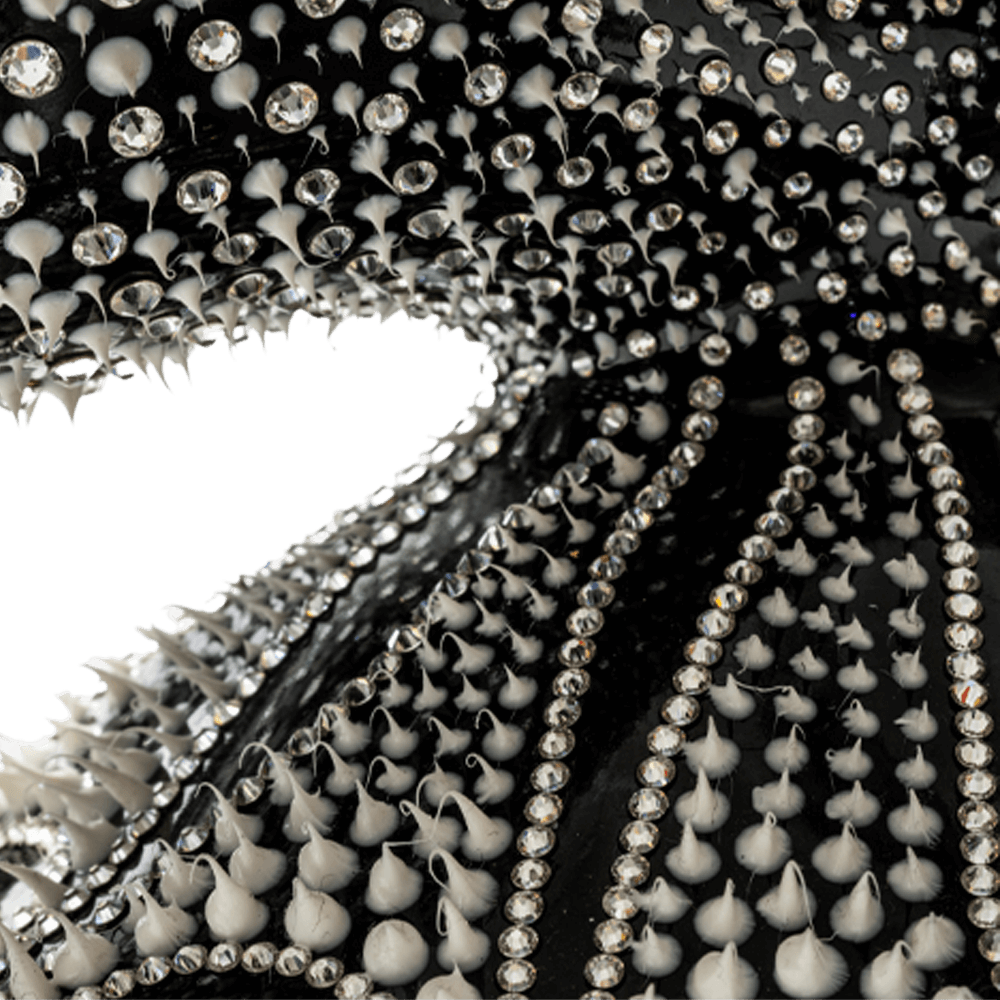
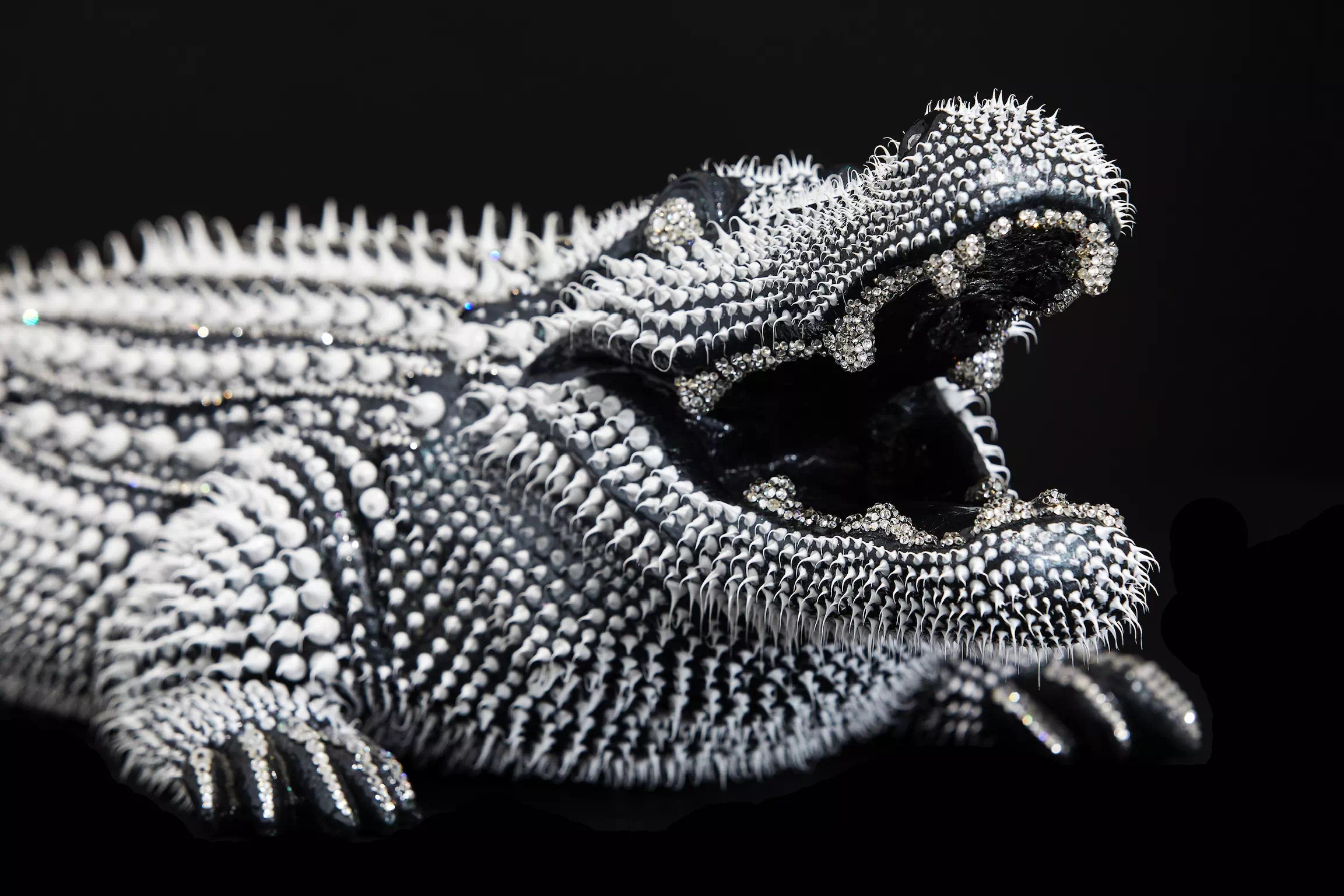
Maniez came to art sideways. He worked the forests around Grasse before any of this, a forester, a man whose job was trees and weather. He's self-taught. The technique arrived in 2006 and he spent years sharpening it, and the origin story tells you everything about how his mind works: he was thinking about boats. About how you'd protect something fragile on rough water — wrap it in soft silicone studs so the impacts glance off. Somewhere between the dock and the studio, the protection became the art. A resin or ceramic animal gets dressed, point by point, in silicone spikes squeezed out of a manual gun — the same humble tool you'd seal a bathtub with — every dot placed freehand, no sketch, no stencil, no guide marks. Just his eye, his breath, and his hand, thousands of times over, until the animal disappears under the pattern and comes back as something else. His own site calls him the man with three billion points. Spend ten minutes looking at one of these animals up close and you stop doubting the math.
Then the crystals. Swarovski, chosen and set by hand into the places the eye lands first — teeth, nails, eyes, the ridge of a brow. This is where the work stops being sculpture and starts behaving like jewelry. A Maniez animal doesn't sit in a room. It performs in one.
And you're allowed — encouraged — to touch it. He took that from Magritte: it is forbidden not to touch. In a world where gallery art comes with a guard and a rope and a look that says don't even breathe on it, Maniez built art that wants your hand on it, spikes soft under your palm, crystals hard underneath. That invitation is the whole personality of the work. It's luxury that doesn't act precious about itself.
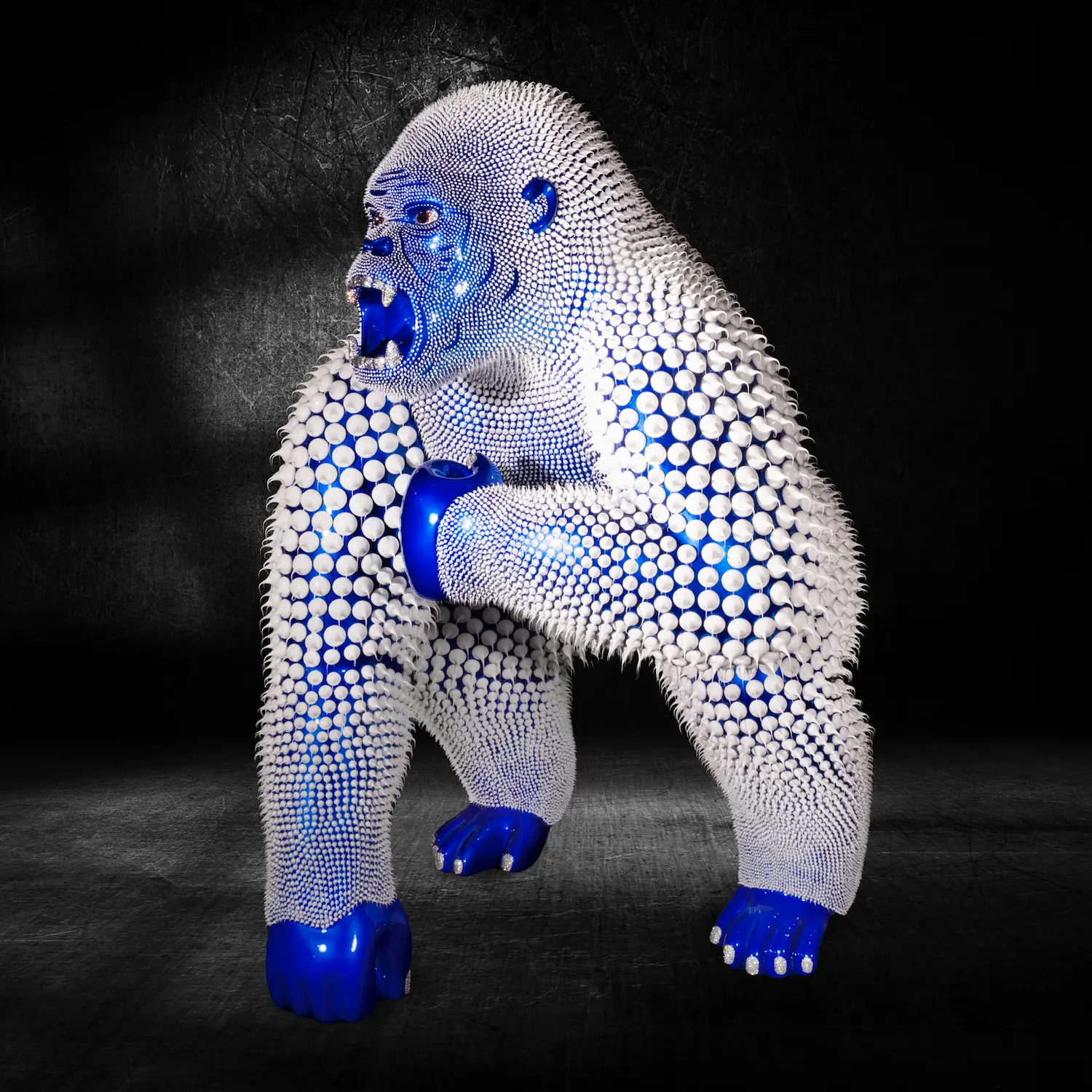
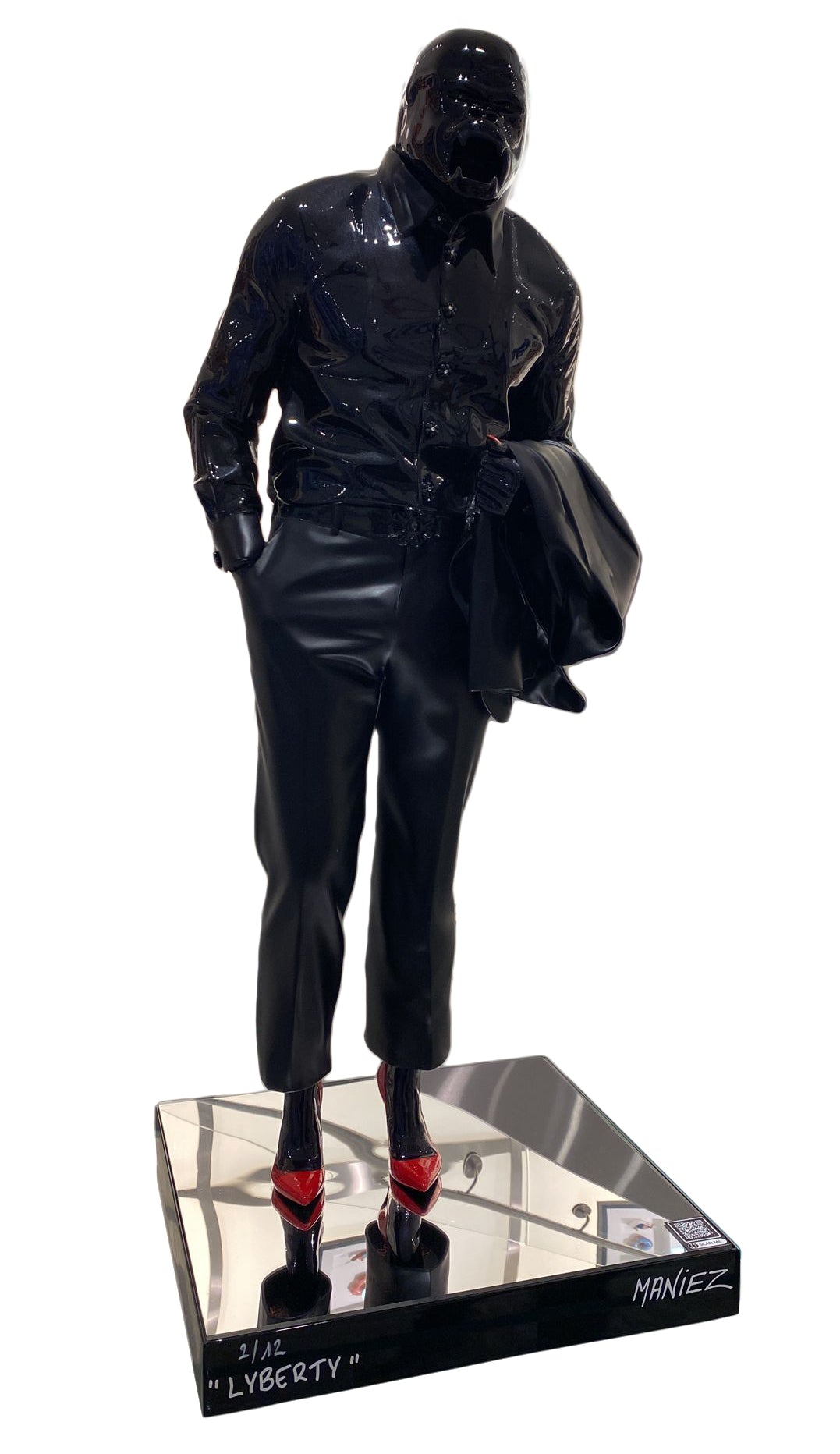
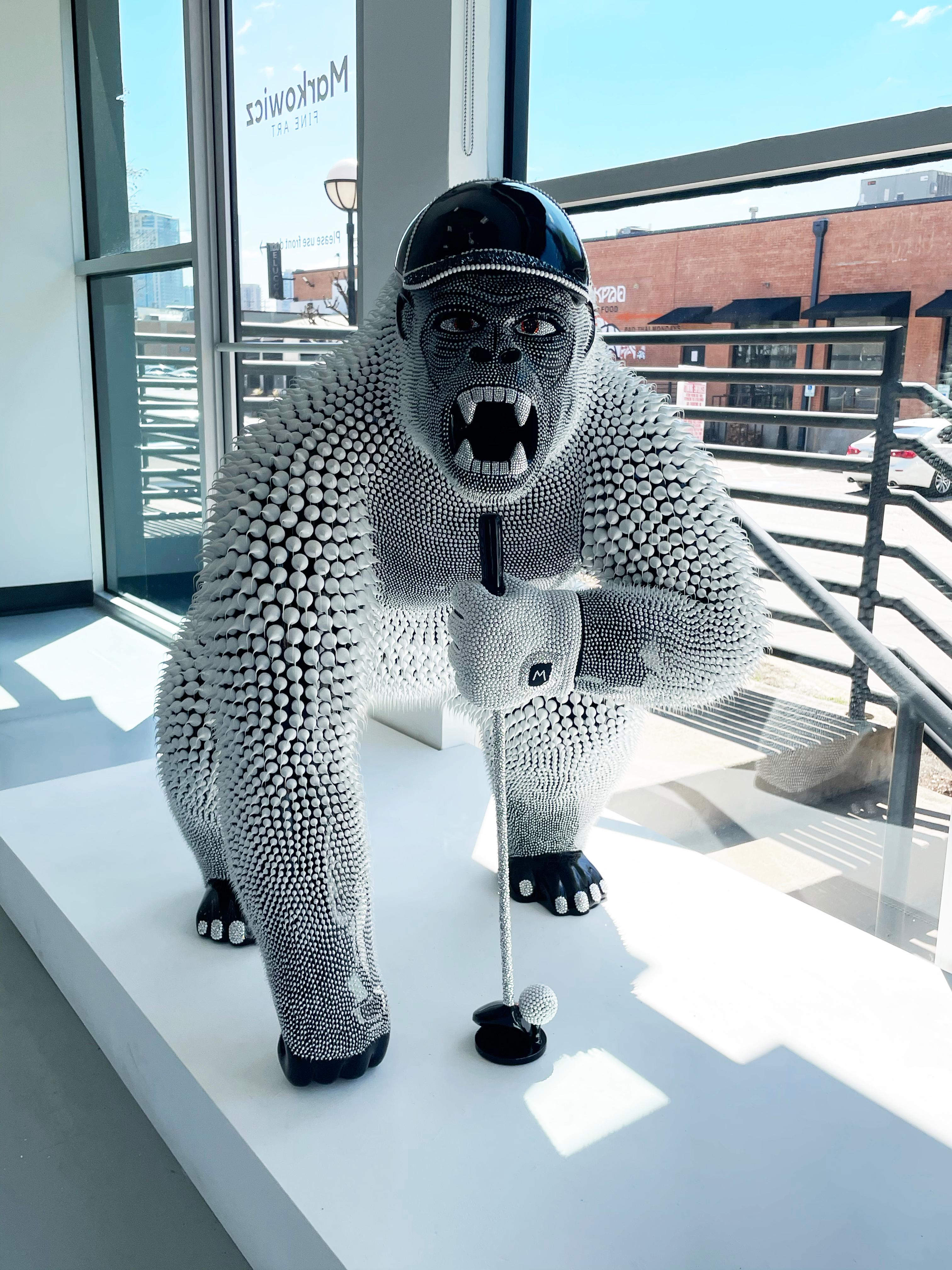
The gorilla is his totem, the animal he returns to in every colorway — black, blue, green, red candy. He'll build one at a metre tall or five metres tall, on commission. One black gorilla, three metres and around 400 kilos, took 500 cartridges of silicone and went home with a client in the States. There's a gorilla-headed Liberty in a black suit and red heels, jacket slung over one arm, her name spelled his way on the base — LYBERTY. There's a golfer: cap on, gloves on, and yes, the club is set with crystals too, the nails, the teeth — the joke told completely straight, which is why it lands. Stand in front of the golfer and try not to smile. You can't. That's craft doing that.
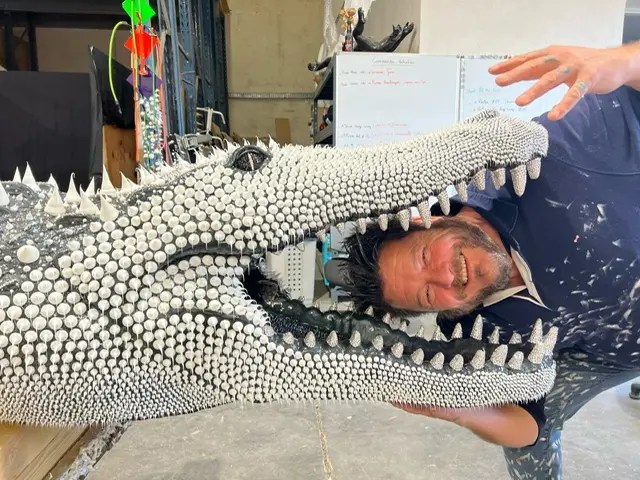
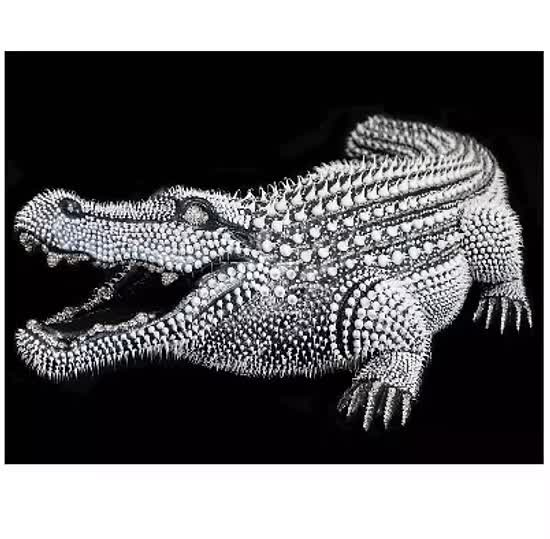
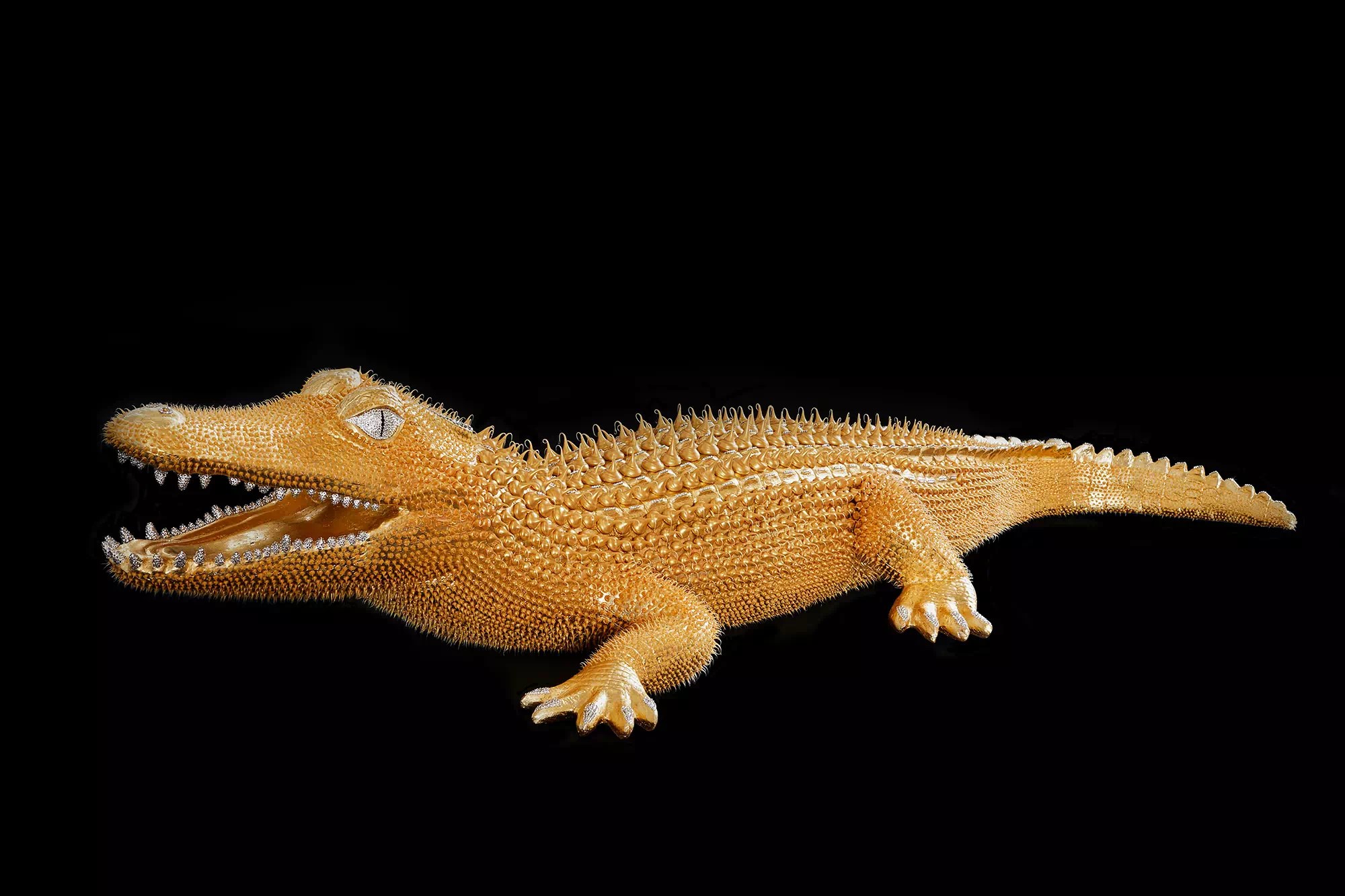
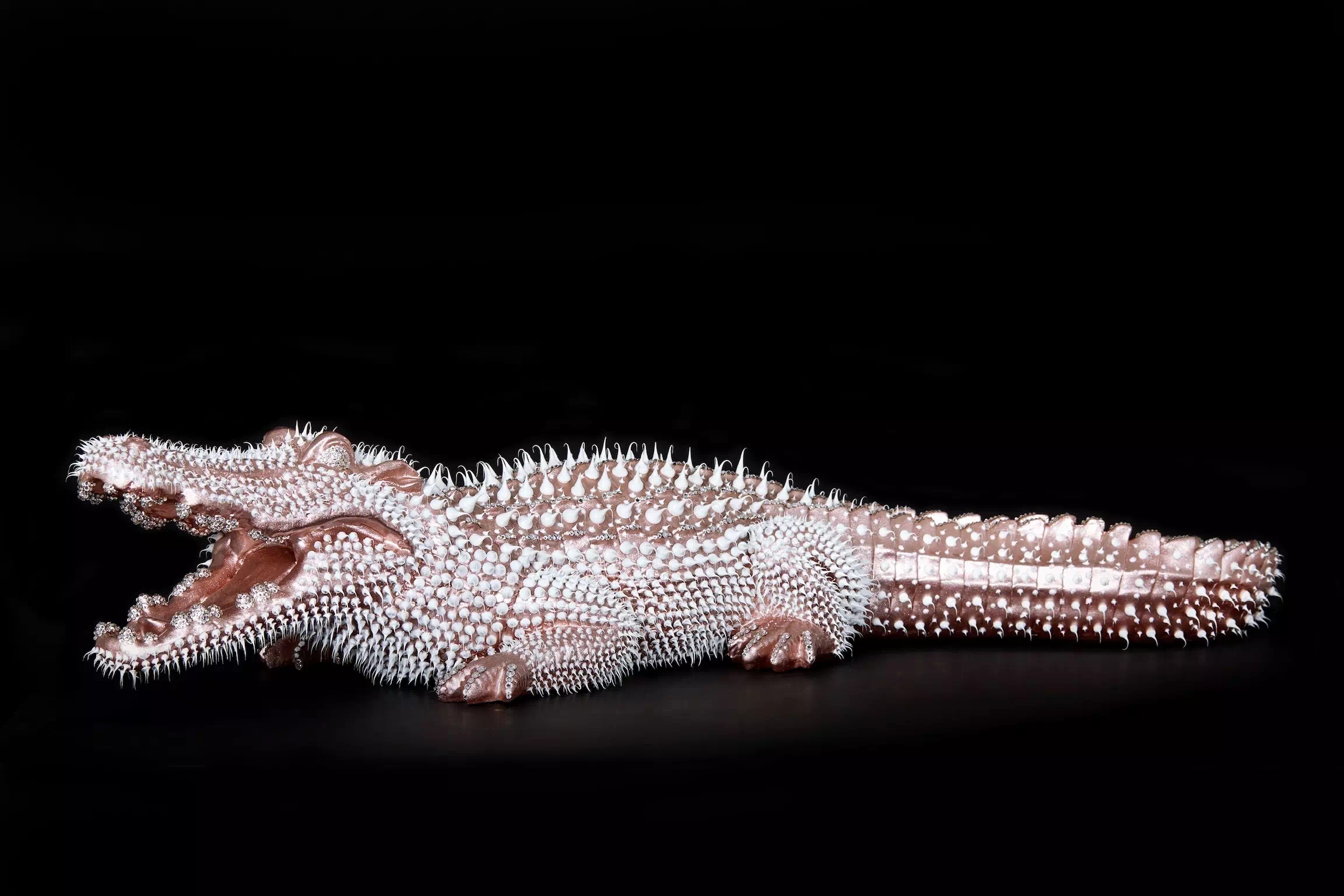
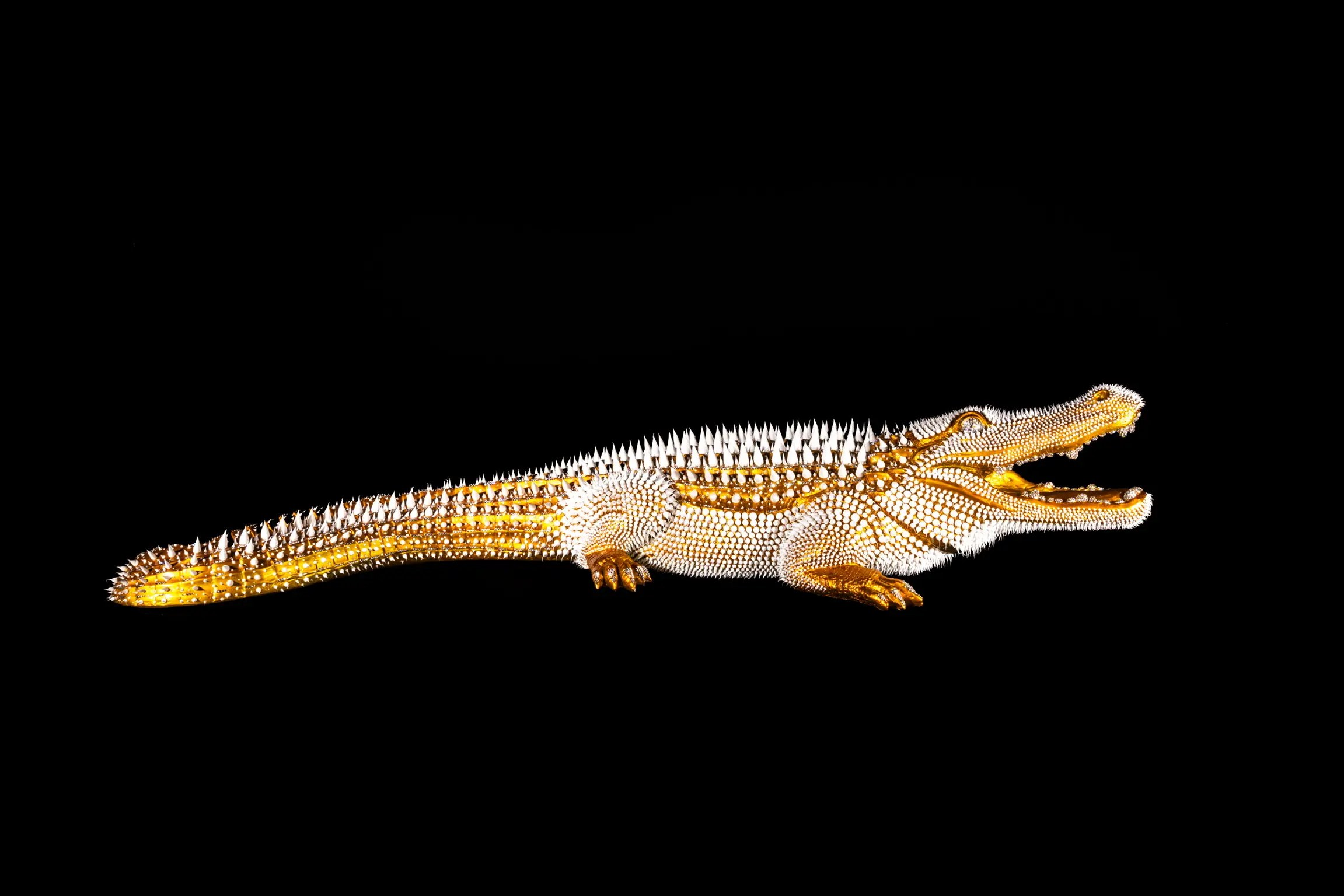
But stay with the menagerie, because the gorilla has company and some of it out-sparkles him. The crocodile runs three metres long — a unique edition, one only: a smooth resin shell dressed point by point in silicone spikes, Swarovski crystals set into the teeth and the eyes and riding that long armored back until the whole animal gleams like beadwork. He's catalogued as Crocodile Black, and he plays the gorilla's trick — the animal in the photograph is white, pearl dots and crystal teeth, not a black scale on him. You won't meet him in Las Vegas. He's stock at Class Art in Biarritz, the French gallery that carries Maniez back home, and Class Art actually prints a price on him: €47,000. Remember that number. It's the rare case of a Maniez with the tag showing.
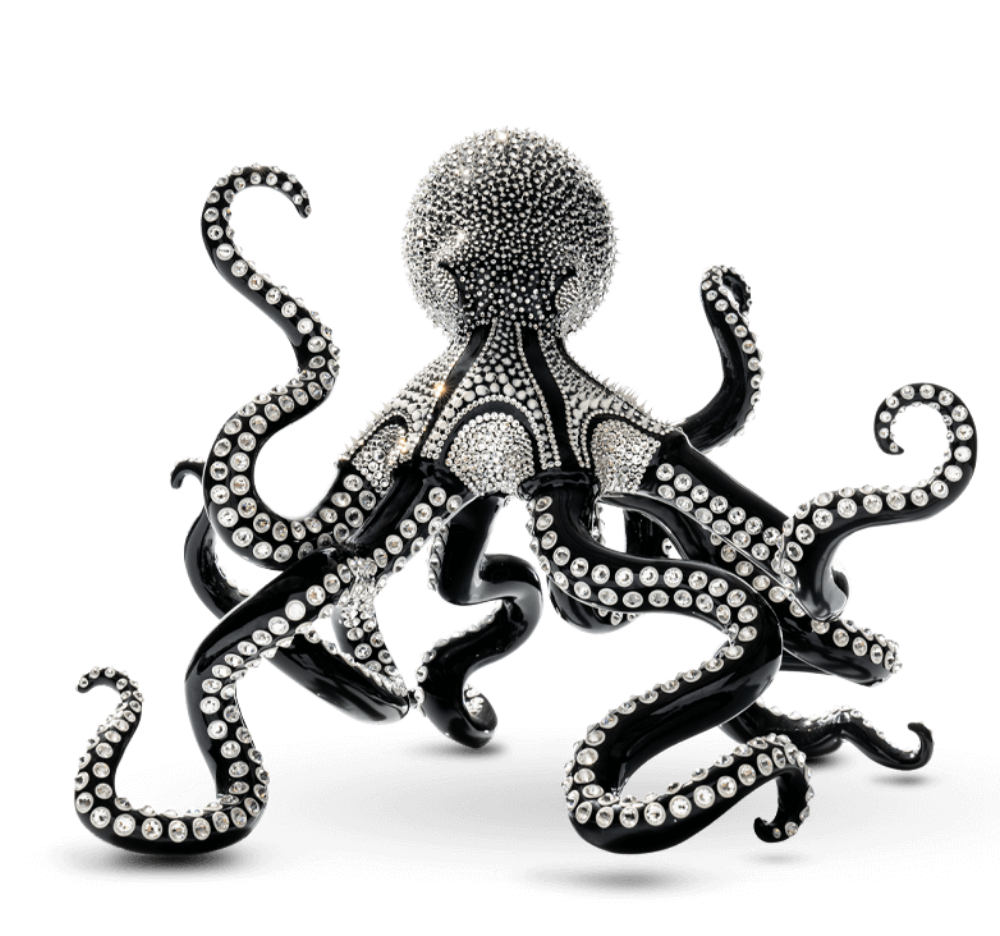
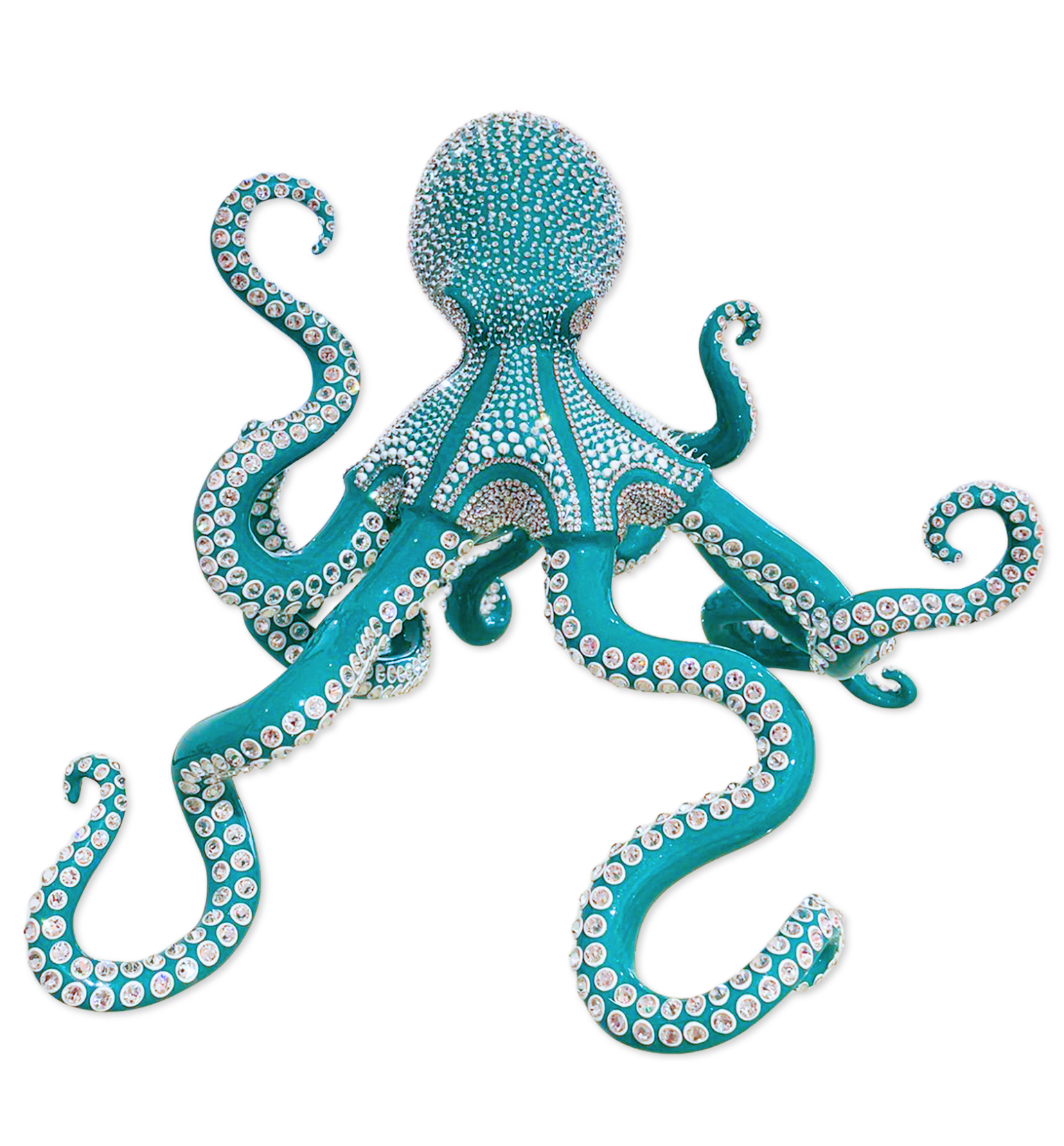
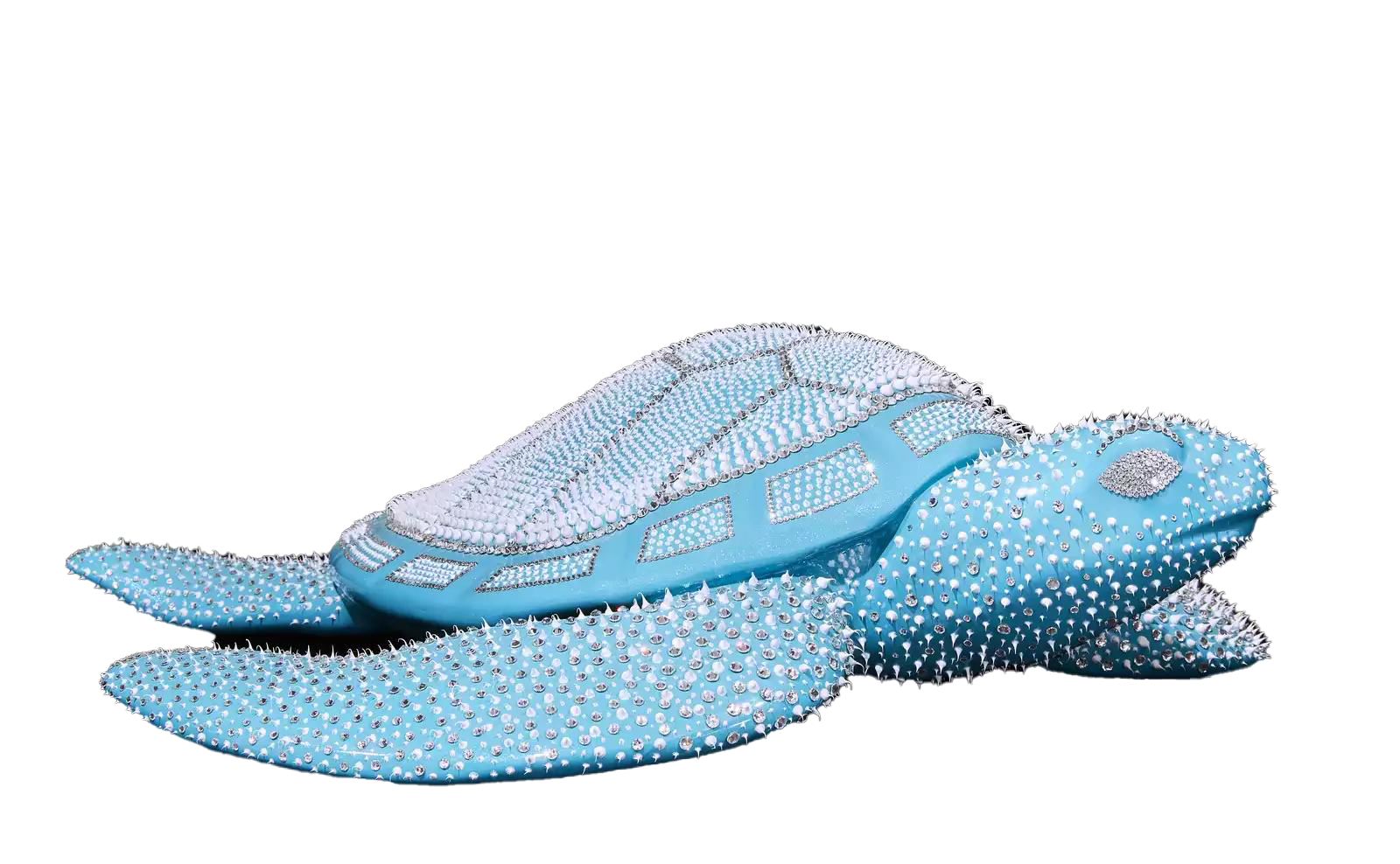
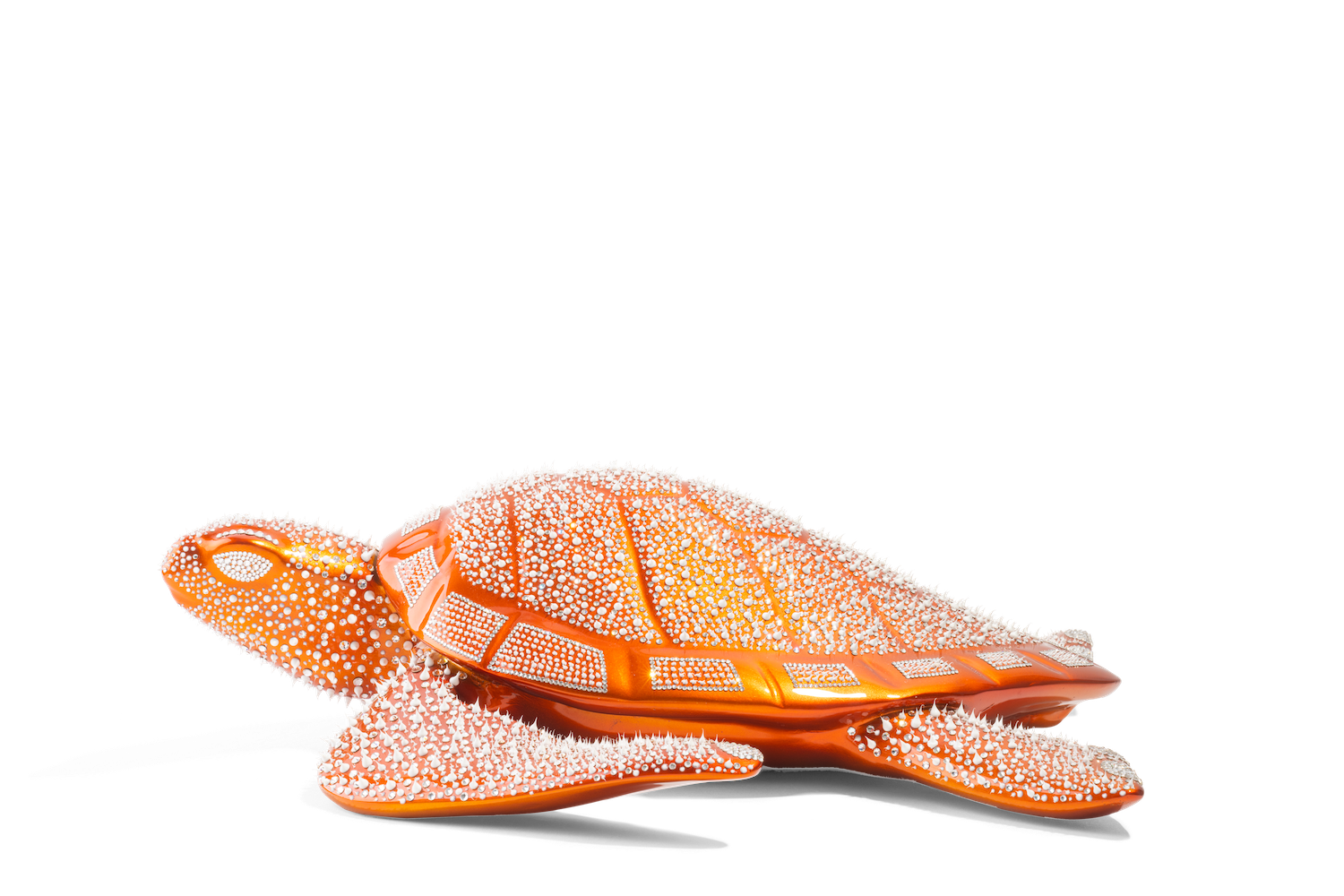
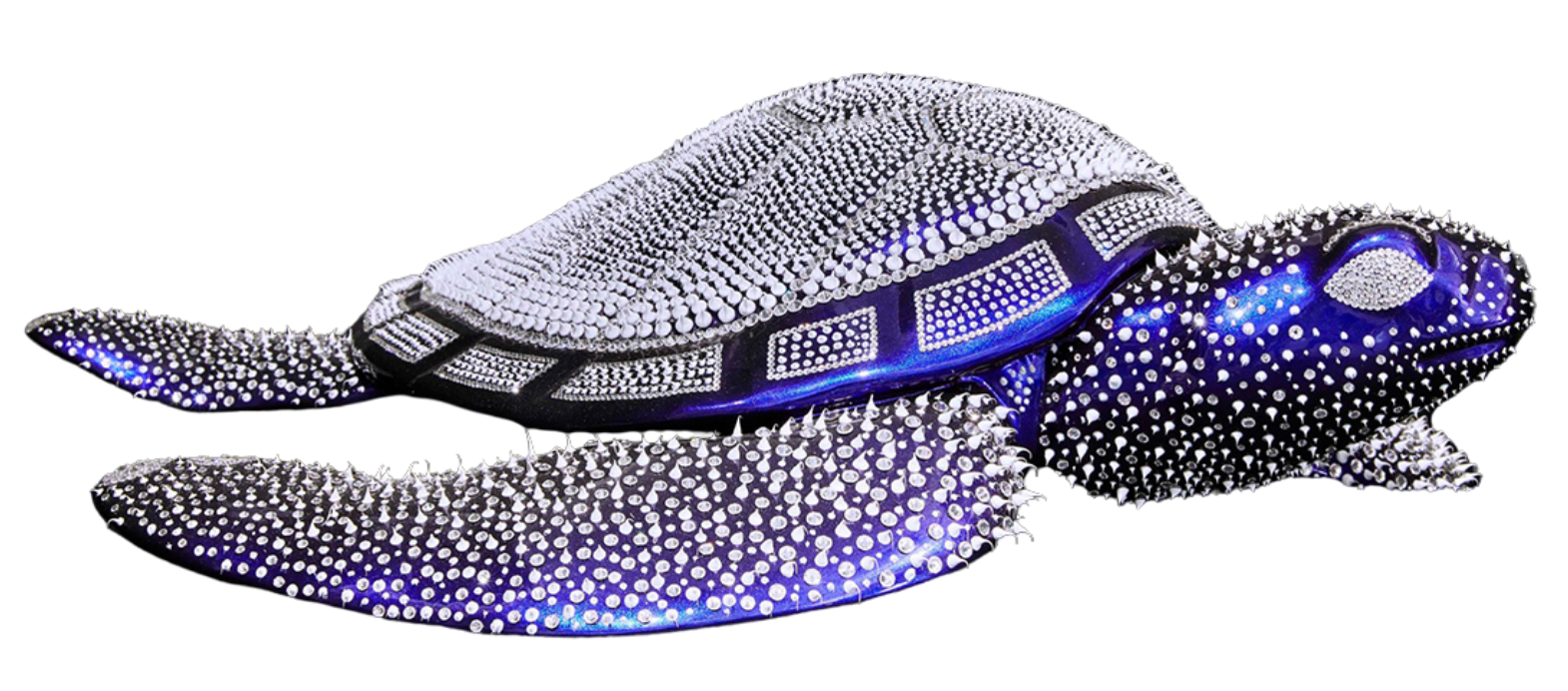
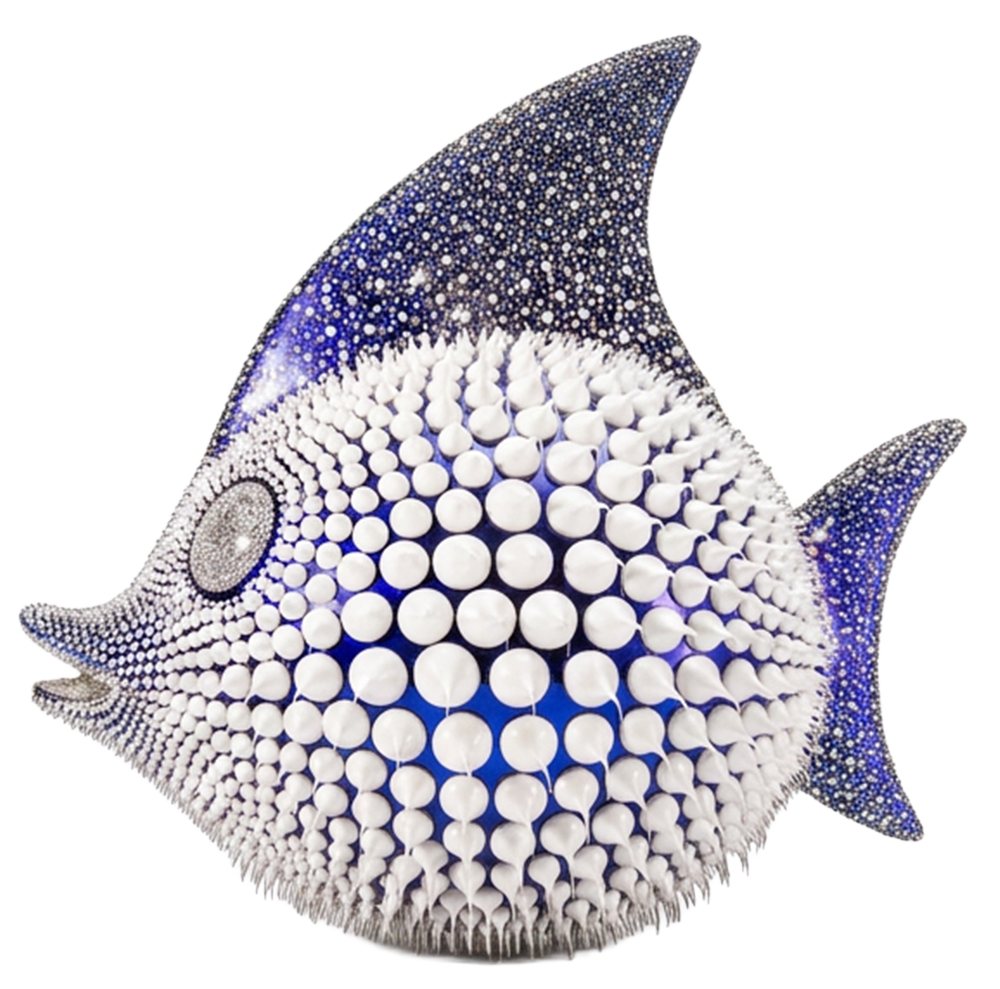
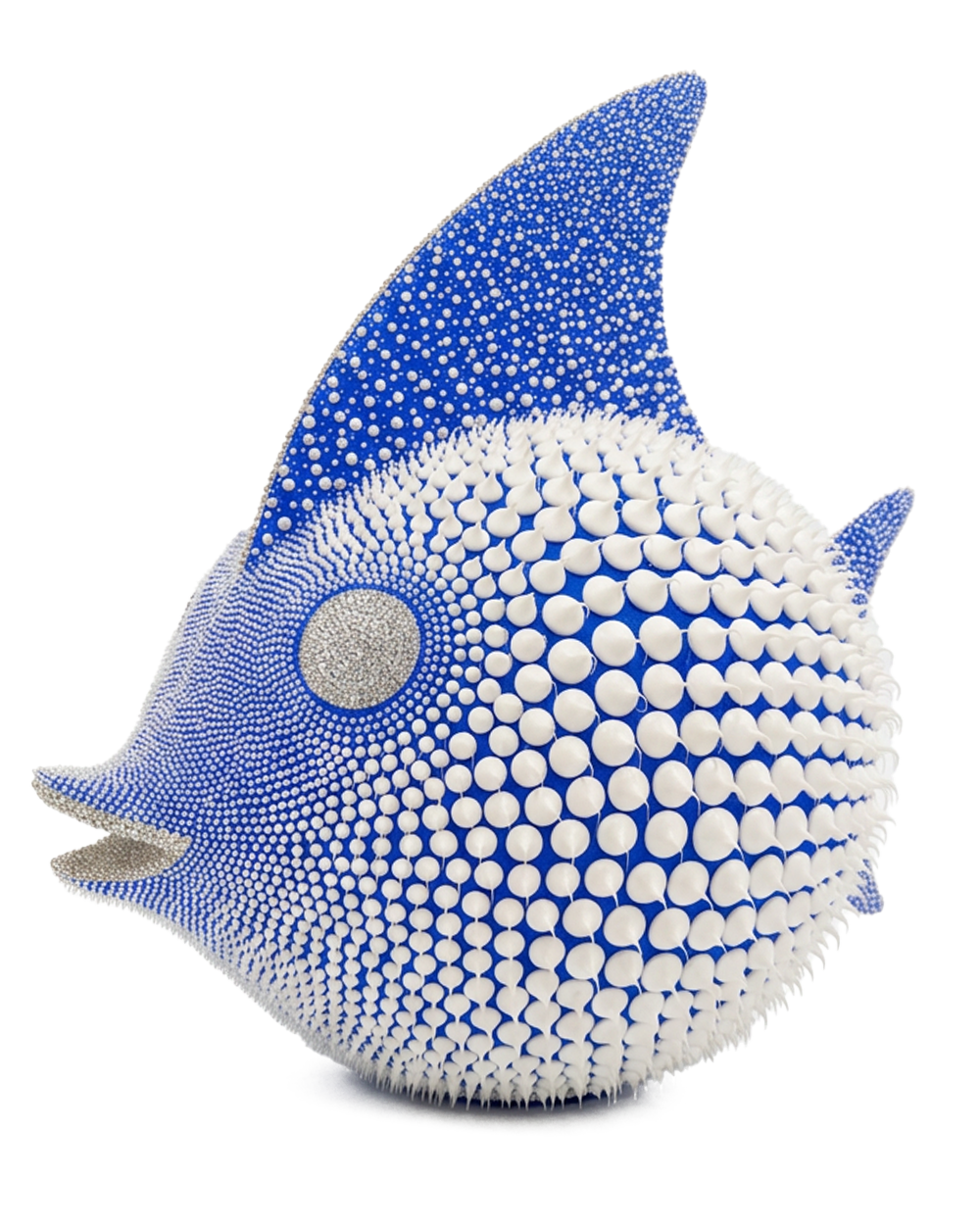
The sea animals might be his truest love — the forester became a man of the ocean somewhere along the way. His octopus for the Eden gallery at the Waldorf Astoria in the Maldives sprawls two metres by nearly three, and the head alone carries around 60,000 crystals. Sixty thousand, on one head, each one placed by a person. His turtles travel too — a turquoise one at Eden runs 130 centimetres long, and another, set with 12,000 crystals, was an auction highlight at a Seychelles celebration in Monte Carlo. At Eden you'll find his moonfish in blue and in Klein blue and in a chameleon colorway, and octopus after octopus in black and pink. The whole kingdom, dotted.
Which brings us back to the Wynn, and to the number Eden won't give you.
There is no price on the gorilla. Eden lists him the old way: inquire. Price on request. For scale — real scale, not gallery fog — look at the red one back in France: the Red Gorilla Candy, a one-metre gorilla in the same resin, silicone and Swarovski, unique, listed at Class Art Biarritz at €22,000. One metre. The animal holding court at the Wynn plays in a larger league than that, and Eden would rather you sit down with an advisor than read a tag. That's not a missing detail. That is the detail. At this end of the market the work is public and the price is private — anybody walking to dinner can stand in front of him for free, and the number only exists for people who ask properly.
And honestly? A casino gallery on the Strip is the most natural home this work could have. Las Vegas is a city built out of light doing tricks, and Maniez builds animals out of light doing tricks — every crystal a little mirror, every spike catching the room and throwing it back. The gorilla belongs in that building the way a shark belongs in water. He just stands there, covered in a fortune of tiny stones, roaring silently at the high rollers, and the high rollers stop. Every night, they stop.
Access is the product. The gorilla is doing the selling.