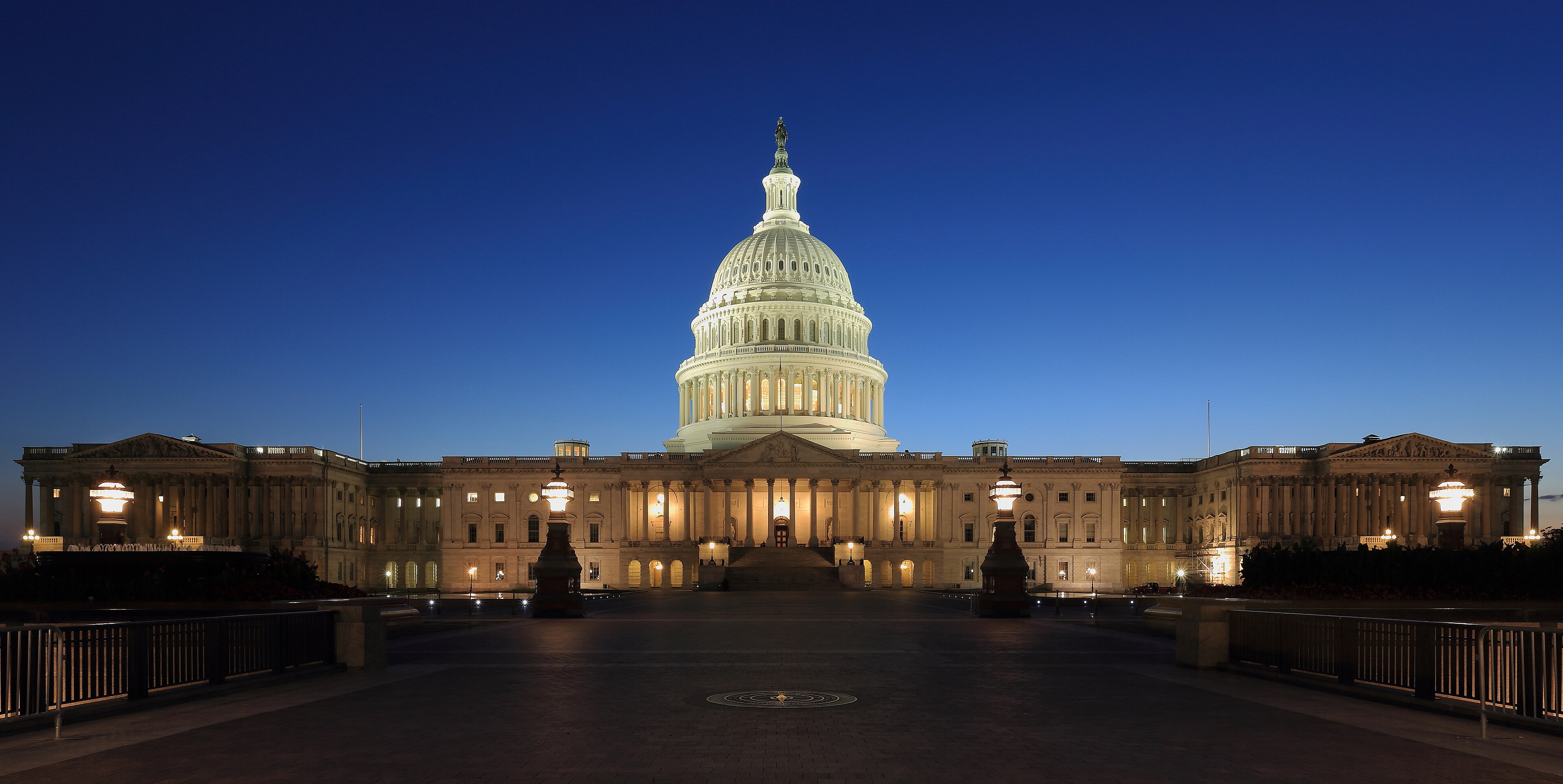

By the time the counting paused on Wednesday morning, the map had changed hands. Democrats won the Senate and the House in the same election — a midterm sweep of Congress — and took a majority of the nation's governorships with them. The Associated Press called the Senate for the Democrats at 11:37 p.m. Eastern on Tuesday and the House in the early hours of Wednesday. Every result in this story is a media race call. Nothing has been certified in any state.
It was also a night of firsts that crossed party lines. Five Black governors will serve at the same time come January — in Georgia, Florida, Wisconsin, Maryland and Nevada. Before Tuesday, only three Black Americans had ever been elected governor, in 1989, 2006 and 2022, and never two at once.
The Senate: seven flips
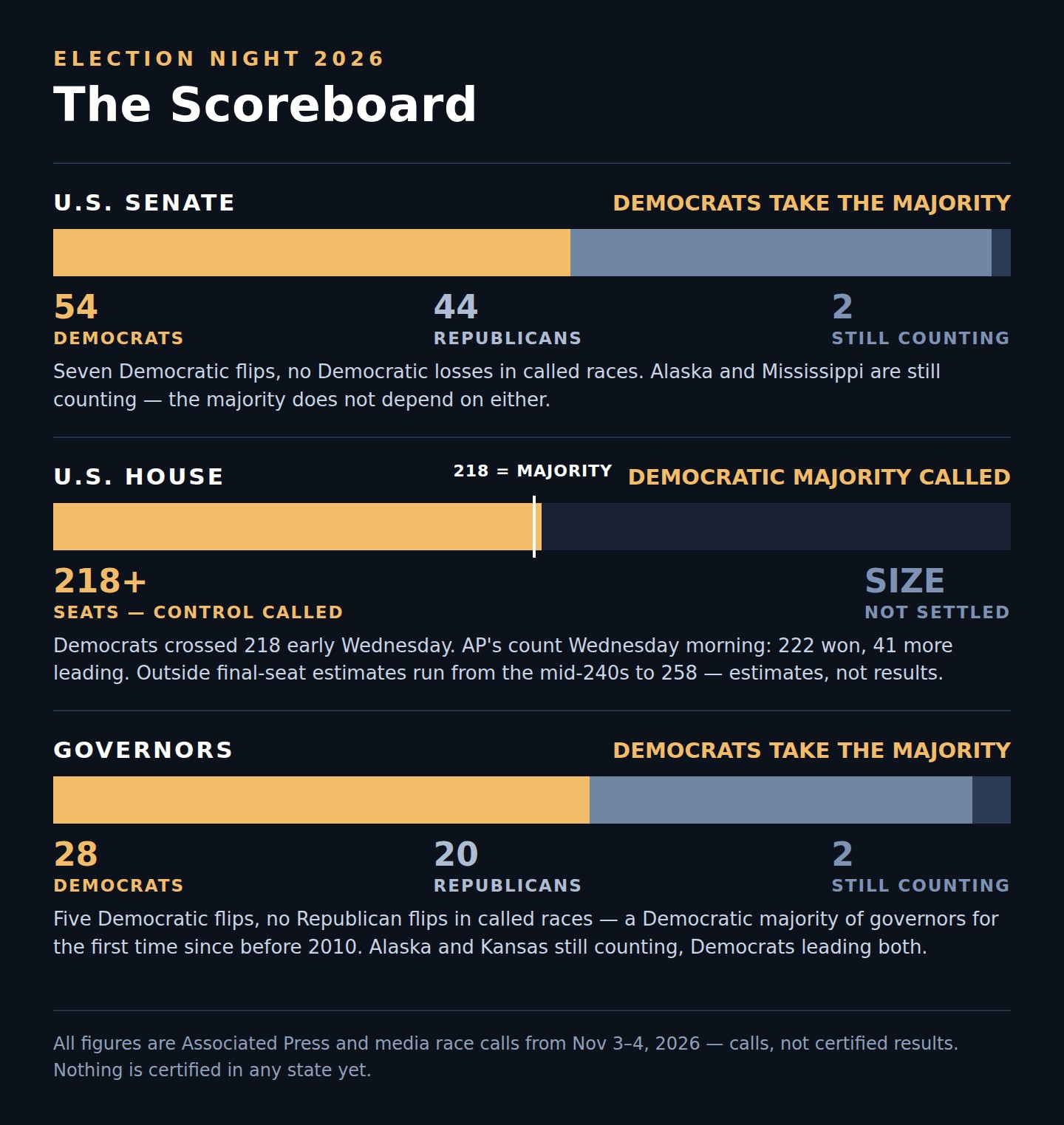
Democrats flipped seven Republican-held Senate seats and, in the races called so far, lost none of their own. In Texas, James Talarico beat Ken Paxton. In Ohio's special election, Sherrod Brown beat Jon Husted. In Maine, Troy Jackson beat Susan Collins, a five-term incumbent. In North Carolina, Roy Cooper beat Michael Whatley. In South Carolina, Annie Andrews beat Darline Graham, in a state the president carried by about 18 points in 2024. In Iowa, Josh Turek beat Ashley Hinson. And in Kansas, Adam Hamilton beat Roger Marshall — Kansas will send a Democrat to the Senate for the first time since 1932.
Democrats also held the seats that mattered most: Jon Ossoff won again in Georgia, and in Michigan, Abdul El-Sayed will become the first Muslim U.S. senator. The count stands at 54 Democrats to 44 Republicans, with two races uncalled. In Alaska, Republican Dan Sullivan leads Democrat Mary Peltola by 1,677 votes with about 72% counted; the state's ranked-choice tabulation is scheduled for November 18. In Mississippi, Democrat Scott Colom leads Republican Cindy Hyde-Smith by 43 votes in the latest count, with affidavit ballots under review and a December 1 runoff possible if nobody clears a majority. The Democratic majority does not depend on either race.
The House: past 218, size unsettled
Democrats crossed the 218 seats needed for the majority early Wednesday. The seat that put them over was Texas's 35th district, won by Johnny Garcia — a district Republicans had redrawn for themselves in the mid-decade redistricting fight. That gamble largely failed: of at least 15 targeted Democratic seats, Democrats held at least eight and flipped at least four the other way (Reuters; CNN). By Wednesday morning, the AP count stood at 222 Democratic seats won, with 41 more leading. How large the majority ends up is not settled — outside final-seat estimates have ranged from the mid-240s to 258, and those are estimates, not results. When the new Congress convenes on January 3, Hakeem Jeffries is expected to be elected Speaker — the first Black Speaker in the House's history.
Five governors, one record
Before Tuesday, the all-time list of elected Black governors held three names: L. Douglas Wilder in Virginia in 1989, Deval Patrick in Massachusetts in 2006, and Wes Moore in Maryland in 2022. Tuesday added four more, and Moore was re-elected. When the winners are sworn in this January, five Black governors will hold office at the same time.
Georgia: the first Black woman
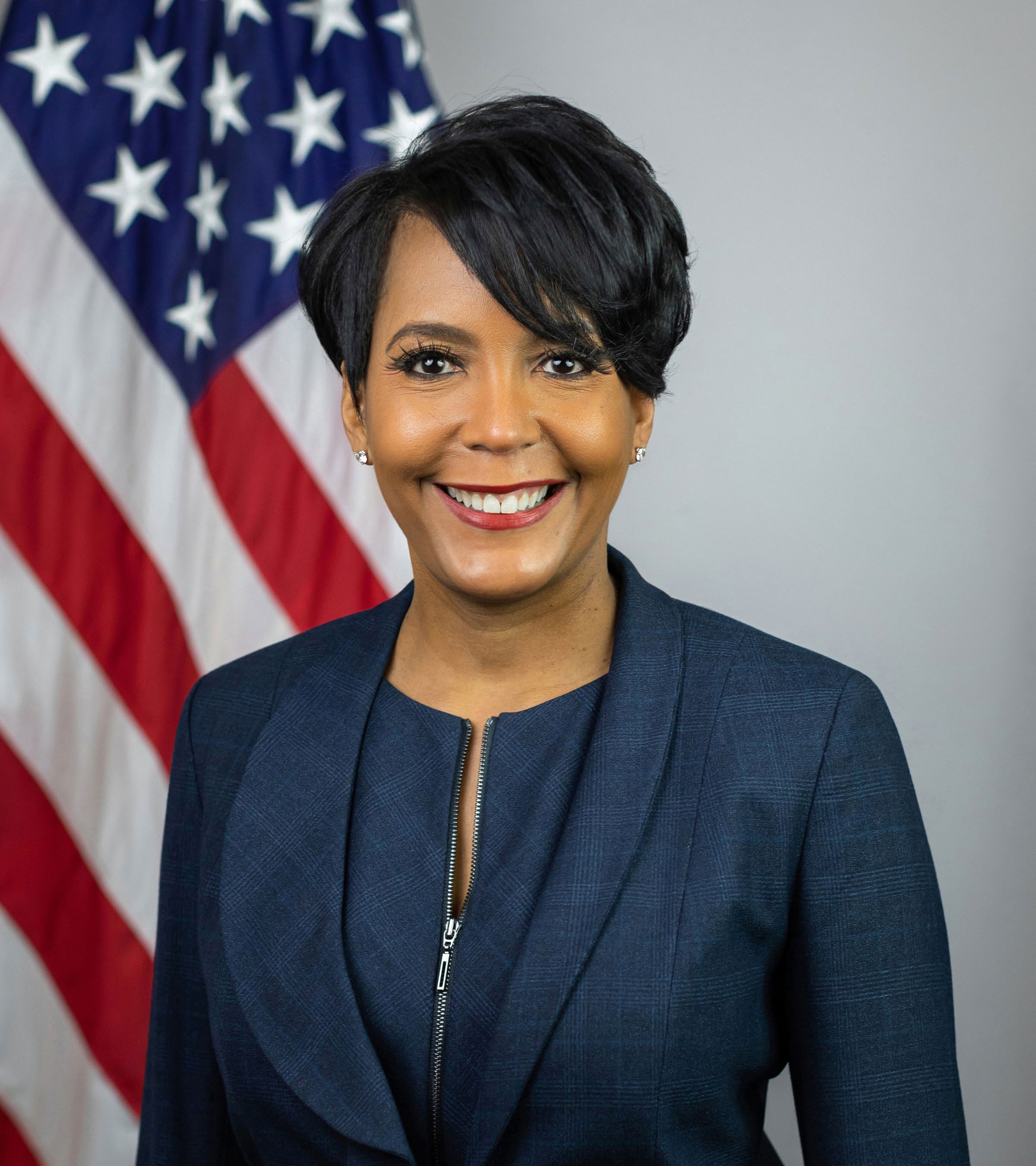
Keisha Lance Bottoms, the former mayor of Atlanta, defeated Republican Rick Jackson to flip Georgia, ending about 24 years of Republican control of the office. She is Georgia's first woman governor — and the first Black woman ever elected governor of any state.
Florida: the Republican
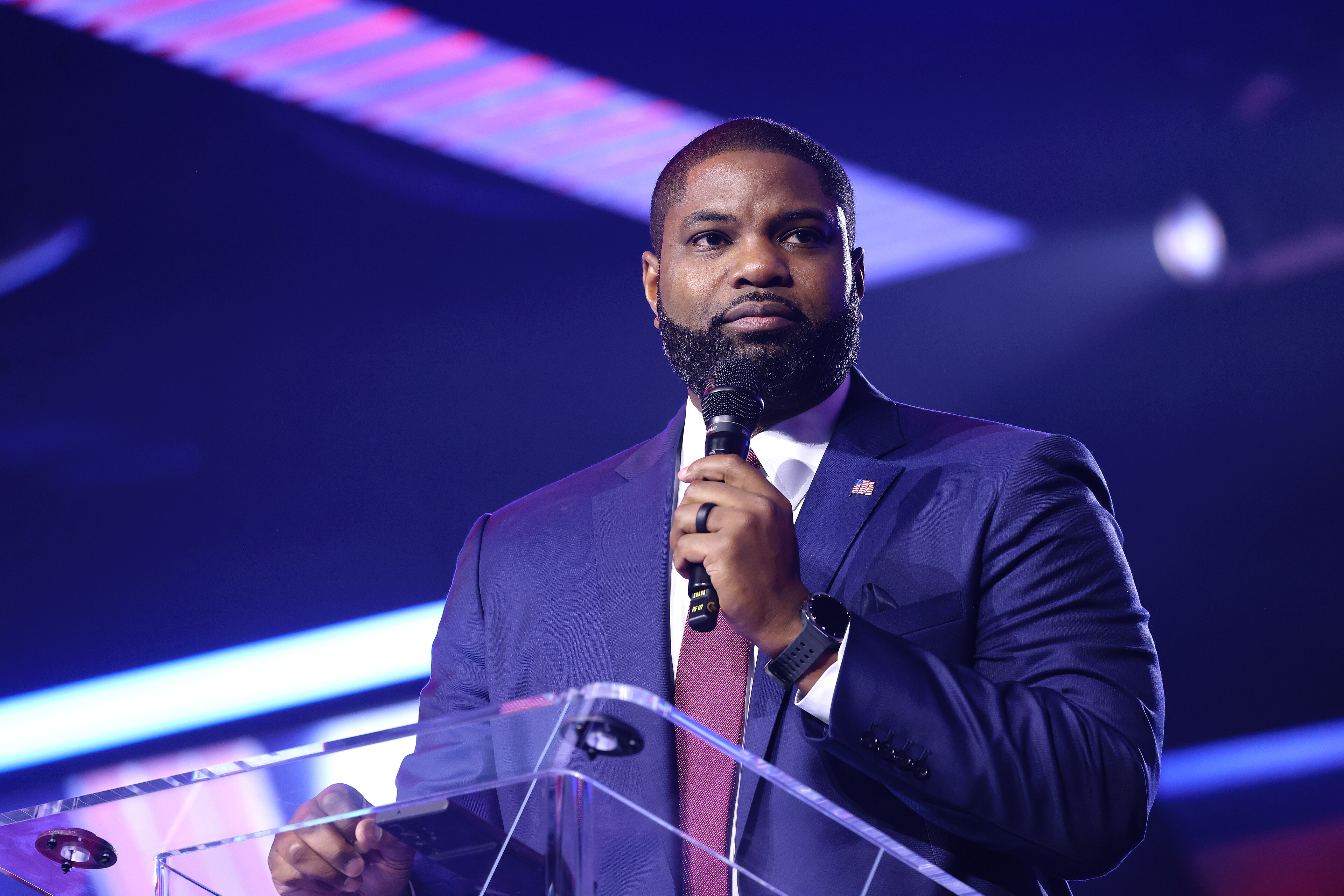
Byron Donalds, a U.S. congressman and ally of President Trump, beat former congressman David Jolly 50.1% to 48.7%, with 99% of precincts reporting — a Republican hold in a state the party has run for nearly 28 years, won by less than two points on a night USA Today said bucked the national trend. (In 2022, Ron DeSantis won the same office by about 20.) Donalds is Florida's first Black governor, and the first Black Republican ever elected governor in the United States.
Wisconsin: the comeback
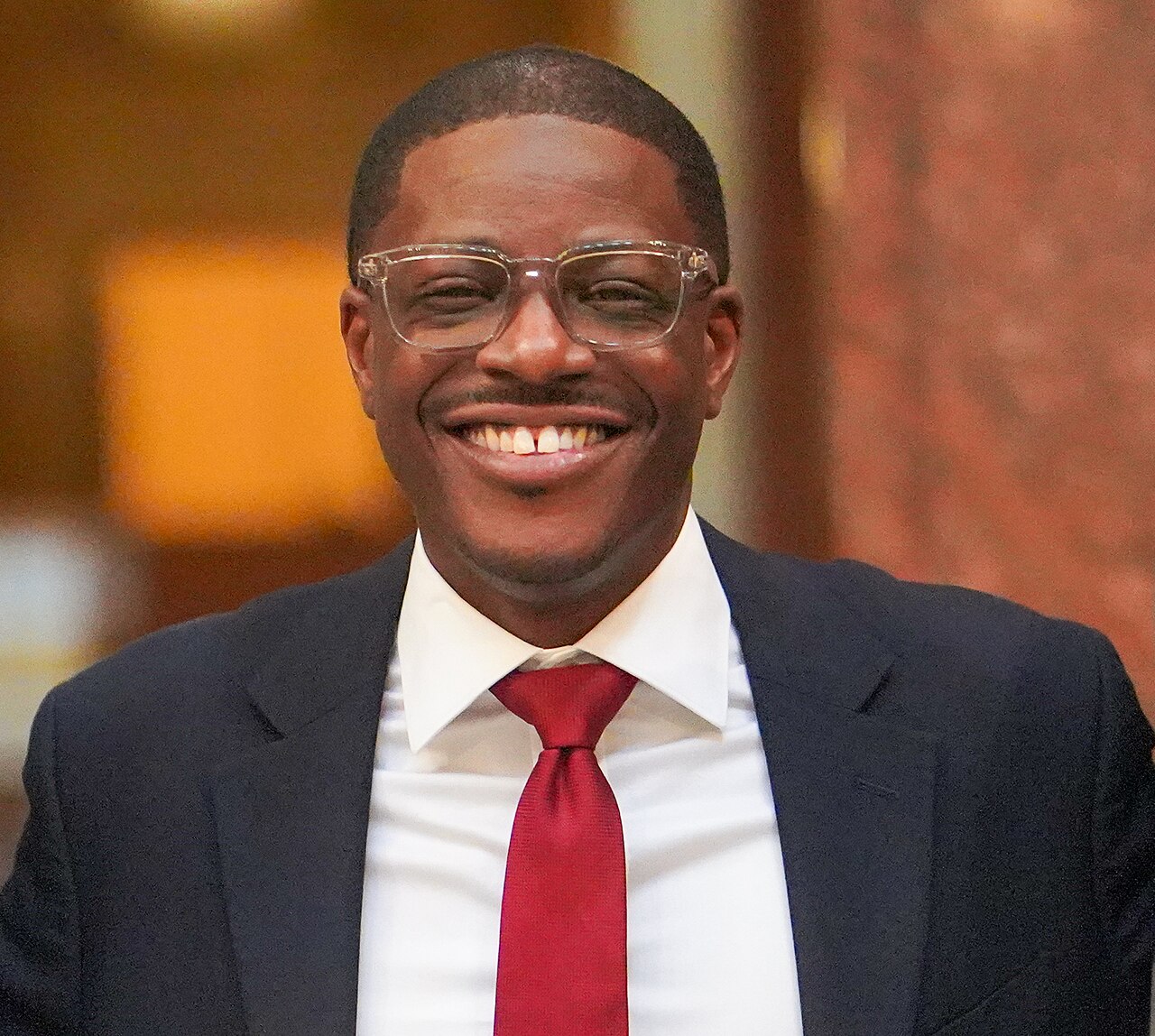
David Crowley, the Milwaukee County executive, beat Rep. Tom Tiffany by about 53% to 47% to become Wisconsin's first Black governor. At 40, he will also be the youngest governor in the country. He won while being outspent, in the most expensive governor's race in his state's history.
Maryland: re-elected
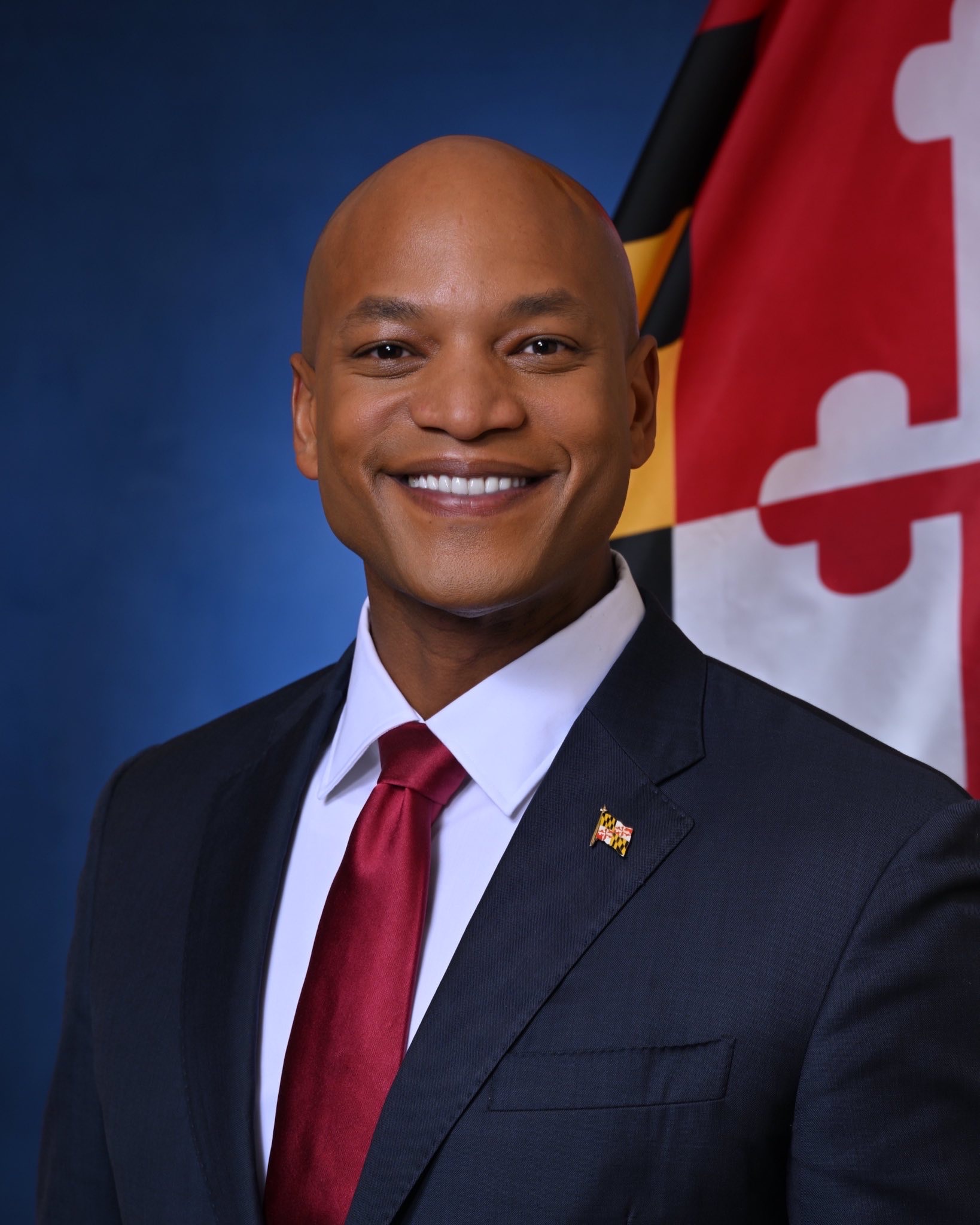
Wes Moore's re-election was the first of the five to be called: the AP projected his win at 8:01 p.m. Eastern, and he beat Dan Cox in their rematch by roughly 62% to 33%. His 2022 victory had made him the third name on the all-time list. He is now one of five.
Nevada: the late call
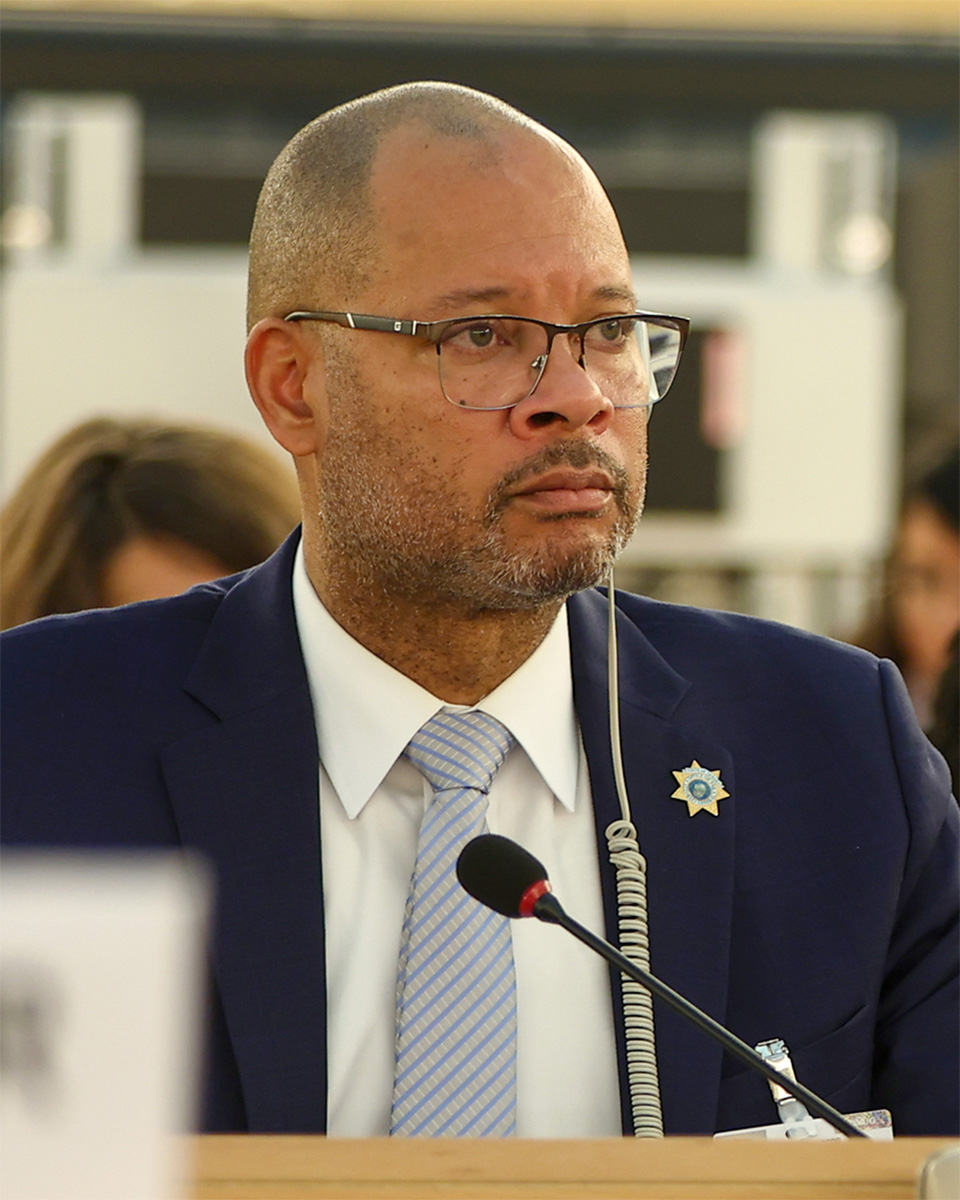
Aaron Ford, Nevada's attorney general, beat incumbent Gov. Joe Lombardo. The AP called the race at 4:46 a.m. Eastern on Wednesday, with Ford ahead 51.5% to 44.3% at 85% counted. He is Nevada's first Black governor and, per the AP, the first Black governor of any state west of the Mississippi. His win was also one of five governorships Democrats flipped, against no Republican flips in called races — a 28-to-20 Democratic majority of governors, the first since before 2010, according to the National Conference of State Legislatures.
The coalition came apart
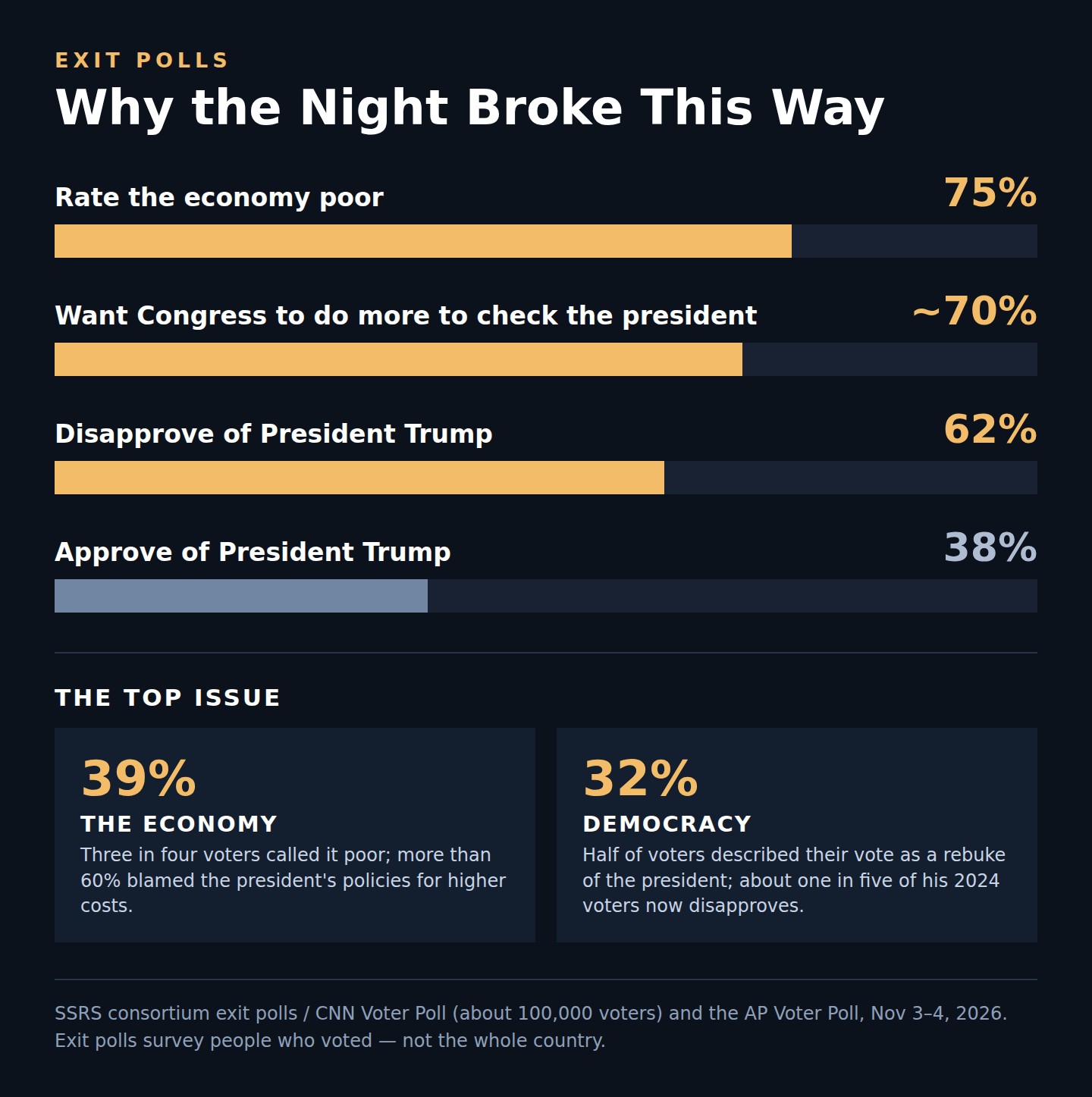
The exit polls describe an electorate voting on prices and on the president. The warning was flashing before election day: a pre-election New York Times/Siena poll had the president's approval at 36%, the lowest any president has carried into a midterm in 80 years. And the coalition that won in 2024 did not hold together under him — independents, the voters who swing midterms, broke for Democrats by double digits.
The breadth showed up on the map, too. By late Tuesday, Republicans had lost ground in all but a handful of the roughly 1,700 counties with results in (Reuters; USA Today) — including sharp reversals in heavily Latino counties that had moved toward the president in 2024.
Democrats credited a campaign built on corruption and affordability, run against the tariffs and the war in Iran that began in February 2026 and pushed fuel prices up (Reuters). Chuck Schumer, the Senate Democratic leader, called the Senate result a generational remake of the map.
Republican strategists were blunter about their own side. "This is a Trump Quake," strategist Doug Heye told Reuters. "Trump spent the year telling voters what was important to him, not to them." Others pointed at candidate quality — nominees who won primaries in Texas, South Carolina and North Carolina over candidates party operatives considered stronger (Reuters). Conservative commentators reached similar verdicts from the right: Guy Benson called the night "catastrophic," Buck Sexton said Republicans got what they deserved after high prices and an "unnecessary war," and Matt Walsh blamed an "unpopular and pointless war" that abandoned America First (Fox News). The hosts of the Ruthless podcast offered the counter-reading from inside the coalition: a backlash against present conditions, not an endorsement of the Democratic Party's policies or vision.
The president denied the night was about him. He blamed Republican candidates and Fox News, called the Iran war only "a piece" of it, and told The Wall Street Journal he had no regrets. On social media he wrote, "I wasn't on the Ballot" — while also congratulating Democrats, offering cooperation on immigration, and threatening to veto what he called insane bills (Reuters; WSJ). One senior White House official, speaking anonymously to Reuters, said the building's own polling six weeks earlier had already shown both chambers being lost.
One caution, from the AP's own voter polling: the country dislikes the Democratic Party, too. The Democratic edge on the economy is real but slim — 46% favourability against 41% for Republicans. Tuesday reads as a verdict on the party in power more than an embrace of the party out of it.
Divided government, starting January 3
From January 3, the government is divided: Democrats control both chambers, and the president keeps the veto. That veto is the binding constraint on everything else. Democrats can block the president's legislation and his nominees, including any Supreme Court vacancy (Reuters; AP). But they are far short of the two-thirds needed to override a veto — and of the 60 Senate votes most laws require.
Oversight is where the majority bites first. Rep. Robert Garcia, in line to chair the Oversight Committee, told the coming targets to "LAWYER UP." Sen. Ron Wyden promised subpoenas. The stated targets include the Trump family's business and crypto interests, Elon Musk and the DOGE operation, immigration enforcement, the Epstein files, a gifted Qatari jet and construction in Washington (Garcia; The Wall Street Journal; Fox News). Impeaching the president, or officials including Defense Secretary Pete Hegseth, has been discussed — it is a discussion, not a decision (WSJ).
The legislative agenda — restoring Affordable Care Act subsidies, reversing Medicaid and nutrition cuts in the 2025 law, challenging the tariffs, war-powers votes on Iran — runs straight into the veto, and both parties know it (WSJ). The fights with real deadlines come sooner: a mid-December government funding deadline in the lame-duck session, where Republicans are expected to rush confirmations through first, and the 2027 debt limit behind it. John Thune, the Senate Republican leader, said his party would work with the president to "stop the worst impulses of Democrat extremism." No Republican leadership change had been announced by Wednesday morning.
And 2028 started on Tuesday — this part is positioning, not fact. Illinois Gov. JB Pritzker and Pennsylvania Gov. Josh Shapiro cruised to re-election, and Pritzker publicly teased "what's next" (CNN). Sen. Jon Ossoff's survival in Georgia drew presidential speculation he says he does not want (CNN). Before the election, the AP reported that Vice President JD Vance's standing was tied closest to the president's performance; Reuters noted Tuesday's result may accelerate the president's lame-duck status.
Alaska, Mississippi and the unfinished map
Plenty is unfinished. Alaska and Mississippi will settle the Senate's final number; Alaska and Kansas, the governors'. California's Proposition 40 — a 5% tax on billionaires — remains uncalled. Missouri voters rejected the Republican-drawn congressional map, and Maryland approved an amendment that lets Democrats redraw theirs for 2028. One number is already a record: 60.1 million people voted early, about 14 million more than voted early in all of 2022 (University of Florida Election Lab; NBC). The final turnout rate will not be known for weeks. And none of Tuesday's results — called, projected or conceded — becomes official until the states certify them.
Sources · 7 sources
- Associated Press — race calls, chamber and governors counts, the Nevada call
- Reuters — the wave, county swings, strategist and White House reporting
- The Wall Street Journal — the Democratic agenda and the president's response
- CNN — Voter Poll exit polling and election-night takeaways
- USA Today — the Florida governor result and national trend reporting
- Fox News — the conservative reaction roundup
- National Conference of State Legislatures — governors and state-legislature tallies