
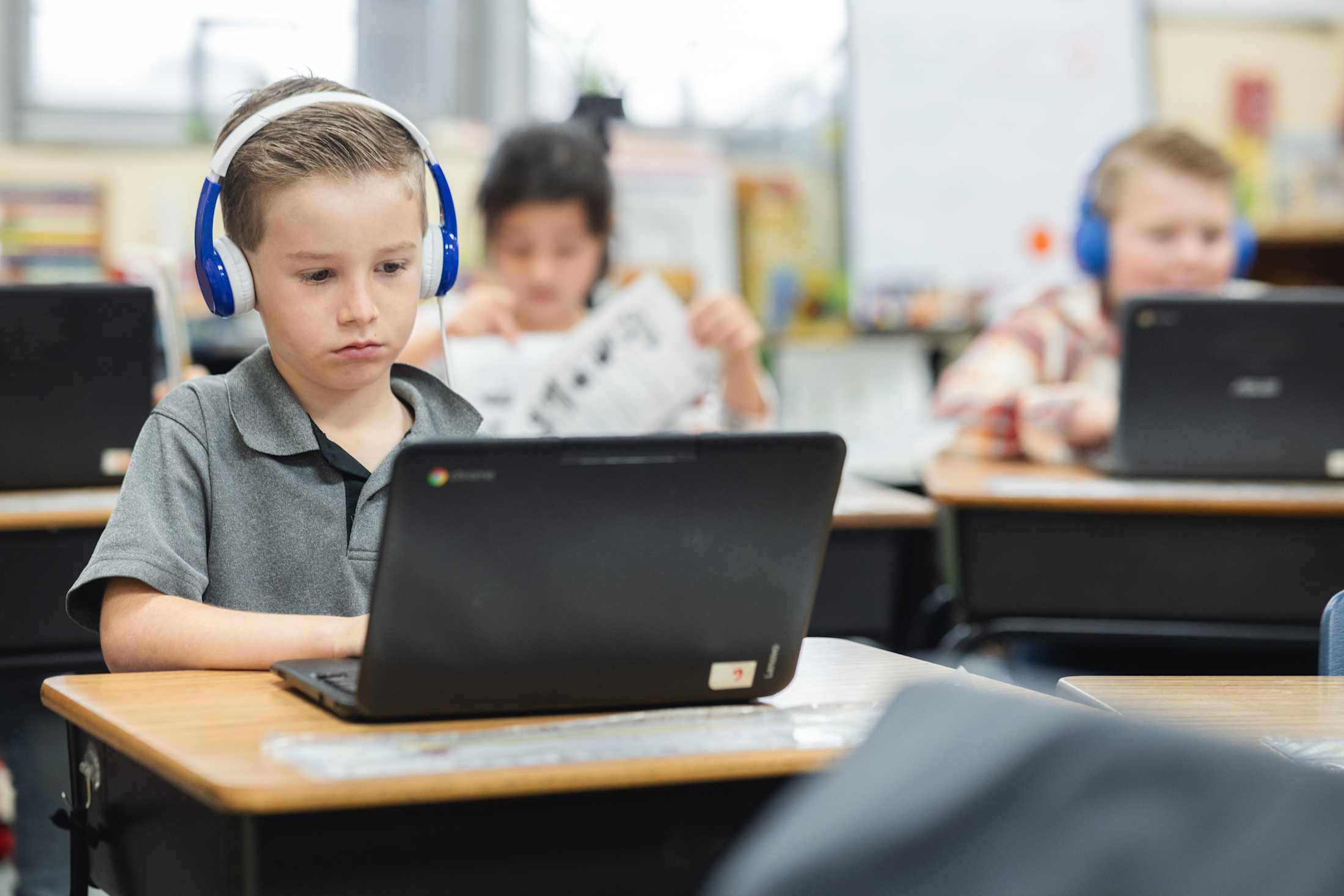
THURSDAY, OCTOBER 8, 2026 — Type a homework question into Google on a Fairfax County school laptop and you used to get the answer before you finished reading the question. Now, at 11 schools across the county, that answer is disappearing. Fairfax County Public Schools has built its own Chrome extension that strips AI-generated answers and summaries out of Google search results on school-issued devices, and it’s rolling out now as a pilot at 11 elementary and middle schools — with teachers, not students, getting the first say on whether it works.
It’s one of the most direct shots a major U.S. school district has taken at Google’s AI search features, and it arrives with receipts: new evidence that the AI shortcut isn’t just cheating — it’s measurably making kids worse at school.
What the district built
According to WTOP’s reporting, surfaced in FFXnow’s October 8 morning notes, the district “is rolling out a new tool that will block students’ access to artificial intelligence-generated answers and summaries when they conduct a Google search on school-issued laptops.” The key phrase is “the county’s Chrome extension” — this isn’t a setting Google offered. Fairfax built the plug-in itself, and a Wall Street Journal investigation confirmed the same: the district “has developed its own plug-in to block Google AI search results that it plans to roll out to student devices soon.”
The rollout is deliberately small and deliberately teacher-first: 11 elementary and middle schools — “with a focus on getting feedback from teachers and other school staff,” according to WTOP. That’s the tell. The district wants to know whether blocking the AI answers actually changes what happens in classrooms — or just changes where kids go to get them.
The evidence that pushed them there
The Journal’s investigation, published this month, put numbers on what teachers have been saying for two years. International PISA scores for reading fell 14 points from the last survey in 2022. And the survey’s AI questions were damning: students who used AI daily for specific schoolwork tasks like drafting texts had science scores an average of 20 points lower than students who never used AI — the equivalent of about a year of schooling. Notably, daily AI users who used the tools to aid learning, and who had access to AI literacy training, scored slightly higher than never-users — though the OECD noted those students tend to be wealthier. The difference isn’t AI itself. It’s whether the kid is learning with it or cheating with it.
Fairfax’s own example is a 15-year-old named Sophia Chatzigianni. “The Google one was the biggest temptation, because it’s the easiest to access,” she told the Journal. She watched her Human Geography and Algebra II grades nosedive to C’s on assessments as she relied on Google Search AI summaries and the AI Mode chatbot on her school computer. When she quit using AI, her grades improved. She is, in one person, the entire policy debate.
She’s not alone. In Miami, where the school district made Google’s Gemini chatbot available to all high-school students last year, AP Art History teacher Kaitlyn Ruano told the Journal she was shocked in July to see a much larger share of students than expected failing the AP test — including kids who had been getting A’s and B’s in class. “I had kids come to class after saying, ‘Miss, I had no clue what half the material was, I’m not going to lie to you. I’ve been using AI all year,’” she said. The Miami district declined to comment. As Wharton professor Hamsa Bastani put it: students seek shortcuts “precisely at the moment the work starts to get mentally taxing.”
The students are fighting back
Here’s where it gets complicated. FCPS students have launched a petition — “Unblock Google AI Overview FCPS” — demanding the district restore the feature, and their argument isn’t “let us cheat.” It’s that the block is already live on school computers and has taken away “an important and efficient research tool,” calling the filter “completely unnecessary and overly restrictive” with “zero educational benefit.” One student wrote that a basic search — “How to see clipboard history on ChromeOS” — required clicking through three links after the AI overview vanished. “Over censoring the internet only slows down our education and stalls our workflow creating unnecessary frustration. It does not protect students.”
They have a point, and the district knows it. The same tool that writes your essay is the tool that explains the concept the textbook fumbled. Blocking AI answers doesn’t just stop cheating — it stops the kid who uses the summary to understand what to read next. That’s the needle Fairfax is trying to thread with a teacher-feedback pilot rather than a district-wide switch.
Part of a much bigger pullback
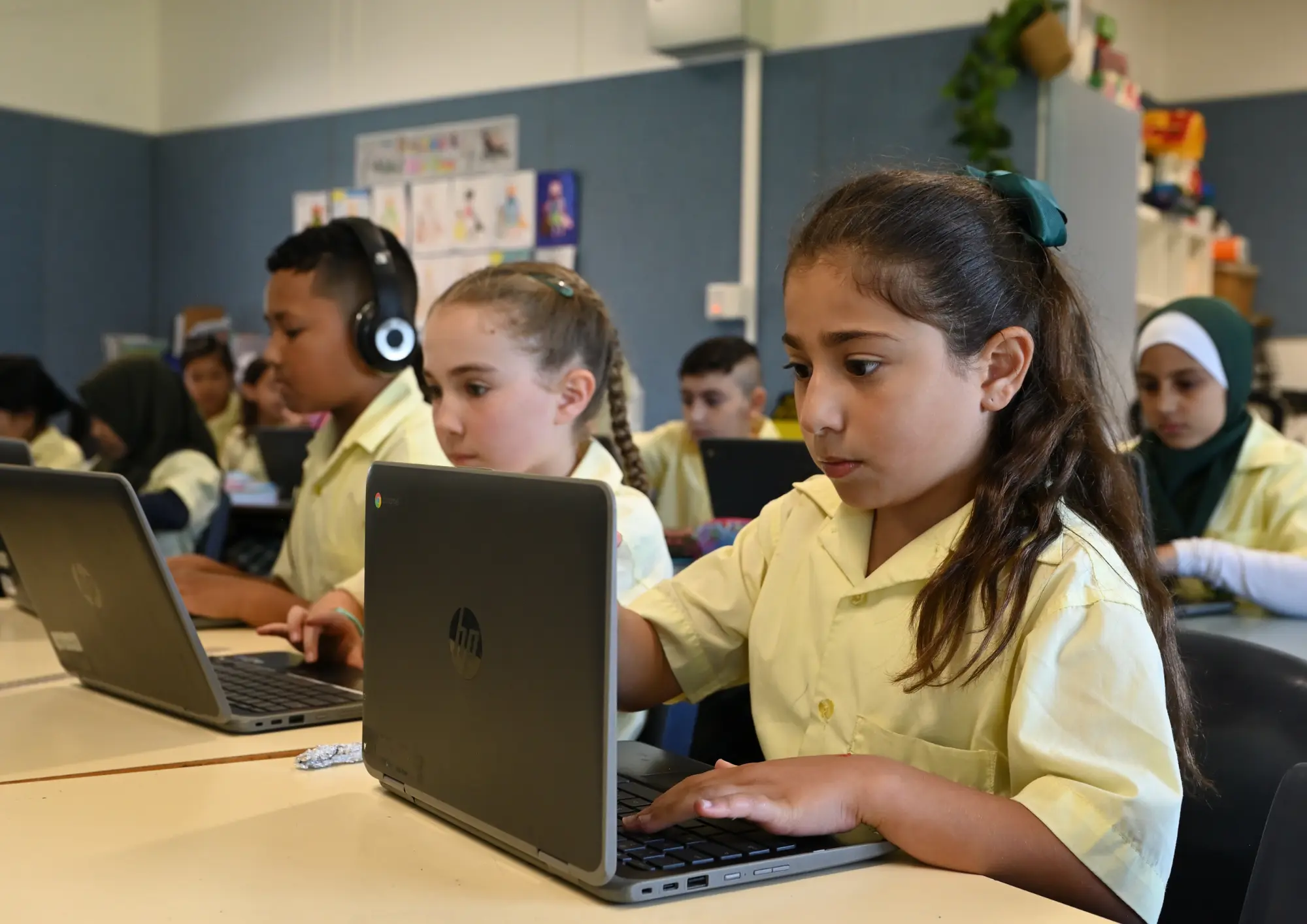
The Chrome extension isn’t a one-off — it’s the latest move in Fairfax’s sweeping retreat from classroom tech. On July 16, the school board passed a series of motions to limit educational technology: banning FCPS-issued laptops and tablets for pre-kindergarten and kindergarten starting in the 2026-27 school year, requiring a plan for storing devices in classrooms when not in use, and — most relevant here — ordering a comprehensive inventory of every generative AI tool on student devices by January 14, 2027. The board’s rule, per Annandale Today’s reporting: AI is prohibited for elementary students outright, and allowed for secondary students only if a principal or the superintendent authorizes it for specialized projects.
A week later, the board approved the restrictions package outright, including a potential ban on YouTube except for videos embedded in teacher presentations, and a pilot of a “whitelist”-style firewall — instead of banning bad sites, students would only reach pre-approved ones. And the process isn’t done: the governance committee’s timeline has the Educational Technology Review Committee weighing in October 21, with a final board vote on the full policy package scheduled for February 11. Student AI uses, the committee confirmed last month, stay blocked until the policy decisions are made.

Fairfax is the test case, but the question is national. Google pushed AI into search and into schools at the same time; districts are now building their own tools to undo half of that. The irony is hard to miss: the biggest school system’s answer to the AI age is software that makes Google work like it’s 2019 again. Whether the teachers at those 11 pilot schools decide that’s a fix or a fantasy will shape what the other 10,000 districts do next.
Related: France school protests and class suspensions.
Sources
- FFXnow, "Morning Notes for October 8, 2026" (citing WTOP), Oct 8 2026
- The Wall Street Journal, "Google’s AI Push In Schools Fuels Alarm," Oct 2026 (via Newsmemory)
- Change.org, "Unblock Google AI Overview FCPS" petition
- Annandale Today, "School Board limits the use of technology in the classroom," Jul 16 2026
- FFXnow, "Fairfax County School Board approves restrictions on generative AI, digital devices," Jul 23 2026
- Citizen Portal, "Governance committee sets timeline for educational-technology policy," Sep 14 2026