WEDNESDAY, OCTOBER 7, 2026 — PARIS — The French government has done something almost unheard of: it has suspended the class timetable at high schools across the entire country — an extraordinary response to the escalating student protests that have injured hundreds of pupils and school staff and turned France’s lycées into the front line of its biggest youth movement in decades. Starting Wednesday, at the urging of Education Minister Édouard Geffray, Prime Minister Sébastien Lecornu ordered every lycée nationwide to pause normal classes and devote the time — at least through the weekend — to what he called a “period of internal democracy,” in which head teachers, staff, and pupils sit down together to air the grievances driving the unrest.
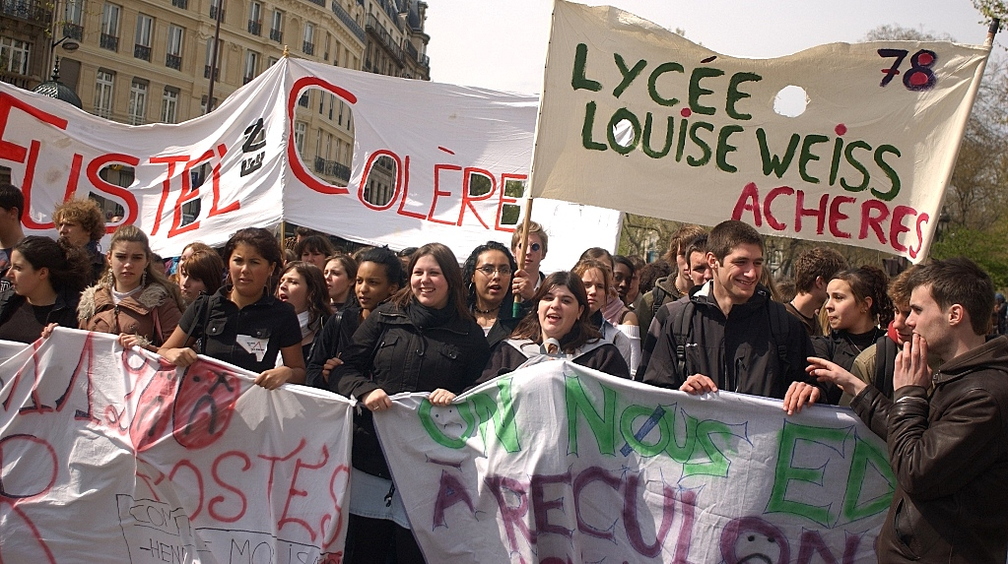
It is a measure of how far things have gone. This movement did not start as politics. It started, around September 21, in the Paris region, with kids angry about the state of their schools: crumbling buildings, packed classrooms, teachers who never get replaced when they’re absent. The demands are disarmingly practical — more substitute teachers, smaller classes, buildings that aren’t falling apart, longer lunch breaks, a rethink of the school day’s length and the university admissions system. But somewhere along the way, the frustration metastasized into a national uprising, and the scenes this week have started reviving memories of the student riots of 1968.
02 The Numbers Behind Tuesday
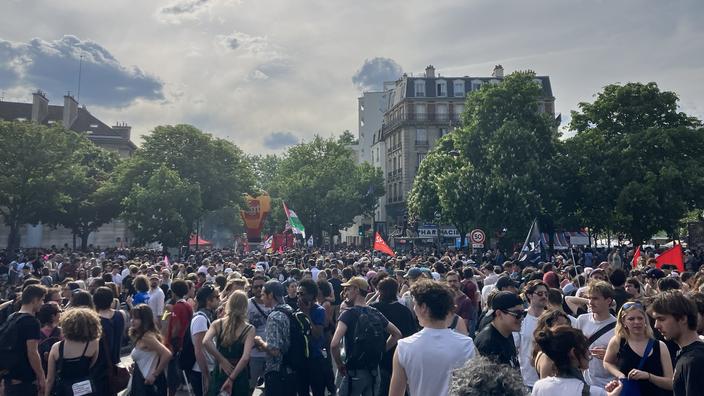
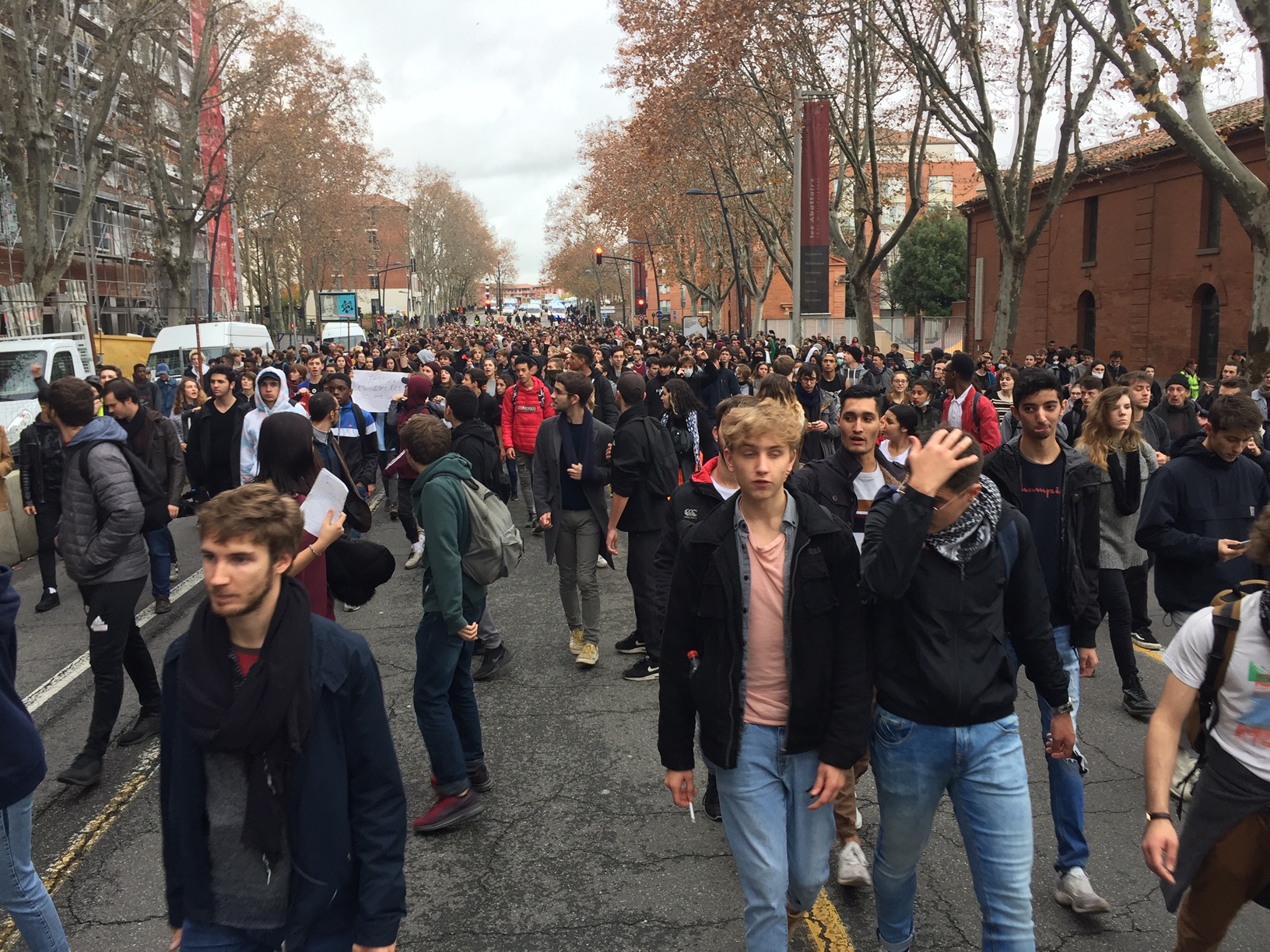
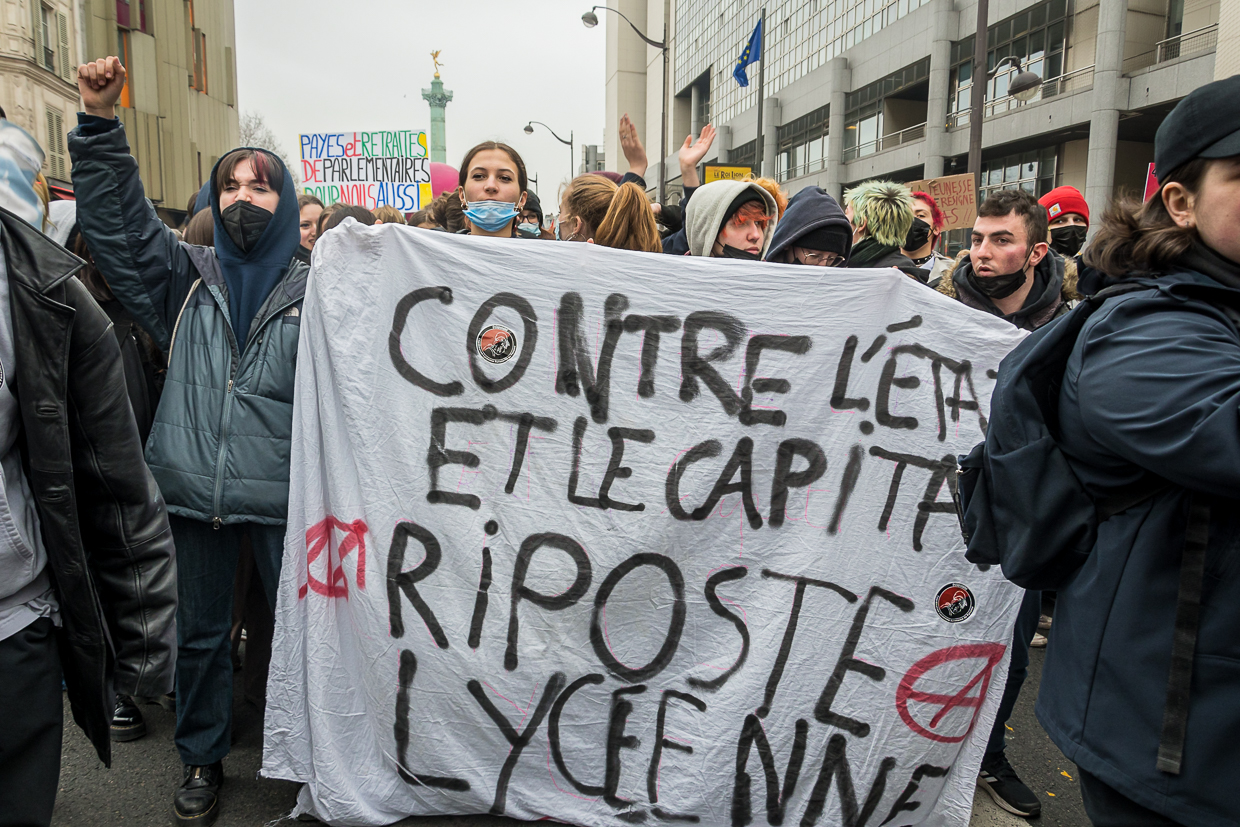
Tuesday, October 6, was the movement’s biggest day yet, and the figures — always disputed in France — tell two stories at once. The Interior Ministry counted roughly 256,000 to 266,000 protesters nationwide, including 56,000 in Paris. Organizers put the real number at 450,000 to 500,000. The High School Students Union said nearly 2,000 high schools were blockaded or closed for the day.
The injuries are what forced the government’s hand. Addressing the National Assembly on Monday, Lecornu said 215 pupils and 85 education staff had been hurt since the protests began — and 715 police officers and gendarmes as well. By his telling, it is the worst toll suffered by school personnel in decades. Nearly 500 people were detained on Tuesday alone, the Interior Ministry said, and 6,100 have been arrested since the protests began — a majority of them under 18. The Justice Ministry says more than 1,800 people will be prosecuted, including 1,483 minors.
Read that again: nearly fifteen hundred children facing prosecution. Whatever side you’re on, that number should stop you cold.
03 The Day the Clashes Turned Ugly
Much of Tuesday’s marching was peaceful. The Paris demonstration moved through the city in relative calm — until it reached Place de la Nation, where, according to the Interior Ministry, around 300 masked or hooded protesters began pelting police with stones. By then, police had already fired tear gas and water cannons not just in Paris but in Rennes, Strasbourg, Lyon, and Marseille.
But the ugliest incidents happened away from the cameras. In Lens, a 15-year-old boy picked up a police grenade during the clashes and it went off in his hands — blowing one of his hands off, as the regional newspaper La Voix du Nord reported. Elsewhere, a police officer has been charged with allegedly firing a tear-gas grenade directly into the face of a 14-year-old protester at point-blank range. And another officer is under investigation over an alleged sexual assault during the arrest of a 14-year-old girl in Metz.
These are the incidents that changed the tone of the whole week. It is one thing for teenagers to blockade their schools over crumbling walls; it is another for the state’s response to leave a 15-year-old without a hand. The casualty figures Lecornu read out on Monday — 215 pupils, 85 staff — are abstract until you put a name and a town to them.
04 A Government on the Defensive
Lecornu’s appearance before the National Assembly on Monday was, by all accounts, a bracing one. He rejected the framing of “police violence” outright, arguing the phrase implied political orders to repress the protests — instructions he said simply did not exist, calling the suggestion a lie. Instead, he turned his fire on La France Insoumise, the left-wing party, accusing it of an ambiguous stance toward the violence that he said serves its own political project ahead of the 2027 presidential election.
It is a remarkable accusation for a prime minister to level: that a political party is essentially feeding on a youth movement’s clashes for its own campaign purposes. Whether it’s true or just a government trying to shift the blame for the week’s bloodshed, the charge shows how fast this crisis has become electoral. The 2027 presidential race is still a year and a half away, but everything in French politics now gets filtered through it — including, apparently, teenagers blockading their schools. Europe has seen its share of political turbulence this fall, from Spain’s surprise snap election call to Brazil’s high-stakes presidential runoff, but few crises have escalated as viscerally as this one.
And then, inevitably, came the commentary from across the Atlantic. US President Donald Trump weighed in on the French protests, blaming immigration and Muslims — without offering any evidence connecting either to a movement that began over broken buildings and missing teachers. The intervention landed in France about as well as you’d expect.
05 Thursday Could Be Bigger
If the government hoped the timetable suspension would buy breathing room, Wednesday morning gave it no such comfort. A barricade of wheelie bins and debris went up on Boulevard Saint-Germain, near the Sciences Po campus, and police cleared it with tear gas. Two MPs from France Unbowed — Thomas Portes and Antoine Léaument — placed themselves between the protesters and the riot police, a scene that underlines just how politically charged this movement has become.
Meanwhile, protest leaders have called for another day of mass demonstrations on Thursday, October 8. If Tuesday’s turnout is any guide — a quarter-million by the official count, up to half a million by the organizers’ — Thursday could be the biggest day yet. Could this become France’s biggest youth protest movement in decades? The question is no longer rhetorical. The government has already suspended the school week to deal with it; the students, so far, seem unmoved. As Tuesday’s top stories showed, France is now the story of the week in world news.
Previously will update this story as Thursday’s demonstrations unfold and as more details emerge on the investigations in Lens and Metz.
Sources
- The Associated Press — Lecornu’s National Assembly address: injury tolls, timetable suspension, “period of internal democracy.” Oct 6–7, 2026
- The Times — Tuesday’s protest figures, school blockades, clashes in Paris, Rennes, Strasbourg, Lyon and Marseille; Thursday demonstration call. Oct 6–7, 2026
- Al Jazeera — Lens grenade incident, officer charges, Metz investigation; Lecornu’s remarks on La France Insoumise and the 2027 election. Oct 6–7, 2026
- La Voix du Nord — The 15-year-old’s injury in Lens after picking up a police grenade. Oct 6, 2026