The Short Version
- GlobalFoundries announced Thursday a five-year agreement to manufacture silicon interposers for TSMC at its Malta, New York facility.
- Malta is expected to become the first US-based source of silicon interposers used in advanced chip-packaging technologies.
- Volume production ramps in the first half of 2028, with a framework for future capacity expansion as demand grows.
- Shares of GlobalFoundries were up about 4% in premarket trading, per Reuters. TipRanks later reported a roughly 6% gain Thursday morning.
NEW YORK — The most important piece of the AI chip that you've never heard of is about to get a new home in upstate New York. GlobalFoundries said Thursday it has signed a five-year agreement to manufacture silicon interposers for TSMC at its Malta, New York facility — a deal that would make Malta the first US-based source of the components used in advanced chip-packaging technology.
So what exactly is a silicon interposer, and why does it move stocks? Think of it as the unsung hero inside an AI chip package. As Reuters explained, the component sits beneath processors and memory chips inside advanced AI packages and enables them to communicate at high speeds. TipRanks put it even more plainly, describing the interposer as a tiny high-speed "connector board" that links processors and memory — the thing that lets more data move quickly between chips in a data center. GlobalFoundries said the components will be tailored for TSMC's CoWoS advanced AI packaging ecosystem, per TipRanks.
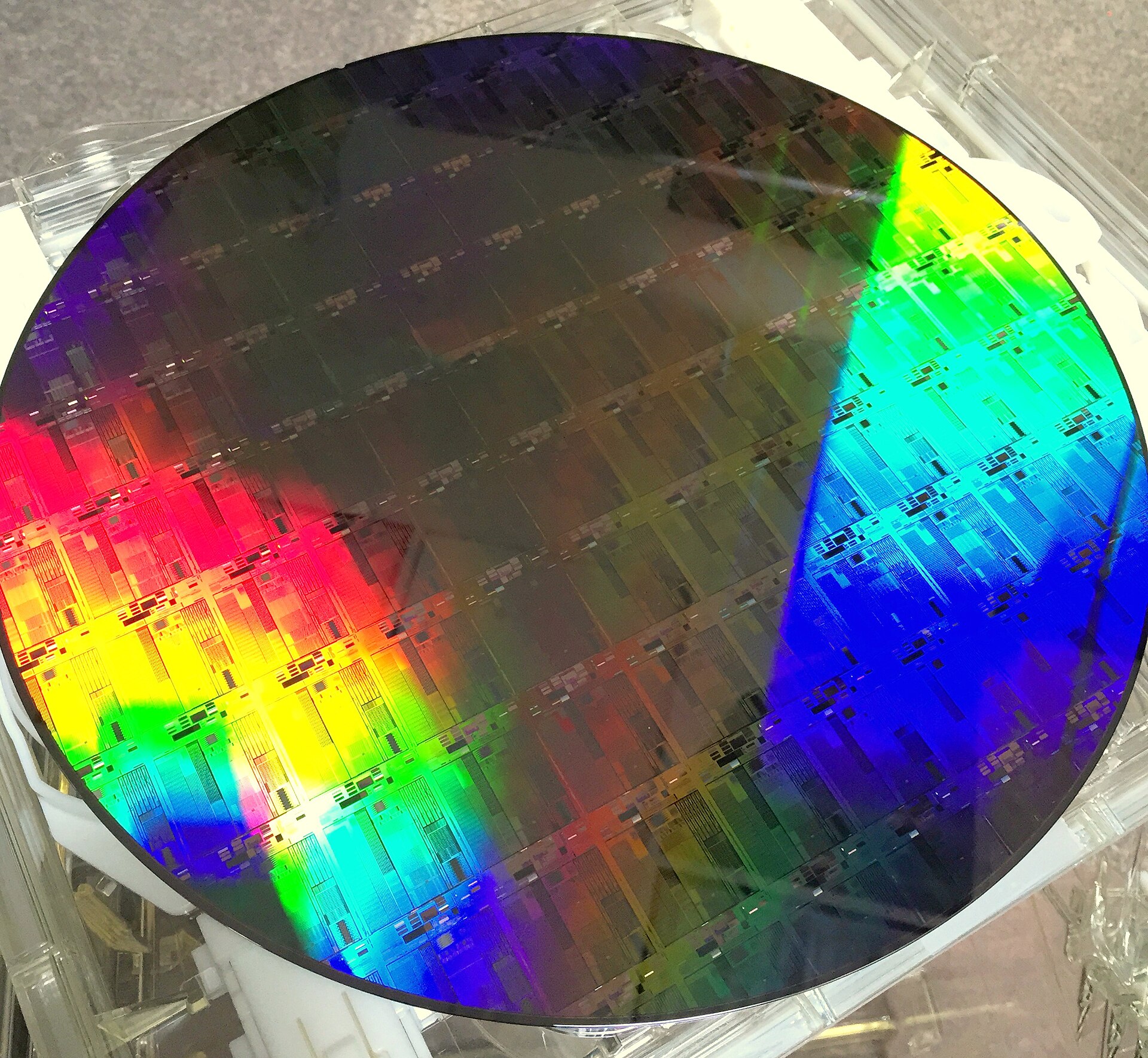
The details matter here. Under the agreement, GlobalFoundries will expand manufacturing capacity at its Malta facility to produce the interposers for TSMC over five years, with volume production expected to begin ramping up in the first half of 2028. The deal also provides a framework for future capacity expansion as demand for advanced packaging grows — which, given the state of the AI buildout, is less an "if" than a "when."
That last point is the one worth sitting with. Advanced packaging has become a major constraint on AI chip production, with demand for the technology exceeding available manufacturing capacity, according to Reuters. Everyone in the industry can print the chips; the bottleneck is in stitching them together at speed and scale. Every Nvidia GPU, every AI accelerator waiting on a data-center rack, needs this packaging work. The fact that capacity is the constraint — not demand — is the whole story of the AI trade in one sentence.
It helps to understand what advanced packaging actually does, because the term gets thrown around a lot. As TipRanks explained, advanced packaging involves putting several chips very close together inside one package. That proximity lets them share data faster and use less energy — which is precisely what an AI workload demands, since training and inference move enormous volumes of data between processors and memory constantly. The interposer is the physical foundation that makes that proximity possible: the silicon layer on which the processor and memory dies are mounted and wired together at high speed. Without it, the fastest GPU in the world is an island.
On the timeline, the ramp is real but not immediate. GlobalFoundries said volume production of the interposers will begin ramping up in the first half of 2028 — meaning the Malta expansion, tooling, and customer qualification all have to happen between now and then. The five-year term and the framework for future capacity expansion are the tell: neither company is signing up for eighteen months of prep work just to cover a short-term blip. They are building for a packaging-demand curve that both expect to keep rising well past 2028, and the expansion option gives them room to scale without going back to the negotiating table.
For GlobalFoundries, the strategic read is straightforward. The company expects the Malta expansion to establish "the first U.S.-based source of silicon interposers supporting advanced packaging technologies, including embedded deep trench capacitor components," the company said, as reported by TipRanks. The added capacity, it said, will provide "greater scale and flexibility for delivering advanced packaging solutions across multiple product generations."
There's also a supply-chain politics angle that doesn't need much decoding. The US has spent the last several years trying to onshore chip production, and advanced packaging has been one of the thinnest spots in the domestic footprint. A first-in-the-US source for interposers, made for TSMC — the company at the center of nearly every AI chip on earth — is exactly the kind of domestic capacity the policy world has been pushing for. GlobalFoundries' Malta fab, already one of the most advanced US facilities, was the natural landing spot.
The market's reaction was immediate. Shares of GlobalFoundries were up about 4% in premarket trading, according to Reuters, with TipRanks reporting the stock up around 6% to roughly $51 Thursday morning. It's worth noting the framing in the trade press: TipRanks characterized it as a multi-year deal worth about $2 billion, secured from rival TSMC — language that underscores how significant this is commercially for GlobalFoundries, which has been leaning hard into its communications infrastructure and data center business. The company's Q2 2026 numbers give the context: TipRanks reported that division's sales reached $277 million, up 62% from the prior year, as the AI boom feeds demand.
The timeline is the one caveat worth flagging: volume production doesn't ramp until the first half of 2028. That's eighteen months of factory work, qualification, and ramp before this moves the needle on anyone's financials. The stock pop is about the trajectory, not the next quarter. But the five-year structure and the expansion framework suggest both companies see demand stretching well past 2028 — and given the trajectory of AI infrastructure spending, that's not a hard case to make.
This is also a useful data point for anyone watching the AI hardware stack. Samsung just posted a record Q3 profit on the AI memory boom, and the AI chip stocks rundown shows how much of this market is riding the same wave — while today's broader market tells its own story. The interposer deal is the same wave, one layer deeper: the supply chain is still the trade.