
BURBANK, TUESDAY, OCTOBER 13, 2026
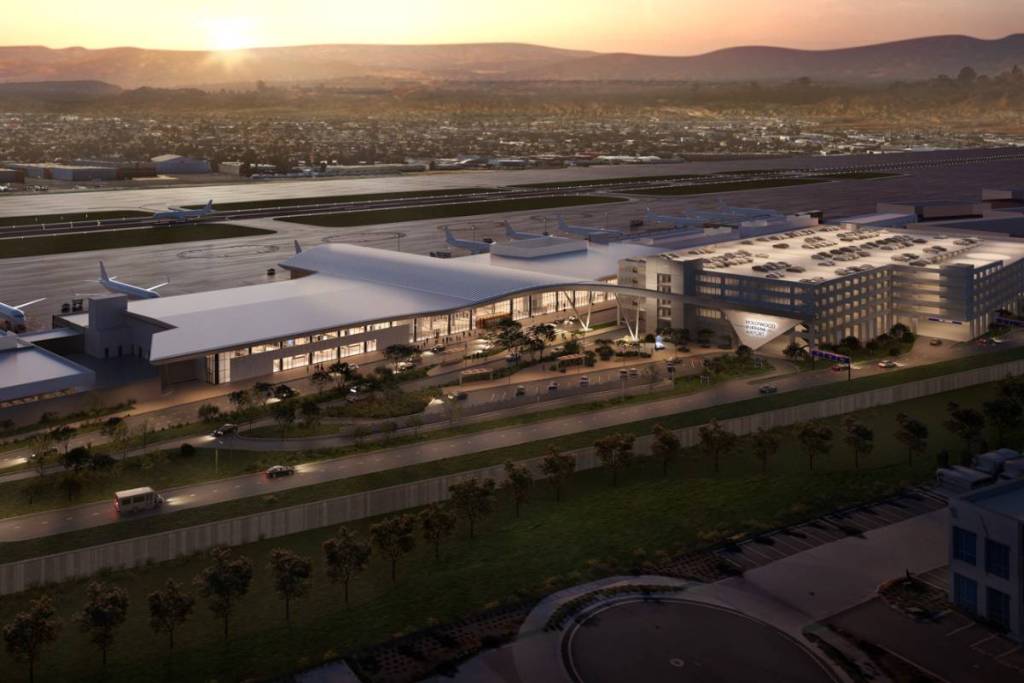
Los Angeles has a new front door, and it deliberately kept its oldest habit. USA TODAY reported that Hollywood Burbank Airport opened its replacement passenger terminal to the public on Tuesday, a $1.3 billion, 355,000-square-foot building that replaces a terminal dating to 1930 — and that one of the airport’s defining characteristics survives the rebuild intact: passengers still walk outside, across the tarmac, to board their planes. No jet bridges. Secret Los Angeles, covering opening day, put the size increase at about 42 percent over the old facility; other coverage has put it higher, at just over half again as large. By any measure it is a much bigger building doing a familiar job, which is precisely what Burbank’s voters ordered when they approved the project a decade ago.
Start with why the old building had to go, because it was not nostalgia-proof. The original terminal had served since 1930 — ninety-six years — and by modern standards it failed on fundamentals: it sat too close to the runways under current Federal Aviation Administration safety standards, and it did not meet contemporary seismic or accessibility requirements. The replacement terminal is located farther from the runways, meets modern FAA safety, seismic and accessibility standards, and is all-electric, part of a push toward a LEED Gold sustainability rating that USA TODAY described in its pre-opening tour of the facility. The design leans into its setting rather than apologizing for it: V-shaped columns meant to evoke premiere spotlights, a sweeping silver canopy, and interiors that nod to old Hollywood. This is an airport that knows its name is a brand.
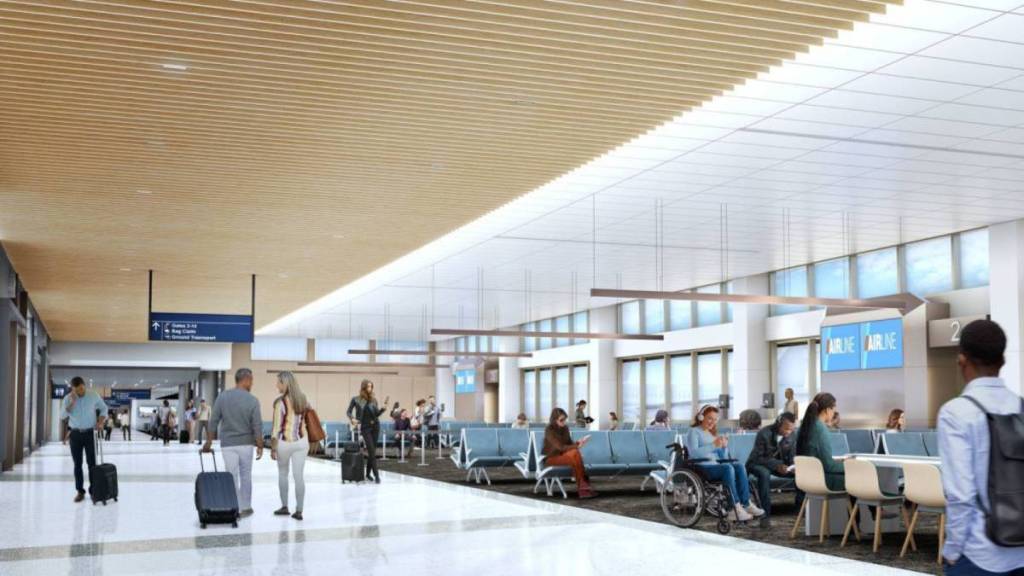
Inside, the changes are the ones regulars will feel in their feet and their shoulders. Where the old terminal split the journey into cramped pieces, the new one has a centralized ticketing hall and a single security checkpoint — USA TODAY counted eight lanes on its tour — feeding wider corridors and larger waiting areas. Baggage claim is indoors now, with three carousels, ending the very Burbank experience of collecting a suitcase essentially outdoors. There is more charging everywhere, including wireless charging built into seating-area tables, plus family rooms, nursing rooms, upgraded restrooms and a new spread of dining and shops, including an open-air bar just past security, according to USA TODAY’s tour. Executive Director John Hatanaka told the USA TODAY Network he wanted arriving passengers to have a warm experience and to get where they are going without the old friction — including, pointedly, no longer backing up onto Hollywood Way, thanks to a longer airport loop road designed to keep traffic moving.
And then there is the number that did not change: 14. The new terminal has exactly the same gate count as the old one, and that is not a failure of ambition — it is the law of the place. The 2016 Measure B referendum, approved by Burbank voters, capped the replacement terminal’s gates, and any expansion beyond it would require a supermajority of the airport authority’s commissioners. Travelers Today, in its coverage of Monday’s ribbon-cutting, framed the project the same way: a safety and modernization upgrade, not a capacity expansion. More than a thousand people attended that Monday ceremony, a crowd size that tells you how much civic emotion is invested in this particular airport. Burbank is the rare piece of Los Angeles infrastructure that its neighbors defend as fiercely as they use it, and the deal they struck in 2016 — modernize everything except the scale — is written into the building that opened Tuesday.
The economics follow the same local logic. The $1.3 billion was funded through airport revenue bonds, federal grants and passenger facility charges, with no local city tax money, according to the project’s published funding structure. More than six million passengers a year use the airport, which serves as the anti-LAX for the San Fernando Valley, Glendale, Pasadena and everyone on the north side of Los Angeles who would rather be at the gate in twenty minutes than in a rideshare for ninety. Southwest Airlines is the airport’s largest carrier by a wide margin, accounting for more than half of departures. In a statement issued for the opening on Oct. 13, Southwest Chief Operating Officer Andrew Watterson welcomed the new facility, and the airline has noted it may fly larger aircraft into Burbank now that the new gates can handle wingspans up to 118 feet — a real operational upgrade hiding inside a building that, from the curb, is mostly about comfort. For more travel and culture coverage, see our news pages and the music desk.
What happens next is subtraction. The old terminal — the 1930 building that generations of travelers crossed on foot, in sunshine, with the mountains in front of them — will be demolished within roughly the next twelve months, its site folded back into the airfield. There is a neat symmetry in the transition week: the airport spent Monday celebrating with a ribbon-cutting, opened the new building Tuesday, and now retires a structure that predates commercial jet travel, television, and most of the city around it. Hatanaka, who has been with the airport since 2002, told USA TODAY he was looking forward to watching the first passengers come off a plane and wonder, for a second, whether they were still in Burbank. They are. That was the whole assignment: a 96-year-old airport, rebuilt to modern standards, that still makes you walk outside to your airplane — because in Burbank, that walk was never the problem. It was the point.
Sources · 4 sources
- Inside Burbank Airport’s new terminal: Here’s what you’ll notice USA TODAY · Oct 2026
- Hollywood Burbank Airport’s $1.3 billion new terminal is open today Secret Los Angeles · Oct 13, 2026
- Hollywood Burbank Airport Holds Ribbon-Cutting for New Terminal MyNewsLA · Oct 2026
- Burbank Airport Swaps Its 96-Year-Old Terminal for a $1.3 Billion All-Electric Replacement Travelers Today · Oct 2026





