
America’s home builders just recorded their gloomiest month in more than fourteen years — gloomier, in fact, than the month the pandemic shut the country down. The National Association of Home Builders/Wells Fargo Housing Market Index fell three points to 29 in October, the trade group announced on Monday. It is the lowest reading since June 2012, and it came in below the 31 that economists polled by Reuters had expected.
Some context for that number: the index runs from 0 to 100, and anything below 50 means more builders describe conditions as poor than good. October’s 29 is not a dip below the line; it is a plunge through the floor of the range the index has mostly occupied since the pandemic era ended. In April 2020, with the economy in lockdown, the index printed 30. This month, with no virus and no lockdown, it printed 29. The industry that builds the American dream is, by its own monthly measure, in its worst mood since the housing market was still digging out from the foreclosure crisis.
The Cost of Money Is the Whole Story
The trigger is not mysterious. The average 30-year fixed mortgage rate hit 7.40% last week, according to Freddie Mac — the highest in nearly three years. “Mortgage rates have climbed well above 7% in recent weeks, and higher gas prices and inflation have further weakened buyer traffic across much of the country,” said NAHB Chairman Bill Owens, a home builder and remodeler from Worthington, Ohio.
Owens added that builders are also contending with higher costs for construction loans, building materials and diesel, even as he credited the administration’s regulatory reform efforts with easing some cost pressures. Stack it up and every layer of the business is squeezed at once: it costs more to borrow the money to build, more to buy the materials, more to haul them to the site — and the customer on the other end of the transaction is being quoted a monthly payment that makes them set down the pen and walk out of the model home.
Every Component Fell — and Traffic Fell Hardest
All three components of the index declined in October. Current sales conditions dropped two points to 33. Sales expectations for the next six months slid five points to 32. And the index charting traffic of prospective buyers plunged five points to 18.
That traffic number is the one that should scare anyone hoping for a quick housing thaw. “Housing remains squeezed by supply-side constraints and significant affordability challenges,” said NAHB Chief Economist Robert Dietz. “Demand persists, but higher mortgage rates, elevated construction costs and weaker consumer confidence are keeping more buyers on the sidelines. As a result, buyer traffic has fallen to its lowest level since April 2012, excluding the pandemic’s onset in April 2020.” Sit with that for a second: outside of the first pandemic month, fewer people are walking through model homes than at any time in fourteen and a half years. The demand exists — households still form, families still grow, renters still want out — but at 7.40%, the math simply does not work, so the visits never happen.
Builders Are Paying Buyers to Show Up
To keep what sales they can moving, builders are surrendering margin at a pace not seen in this cycle. In October, 43% of builders cut prices — the highest share during the entire 2020–2026 period, according to NAHB. The average price reduction stayed at 6% for the seventh consecutive month. Meanwhile, 65% of builders reported using sales incentives, such as mortgage-rate buydowns, in October — the 19th straight month in which at least 60% of builders have done so.
That is an industry effectively paying its customers’ interest for them, month after month, and still watching traffic fall. When price cuts and buydowns stop working, the next lever is the one nobody wants: building less. Sagging demand has already left builders holding excess inventory of unsold new homes, Reuters noted, which discourages breaking ground on the next subdivision — the exact opposite of what a country chronically short of housing supply needs, and a slowdown that would echo into lumber, appliances, and every local trade that lives off a construction site.
Labor: The Pressure Nobody Budgeted For
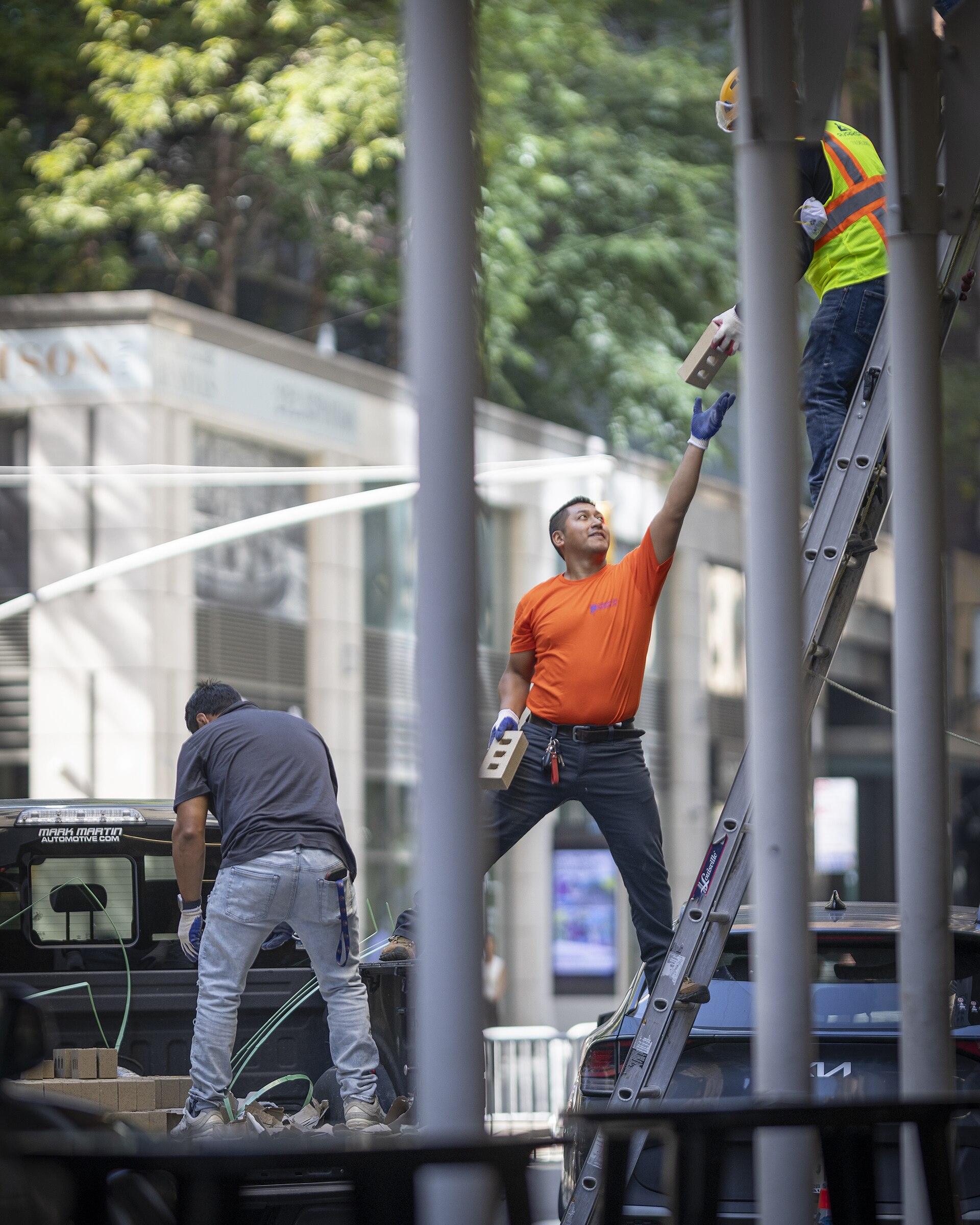
There is a second squeeze, and it is political. Nationwide, more than one-third of builders reported immigration enforcement activity in their market areas during the past month, Owens said, causing construction delays and discouraging legal workers from reporting to work. However you feel about the policy, the arithmetic is the arithmetic: fewer crews means slower builds, slower builds mean higher carrying costs, and higher costs land in the price of the finished house. Reuters reported that the drop in sentiment also reflected rising costs from tariffs on imports and from energy-related building materials, as the Middle East conflict pushes up prices — the same cost pressures showing up in today’s record-low presidential approval poll, where gasoline prices topped voters’ complaints.
The Regional Picture, and the November Stakes
Regionally, the three-month moving averages fell almost everywhere: the Northeast slipped one point to 38, the Midwest fell three points to 40, the South eased one point to 30, and the West dropped two points to 26 — the weakest region in the country, a striking position for the part of America that includes fast-growing metros like Las Vegas and Phoenix, where the local water district is planning a $580 million bond sale to keep infrastructure ahead of growth. The Midwest was the relative bright spot in the release, with single-family permits up 2.9%.
All of this lands fifteen days before the November 3 midterm elections, with housing affordability sitting near the center of the campaign. A reading of 29 is more than an industry statistic; it is a field report from the part of the economy voters feel in their bones — the rent check, the mortgage quote, the starter home that stays a listing photo instead of an address. Builders, on this evidence, do not expect a rescue this year. At 7.40%, nobody should. More from the day’s business and politics coverage is on Previously News.