
Apple has launched expensive phones before. It has never launched one quite like this, and it has rarely seen one disappear quite this fast.
Pre-orders for the iPhone Duo, Apple's first foldable iPhone, opened Friday, October 16, 2026 at 8 a.m. ET / 5 a.m. PT. Within minutes, the phone was effectively sold out for launch delivery, and delivery estimates for every configuration had slipped into late January 2027. Bloomberg reported that Bloomberg's Mark Gurman tracked the timelines moving within minutes of orders opening, a speed that surprised even seasoned Apple watchers. The Verge and 9to5Mac reported the same rapid slip, via MacDailyNews and Zot News, and CBS News reported that by Friday afternoon the Duo was on backorder to late January.
That is the headline fact, and it matters for two reasons. First, the Duo starts at $1,999, making it Apple's most expensive iPhone ever by a wide margin. Second, a sellout at that price tells a different story than a sellout at $799 or $999. This was not a mass-market rush for the default phone. This was Apple's most loyal, highest-spending customers competing for a limited first run of a brand-new form factor — and there were not enough units to go around even for them.
A $1,999 phone, and a $3,199 top end
The pricing alone explains why Friday drew so much attention. According to the reported lineup, the iPhone Duo costs $1,999 for 256GB of storage, $2,199 for 512GB, $2,599 for 1TB, and $3,199 for 2TB. The top configuration costs more than many laptops, and more than three base-model iPhones combined. For that money, buyers get a device that works as a compact phone and then opens into something closer to a small tablet: a 5.4-inch outer display that unfolds to a 7.6-inch inner display, in a titanium body.
The two-screen pitch is the whole point of the product. Closed, the Duo is meant to feel like a normal premium phone — check messages, take a call, shoot a photo. Open, it becomes a reading, browsing, video and multitasking surface that no slab iPhone can match. Apple is betting that the people who already carry an iPhone and an iPad, or who have watched Android foldables mature from the sidelines, will pay a steep premium to carry one device instead of two.
The Duo is set to reach stores on October 23, 2026. Apple typically reserves some walk-in stock for launch day, though the levels for this launch are unconfirmed — so Friday's online sellout does not necessarily mean every store shelf will be empty next week, only that anyone who wants a guaranteed unit without camping a line is now looking at January.
Apple calls the demand extraordinary
Apple did not dispute the scale of what happened Friday. In a statement reported by CNBC, the company said pre-order demand was "nothing short of extraordinary," and said it is working to get the device to customers as quickly as possible while continuing to accept orders online. That language is worth reading carefully. Companies do not usually describe a routine launch morning that way, and Apple in particular tends to understate rather than oversell a first-day rush.
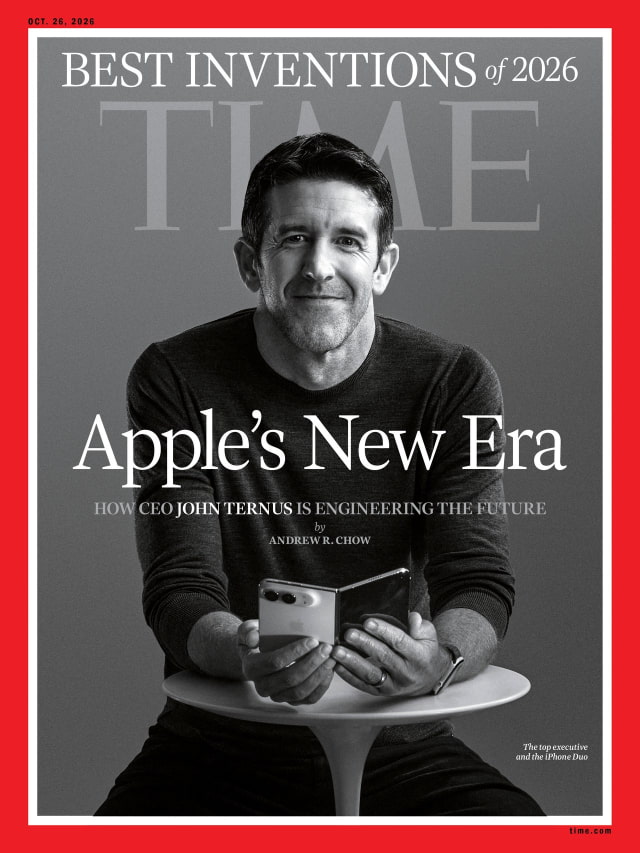
There is also a new face behind this launch. CEO John Ternus, who took over on September 1, unveiled the Duo at his first keynote on September 9 — meaning the foldable is the defining product of the opening chapter of his tenure. According to CryptoRank and Coinotag reporting, Ternus and executive chairman Tim Cook both posted teasers on X on pre-order day, an unusually direct bit of launch-day promotion that underlined how much of the company's story is now riding on this device. A sellout on day one is, politically inside Apple, exactly the opening Ternus needed. The harder test comes next: whether the company can actually build enough of them.
Foldables are simply harder to manufacture than flat phones. Hinges, flexible displays and thin titanium frames all carry lower yields and slower assembly than a conventional handset, which is one reason rivals launched their first foldables in limited numbers too. A January delivery window in October is Apple signaling, in the only language customers cannot misread, that supply — not demand — is the constraint.
Why an old idea suddenly matters
The most clarifying voice on Friday may have come from outside Apple entirely. IDC analyst Nabila Popal told CNBC that the technology itself is not new — Android foldables have existed for years — but that Apple bringing the form factor to its enormous installed base is what is new. That distinction is the entire story of the modern smartphone business in one sentence. Samsung, Google and others proved the hinge could work. Apple is now testing whether the category can become mainstream at scale.
The numbers Popal's firm tracks explain why Apple finally moved. According to IDC figures cited in the CNBC reporting, foldables account for just over 2% of global smartphone units — a rounding error next to conventional phones. But they represent nearly 7% of industry revenue, because every foldable sold carries a premium price. For a company that already dominates the profitable end of the market, that gap between unit share and revenue share is an invitation: a small category, priced high, full of early adopters who look exactly like Apple's best customers.
If the Duo's first run is any guide, the invitation was accepted. The risk, as always with a first-generation Apple product, is durability and software polish over months rather than minutes. None of Friday's excitement answers whether the crease stays invisible, whether the hinge survives a year of pockets and drops, or whether apps make genuinely good use of the larger inner screen. Those questions will decide whether the Duo is a new iPhone line or an expensive experiment.
The resale market moved just as fast
Where official stock vanishes, the secondary market appears — and on Friday it appeared at startling prices. According to MacDailyNews Substack reporting of sold listings, confirmed pre-orders were resold on eBay for up to $4,999.99 for the 2TB model. That is roughly $1,800 above the already-record retail price of the top configuration, paid by buyers effectively purchasing someone else's place in line rather than waiting until January.
Those listings should be read as a signal, not a market price. Early resale premiums spike on scarcity and collapse as supply improves, and anyone paying close to $5,000 for a pre-order slot is betting that January estimates will hold or worsen. Still, the existence of a four-figure markup within hours of pre-orders opening underlines how tight the first run appears to be — and how much unmet demand Apple is carrying into the holiday quarter.
What happens next
The next milestone is October 23, when the Duo reaches stores and the first real-world units land in buyers' hands. Expect the conversation to shift quickly from availability to quality: hinge feel, screen crease, battery life across two displays, and whether that 7.6-inch inner screen changes how people actually use a phone. If walk-in stock exists, expect lines. If it does not, expect the January window to become the story all over again.
For now, the first foldable iPhone has done the one thing a $1,999 debut needed to do. It made the most expensive phone Apple has ever sold look, at least for one Friday morning, like the hardest one to get. Readers can follow more tech coverage in our news section and browse phones and devices in our browse pages as launch week unfolds.
Sources · 3 sources
- MacDailyNews — Apple's iPhone Duo sells out in minutes as preorders push into 2027
- CNBC (as reported) — Apple statement on pre-order demand and IDC analyst Nabila Popal comments
- Bloomberg — Mark Gurman reporting on delivery timelines moving within minutes