
SAN FRANCISCO THURSDAY, OCTOBER 15, 2026
There may be no job in technology right now with more money riding on it than the one that just changed hands at OpenAI. Bloomberg reported on Wednesday that the company has appointed Uday Ruddarraju to lead its infrastructure and compute businesses — the sprawling operation behind the Stargate data center effort — succeeding Sachin Katti, who is stepping out of the role after about a year. The Wall Street Journal separately reported that Katti is leaving the company next month, and CNBC reported that he will finish in the role on November 15 and remain an adviser. Three major outlets, three slightly different framings of the same handover — and one enormous brief changing shoulders.
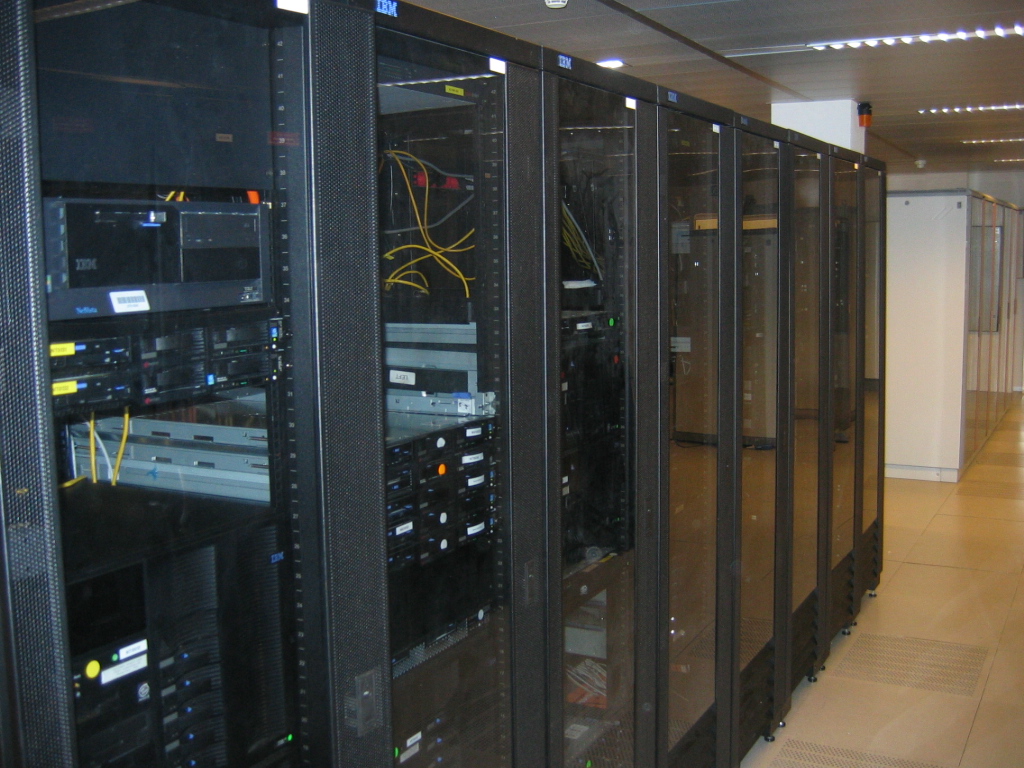
The brief, to be clear, is not maintaining a server fleet. It is building the physical foundation of OpenAI's next generation of models: the data centers, power contracts, chip supply and cloud partnerships that decide how much computing capacity the company can bring online, and when. In the AI race as it is currently run, that is not a support function. It is close to the whole game.
The handover: what each outlet reported
Bloomberg, via PYMNTS' summary of its report, said Ruddarraju — OpenAI's chief technology officer for compute — will now head both the infrastructure and compute businesses, and that Katti will transition out of the infrastructure role and remain an adviser. Data Center Dynamics reported the same appointment, adding that Ruddarraju will run OpenAI's Stargate and other data center efforts. The Wall Street Journal reported that Katti joined OpenAI in late 2025 to rein in the Stargate effort after its slow start, that he struck additional computing agreements with providers such as Amazon Web Services, and that in August he helped lock in a 10-gigawatt data center lease with SB Energy backed by a financial guarantee from Nvidia.
Katti announced the move himself on LinkedIn on Wednesday, in a post reported by CNBC and others. He said he had decided to move on to build something new, that his last day would be November 15, and that he would remain an adviser. Looking back, he said the team had secured double-digit gigawatts of new compute capacity across projects in Ohio, Portsmouth and Georgia and the Trainium program, working with partners including Nvidia, Broadcom, AMD, Oracle, Microsoft, Google, AWS, Cerebras and CoreWeave — and had taken GPT-Infra from an idea to a real business in three months. However the departure is framed, that is not the résumé of someone who failed quietly.
Who is Uday Ruddarraju?
Ruddarraju arrived at OpenAI in July 2025, according to his LinkedIn profile as cited by CNBC and Data Center Dynamics, and he did not arrive as a novice. He previously led infrastructure engineering at xAI, Elon Musk's AI company, where he was part of the team known for standing up very large training clusters at aggressive speed. At OpenAI he served as head of compute and infrastructure and was named CTO of compute this July. Data Center Dynamics reported that his data center team has been increasingly reinforced by fellow former xAI employees, including OpenAI's head of data center build and delivery. Bloomberg reported that he will now also spend more time on the commercial side of the operation — the partner deals and capacity agreements that Katti had been running.
The Journal reported that Ruddarraju reports to OpenAI President Greg Brockman. That reporting line is a signal in itself: compute strategy at OpenAI is not buried three layers down an org chart. It sits at the president's desk, which is where it belongs when the strategy involves sums that rival the budgets of mid-sized nations.
The scale of the job
Just how large? The Wall Street Journal reported that OpenAI has raised its projected spending on computing power to around $750 billion through 2030, up from a projection of roughly $600 billion earlier in the year. Other outlets, including CNBC's coverage as summarized by multiple reports, continued to cite the roughly $600 billion figure for total compute spending by 2030 — a discrepancy worth noting rather than smoothing over, since it likely reflects the projection being revised upward during the year. Either figure comes with multi-billion-dollar data center projects in Ohio, Texas and Georgia, and with growing political attention: Data Center Dynamics and CNBC's reporting both noted that data centers have become campaign issues in parts of the U.S., with candidates of both parties raising concerns about noise, electricity rates and water use.
That political weather is part of the job now, too. The person leading OpenAI's compute build-out is simultaneously an engineer, a negotiator of nine- and ten-figure deals, and — whether they want to be or not — a public face in local fights over power and land. Katti's tenure saw OpenAI shift from renting capacity toward leasing and building its own data centers, per the Journal. Ruddarraju inherits that strategy mid-flight, along with the expectations attached to it.

Another chair in a busy corridor
Context matters here, because this is not OpenAI's first leadership change of the year — in this unit or beyond it. Data Center Dynamics reported that several data center leaders departed following Katti's own promotion to run Stargate in March, and CNBC's coverage noted other senior moves this year, including product and business chief Fidji Simo moving to an advisory role in July for health reasons, and Brad Lightcap and revenue chief Denise Dresser departing in August. OpenAI President Greg Brockman has previously said, as CNBC reported, that he did not consider the departures atypical for a young company — while acknowledging that OpenAI's prominence means every departure gets scrutinized in a way it otherwise would not.
Both things are probably true. Young companies churning executives is unremarkable; the most valuable private company in AI churning the leadership of its single most capital-intensive operation, twice in a year, is legitimately news. The test of this handover will not be the announcement. It will be the next few quarters of capacity actually coming online — gigawatts energized, models trained on schedule, deals closed without drama. Ruddarraju's track record says he knows how to build fast. OpenAI has now bet its compute future that fast is what the moment needs.
More from Previously
- Eight states sue OpenAI, saying ChatGPT harms children — OpenAI disputes it
- Hot inflation sinks tech stocks for a second day even as TSMC posts a record quarter
Sources · 4 sources
- Bloomberg via PYMNTS — OpenAI expands Uday Ruddarraju's role to head compute and infrastructure units
- The Wall Street Journal — OpenAI computing chief to depart
- Data Center Dynamics — OpenAI again shakes up data center leadership, with xAI exec Uday Ruddarraju to lead and Sachin Katti to leave
- CNBC via CryptoBriefing — OpenAI infrastructure chief Sachin Katti to leave role in November