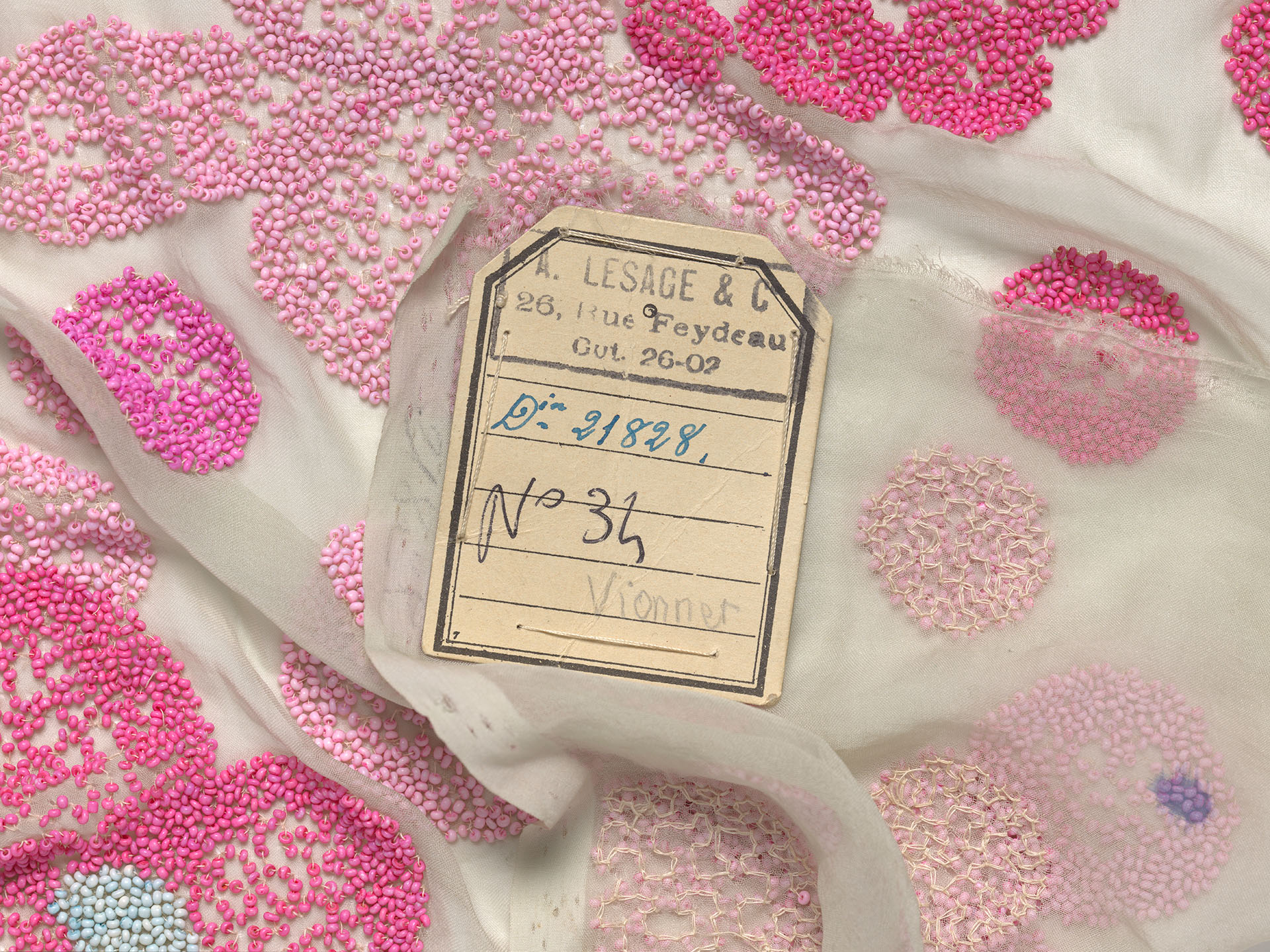

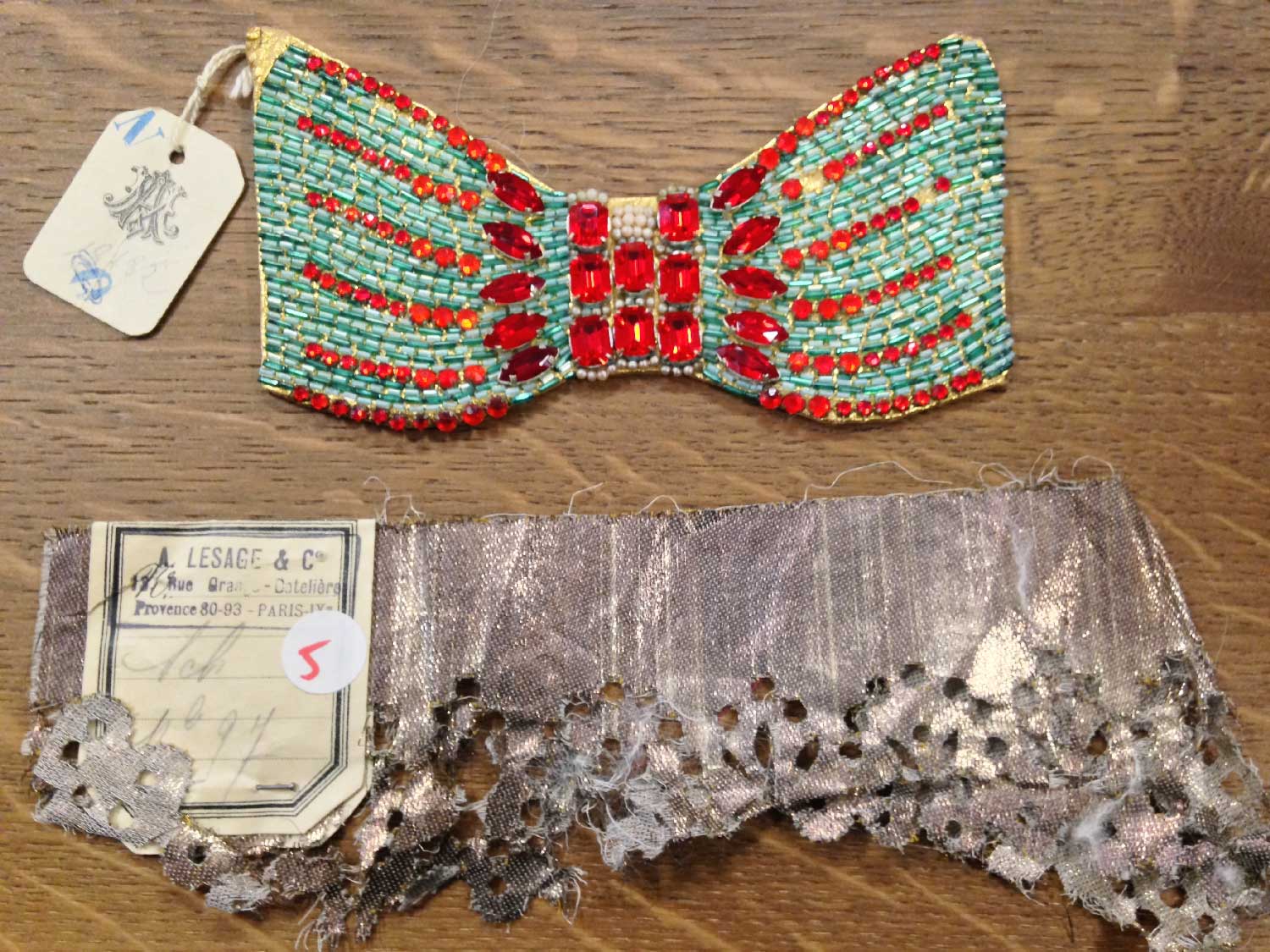
A couture collection at Lesage starts in a room full of old work. The house holds a collection of 75,000 embroidery samples — swatches of beading, sequin work and stitch experiments reaching back to the nineteenth century — and it is not treated as a museum. Designers come to it the way writers go to a library: looking for the exact precedent that turns a sketch into something a pair of hands can actually make. A sample proves a technique works before anyone commits it to a garment.
The library exists because the workshop came first. The embroidery house Michonet was founded in 1858 and supplied Charles Frederick Worth, the founder of haute couture. Albert and Marie-Louise Lesage bought it in 1924 and put their name on it. Their son François took over in 1949, aged twenty, and ran the house for the rest of his life — by the time he died in 2011, the Lesage name had become the answer Paris gave whenever a designer's drawing demanded more than a sewing machine could do.
The client list across that century is a history of couture itself. Madeleine Vionnet, Marie-Louise's former employer, pushed Lesage to invent — ombré beadwork that could be dyed after embroidery so colour melted across a bias-cut dress. Elsa Schiaparelli ordered circuses and zodiac signs. Decades later, Yves Saint Laurent had Lesage rebuild Van Gogh's irises and sunflowers in sequins, jackets that remain among the most famous embroideries ever worn. Each of those commissions left samples behind, which is how an archive like this grows: every solved problem stays on file.
The work itself runs on two tools, the needle and the Lunéville hook — a small tambour hook worked from beneath the fabric, chaining beads and sequins into place from the underside, so the embroiderer is effectively stitching what she cannot fully see. It is slow, exacting and learned by hand over years. A motif is tested flat first, on a sample, where thread weight, sequin size and stitch direction can be argued over cheaply. Only when the flat version convinces does it earn its place on a three-dimensional garment.
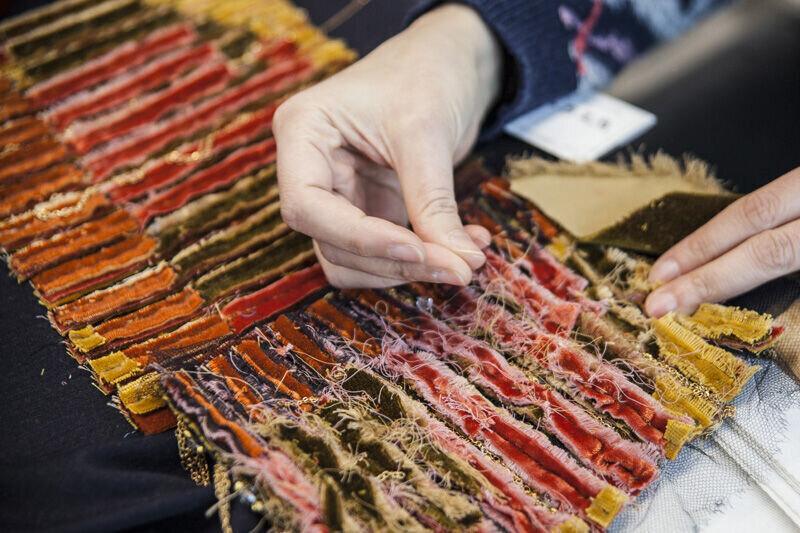
Lesage also gave itself a second trade. Since 1998 it has woven tweed for Chanel, threading ribbon, fantasy yarns and unlikely materials through the looms alongside wool — the embroiderer's instinct for surface, applied to the cloth itself rather than on top of it.
Chanel had been a client since 1983. In 2002 it bought the house through Paraffection, its subsidiary for preserving exactly this kind of endangered skill, and Lesage kept working for other houses as it always had. The point of the purchase was continuity, not exclusivity. Today the ateliers, the sample collection and the school sit together at le19M, Chanel's Paris home for its craft houses. The school matters as much as the vault: François Lesage founded it in 1992, worried the knowledge would die with his generation of embroiderers, and it now trains new ones within sight of the archive they will one day add to.
Previously's Take
Fashion talks about heritage as if it were a mood. Lesage shows what it actually is: a filing system of solved problems, kept by people who can still solve new ones. The samples are not nostalgia. They are inventory — a hundred years of "yes, that can be done," waiting for the next designer bold enough to ask.
The numbers
Sources · 5 sources
- le19M / Maison Lesage — official house and archive record (catalog row H22 primary source)
- CHANEL — The Maisons d'art ateliers (Lesage: partner since 1983, Métiers d'art 2002, tweed since 1998)
- The Costume Society — "Lesage: 100 years of fashion and decoration at La Galerie du 19M" (75,000 samples; centenary exhibition, 2024)
- National Gallery of Victoria — Lesage × Vionnet exhibition record (Michonet founded 1858, purchased by Albert Lesage 1924; samples 1922–1938)
- FZine / FEMALE — "Why Chanel Tweed Will Never Be The Same Without Lesage" (École Lesage founded 1992; Paraffection 2002)
Photographs: National Gallery of Victoria · Numéro · Parsons Paris / The New School