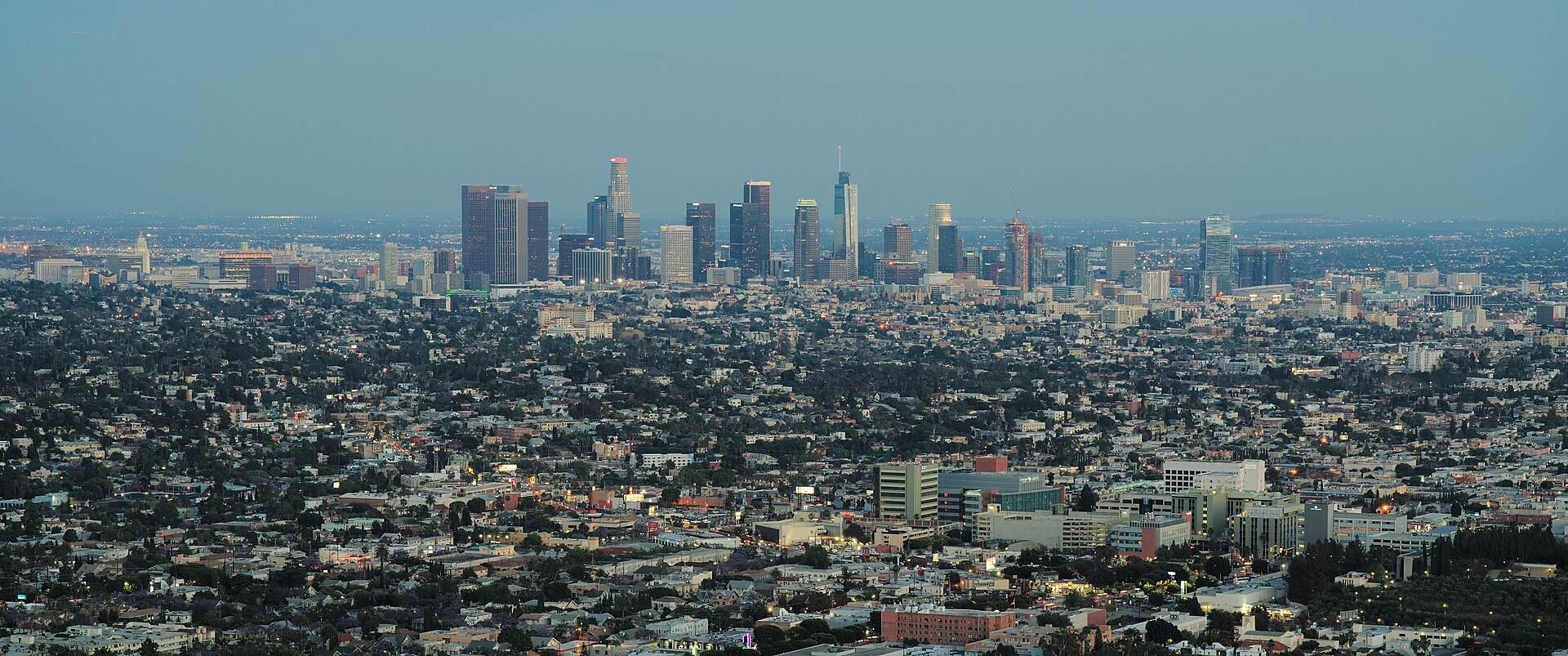

LOS ANGELES
The starting gun fired this morning. Los Angeles opened applications today, October 13, for $466.6 million in affordable housing funding — the largest single round the city has ever offered — after the City Council voted 13-0 to authorize the notice of funding availability. Developers, nonprofits and housing operators now have until December 4 to get their projects in front of the city, in a competition that will shape what gets built, bought, saved and stabilized across Los Angeles for years.
01 A Unanimous Vote for a Record Round
The council's 13-0 vote came with two members absent — Heather Hutt and Tim McOsker — and no votes against. The round, branded Homes for LA, totals nearly $467 million, a substantial jump from the roughly $387 million offered in the previous round. In a city where housing fights are usually measured in lawsuits and ballot measures, the size of the number is itself the headline: this is the biggest pot of local affordable housing money Los Angeles has ever put on the table at one time, and it is open for applications as of today.
That timing is the news hook for builders. A funding availability notice is the moment a housing program stops being a budget line and becomes a race. Projects that have been assembling land, designs and financing can now formally compete; projects that are not ready will watch this round pass and wait for the next one. With the application window closing December 4, the next seven weeks will quietly decide a large share of the affordable homes Los Angeles breaks ground on in the late 2020s.

02 Seven Categories, One Strategy
The $466.6 million is not a single undifferentiated pool. It is divided into seven categories, and the divisions read like a diagnosis of the city's housing crisis from seven different angles. The largest share, $123 million, is reserved for multifamily projects of 40 or more units — the big, dense developments that move the unit count fastest. Close behind, $115 million is set aside for projects using low-income housing tax credits, the workhorse financing tool of American affordable housing, where city money typically fills the gap that makes a tax-credit deal pencil out.
Then the round gets more interesting. A full $104 million goes to alternative development models — an acknowledgment that the standard developer playbook has not produced enough homes, and that different structures deserve serious money rather than pilot-program scraps. The remaining categories are about defense as much as construction: $38 million to stabilize existing affordable properties, $32 million to acquire and rehabilitate rental housing, $27 million to preserve affordable homes that could otherwise be lost, and $25 million for properties at risk of financial distress.
That defensive money matters more than it might look. Every affordable home Los Angeles loses — to expiring restrictions, deferred maintenance or a distressed sale — is a home the city would have to replace at new-construction prices. Preservation dollars are unglamorous, but they are frequently the cheapest affordable housing a city can buy, because the building already exists and the tenants are already home.

03 Follow the Money: The Mansion Tax
Much of the money in this round traces back to Measure ULA, the voter-approved measure Angelenos know as the mansion tax. It charges a transfer tax of 4% or 5.5% on property sales above $5.4 million, and since 2023 it has raised more than $1.3 billion — turning the top end of the Los Angeles real estate market into the city's most powerful local housing engine. The Homes for LA round is, in large part, that revenue being put to work.
The safeguards attached to this round reflect how closely that money is watched. The city's housing department will be required to deliver quarterly reports tracking how the funds are used. Housing Committee chair Imelda Padilla pressed for that tracking during the process, arguing in substance that the city has to be able to show the dollars are producing the housing Angelenos were promised when they voted for the tax. Quarterly reporting will not build a single apartment by itself, but it creates a public paper trail — and a recurring moment, four times a year, when the program has to answer for its pace.
04 What Happens Next
The calendar from here is clear. Applications close December 4, 2026. Scoring and selection run into February 2027, as the housing department evaluates competing projects against the round's categories. The City Council is expected to approve the actual awards by April 2027 — meaning today's opening is the start of a roughly six-month public process before a single project can call the money its own.
For applicants, the practical advice embedded in the structure is simple: fit matters. A 60-unit tax-credit project, an alternative-model experiment, and a preservation deal for a building at risk are not competing against each other in one giant pool — they are competing inside categories designed for them, each with its own meaningful share of the total. For everyone else in Los Angeles, the thing to watch is April: the award list will be the moment this $466.6 million stops being a record-setting announcement and becomes addresses, unit counts and construction timelines in specific neighborhoods.
Read more Southwest coverage in the Previously newsroom, including this week's Nevada housing council round and our latest Vegas coverage from the Vegas Desk.
Sources · 1 source
- MyNewsLA, KFI and Los Angeles Times reporting, cross-verified by the Previously desk — City Council votes 13-0 to authorize the $466.6 million Homes for LA notice of funding availability; category breakdown; application window Oct. 13–Dec. 4, 2026; selection timeline into February 2027 with awards expected by April 2027; Measure ULA revenue history and quarterly reporting requirement. Oct 2026





