
Ten years ago, the music inside a video game mostly stayed there. A score might be beloved by the people who played the game, hummed by them for years, and still never exist as a record anyone could buy, stream or put on a shelf. Materia Music — the Seattle-based independent label and publisher specializing in original video game music — has spent a decade attacking exactly that problem, and this month the company gets to celebrate its 10th anniversary with the kind of receipt the whole industry can read: a No. 3 debut on Billboard's Soundtracks chart, according to Digital Music News.
The milestone arrives courtesy of the label's longest-running partnership. Deltarune: Chapter 5, the latest installment from creator and composer Toby Fox, debuted at No. 3 on Billboard's Soundtracks chart and No. 5 on Top Dance/Electronic Albums, Digital Music News reports. According to Billboard, the soundtrack also gave Fox his first appearance on a songs-based chart: "Flower Man" and "Cutie Mew Mew Magic" landed at No. 13 and No. 18 respectively on Hot Dance/Electronic Songs. The Chapter 5 soundtrack, released in June, topped the previous high-water mark for the series — the No. 5 peak of the Deltarune Chapters 3+4 soundtrack Materia released in 2025. Billboard reported the Chapter 5 album earned 9,000 equivalent album units in the United States in its chart debut week, the majority from streaming, across a 40-track tracklist.
The partnership behind the numbers
Fox first became known for Undertale, the 2015 independent game whose music became a phenomenon in its own right. Materia Music has worked with him on Deltarune — its spiritual successor — since Chapter 1 arrived in 2018, building each chapter's music into a full commercial life: streaming releases, CDs and vinyl LPs for collectors, sheet music for players who want to perform the pieces themselves, and merchandise for fans who want to carry a piece of the game with them. That range is not decoration. It is the business model, and it exists, the company says, because fans actively seek this music out long after they finish playing.
"During a single convention, more than 20,000 people walk past our booth, and the fans who stop almost always have a story about the first time a song from a game stuck with them," Jen Miller, Materia's Consumer Events Coordinator, told Digital Music News. "They aren't just shopping. They want a way to reconnect with their favorite game and share that feeling with other fans, whether it's a record, a book of sheet music, a shirt, or a night at a live concert."
Sheet music, sync, and the unglamorous machinery
The part of Materia's story that rarely makes headlines is the part the company considers the actual achievement: infrastructure. Behind the releases sits a publishing, licensing and sync operation that manages the rights and revenue game music generates once it reaches audiences outside the game. The team has grown from four people to 35 in roughly five years, according to Digital Music News. "Game music has always had devoted fans," Joel Andrew, the company's Head of Operations, told the outlet. "What was missing is the infrastructure to serve them properly: the rights work, the manufacturing, the distribution, and the reporting. We spent ten years building that, so the people who make the music don't have to figure it all out themselves."
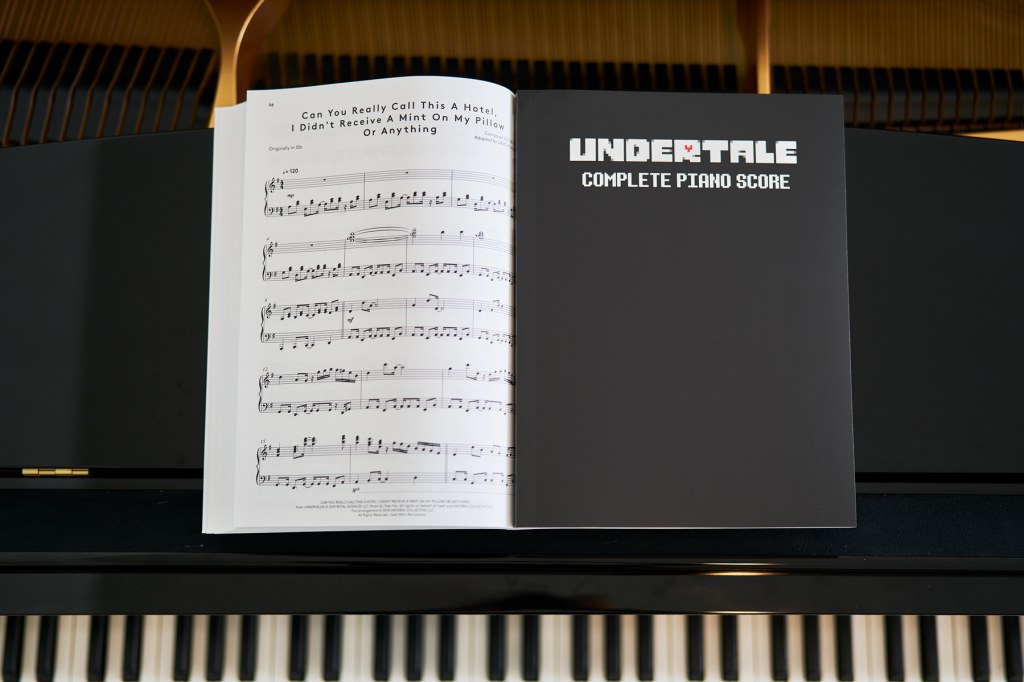
Some of the results are delightfully analog. CEO Sebastian Wolff, a classically trained pianist, told Digital Music News the company has printed and sold more than 50,000 sheet music books to date — physical books, bought by players learning game themes on real instruments. It is hard to think of a cleaner illustration of the label's thesis: this music is not background. For a generation of players it is repertoire.
"Our mission is to give this music the long life it deserves, with the human artists who write it sharing in its success." — Sebastian Wolff, CEO of Materia Music, to Digital Music News
Why this anniversary lands now
Context matters here, and so does a disclosure: the Digital Music News anniversary piece was published as a collaboration with Materia Music itself, so its framing is a friendly one. The chart numbers, however, are Billboard's, and they are independently verifiable — the Deltarune Chapter 5 soundtrack's No. 3 Soundtracks peak and Fox's twin songs-chart debuts are matters of chart record, not publicity. What those numbers show is a category that has quietly become a business. Game music is written for an interactive medium — tracks built to loop for hours, shift with the action and carry moments the player shaped themselves — and that intimacy is precisely why listeners keep returning to it as albums, vinyl, books and concert nights.
"For a growing number of people, a game is where they first fall in love with a song, and that love doesn't go away when the game ends," Wolff told Digital Music News. Ten years in, Materia is no longer just a label putting soundtracks on streaming services; it is a rights, publishing and catalog business built around that love, with more announcements promised soon. If the first decade proved original game music can chart, the company is betting the next one proves it can sustain an entire music business of its own. A No. 3 Billboard debut, in the anniversary month, is a strong way to open the argument.
More music coverage: Hot Chip announce their ninth album, led by a tribute to JD Twitch, Lucky Daye lives ALOUD! on a fearless new album, and the full catalog on our Music front.
Sources · 2 sources
- Digital Music News — "Materia Music Turns 10 as Deltarune Hits #3 on Billboard" (Oct. 19–20, 2026; published in collaboration with Materia Music)
- Billboard — Deltarune Chapter 5 chart coverage (Soundtracks No. 3; "Flower Man" No. 13 and "Cutie Mew Mew Magic" No. 18, Hot Dance/Electronic Songs)