
Baseball's winter officially started at 5 p.m. ET on Monday, and it started in a hurry — free agency is open, Tarik Skubal is the prize at the top of it, and the clock is already ticking toward December 1. The five-day quiet period — the stretch when clubs could only talk to their own free agents — ended five days after the Milwaukee Brewers finished off the Tampa Bay Rays in Game 5 of the World Series, and for the first time this offseason, every free agent in the sport can sign anywhere. What they are signing into, though, is the strangest market in years: a class widely described as the weakest in at least a decade, one enormous prize at the top of it, and a collective bargaining agreement that expires on December 1 with a lockout widely expected to follow. Every front office in the game is doing the same math. Whatever is going to get done this winter probably has to get done in November.
The first hard evidence of the market's shape arrived Monday afternoon, when teams had to decide on qualifying offers. According to USA Today, Reuters and MLB Trade Rumors, just eight players received the one-year, $23.15 million offer before the 5 p.m. ET deadline — the second-fewest in a full season since the system was introduced in 2012. In a normal winter, that number is a formality. This winter, it reads like a scouting report on the class itself.
The eight names, and the two decisions that actually fascinate
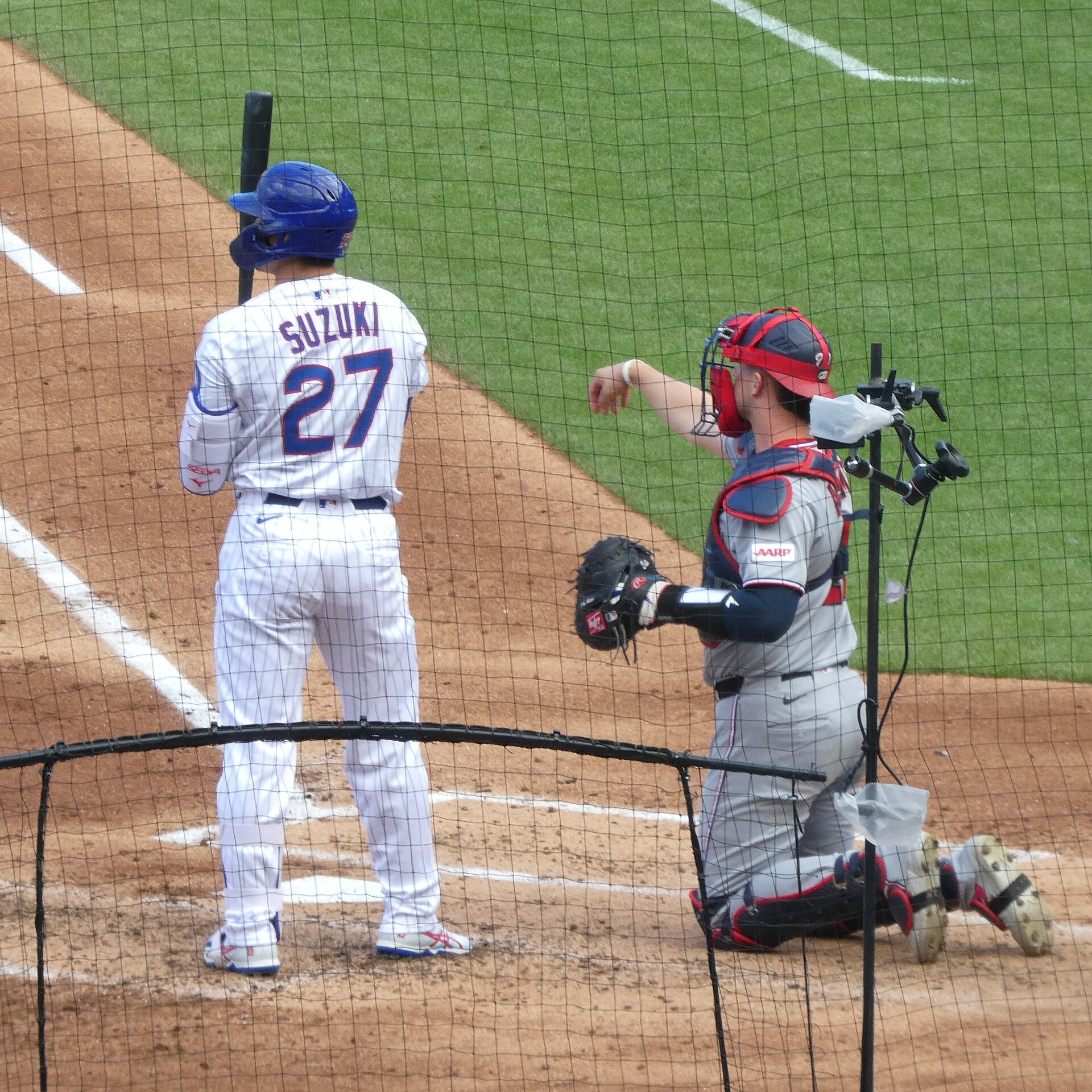
The eight, as reported by Joel Sherman of the New York Post and confirmed across MLB.com and Reuters: Seattle outfielder Randy Arozarena, Chicago Cubs outfielder Seiya Suzuki, Minnesota catcher Ryan Jeffers, New York Yankees closer David Bednar, Pittsburgh second baseman Brandon Lowe, Baltimore starter Trevor Rogers, San Diego reliever Adrian Morejon and Milwaukee first baseman Jake Bauers. Each has until November 17 at 4 p.m. ET to accept or reject, according to MLB Trade Rumors. History says almost all of them will reject — only 18 of 157 qualifying offers have ever been accepted since 2012, per MLB.com — although last winter a record four players took the offer, including Shota Imanaga, Trent Grisham, Gleyber Torres and Brandon Woodruff.
Two of this year's decisions are genuinely delicious. Bauers earned $2.7 million in 2026, hit 26 home runs for the World Series champions, and as USA Today pointed out, the qualifying offer alone would pay him more than twice what he has earned in his entire career. Morejon, San Diego's left-handed setup ace, made $3.9 million; if he accepts, he becomes the highest-paid reliever in baseball for 2027, eclipsing the Dodgers' Edwin Diaz at $23 million. Bednar's case rhymes with Morejon's — the Yankees' closer jumps from $9 million to $23.15 million if he says yes. And hovering over all of it is the lockout: a guaranteed $23.15 million, decided under the current rules before December 1, looks a lot safer than a long-term market that might freeze for months. Do not be surprised if this year's acceptance count makes another run at the record.
Just as telling was who did not get an offer. The Yankees extended one to Bednar but not to second baseman Jazz Chisholm Jr., who now reaches the market unattached — no draft-pick compensation tied to his name, which makes him more attractive to everyone else. The Cubs tagged Suzuki but not Ian Happ. Seattle's J.P. Crawford, San Diego's Ty France, the Cubs' Matthew Boyd, Cincinnati's Brady Singer and Arizona's Michael Soroka also hit the market clean, according to Reuters. In a thin class, the untagged names might move fastest of all.
Skubal is the winter — and he cannot be tagged
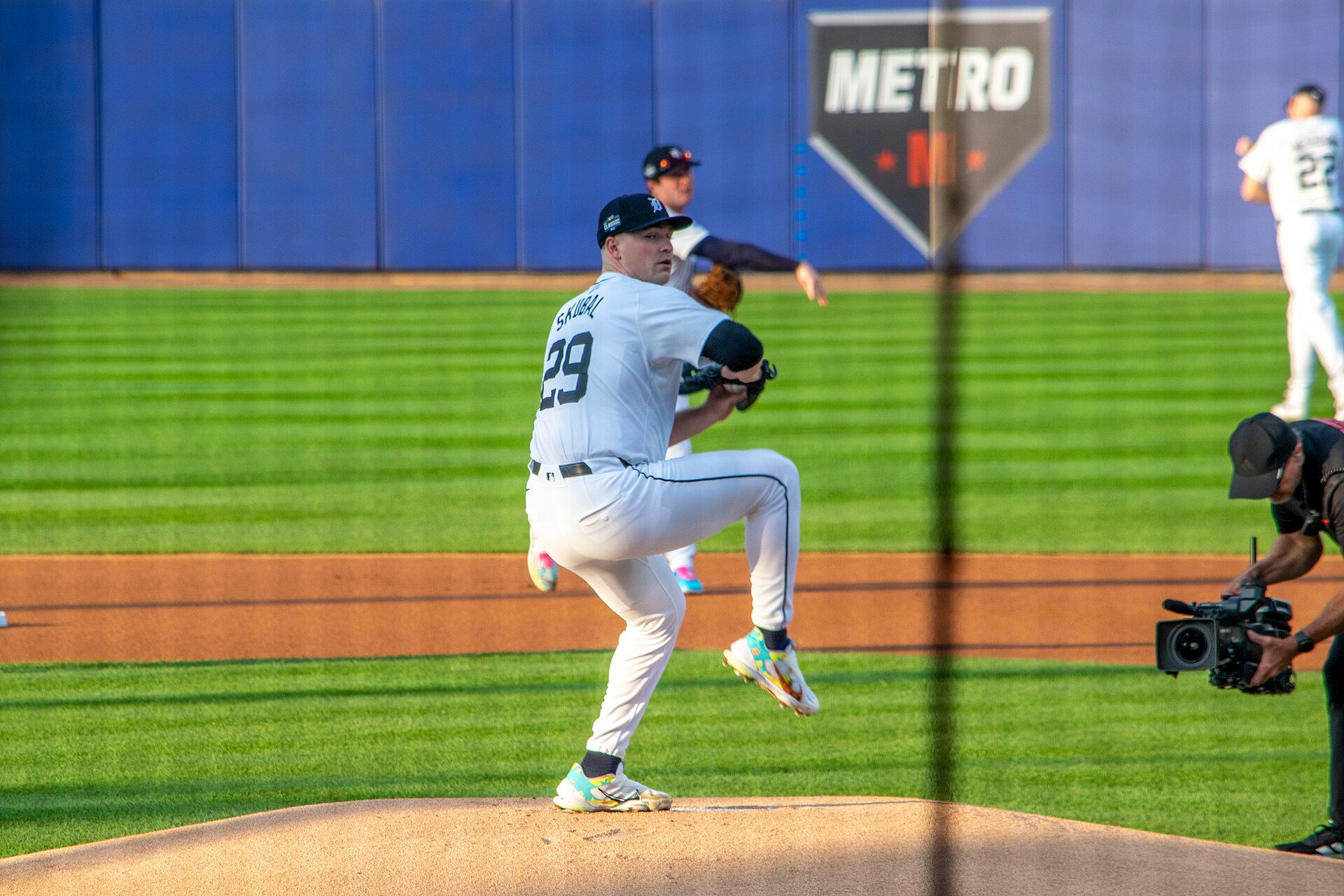
None of the eight, however, is the winter's main event. That is Tarik Skubal, and the most important fact about his free agency is a technicality: because Detroit traded him to the Los Angeles Dodgers at midseason, he was ineligible for a qualifying offer, as USA Today noted. Whoever signs him gives up nothing but money. Skubal is, in the words of ESPN's Jeff Passan, "far and away the best player in this class." Passan, in ESPN's offseason intel report relayed by TSN, reported that the expectation is he signs before the December 1 lockout, and put the price at well in excess of $300 million — potentially into the $400 million range. The two most obvious suitors, Passan reported, are the two highest-payroll teams in the sport: the Dodgers and the New York Mets. The Chicago Cubs badly want him too, but are skeptical they will match the dollars.
Sit with the Dodgers part of that for a second. Los Angeles acquired Skubal in July, watched him front their rotation into the NLCS, got swept by Milwaukee — and now has to win a bidding war against the Mets to keep him. If he leaves, the Dodgers will have rented the best pitcher alive for one postseason run that ended in a sweep. If he stays, they will have paid something like $400 million for the privilege. Either way, everyone else is shopping in his shadow: Passan reported that the next tier of starters — Michael King, Clay Holmes, Nick Martinez and Tyler Mahle — are precisely the pitchers most likely to have solid short-term offers in hand during November, because teams can absorb those deals no matter what the next financial system looks like.
The trade market is frozen — except where it isn't
Trades, by contrast, may crawl. ESPN's Buster Olney reported that the trade market will not gain real clarity until the next CBA is settled, because teams cannot confidently value players without knowing the financial system they are valuing them in. Two names, though, are already circulating. The first is Tampa Bay ace Drew Rasmussen: Passan reported that his $20 million salary would push the Rays' payroll above its 2026 level on its own, which is why the American League champions — the team that just took Milwaukee to five games in the World Series — might move their ace this winter. That is not a baseball decision. That is a Tampa Bay decision, and it tells you everything about how the other half lives.
The second is Teoscar Hernandez. ESPN's Buster Olney identified the Dodgers outfielder as "the most obvious trade candidate in their position player group" (Olney, ESPN), because as his defense declines there is no designated hitter spot to hide him in — Shohei Ohtani occupies it. Hernandez, 34, hit .267 with a .759 OPS and 16 home runs across 125 games in 2026, per ClutchPoints' syndication of Olney's reporting, and the Dodgers' outfield — Kyle Tucker, signed to a big deal last winter, and rising star Andy Pages — is only getting more crowded. Olney also reported that Seattle is quietly assessing how its surplus of pitching might be converted into a bat. In a winter this thin on free-agent hitting, a pitching-rich team shopping for offense is a team holding real currency.
The Japan pipeline is open, too
The international market fired its starting gun Monday as well. Hanshin Tigers third baseman Teruaki Sato — the highest-profile NPB player in this winter's class — had his posting accepted, opening a 45-day negotiating window with all 30 clubs, according to Sports Hochi's reporting tracked by MLB Trade Rumors. Sato aims to settle within November, which tells you he has read the same lockout calendar as everyone else. The Mets, Yankees, Dodgers, Phillies and Blue Jays have all been linked, and Ken Rosenthal confirmed the Yankees will keep tabs on his market. Sato joins Seibu Lions ace Kaima Taira, whose posting we covered last week, in a Japan pipeline that has rarely mattered more in a single winter.
Meanwhile, the champions are already coming apart at the edges
And then there is Milwaukee, where the confetti from Friday's parade — 750,000 people, the largest single-day crowd in Wisconsin history, according to the Milwaukee Police Department via Milwaukee Business Journal — had barely been swept up before the roster started moving. Bauers got his qualifying offer. Dustin May declined his part of a mutual option in favor of a $500,000 buyout. Reliever JoJo Romero and right-hander Brandon Woodruff — who made an improbable World Series appearance after an injury-plagued season, one year after accepting a qualifying offer himself — are free agents, according to the list shared by MLB.com's Adam McCalvy on November 2. The Brewers will raise a banner in April with the best young core in the sport, the two newest Gold Gloves in their infield and outfield, and an 11-2 postseason run behind them. But championship rosters do not stay still, and Milwaukee's winter started the moment the parade ended.
What happens next is a sprint with three finish lines. The qualifying-offer decisions land November 17. Awards week runs November 9-12, with the full finalists list announced Monday night. And on December 1, the CBA expires and the sport likely stops. Between now and then: one $400 million ace, eight $23.15 million questions, a Japanese star on a 45-day clock, and 30 front offices trying to do a winter's worth of business in about four weeks. The hot stove is not just lit. Somebody put a timer on it.