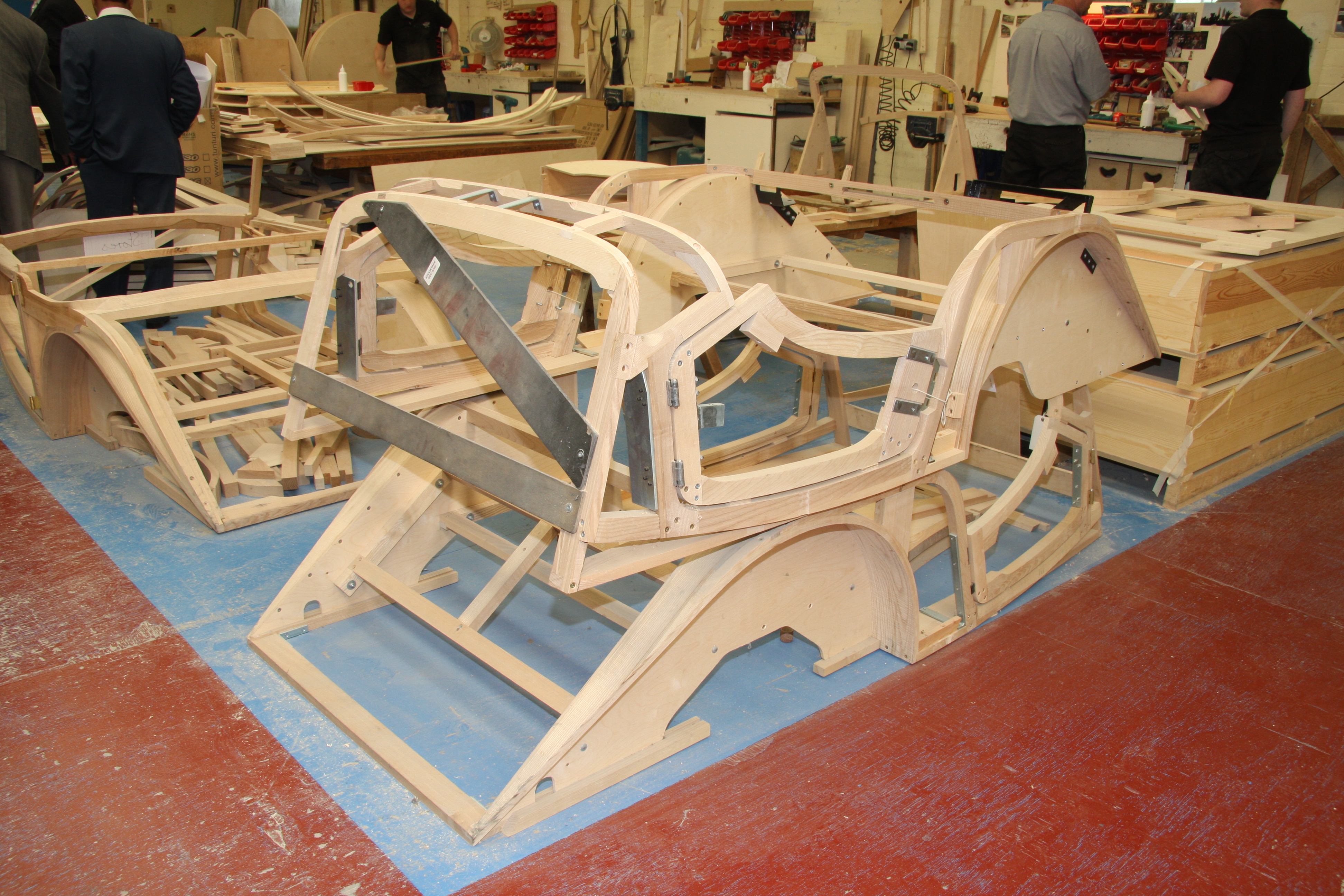

The bare frame looks almost like the outline of a car drawn in timber. Curves around the wheel openings and the spaces for doors remain visible before the body panels cover them. In Brian Snelson’s photographs from Morgan’s factory on 23 April 2009, the familiar exterior has not yet become an uninterrupted surface. The construction is easier to read because the finished shape is still incomplete.[1]
Morgan’s account of its coachbuilding identifies English ash as the material for the wooden body frame. It describes that frame as the structure around which aluminium panels are formed. The distinction matters: the presence of wood in this part of the car does not mean that every structure underneath the car is wooden.[2]
The manufacturer’s explanation brings together two ways of determining a shape. Its account of the Plus Four and Plus Six describes a body frame designed with computer-aided design and made by hand, including tenon joints and laminated curves. The digital model supplies information; shaping and assembling the material still require a craftsperson to make that information physical. Neither activity is evidence that the other has disappeared.[2]
The chassis has its own development history. In a 2025 retrospective, Morgan identifies the Plus Four launched in 2020 as using the bonded and riveted aluminium chassis introduced with the Plus Six the previous year. Those dates belong to later cars than the factory photographs shown here. The images document a historical practice; they do not establish which components are being fitted to a present model.[3]
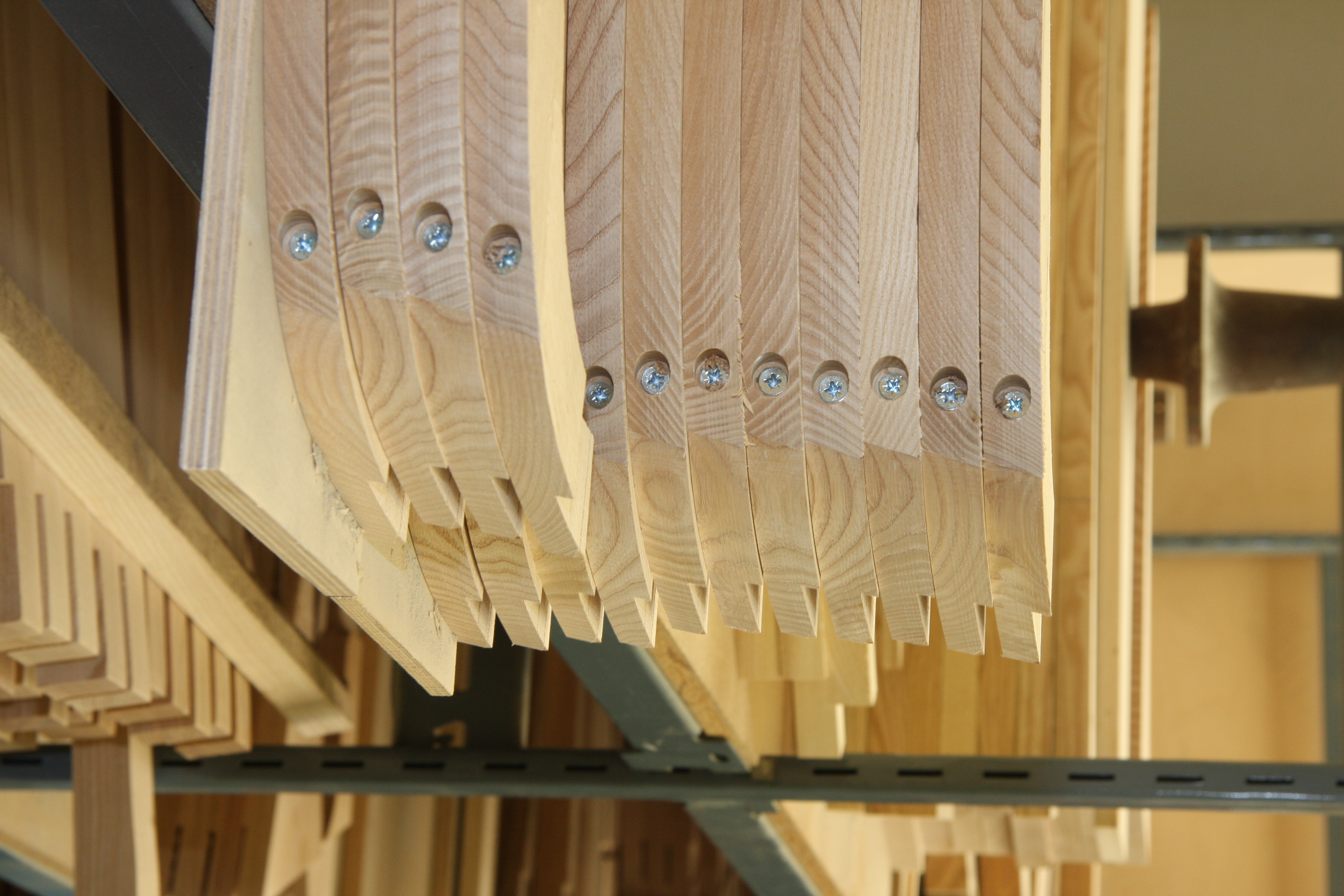
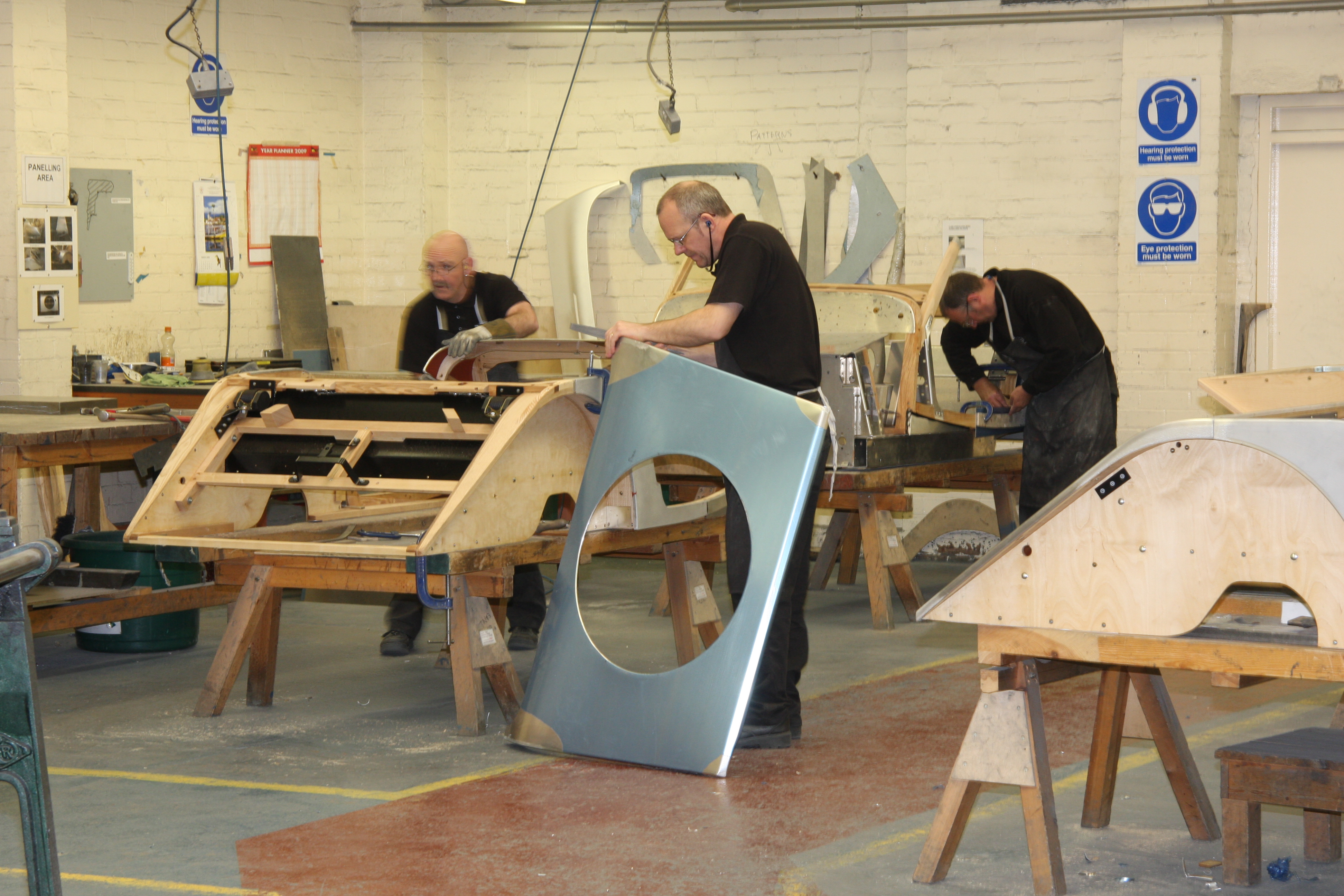
That separation makes the older photographs more useful. One shows a wooden body structure, another the fitting of aluminium panelling, and a third rows of ash components awaiting assembly. They are separate examples within a factory, not a claimed start-to-finish record of one identified car. Taken together, they help explain how a recognisable body can emerge from parts that have different material jobs.[1]
Handcraft is often discussed as a visible finish: a stitched seam, a polished surface, a signed detail. Here, some of the work becomes less visible as the object approaches completion. A panel conceals the frame that helped determine its shape.
The craft is still worth understanding once covered. Looking beneath the bodywork replaces a charming but imprecise story about a “wooden car” with a more interesting one about how wood and metal are made to meet.
The details
The frames are English ash, built with tenon joints and laminated curves. Morgan CAD-designs them for the Plus Four and Plus Six, then makes them by hand.
Sources · 3 sources
- Wikimedia Commons — Morgan wooden body substructure — photograph and file record
- Morgan Motor Company — 21st-century coachbuilding — Morgan's story
- Morgan Motor Company — When BMW met Morgan
Photography
Photographs: Brian Snelson / Wikimedia Commons / CC BY 2.0
- An exposed wooden body frame in the Morgan factory, photographed in April 2009.
- Aluminium panelling being fitted around a Morgan wooden body frame, photographed in April 2009.
- Rows of Morgan ash components awaiting assembly, photographed in April 2009.