
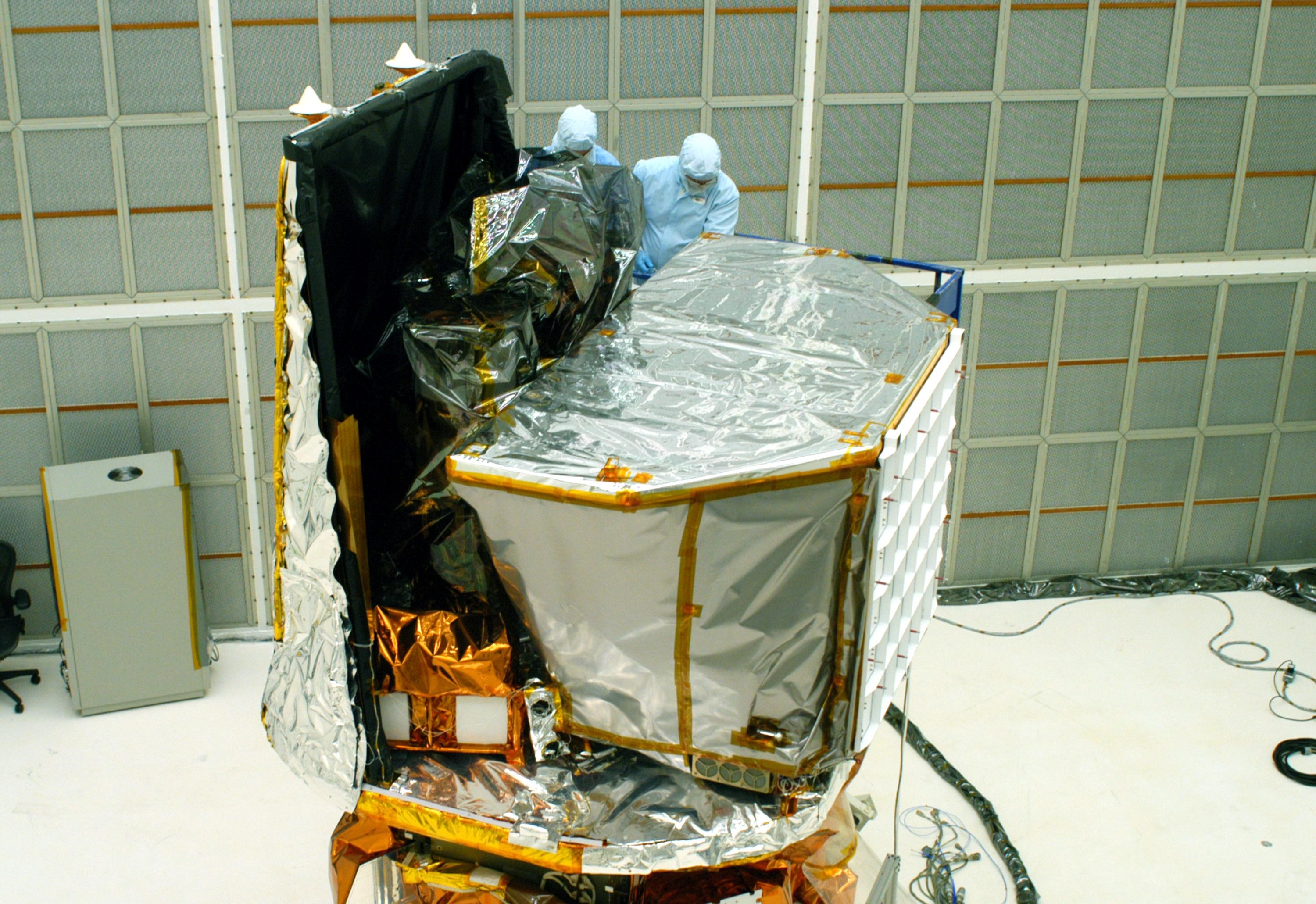

Swift took its final observation on October 20. By then the Neil Gehrels Swift Observatory was down to about 171 miles above Earth — deep in the drag of the upper atmosphere — and the team that had flown it for nearly 22 years put it into safe mode and sent the command that ended the mission. NASA announced the end on October 23. Swift was designed to last two years. It lasted almost twenty-two.
Nothing broke. That is the remarkable part. Swift's orbit simply decayed, the way every low orbit eventually does, and in its final stretch the decay sped up: an active Sun swells Earth's upper atmosphere, the swollen air drags harder on anything flying through it, and a satellite caught in that grip has no way to climb back out. By October 20, NASA says, Swift had sunk to about 171 miles up (275 kilometers) — too low, and falling too fast, to hold the steady pointing its science needed. An attempted servicing mission that might have raised its orbit did not, and so the team chose the ending themselves: one last observation, safe mode, and a command that closed the mission on their terms rather than the atmosphere's.
Built to chase the biggest explosions in the universe
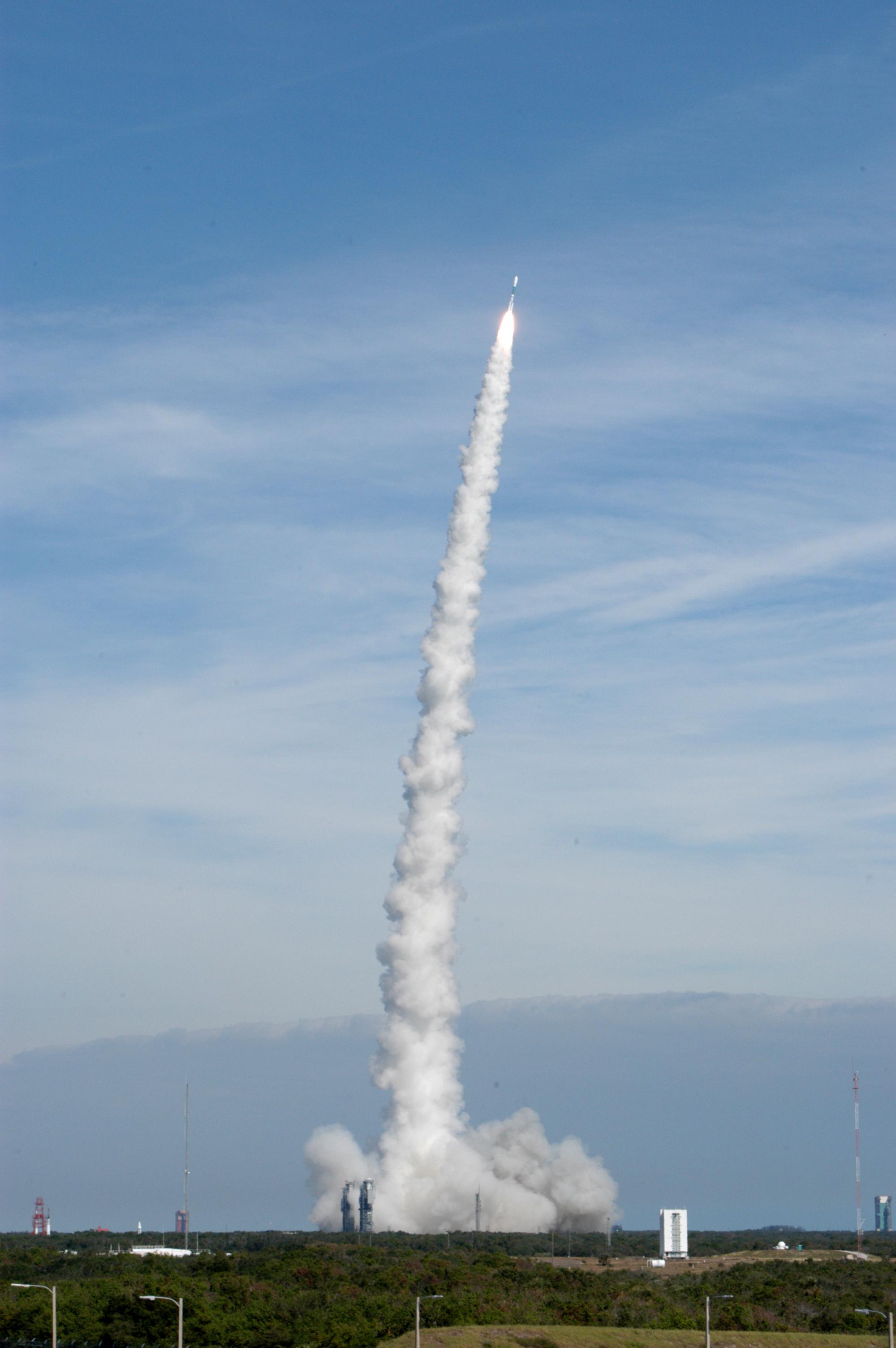
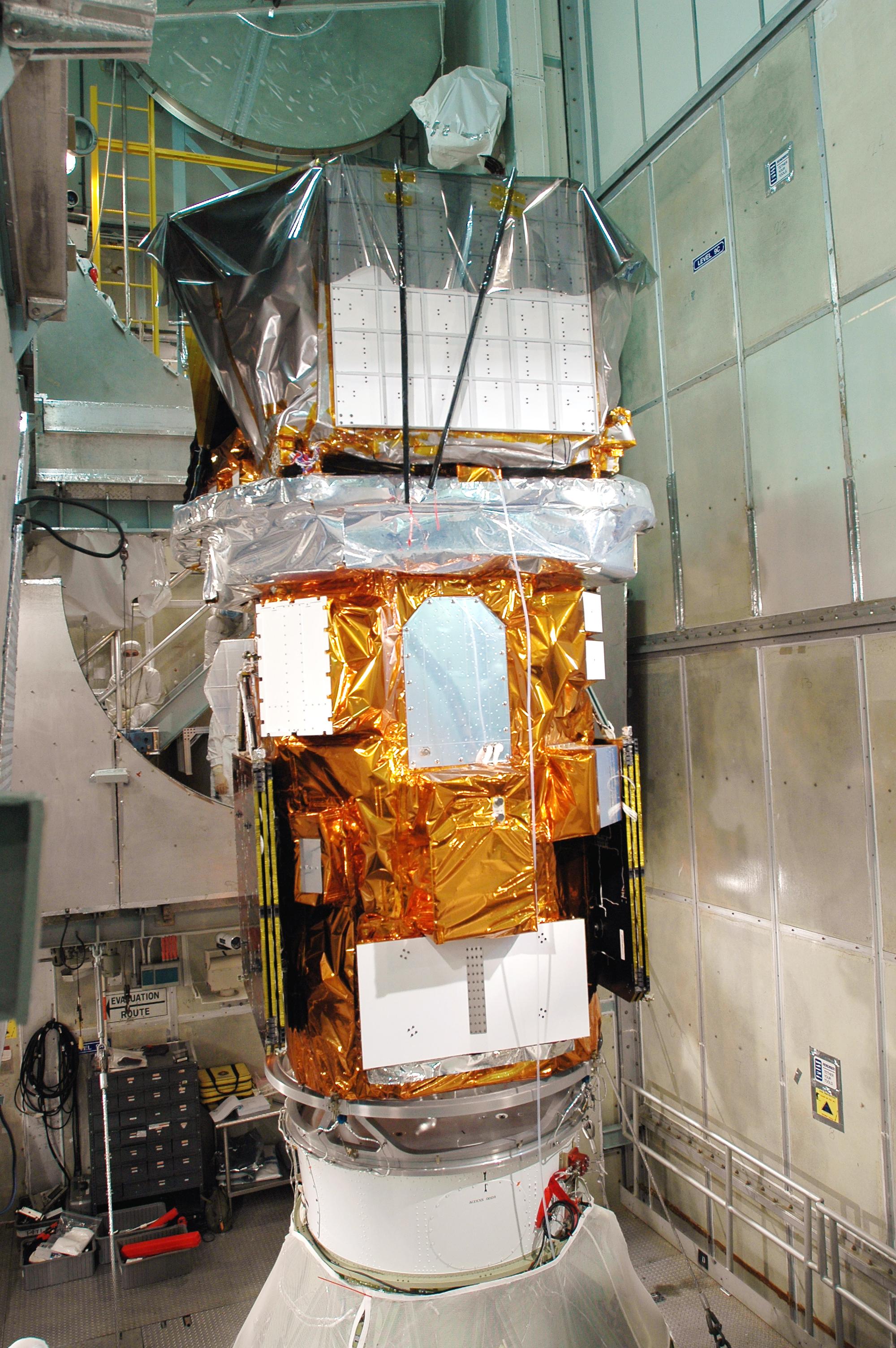
Swift launched on November 20, 2004, from Cape Canaveral aboard a Delta II rocket, with a job description unlike anything flown before it: catch gamma-ray bursts — the most powerful explosions in the universe — in the act. A burst can flare and fade in seconds, and its afterglow dies within hours, so Swift was built around speed. Its Burst Alert Telescope watched for the flash; the spacecraft could then swing around autonomously — no waiting for a human on the ground to notice and radio up instructions — and bring its X-ray and ultraviolet/optical telescopes onto the fading light while there was still light to study. Three instruments, three kinds of light, one very fast satellite.
The numbers it leaves behind are the legacy. NASA counts more than 2,000 gamma-ray bursts detected, more than 1,400 supernovas observed, and contributions to roughly 7,000 scientific papers — from a mission whose initial planned life was two years. Managed by NASA's Goddard Space Flight Center in collaboration with Penn State and partners in the U.S., the U.K. and Italy, Swift turned gamma-ray bursts from rumors into a field: events astronomers could locate precisely, follow across the spectrum, and trace back to their sources across the universe.
It is worth pausing on how unlikely the run was. Swift was, in NASA's own description at launch, a first-of-its-kind multi-wavelength observatory — a single spacecraft meant to do in minutes what no ground telescope could do at all, because the afterglows it hunted faded before an observing night could even be scheduled. The two-year plan was not modesty; it was the lifespan engineers honestly projected for a fast-slewing spacecraft working that hard. The spacecraft simply declined to wear out on schedule.
The fall nobody can clock
What happens next is certain in outline and fuzzy in every detail. Swift is coming down — NASA's mission-ending announcement puts the re-entry in the coming weeks — but nobody can honestly give you a day, let alone an hour. The one precise public forecast comes from The Aerospace Corporation's CORDS re-entry database, which tracks the satellite as object 28485: its current prediction centers re-entry on November 4 at 09:30 UTC — 1:30 a.m. Pacific — with an uncertainty of plus or minus 26 hours. Read that again: the window runs from early on November 3 to midday on November 5, UTC. That is not a countdown. It is a weather forecast for a fall.
There is a reason for the fog, and NASA has studied it directly: the space agency's CCMC modeling work on Swift's return identifies the density of the thermosphere — that same puffed-up upper atmosphere — as the dominant uncertainty in every prediction. The return has even become a test case for the science of forecasting itself: NASA's CCMC runs a re-entry modeling challenge built around Swift, a chance to score prediction methods against what the satellite actually does. The drag on the satellite depends on air nobody can measure precisely from the ground, and the Sun keeps changing the answer. The same solar activity that hurried Swift's descent is what makes its final hour unknowable until it is nearly here. Forecasts like this one narrow as the event approaches — each updated orbit tightens the window — but as of NASA's latest update, no re-entry has been confirmed. Swift is still up there, circling silently, its instruments dark.
Television has been following the descent as well: Scripps News reported this week on the observatory's long career and its coming return. Watch the Scripps report at KTNV.
Twenty-two years on a two-year ticket
There is a pleasing symmetry in how Swift ends. It was built to react to the universe's most sudden events — flashes that arrive unannounced and vanish in moments — and it spent two decades proving how much science lives in being fast enough. Its own ending refuses the courtesy of a schedule. Somewhere inside a window a few days wide, in early November, a satellite that outworked its design life eleven times over will make its last pass — observed or unobserved, recorded or not — right on the universe's timetable rather than ours.
Previously will update this story when NASA confirms the re-entry. A two-year mission earned that much of a follow-up; twenty-two years on, the least anyone can do is note the moment it comes home.
Sources · 5 sources
- NASA — NASA — NASA's Swift Mission Ends
- NASA — NASA — NASA's Swift Mission Ends Ahead of Re-entry (Swift blog, October 23)
- The Aerospace Corporation — The Aerospace Corporation — CORDS re-entry prediction: SWIFT (NORAD 28485)
- NASA CCMC — NASA CCMC — Swift Re-entry Modeling Challenge
- Scripps News / KTNV — Scripps News via KTNV — NASA satellite to plunge back to Earth after 22 years in space