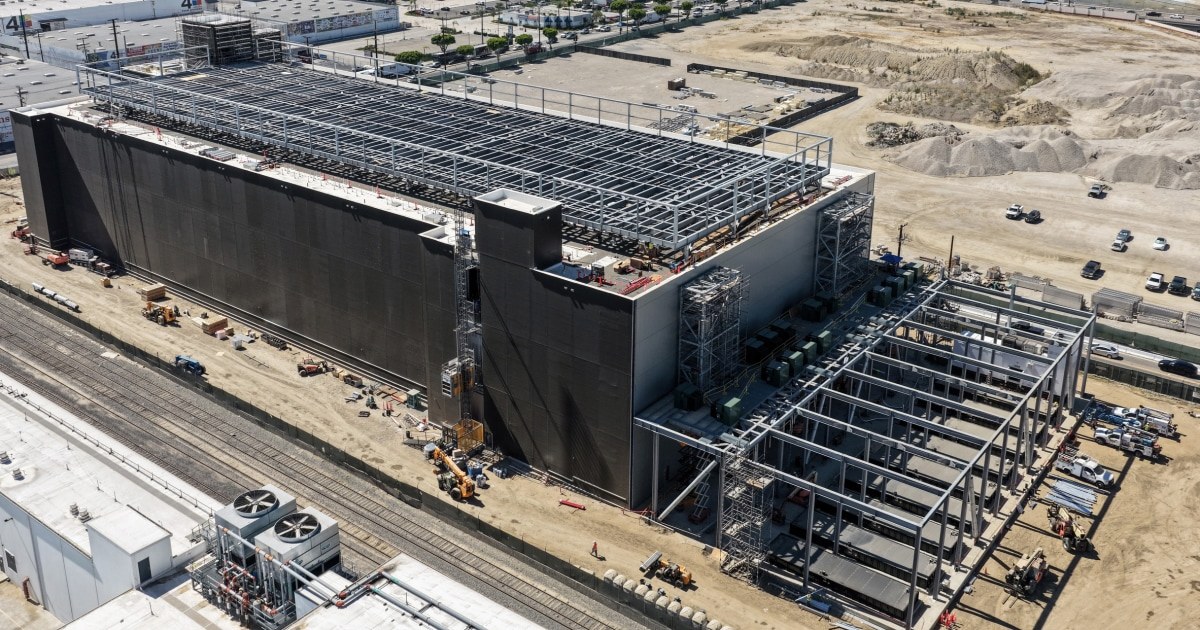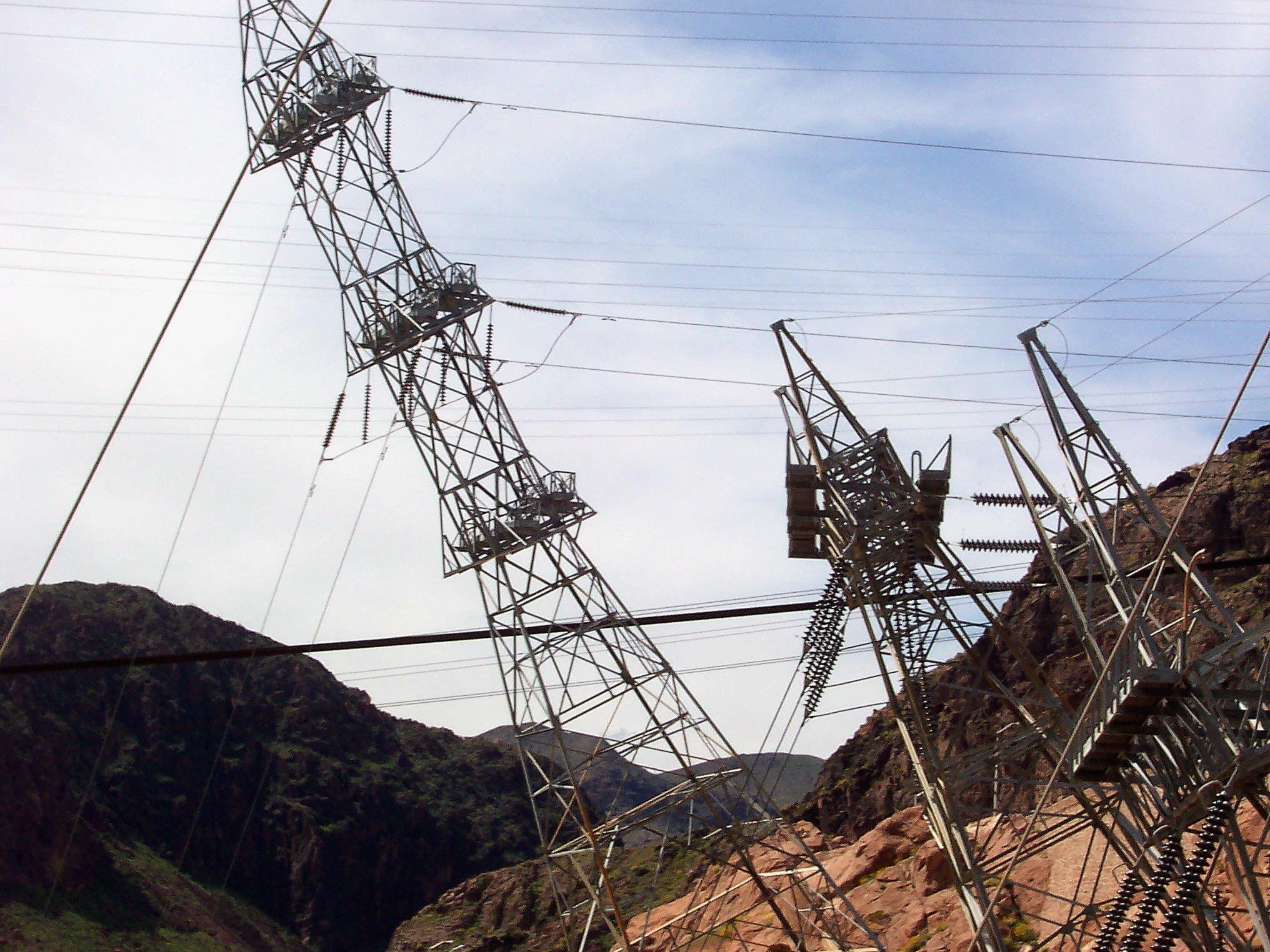
LAS VEGAS, NEVADA — Nevada's power grid is being asked to do something it was never designed for: potentially triple in size to feed the artificial-intelligence boom — and the fight over who pays for that buildout is already in the courts, at the regulators, and in Congress.
The numbers come from NV Energy's own 2026 Integrated Resource Plan, filed with state regulators in May. The utility reported roughly 22,000 megawatts of interest from data-center developers — nearly three times the combined 2025 system peak of about 8,250 megawatts for its two Nevada utilities. Formal requests from 39 prospective customers already total around 16,930 megawatts, most of it in northern Nevada, and the utility has signed some 6 gigawatts of interconnection agreements, roughly 84 percent of them with large-load customers up north. NV Energy has raised its own load forecast by 47 percent in just two years.
Put in household terms: one megawatt powers roughly 750 homes, so the load being requested is two to three times the size of the entire system that serves every household and business in Nevada today. Data centers are about 5 percent of the utility's retail electricity sales today. NV Energy projects they could be 64 percent by 2046 — with the north, where most of the growth is landing, hitting 82 percent of sales while the south reaches 42 percent, according to an analysis of the plan by Western Resource Advocates.

The stopgap: temporary gas plants
The demand is already outrunning the wires. On Sept. 17, the Public Utilities Commission of Nevada approved two temporary natural-gas power plants for Fleet Data Centers, a subsidiary of Denver-based Tract Capital, to power its South Valley and Peru Ridge data centers in northern Nevada. In its application, Fleet said: "This temporary power system is required because data center growth is outpacing NV Energy's ability to supply power in new areas."
The South Valley plant would sit on 37.4 acres at 8990 USA Parkway in Sparks with 144 megawatts of generating capacity; the Peru Ridge plant would occupy 23.4 acres near Peru Drive in Reno at 218 megawatts. Together they'd feed associated data centers totaling more than 2,000 acres and 1,445 megawatts. Construction is slated for early 2027, taking about six months, with the plants operating for two to three years. Tract told the Review-Journal the plants would come at no cost to Nevada residents and bring economic benefits to Storey County, home of the 107,000-acre Tahoe-Reno Industrial Center — a park bigger than Detroit where the majority of Nevada's roughly 70 planned data centers are clustering, per the Nevada Legislative Counsel Bureau.
The approval drew about two hours of critical public comment. Elizabeth Bree Kasper called the plants "destructive" to northern Nevada's air quality, water resources and "climate future." She added: "Calling these massive natural gas facilities 'temporary' is a bureaucratic fiction. You cannot build hundreds of megawatts of fossil fuel infrastructure without permanent destructive impacts." Mary Levinson, a retired chemical engineer and physician, said she believes the commission "does not value the environment nearly as much as it values development" — and asked, "who really needs this facility? Certainly not Nevadans." PUC Commissioner Randy Brown said "no permit will be issued without proper state agency oversight," noting multiple permits, including a Storey County building permit and air permit, must be secured before construction starts.
The lawsuit: who pays for the buildout
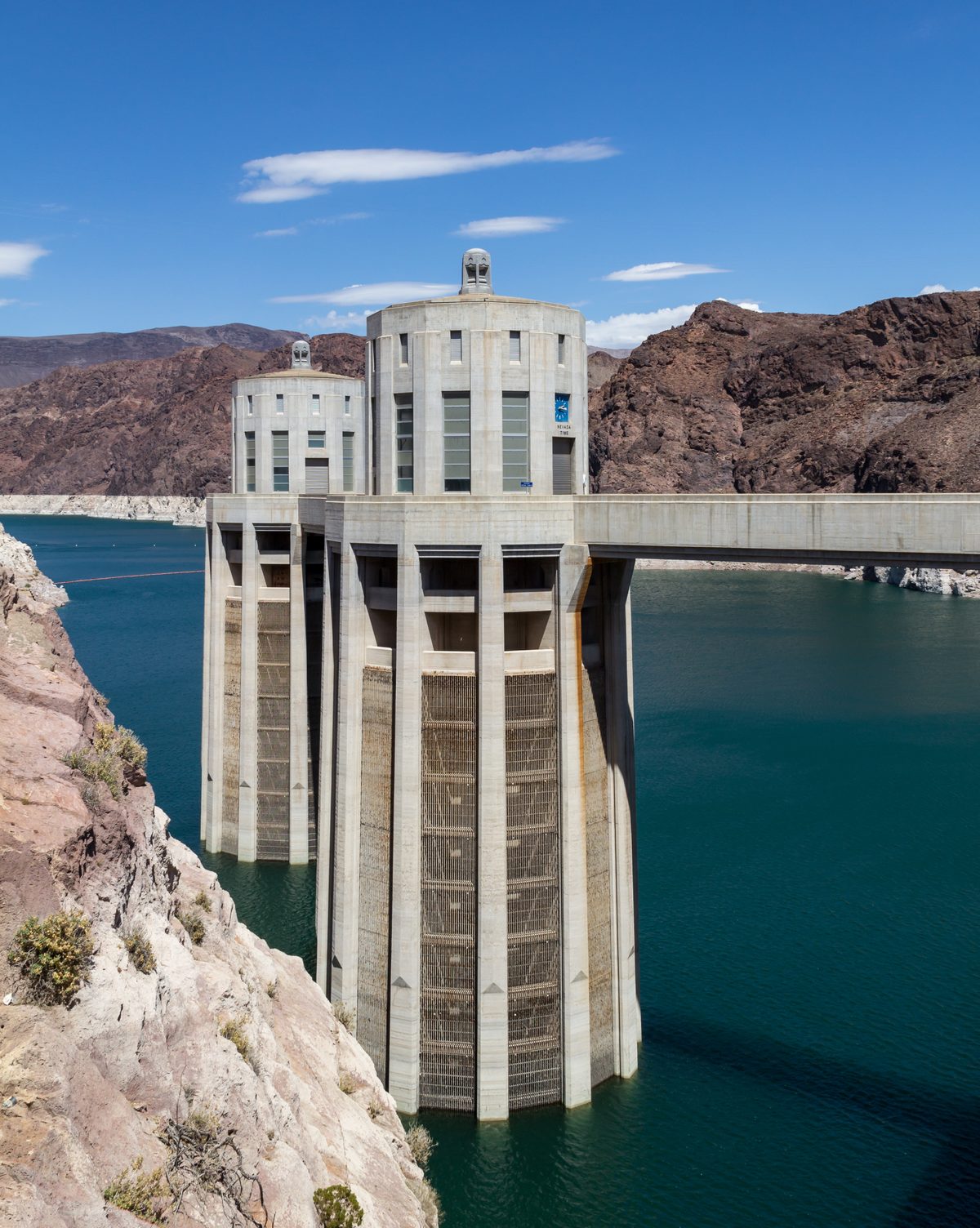
The deeper question — who pays — is now before a judge. NV Energy sued Tract Capital this summer, arguing the developer's two planned campuses near Reno would together draw more than 2 gigawatts of power, nearly a third of NV Energy's generating capacity, and that the developer must shoulder the infrastructure costs rather than passing them to customers. "Projects that create new infrastructure or energy costs must pay those costs and cannot shift them onto Nevada families, small businesses, or existing customers," NV Energy spokesperson Katie Jo Collier said.
Tract disputes the characterization. The company says NV Energy is refusing to deliver power it had promised while demanding the developer begin roughly $1 billion in grid upgrades — and that it has already invested more than $50 million and committed nearly $1 billion to the required infrastructure. Tract called for private arbitration in June; weeks later, NV Energy sued to stop the arbitration, arguing the dispute is no longer a private contract matter but a public question of how much power Tract can draw and who pays for the infrastructure to deliver it.
The case is the first of its kind — a major utility suing a data-center developer over cost allocation — and the outcome could shape how the AI buildout is financed well beyond Nevada.
The protections — proposed, not yet final
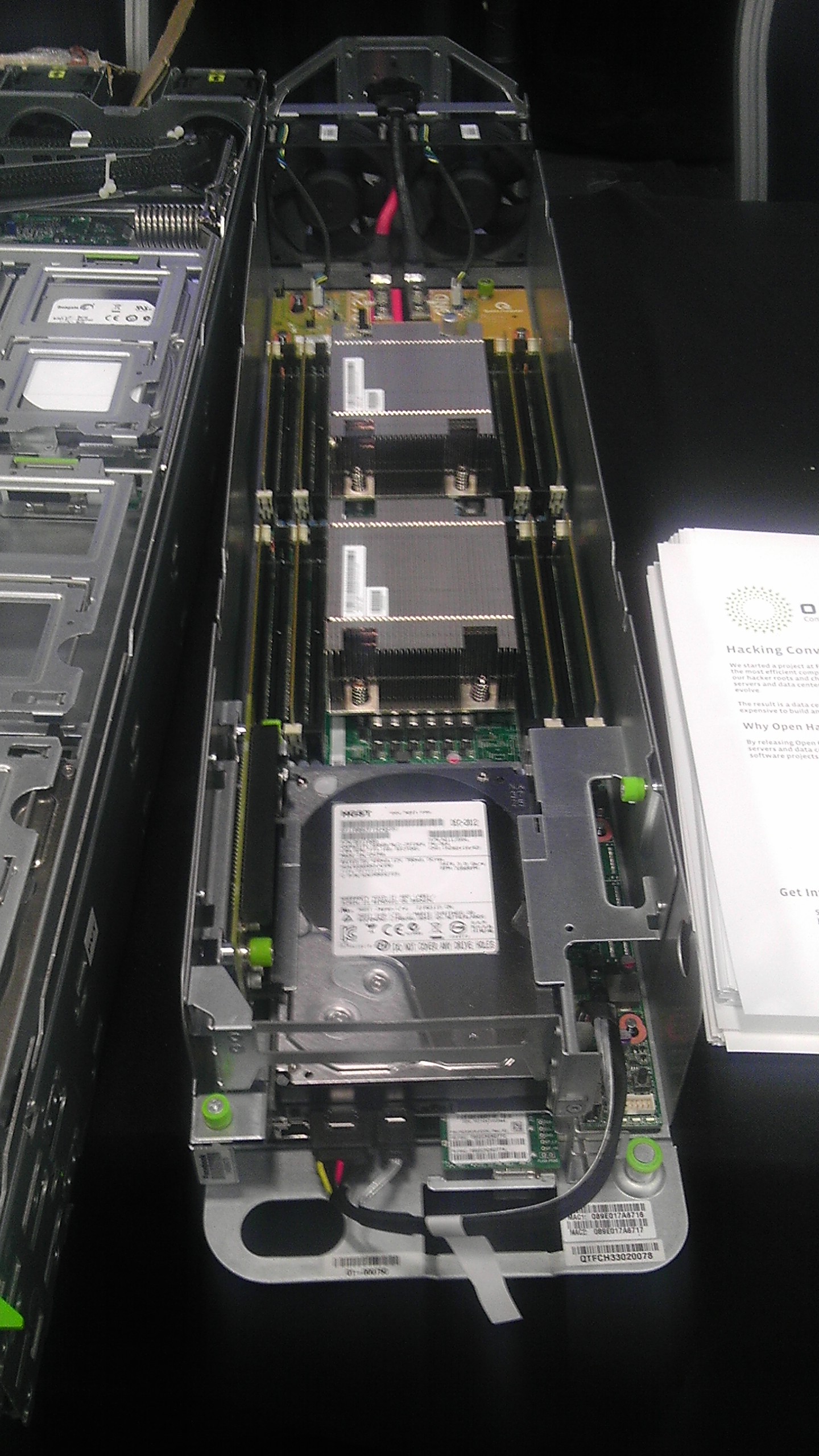
NV Energy has proposed a Large Load Electric Service Agreement for customers with loads of at least 25 megawatts — a framework with ramp commitments, minimum billing obligations, security and termination provisions that the utility says is intended to align cost responsibility with cost causation. In filings, utility witnesses have described a minimum-demand bill based on 90 percent of a customer's maximum demand, plus minimum energy billing at 72 percent, with termination payments sized to the present value of remaining expected revenue. But that is the utility's proposed framework, not a blanket guarantee: the actual commission order, tariff treatment, customer agreements, construction approvals and later rate cases will determine how the protections work in practice.
Critics say the framework has real gaps. The Sierra Club's 2026 utility report card gave NV Energy's northern utility, Sierra Pacific Power, a D — its lowest grade yet — noting the utility now plans more than 2.7 gigawatts of new gas-fired capacity by 2035, a fourfold increase from a year earlier, and that the proposed cost protections "have not yet been implemented." The report also flagged that Nevada Power, the southern subsidiary, recently agreed to refund $65 million to customers after overcharging them over a two-decade period. Microsoft has separately proposed a ratepayer-protection tariff that would require data-center customers to contribute toward project-specific infrastructure costs.
The industry's counter is that the safeguards already exist. A Northern Nevada development group points to NV Energy's Rule 9 (transmission) and Rule 15 (generation), which allocate new infrastructure costs directly to the commercial user, plus letters of credit and take-or-pay tariff programs that make large users pay for contracted power whether they use it or not — with the Public Utilities Commission and the state Consumer Advocate policing the line. The rate-making process runs three times a year, in public, with the utility, commission staff and the Consumer Advocate at the table.
Washington is watching. On Sept. 16, the U.S. House passed the Ratepayer Protection Act 417-3 — a bill directing states to make very large power users pay the full incremental cost of the grid upgrades built to serve them — sending it to the Senate. Trump has vowed to sign a ratepayer protection act amid the national data-center fight. Nationally, grid costs tied to data centers have been estimated at $9.3 billion, with the cost to serve them climbing roughly 174 percent.
What it means for your bill
Here's the honest version of the answer, from Ari Peskoe, director of the Harvard Electricity Law Initiative, who told NPR this week: "Everyone pays those costs. They're spread across the region to every business and resident that has an electricity meter." That is how utility regulation works by default — the question Nevada is now litigating, regulating and legislating is how much of the data-center-driven buildout gets carved out of that default.
Southern Nevada households are also about to see a new line on their bills: NV Energy told state lawmakers it will implement a residential daily demand charge in its southern territory beginning Jan. 1, 2027, shifting some costs from per-kilowatt-hour charges into a daily demand component. Company officials said the kilowatt-hour charge would drop by about 1.8 cents in the proposed design and that, on average, more than 90 percent of residential customers would see lower bills — a claim that will get its test in the rate cases ahead.
The builders, meanwhile, aren't waiting. Switch — one of Nevada's largest data-center operators — runs the Citadel Campus in the Tahoe-Reno Industrial Center, a 2,000-acre site designed for up to 650 megawatts and 7.2 million square feet at full build-out, with clients including eBay and Renown Health, plus a Las Vegas Core Campus planned for up to 495 megawatts. Google, which has operated in Nevada since 2019 and says it has invested more than $6 billion in the state, just committed $10 million to the Nevada Clean Energy Fund's residential energy-upgrade program — weatherization and efficient heating for households near its server farms in Storey County and Henderson. "We're committed to being a good neighbor," said Amanda Peterson Corio, Google's global head of energy and power.
Good neighbors or not, the math is the math: NV Energy's existing and approved systemwide generating capacity through 2050 is roughly 10 gigawatts. If projected data-center demand materializes, the capacity needed to serve Nevada could exceed 20 gigawatts by 2050. Somewhere in the gap between those two numbers is the largest question in Nevada energy — and right now, nobody can tell you whose bill it lands on. The lawsuit, the commission, and Congress are all about to answer at once.
The national fight over data centers and electric bills is moving fast — Morgan Stanley's latest read on the AI power crunch breaks down which chip giants are shielded and which aren't.
Sources
- Amid Data Center Growth, Nevada Approves Temporary Gas Plants Las Vegas Review-Journal via TNS · Sept 2026
- Nevada's Data-Center Boom Is Outrunning Its Power Grid RCG Economics (Restrepo & Potts) · July 2026
- How Much Are AI Data Centers Adding to Your Electricity Bill? NPR · Oct 4, 2026
- Nevada Is Falling Behind on Climate Goals. Data Centers Are to Blame. Western Resource Advocates · 2026
- Nevada Power Decision Puts 22 GW of Data-Center Interest Behind September 8 PUCN Vote W4NEWS · Sept 2026
- Google Pours $10 Million Into Nevada Homes as Its Data Centers Strain the Grid WebProNews · Sept 2026
- Sierra Club's Utility Report Card: NV Energy's Sierra Pacific Gets Lowest Grade Yet RocketNews · Sept 2026
- Top 5 New Data Center Projects in Nevada (2026) Blackridge Research · 2026