
The most revealing opening on the Pilatus PC-24 is not the door its passengers use. Farther aft, a separate cargo door opens into the aircraft. Pilatus gives its dimensions as 1.25 metres wide and 1.30 metres high. That is a specific answer to a practical question: how does a business jet accommodate objects that have not been designed around a passenger entrance?
A cabin can look generous in a photograph and still be awkward to load. Its usable space depends on the route into it as well as the volume inside. The PC-24 treats that route as part of the aircraft’s design. The cargo door is standard equipment, and the manufacturer’s technical account describes an internal, pressurised baggage compartment and a continuous flat cabin floor.
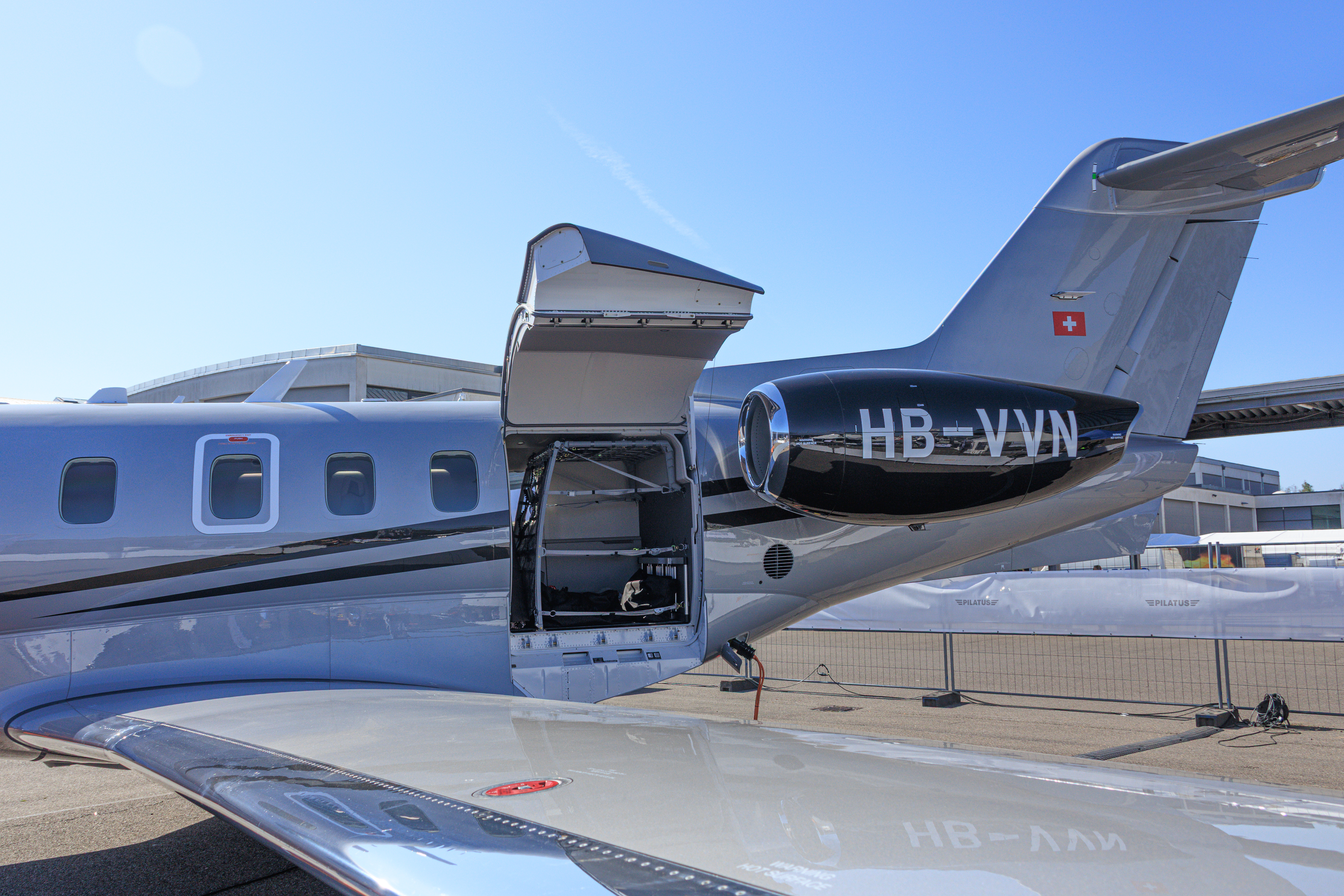
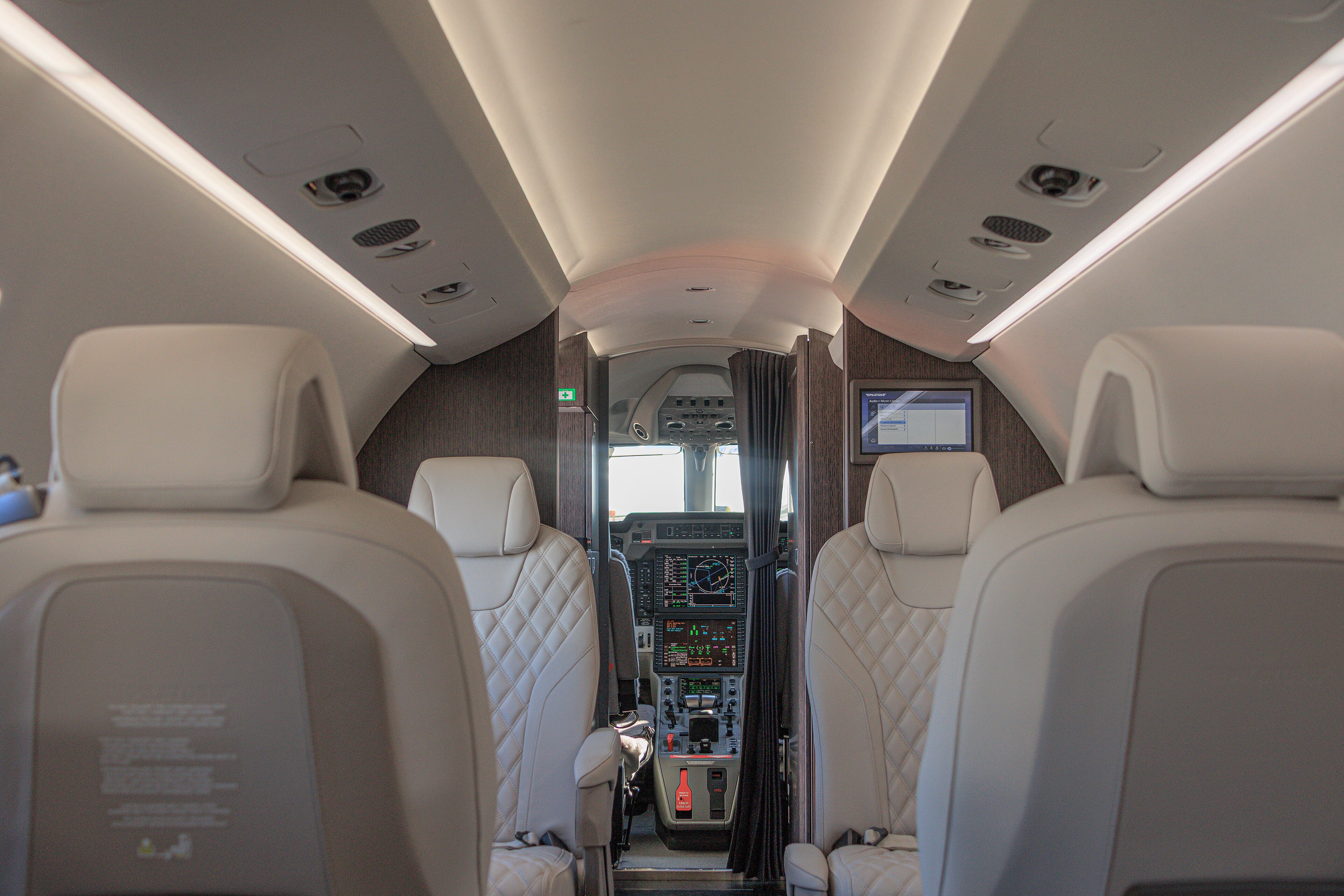
The two entrances make their different jobs measurable. Pilatus lists the passenger door as 0.60 metres wide, beside the cargo opening’s 1.25 metres. Seats, luggage and equipment need both a place inside and a workable route to it. Pilatus’s current brochure lays out executive, commuter, combi and air-ambulance configurations. These are different uses of the platform, rather than a suggestion that one cabin contains all those arrangements simultaneously.
The company put this flexibility at the centre of the three-part aircraft tour it announced on 30 July 2021. The cabin segment was to address the flat floor, cargo area and ease of seating-layout changes. Those priorities extend the design discussion beyond the experience of sitting in a finished seat. Loading, changing the arrangement and reaching the baggage are also parts of using the cabin.
There is a useful discipline in looking at an aircraft through its openings. A door’s dimensions describe access; they do not, by themselves, establish what weight can be carried or which mission is possible. Pilatus publishes payload and performance data separately. Actual operating decisions belong to the approved aircraft configuration, load and conditions.
This makes the PC-24 an interesting object beyond the familiar business-jet vocabulary of speed and cabin finishes. Its large aft opening is visible evidence of a broader brief: the people using the aircraft may also have bulky possessions, equipment or a different job for the cabin next week. The design gives those possibilities a physical route aboard. The utility is not hidden behind the finished interior. It is built into the way the interior can be reached and arranged.
The details
Pilatus offers the PC-24 cabin in executive, commuter, combi and air-ambulance layouts. The cargo door is standard equipment, and the baggage compartment behind it is pressurised.
Sources · 4 sources
- Pilatus Aircraft — PC-24 — official aircraft page
- Pilatus Aircraft — PC-24 brochure (PDF)
- Pilatus Aircraft — PC-24 Super Versatile Jet — announcement
- Pilatus Aircraft — PC-24 configurator
Photography
Photographs: New York-air / Wikimedia Commons / CC BY-SA 4.0
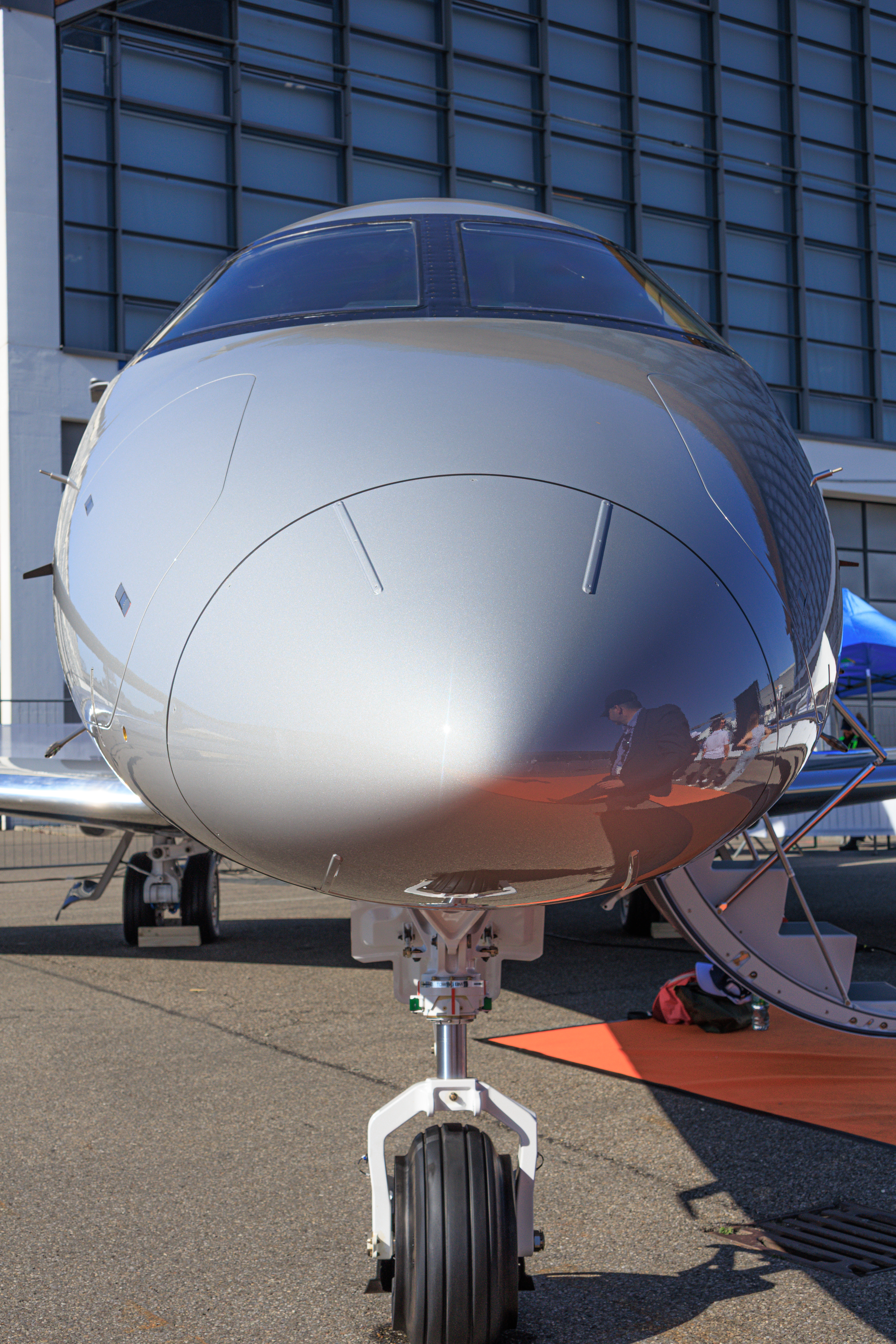
- The nose and nose gear of a Pilatus PC-24 displayed at AERO Friedrichshafen on 11 April 2025.
- The open aft cargo door of a Pilatus PC-24 at AERO Friedrichshafen on 11 April 2025.
- A Pilatus PC-24 passenger cabin photographed at AERO Friedrichshafen on 11 April 2025.