
ELCHE, Spain — Javier Aguirre has built a two-decade career on games exactly like this one, and his first afternoon as Valencia manager ran to the oldest script he owns: give them the ball, give them the shots, give them the territory — and take the one moment that matters. Valencia won 1–0 at Estadio Martínez Valero on Sunday, in front of 28,360 people, and the moment belonged to a striker who had not kicked a ball in anger since the summer.
For an hour, the match belonged entirely to Elche and to nobody’s benefit. Martín Anselmi set his side up in a 4-3-3 built to keep the ball, and they kept it, moved it, and built pressure in the way home teams are supposed to. Aguirre answered with a 4-4-2 built to give the ball straight back and defend the spaces instead — two banks, narrow and patient, while Valencia’s shape held and their threat stayed theoretical. The hosts’ afternoon darkened with an injury to Thomas Lemar, and still the pattern held: Elche probing, Valencia absorbing, the scoreboard unmoved. Aguirre’s side had arrived with seven league goals in ten games and a finishing problem their new manager had made his first training-ground project. Nothing in the first hour suggested the project was finished.
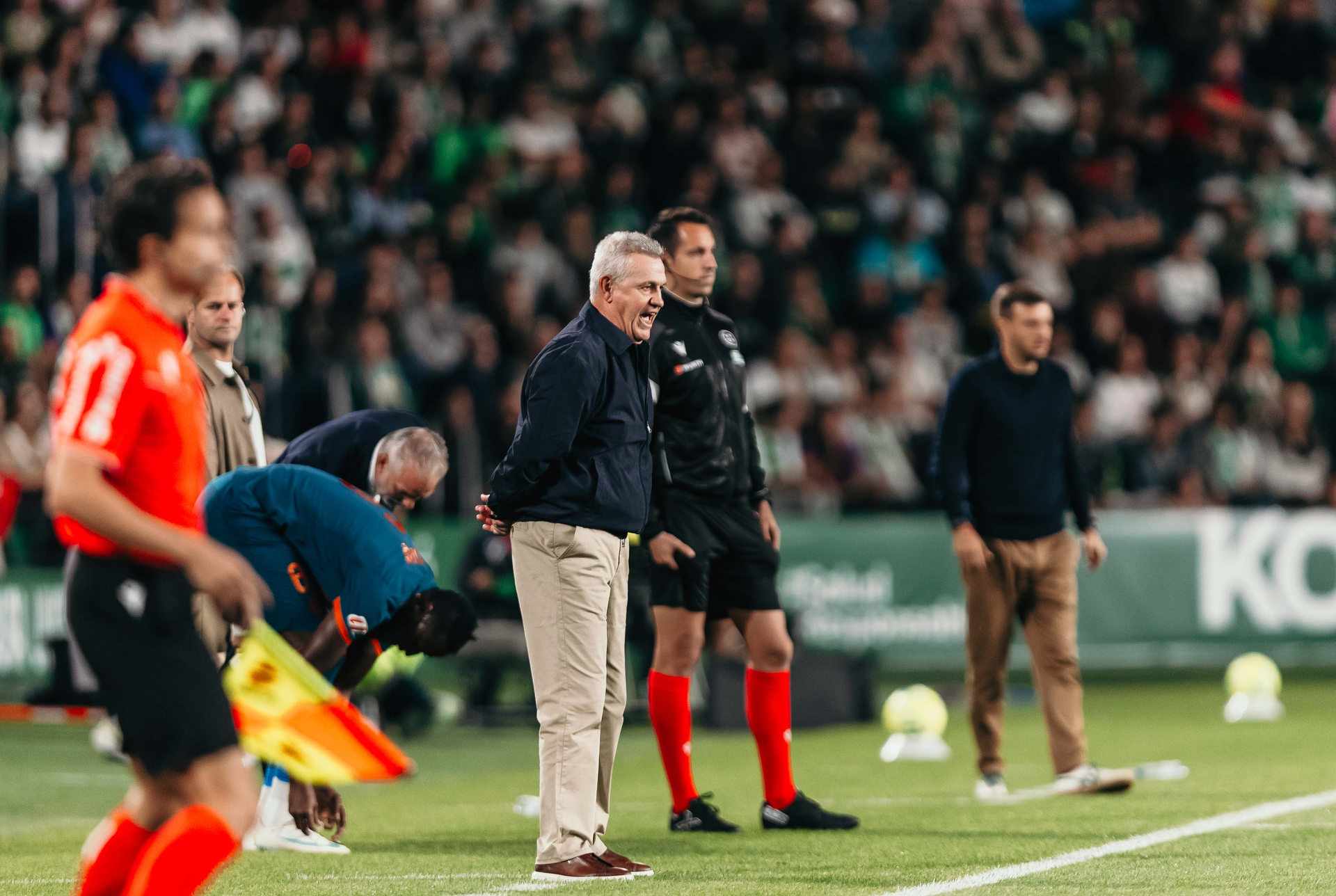
Something shifted after the break, quietly, the way Aguirre games tend to shift. BeSoccer’s account of the afternoon notes that after allowing Elche to dominate, the visitors took control of the game’s terms in the second half — not the ball, never the ball, but the terms. The counters started carrying further. Guerra’s influence grew. Elche’s pressure, so tidy for an hour, began arriving a half-second late.
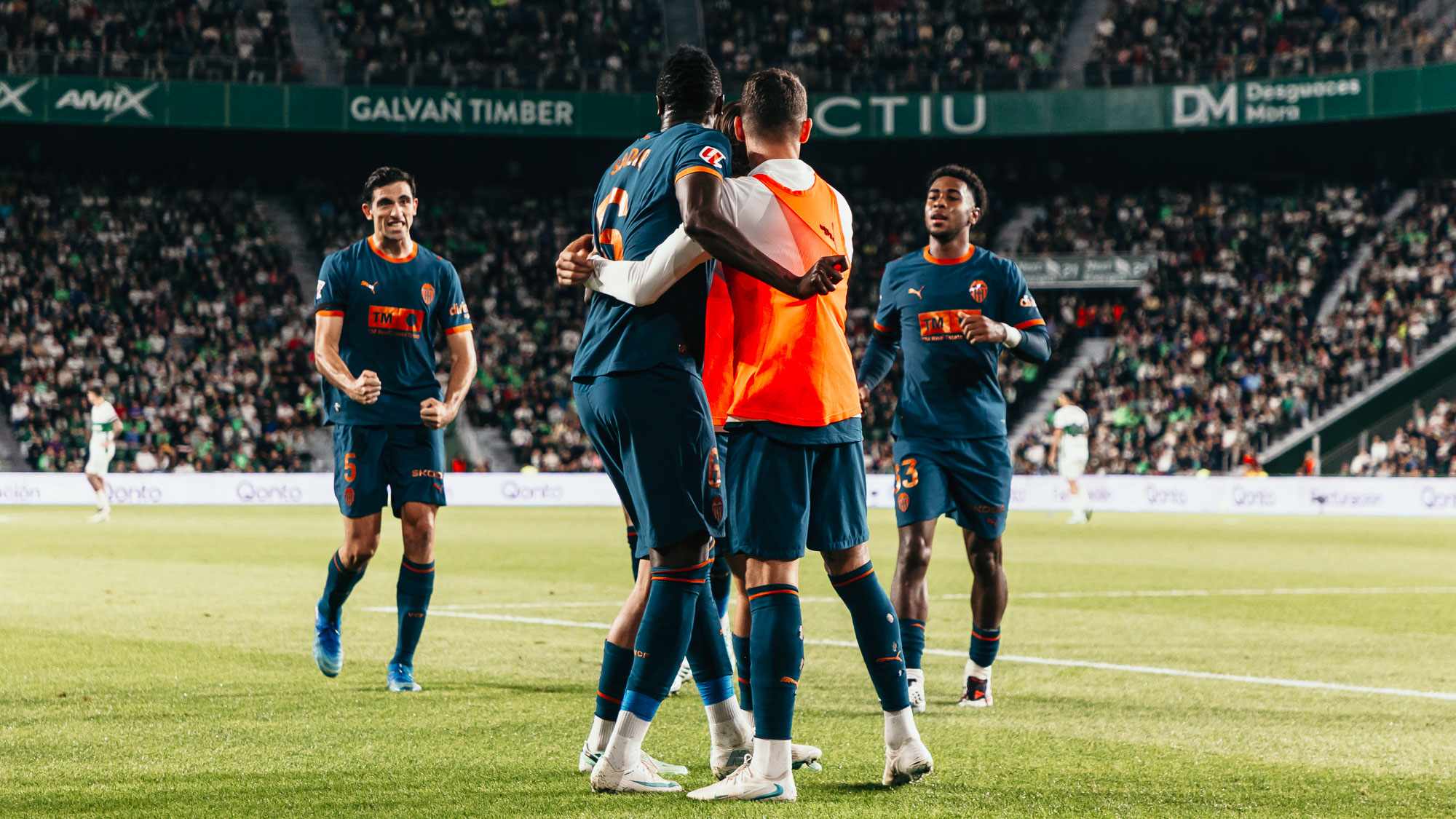
Then came the change that decided it. In the 61st minute Aguirre sent on Umar Sadiq for Pablo Maffeo — Sadiq’s first appearance since August 30, the end of an injury absence that had stretched past two months. Eight minutes later the game broke open in the only direction it was ever going to. On a lightning counter, Arnaut Danjuma drove the ball in from the left, Javi Guerra’s strings-pulling in midfield having set the transition running, and Sadiq collected it in front of goal. What he did next was the opposite of rust: he waited. He bided his time, let the chance come to him, dribbled past Gonzalo Villar and finished with his left foot, calm as a man who had been playing every week. A comeback goal, eight minutes into the comeback.
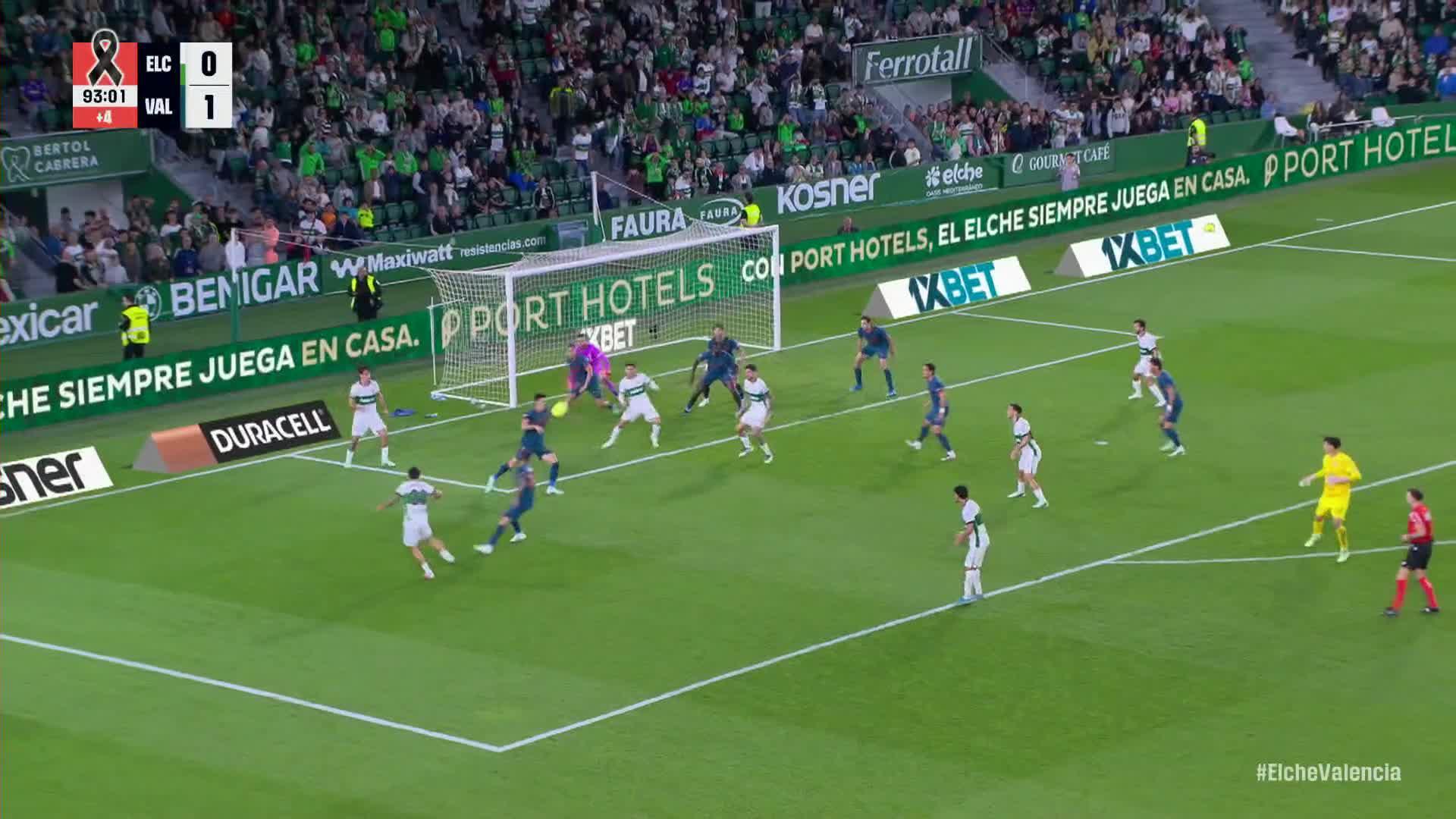
Look closer at those shot numbers, though, and the heist becomes less mysterious. For all Elche’s 16 attempts, they put exactly three on target — the same number Valencia managed from five. The expected-goals ledger even leaned Elche’s way, 1.33 to 0.96, which is another way of saying the hosts created more of the game’s chances and finished none of them, while the visitors created one moment of real quality and finished it like veterans. That is not luck. That is the precise skill Aguirre was hired to install: suffer without the ball, stay organized, and be ruthless in the one moment the game offers you. His players, to a man, looked like they had been doing it for years rather than a week.
The benches told the story in miniature. Elche, chasing a breakthrough that their possession kept promising, threw on three fresh attackers at once around the 68th minute — Morente, Osorio and Sánchez all entering within moments of each other. The very next minute, Sadiq scored. Aguirre’s closing moves were the mirror image: Danjuma and Guerra, his two creators, were withdrawn late for fresh legs and an extra defender in Diakhaby, and the game’s final shape was set — Elche throwing everything forward, Valencia’s box crowded with white shirts, and a one-goal lead guarded like a family heirloom.
The numbers will say Elche ran this game and lost it anyway, and the numbers are right. The hosts finished with 69 percent possession and 16 shots to Valencia’s five. They had the ball, the corners of the pitch, the momentum of the crowd — everything except the goal. And when their late push finally produced its clearest moment, deep in stoppage time, Stole Dimitrievski produced the crucial intervention that preserved the win and turned the away end’s nerves into noise. Possession is a statistic. Points are a fact.
One last number captures the heist better than any other. Sadiq, in half an hour of football after two months out, put three shots on target. Elche’s entire team, in 90 minutes with 69 percent of the ball, put three shots on target. The substitute was, by himself, as dangerous as the opposition combined.
Valencia stay 19th on nine points, but the gap to safety is down to a single point, the dressing room has a result to believe in, and a manager hired to win precisely this kind of game has his first three points on the board in his first attempt. Elche, dominant and beaten, sit 17th on ten points, close enough to the drop zone to feel its breath after a day when they did almost everything right except the thing that counts. Every stat from this one is in the Game Center.
Sources · 3 sources
- BeSoccer (EFE) — Elche 0-1 Valencia: Sadiq’s soldiers
- Sportradar — Elche CF vs Valencia CF — match record
- theScore — Elche CF vs Valencia CF — game details and timeline