
October 13, 2026
Liftoff is targeted for 6:33 a.m. Eastern Tuesday from Cape Canaveral, carrying more than 6,300 pounds of science and supplies — including the station's final set of roll-out solar arrays — to the crew that arrived October 1.
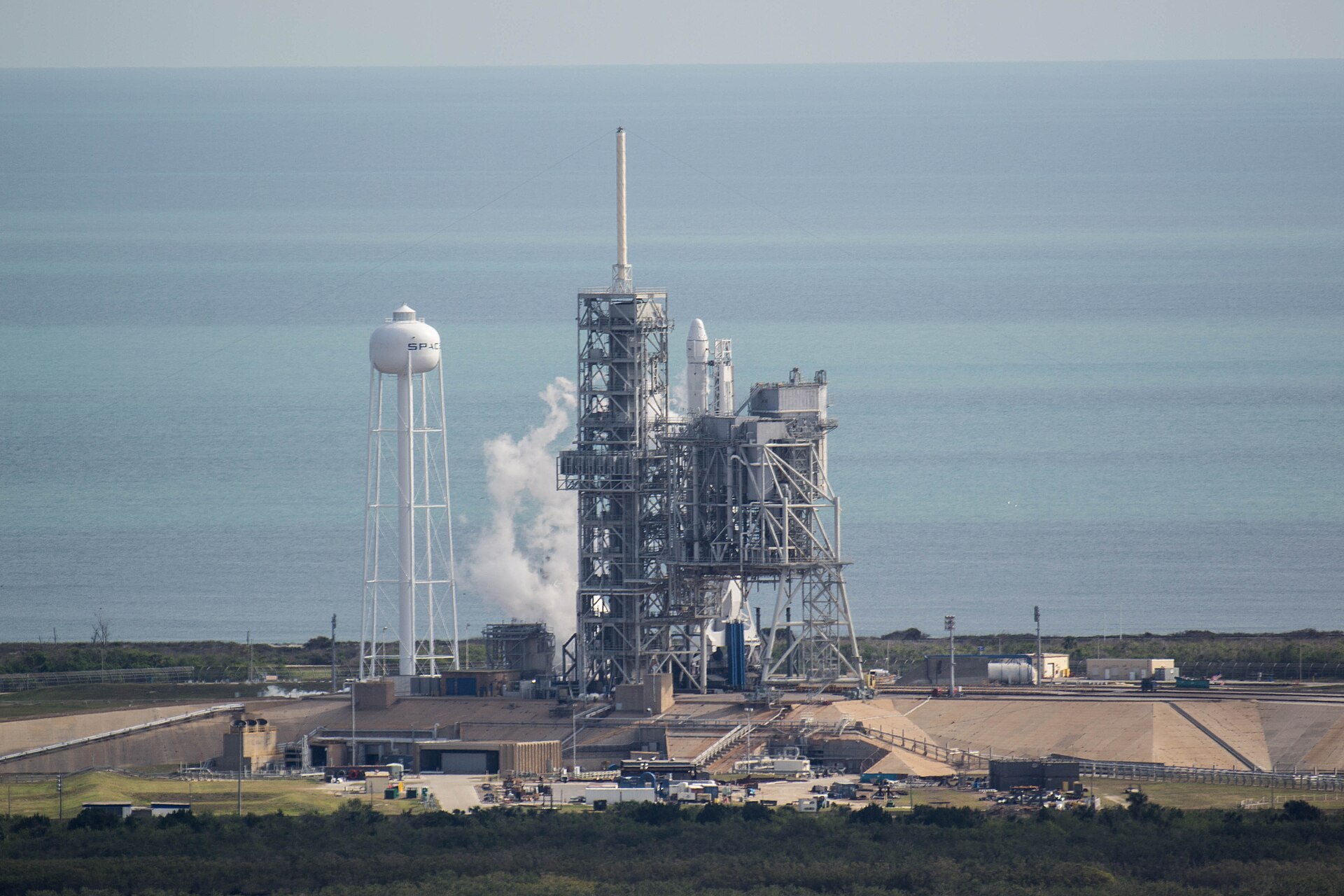
While most of the East Coast is asleep, a Falcon 9 is scheduled to do the loudest commute in Florida. NASA and SpaceX are targeting 6:33 a.m. Eastern on Tuesday, October 13, for the launch of the CRS-35 commercial resupply mission from Space Launch Complex 40 at Cape Canaveral Space Force Station, sending a Cargo Dragon spacecraft with more than 6,300 pounds of supplies and scientific investigations to the International Space Station. The window is instantaneous — the rocket goes at 6:33 or it does not go Tuesday — and in the final hours before liftoff, Florida Today's live coverage reported SpaceX calling conditions good for the attempt.
What Is Riding on This Dragon
CRS-35 is SpaceX's 35th cargo run to the station under NASA's Commercial Resupply Services contract, and its manifest reads like a summary of what the orbiting laboratory is for. The headline hardware is the final set of International Space Station Roll-Out Solar Arrays, the unrolling power blankets that have been modernizing the station's aging electrical grid. Alongside the arrays, NASA said, Dragon carries hardware to manufacture artificial retinas in microgravity — work aimed at restoring vision on Earth — plus 3D heart-tissue models for large-scale drug testing, materials to study how a new type of glass forms in orbit, and brain organoids that could reveal treatment targets for Alzheimer's, Parkinson's and multiple sclerosis.
There is a hometown experiment on board, too: Florida Today reported that the cargo includes an experiment built by students at Florida Tech in Melbourne, a short drive from the launch pad. Cargo totals vary slightly by accounting — NASA puts the load at more than 6,300 pounds, while Florida Today's coverage rounds it to roughly 6,500 pounds of supplies and scientific payloads.
A Launch Built for Early Risers
The 6:33 a.m. timing is not an inconvenience; it is orbital mechanics — the station's path has to pass over the Cape at the right moment — but it creates a spectacle Florida knows well. With sunrise at Cape Canaveral not until 7:21 a.m., the rocket will climb through darkness into sunlight high above the coast, the geometry that can turn its exhaust plume into the glowing, billowing shape locals call a space jellyfish. Photographer John Kraus's jellyfish predictor, cited by Florida Today, rated conditions favorable if skies stay clear, with the launch potentially visible from Jacksonville Beach to West Palm Beach.
Residents will hear it as well as see it. The Falcon 9's first stage is planned to return to Landing Zone 40, near the launch site, rather than landing on a drone ship at sea — and a booster coming home over land means sonic booms across Brevard County as it slows for touchdown.
A Station in the Middle of a Crew Rotation
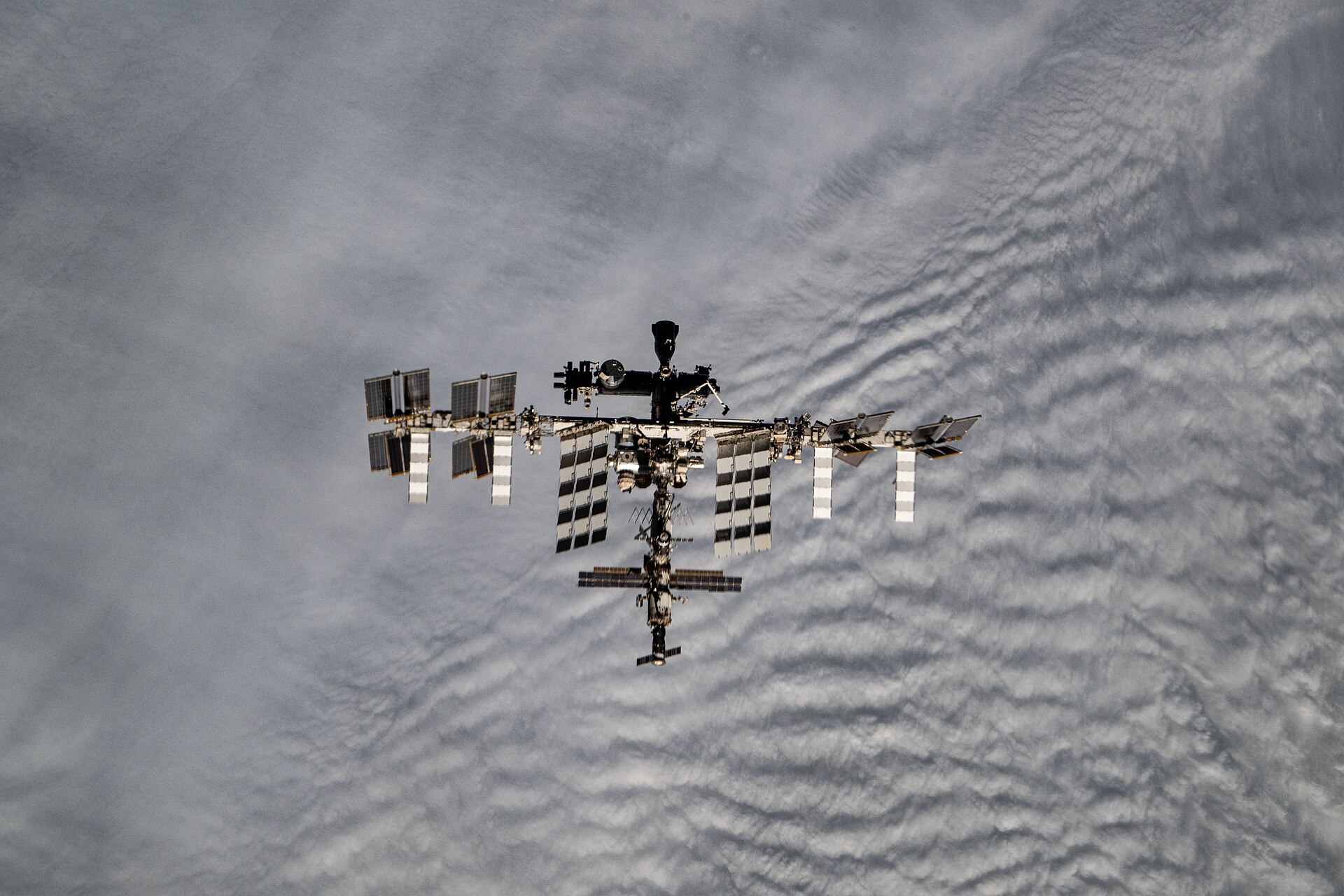
CRS-35 arrives in the middle of a busy month at the station. The Crew-12 Dragon splashed down off California on October 8, ending a stay of nearly eight months, Florida Today reported, and its departure freed the docking port this cargo ship will use. Crew-13 launched from the Cape on October 1 and will receive the delivery. That handoff rhythm — crew capsule out, cargo capsule in — is the operational tempo the station was designed for, and it is easy to forget how recently it became routine.
If liftoff happens on schedule, Dragon will chase the station for two days and dock autonomously at about 11 a.m. Eastern on Thursday, October 15, at the space-facing port of the Harmony module, NASA said. The spacecraft is expected to stay attached until mid-November, then return to Earth with time-critical research and cargo, splashing down off the coast of California — the same coast where Crew-12 came home last week. Previously covered that splashdown in our Crew-12 return story.
How to Watch, and What Would Stop It
NASA's live launch and docking coverage streams on its usual platforms, and the countdown milestones are as choreographed as ever: propellant loading begins about 35 minutes before liftoff, the launch director's final go/no-go poll comes at T-minus 45 seconds, and because the window is instantaneous there is no holding for a stray boat or a passing cloud without scrubbing to another day. Weather and the rocket's health are the only real questions left this morning, and pre-launch reporting pointed to a clean attempt.
For the Previously audience, the appeal of a mission like CRS-35 is precisely that it is not a stunt. It is a supply truck — groceries, experiments and a power-system upgrade, delivered 250 miles up, on a schedule, by a reusable rocket that lands itself near where it launched and a capsule flying its fourth mission profile of station logistics. The extraordinary part is that it happens before breakfast. Liftoff is 6:33 a.m. Eastern, 3:33 a.m. Pacific — set the coffee accordingly, and follow the rest of the morning's news in the Tuesday wrap and on the news front.
Sources · 3 sources
Reporting based on coverage from NASA's mission coverage announcement and Florida Today's Space Coast reporting. Facts cross-checked across at least two independent outlets before publication.





