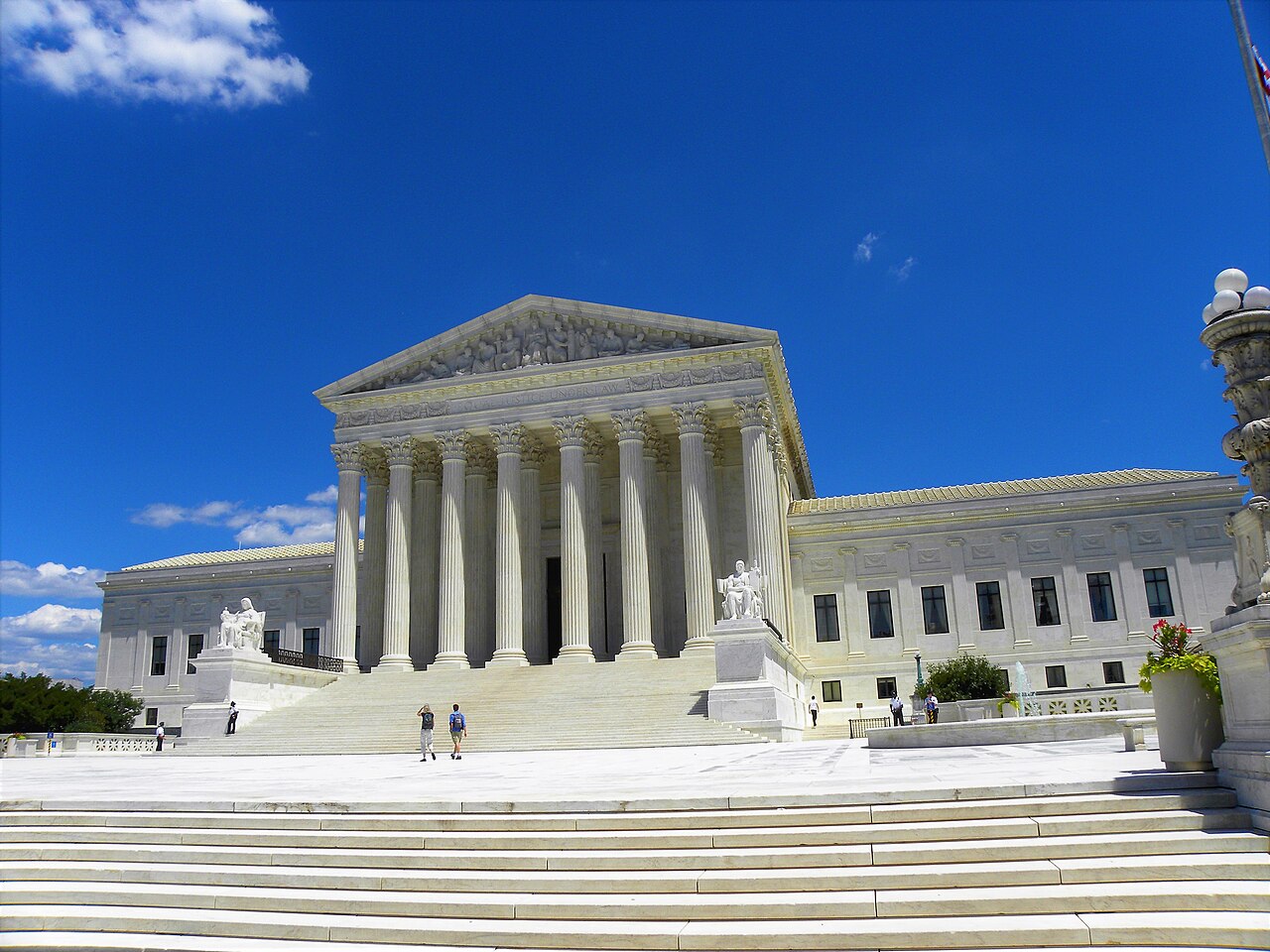

The U.S. Supreme Court on Monday declined to hear a bid by Khalid Sheikh Mohammed, the accused mastermind of the September 11, 2001, attacks, to revive a 2024 plea agreement that would have spared him the death penalty in exchange for a guilty plea. Reuters reported that the justices turned away appeals by Mohammed and two co-defendants who had also signed plea agreements, leaving in place a lower court’s ruling that upheld former Defense Secretary Lloyd Austin’s decision to void the deals. The court’s action, Reuters reported, is the latest milestone in a military prosecution of the Guantanamo Bay detainees that has been beset by two decades of legal gridlock.
A plea deal in a case like this is not a technicality, and neither is its cancellation. The 2024 agreement would have resolved the most consequential unresolved prosecution from the 9/11 attacks without a capital trial, in exchange for guilty pleas and life sentences. Its revival would have taken the death penalty off the table permanently. By refusing to hear the appeal, the Supreme Court has left Austin’s cancellation standing and the death penalty in place as the prosecution’s possible outcome — and has pointed the case, at last, toward the trial that has been deferred for more than two decades.
What the justices actually did
The Supreme Court did not rule that Austin was right on the merits in a signed opinion; it declined to take the case at all, which leaves the lower court’s decision as the controlling one. Reuters reported that the U.S. Court of Appeals for the District of Columbia Circuit rejected an argument that Austin, who served under former President Joe Biden, had acted too late when he scrapped the deals. That timing argument was the heart of the defendants’ position: that by the time Austin intervened, the agreements had already been reached and could not simply be withdrawn. The D.C. Circuit disagreed, and on Monday the Supreme Court let that disagreement stand.
The Capitalism Institute’s reporting on Monday’s order added two details from the court’s action. The justices turned away the effort with no noted dissents, and Justice Brett Kavanaugh recused himself from the matter, according to reporting summarizing the order; Kavanaugh had served in the George W. Bush White House counsel’s office at the time of Mohammed’s capture in 2003. Recusals of that kind, tied to a justice’s earlier government service on the very events in a case, are a reminder of how long this prosecution has been moving through American institutions: long enough for officials who worked on the capture to now sit on the court asked to judge the case.
The Justice Department welcomed the outcome. Monday’s Supreme Court action “clears the path for holding those responsible for the September 11 attacks accountable. This is a critical step toward delivering justice for the victims and families on one of the darkest days in American history,” a U.S. Justice Department spokesperson said in a statement, according to Reuters.
The deal, and the two days that undid it
To understand Monday’s decision, the timeline matters. On July 31, 2024, Mohammed and two co-defendants — Walid bin Attash and Mustafa al-Hawsawi — reached an agreement with the Office of Military Commissions under which they would plead guilty and accept life sentences without the possibility of parole, according to the Capitalism Institute’s reporting on the history of the agreements. Two days later, Defense Secretary Lloyd Austin rescinded the agreement. Austin said only the Pentagon chief could authorize such a deal, and the move came amid a national outcry over sparing the death penalty for the accused 9/11 plotters, according to the Capitalism Institute’s reporting. A divided panel of the D.C. appeals court later upheld Austin’s action, and Mohammed then sought Supreme Court intervention to put the plea back in force. The justices declined, Reuters reported.
That sequence — a negotiated agreement, a political firestorm, a cabinet secretary’s reversal, years of appellate argument over whether the reversal came too late — is the whole modern history of the Guantanamo prosecutions in miniature. Every attempt to resolve these cases short of a full capital trial has run into the same collision between military-commission procedure and the public weight of the crimes, and every resolution attempt that collapsed has returned the cases to a trial track that itself has taken decades to reach a courtroom.
A trial date, finally — in 2028
What Monday’s action changes, concretely, is the calendar. Reuters reported that in August, a U.S. Air Force judge set the trial for Mohammed and his co-defendants for June 2028. That date, distant as it is, is now the operative one: with the plea agreements void and the Supreme Court declining to revive them, the prosecution proceeds as a capital case at the U.S. naval base at Guantanamo Bay, Cuba, where Mohammed has been held for more than two decades. Reuters reported that Mohammed remains the most well-known inmate at the Guantanamo detention facility, which was set up in 2002 by then-President George W. Bush to house foreign terrorism suspects following the 9/11 attacks.
The underlying accusation has never changed. Reuters reported that Mohammed is accused of orchestrating the plot to fly hijacked passenger jetliners into the World Trade Center in New York City and into the Pentagon in Arlington, Virginia. The attacks killed nearly 3,000 people, Reuters reported. A fourth hijacked plane crashed in a field in Shanksville, Pennsylvania. Those facts, now a quarter-century old, will be the prosecution’s case when the trial finally opens — presented, in 2028, to a military commission, in a proceeding that victims’ families have waited for since many of the victims’ children were small.
Why this case has taken two decades
Reuters described the prosecution, plainly, as one “beset by two decades of legal gridlock,” and Monday’s order is best understood as one more milestone in that gridlock rather than its end. The cases have been slowed by disputes that have no real parallel in civilian courts: litigation over the defendants’ treatment in CIA custody, over what evidence that history taints, over the structure and authority of the military commissions themselves, and over who, as this appeal asked, had the authority to make and unmake a plea agreement. Each of those fights produced its own appeals, and each appeal consumed years. The plea agreements were, in part, an attempt to step around that accumulation — to trade certainty of conviction and life imprisonment for an end to litigation that might otherwise outlive everyone involved. Austin’s reversal, and now the courts’ refusal to undo it, closes that exit.
That leaves the hardest version of the case to try: a capital prosecution, decades after the crime, in a military commission, with the evidentiary disputes still attached. The June 2028 date gives the system roughly twenty months to prepare a trial that has, in a sense, been in pretrial since the George W. Bush administration. Whether that date holds is itself a question the history of this case teaches observers to ask carefully.
What Monday’s order does and does not settle
The order settles the plea question. The 2024 agreements are void, the D.C. Circuit’s ruling stands, and no further appeal revives them; the Justice Department’s statement, quoted by Reuters, framed that as the path to accountability now being clear. It does not settle the trial itself, the evidence fights that will precede it, or the ultimate outcome of a case in which the government will seek the death penalty for attacks carried out in 2001. For families who have attended years of pretrial hearings at Guantanamo, Monday’s news removes one possible ending — a negotiated one, with guilty pleas and life sentences — and commits the case to the other: a courtroom verdict, in 2028 at the earliest, twenty-seven years after the attacks.
Previously will continue to follow the Guantanamo proceedings as the 2028 trial approaches. For more national and world coverage, see the latest news from Previously, including our reporting on Alberta’s referendum vote to remain in Canada and on the record $15 billion midterm campaign now two weeks from Election Day.
More from the News Desk: Latest news
Sources · 2 sources
- Reuters — US Supreme Court snubs bid to revive plea deal for accused 9/11 mastermind (Andrew Chung, October 19, 2026)
- Capitalism Institute — High court blocks Khalid Sheikh Mohammed from restoring 9/11 plea deal (October 19, 2026)