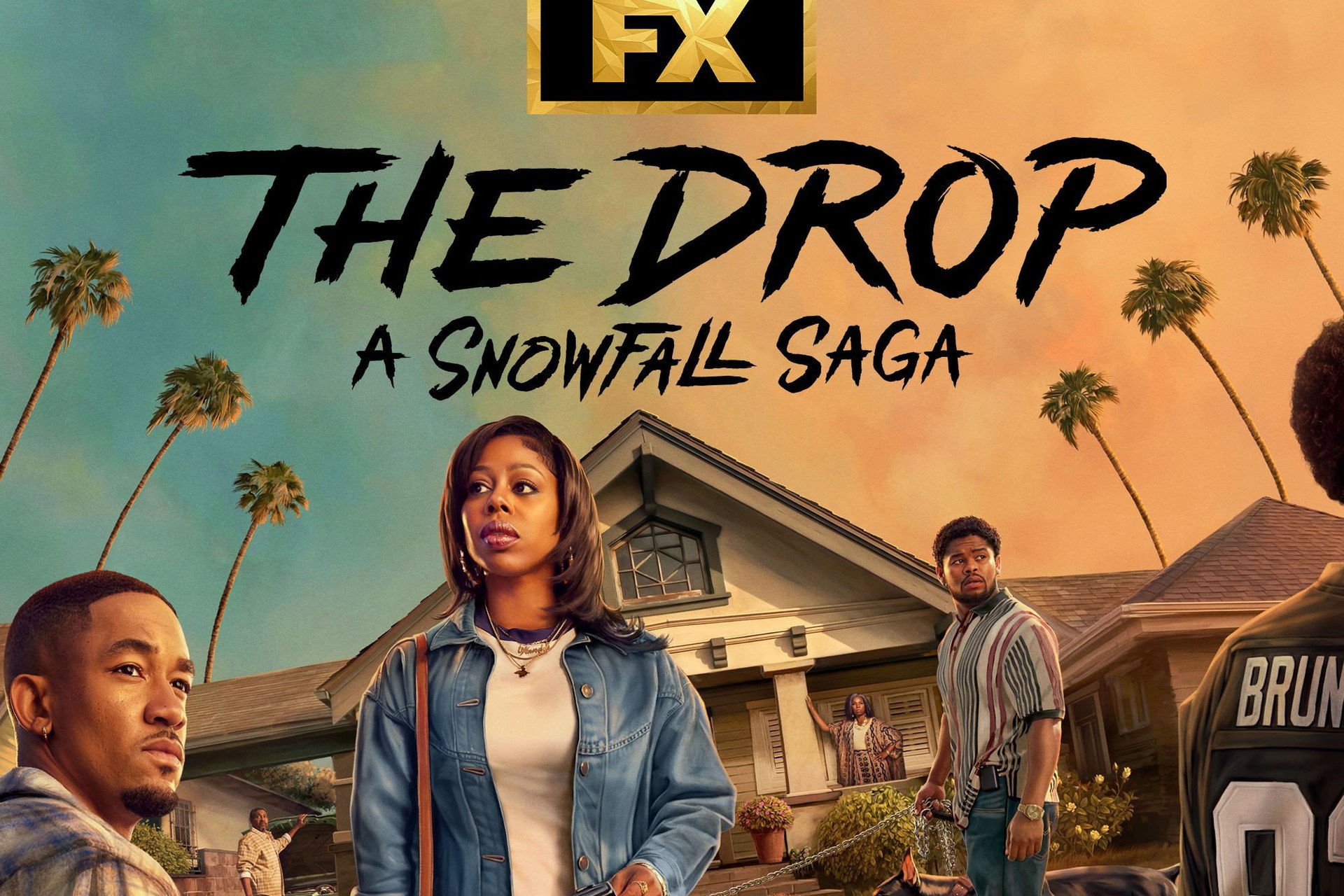
Episode 7 of The Drop: A Snowfall Saga — Blood In, Blood Out, written by Lex Edness and Emil Pinnock and directed by Tiffany Johnson — aired Tuesday on FX and streams on Hulu, and it is the hour where this season's title logic finally shows its teeth. Every door on this show opens one way. You get into the crew, the label, the life, by proving you belong; getting out has never once been priced the same. FX's official synopsis frames the penultimate episode around Lamar, who "works to repair fractured relationships through music," and that's accurate as far as it goes — but what the hour is really about is the bill. Keith is dead. The album is unfinished. And one episode from the finale, everybody at the center of this story is being asked, in a different room and a different tone of voice, the same question: what exactly do you owe the people who brought you here?
Start with Lamar, because the episode does. Memorable TV's coverage of the hour notes that the reconciliation attempt opens the episode — Lamar reaching back toward the people he walked out on after the blowup we caught in our Episode 6 review — and the choice to lead with repair instead of fallout tells you what Edness and Pinnock think this hour is for. Music broke the trust, so music is the only language Lamar trusts to fix it. But the reconciliation runs straight into the season's newest fact: Lamar the producer is becoming DJ Nex, an identity he found for himself last week, and The Film Gordon's episode coverage frames this hour as that identity's first real test — a young artist who has finally located his own sound now has to prove it can carry a finished album while the label's commercial expectations, voiced through Jenny and through Darryl "DG" Grant's operation, press in from the other side. Asante Blackk plays both assignments at once, the apology and the ambition, without letting either one soften the other. The kid who went quiet and watchful in Exit Wounds is talking again. He's just very careful now about who gets to hear him.
The hour's moral center, though, belongs to Artillery — and to the line he draws, the one everybody else around him is afraid to draw. In the sequence FX released from the episode ahead of broadcast, covered by Hip-Hop Vibe, Artillery refuses to write songs that would fuel gang retaliation after Keith's murder, and his aunt and manager Dara — Aleyse Shannon — pushes back hard, arguing he has to represent where he comes from. He won't budge. It is the clearest statement of the show's whole argument: his music was supposed to be the alternative to the street, and the street keeps presenting itself as the marketing plan. Hip-Hop Vibe notes the scene closes with a nod to Ice-T's 1988 anthem "Colors," and reads it as Artillery's turning point; in context it plays even bigger than that, because Comic Basics' post-episode look ahead to the finale describes Artillery as entangled in tragedy and law-enforcement scrutiny, his emerging career in immediate jeopardy. Simmie "Buddy" Sims III carries the grief without histrionics — this is a young man discovering that the most dangerous thing he owns is not his past but his platform, and that everybody around him, family included, has a use for it that he didn't agree to.
Wanda's thread is the one that tightens the screws. The plan she built this entire season around — the crew, the record, the one legitimate shot — has to be rebuilt from scratch with a single episode left to land it, and the hour keeps stripping away her margin. Comic Basics' finale preview, looking back at this episode, describes DG's predatory label tactics backing Wanda into a corner and leaving her with few reliable allies to protect her cousins. That tracks with everything the hour shows us: Wanda's problem is no longer getting the music made, it's that every institution she might lean on charges interest in a currency she doesn't want to pay. Gail Bean, as always, plays two conversations at once — the one about the record and the one about survival — and the craft of her performance this season has been watching the gap between those conversations close. It is nearly closed now. As this desk put it in our Episode 5 review, Wanda assembled the crew to shield her people — the same impulse that held her family together a generation earlier — and this is the hour she learns the shield itself can turn into the danger.
And circling all of it, Leon — the man who left. Isaiah John remains the show's quiet anchor, and the episode leans into the cruelest version of his dilemma yet: the free legal clinic work that defines the life he chose keeps teaching him exactly how much use that life is to the people he loves, and it isn't enough. The Film Gordon's coverage highlights the pull on the other side — his experience with how power actually moves could protect Wanda and Lamar inside an industry he increasingly recognizes as the old world in better clothes, and Dara offers him the possibility of a genuinely different future. Loyalty and responsibility, the two words FX's synopsis hangs on him, stop sounding like opposites this week. They sound like the same debt described by two different creditors. The Leon and James engine the show paired up last week keeps humming underneath — two men still asking whether the official story of this family is the whole story — but here it's Leon alone at the crossroads, and John makes standing still look like the hardest acting job on television.
Craft-wise, Johnson directs the penultimate hour the way penultimate hours should be directed and rarely are: nothing stalls, but nothing is wasted on finale foreplay either. Every scene does two jobs — it closes a door the season opened and locks the one behind it. Edness and Pinnock's script keeps the '90s Los Angeles texture working as pressure rather than wallpaper: the debate running underneath the episode, about what rap owes the streets that raised it, was a real argument in this city's real studios in exactly these years, and the show stages it as an argument between people who love each other rather than a lecture. The Film Gordon's at-a-glance for the episode lists its central themes as loyalty, retaliation, family, ambition and survival — a fair five words, though the hour's real subject might be simpler: exit costs. Even the title is a contract term. Blood in is the easy signature. Blood out is the negotiation nobody survives clean.
The verdict: the strongest kind of penultimate episode — one that makes the finale feel both inevitable and genuinely unwritten. Blood In, Blood Out doesn't have Homecoming's single detonating revelation, and a thread or two still moves faster than eight episodes can comfortably hold; the season's short runway remains its one honest flaw. But as an hour of television it is disciplined, bruising, and unusually clear about what it's saying: in this world, loyalty is just the name of the door, and the door only swings one way. One hour is left: Hercules, the finale, lands Tuesday, October 27, and Wanda's last move is an alliance nobody at this table would have predicted back in September. After this hour, the risk feels real. Previously Score: 8.9 / 10.
Blood In, Blood Out — Season 1, Episode 7 (penultimate); written by Lex Edness & Emil Pinnock, directed by Tiffany Johnson; aired Oct. 20 on FX, streaming on Hulu (Disney+ internationally); runtime 43 min. Malcolm Spellman; developed with original Snowfall showrunner Dave Andron; Idris EP (not on screen). Gail Bean (Wanda Bell), Isaiah John (Leon Simmons). Asante Blackk (Lamar Kinsey), Peyton Alex Smith (James Kinsey), Simmie "Buddy" Sims III (Artillery), Brandon Mychal Smith (Darryl "DG" Grant), Aleyse Shannon (Dara), Mykelti Williamson, Nicki Micheaux, Isidora Goreshter, Eric Balfour. 1990 Los Angeles — the crack epidemic's aftermath meets the rise of West Coast rap. "LA Theme Song" by Nipsey Hussle.
Sources · 5 sources
- The Drop: A Snowfall Saga: Blood In, Blood Out
Memorable TV — the reconciliation attempt that opens the episode, Artillery's tragedy fallout, and Leon's loyalty bind (Oct. 17, 2026) - 'The Drop' episode 7 clip shows Artillery refusing to write songs that fuel gang retaliation
Hip-Hop Vibe — FX's official episode 7 sneak peek: the Artillery–Dara confrontation and the "Colors" nod - The Drop Season 1 Episode 7 Preview: Blood In, Blood Out
The Film Gordon — DJ Nex's first test, Daryl's enforcement structure, Leon and Dara, and the episode's central themes - 'The Drop: A Snowfall Saga' Episode 8 Release Date, Time and Where to Watch the Finale
Comic Basics — post-episode account of the penultimate hour's fallout and the "Hercules" finale setup - 'The Drop: A Snowfall Saga' Episode Lengths, Titles and Descriptions
Feature First — episode titles, runtimes, and official descriptions for the full season
Episode facts, schedule, and the official synopsis via FX listings and Feature First; post-air episode coverage via Memorable TV, Hip-Hop Vibe, The Film Gordon, and Comic Basics.