WASHINGTON — President Donald Trump said Sunday that he “personally” believes Iran was behind last week’s foiled attack aboard a FlyDubai passenger jet bound for Tel Aviv — a claim he made without offering evidence, and one that landed just hours after Vice President JD Vance said U.S. intelligence had seen nothing conclusive tying Tehran to the plot.
The Short Version
- Asked Oct. 5 by a reporter whether he believes Iran was responsible for the foiled Sept. 30 attack, Trump said: “I do. I personally do.” He cited no evidence.
- Hours earlier, Vice President Vance deferred to CIA Director John Ratcliffe and said, “I wouldn’t say I’ve seen anything conclusively just yet” — while NBC reported multiple U.S. officials briefed on the case say early indications point to a lone actor, not Iranian coordination.
- The investigation is widening anyway: Australia’s multi-agency Victorian Joint Counter Terrorism Team is investigating the suspect’s links to Melbourne, where he studied at RMIT University without completing an engineering degree.
- Separately, Trump confirmed that a threat prompted the U.S. to pull all of its bombers out of RAF Fairford in Britain on Sunday — publicly contradicting his own secretary of state, who had called the move a “regular rotation.”
Two answers, one White House
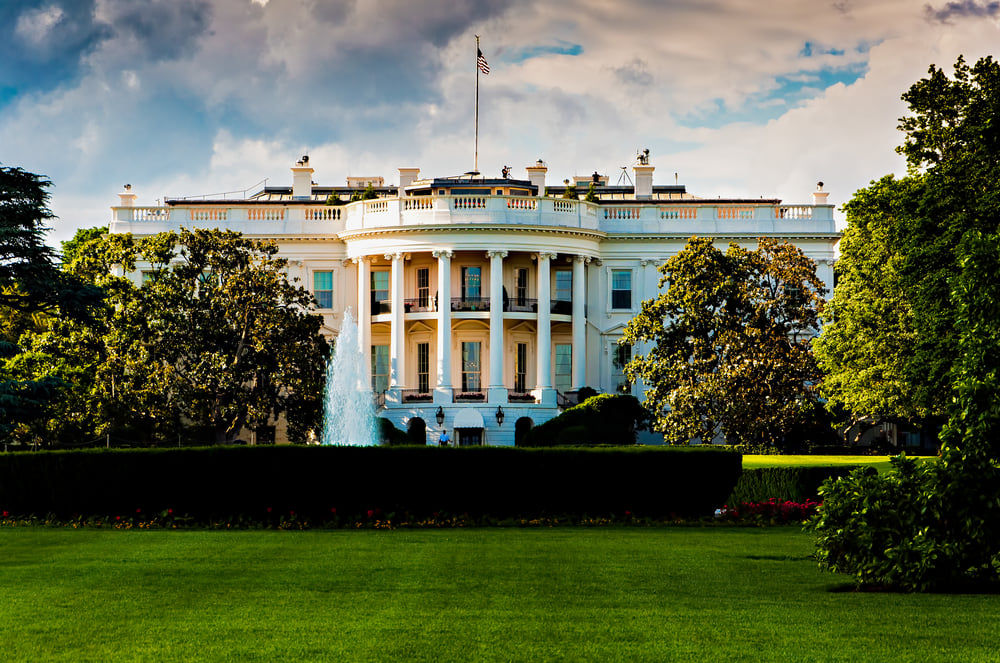
Trump’s remarks came in a brief exchange with reporters at the White House on Sunday, Oct. 5. Asked directly whether he believes Iran was responsible for the attempted hijacking of FlyDubai Flight FZ1073, he answered flatly: “I do. I personally do.” He offered no evidence and no explanation for the assessment, according to USA Today’s account of the exchange.
The statement stood in sharp contrast to what his own vice president had said only hours before. Vance, asked separately about the attack, was careful not to get ahead of the intelligence community.
“That’s something that I defer to (CIA Director) John Ratcliffe and some of the intelligence folks on,” Vance said. “I don’t want to get ahead of any announcements there, but it’s certainly something that we’re looking at. But I wouldn’t say I’ve seen anything conclusively just yet.”
What investigators have actually said
The facts on the ground tell a more complicated story than the president’s certainty suggests. Multiple U.S. officials briefed on the investigation told NBC News that early indications are the suspect acted alone — not as part of a larger organization or in coordination with Iran or any other foreign actor, USA Today reported.
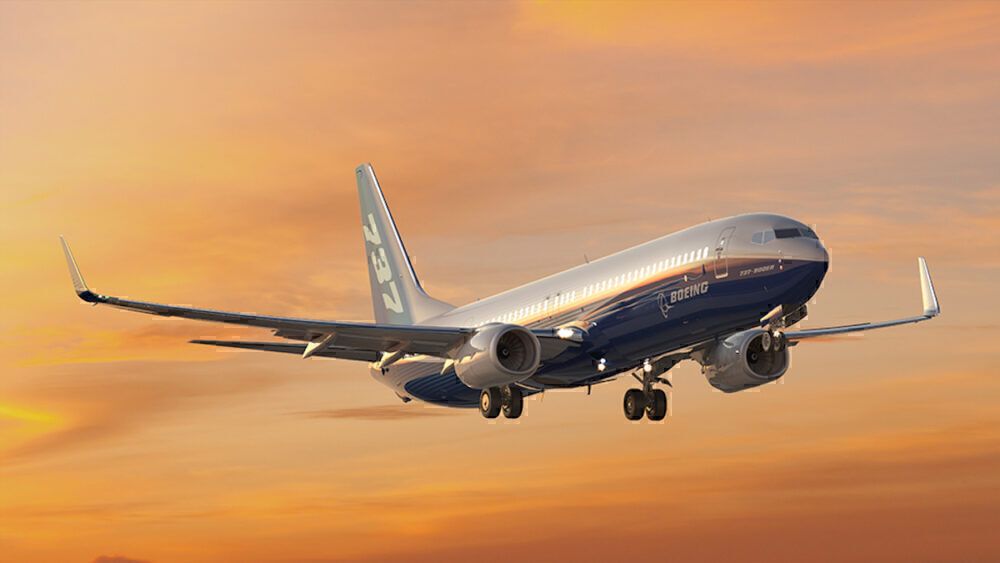
The basic outline of the Sept. 30 incident is not in dispute. The UAE prosecutor general has called it a “terrorist attack.” The suspect, identified by sources as 29-year-old Omani national Hamam al-Hammami, attacked his captain — Indian national Smit Machchhar — with an emergency crash axe in the cockpit of the Dubai-to-Tel Aviv flight, Reuters reported. The Boeing 737, carrying more than 170 passengers and crew, plunged thousands of feet before the wounded captain managed to open the cockpit door so passengers and crew could subdue the co-pilot. The jet was diverted to Tabuk, Saudi Arabia, where it landed safely.
Reuters, citing sources briefed on the UAE-led investigation, reported that al-Hammami intended to crash the hijacked plane into Ben-Gurion Airport near Tel Aviv — and that earlier this year he had planned to hijack a different Tel-Aviv-bound flight before opting against it. The suspect is in UAE custody; no formal charges have been announced.
Israeli Prime Minister Benjamin Netanyahu has also stopped short of blaming Iran, saying it is “too early to say” whether Tehran was involved. In a Fox News interview, Netanyahu said the suspect had undergone “Islamist radical indoctrination” and was clearly suicidal — but, he added, “I don’t make final conclusions yet.”
The Melbourne years
While Washington argues about who ordered the attack, the investigation has stretched to a second continent. On Sunday, Oct. 4, the Australian Federal Police confirmed that the Victorian Joint Counter Terrorism Team — a multi-agency unit combining the AFP, Victoria Police and the ASIO intelligence agency — is investigating the suspect’s links to Australia.
“The Victorian Joint Counter Terrorism Team (VIC JCTT), comprising the AFP, Victoria Police and ASIO, can confirm it is investigating the man’s links to Australia,” an AFP spokesperson said. Two sources briefed on the investigation told Reuters the co-pilot studied at a university in Melbourne roughly a decade ago; the university was subsequently identified as RMIT University. RMIT confirmed he had been enrolled but did not complete an engineering qualification — and did not name him. The Times reported his enrollment ran from 2015 to 2017 in a mechanical engineering degree he never finished.
The Financial Times reported that al-Hammami had allegedly visited radical mosques and accessed extremist websites while living in Australia, and that Australian intelligence held a file on him — claims Reuters said it could not independently verify. For now, Australia’s role in the case is a line of inquiry, not a conclusion.
A scare in England
The flydubai story was not the weekend’s only Iran-linked scare. On Sunday, the United States moved all of its long-range bombers stationed at RAF Fairford in Britain back to their American home bases after an unspecified new threat, CNN reported. The move came days after the British government arrested several individuals in connection with an alleged Iranian plot targeting the airbase, according to officials.
The Pentagon confirmed the redeployment, saying its global bomber fleet remains ready to strike — including from U.S. soil. What the Pentagon did not say is why the planes moved. Secretary of State Marco Rubio had initially described the movement as part of “regular rotations” of American assets around the world, unrelated to any Iranian threat.
Trump publicly contradicted him.
“I think we can say that — I mean, they didn’t fly out by accident,” Trump said from the White House. “There were some threats, and rather than tempting the enemy, we’ll capture the enemy and beat the enemy. But why should we leave them there? So we moved them around a little bit.” Asked whether Iran had planned a drone attack launched from British soil, Trump declined to say: “I can’t tell you that. If they did they will suffer greatly.”
Vance, speaking Monday, called the move an act of “an abundance of caution” and said the administration feels “with some confidence” that Iran is engaged in terrorism against the United States — while declining to detail the specific threat. CNN noted it could not independently confirm reports that a drone attack ordered by Iran prompted the withdrawal.
“Hit very hard”
Trump’s Sunday remarks are the sharpest in a week of escalating warnings. On Oct. 2, he said Iran would be “hit very hard” if it is determined to have been behind the FlyDubai attack. “Oh they’ll be hit, very hard, don’t worry,” he told reporters, adding of Tehran’s leadership: “You just ask them. They know what happened.”
The threats land in the middle of an actual shooting war: the United States has been at war with Iran for more than seven months, since Trump ordered the first round of strikes on the country’s nuclear program, and he has predicted Iran will agree to a deal to end the war after the Nov. 3 midterm election. The UAE’s probe, Australia’s probe and the American intelligence assessment are still unfolding — and so far, none of them has produced the Iranian connection the president says he personally believes in.
More coverage of the investigation at Previously’s FlyDubai reporting and the UAE terror probe story.
Sources
- USA Today · Trump says he thinks Iran was responsible for Flydubai attack, Oct 5 2026
- New York Post · Trump says Iran behind failed flydubai hijack attempt, Oct 2 2026
- Reuters · Australia probes flydubai co-pilot links, police say, Oct 4 2026
- CNN · US removes all Air Force bombers from UK base following new threat, Oct 4 2026
- The Times · Trump says he believes Iran was behind Flydubai hijack attempt, Oct 5 2026