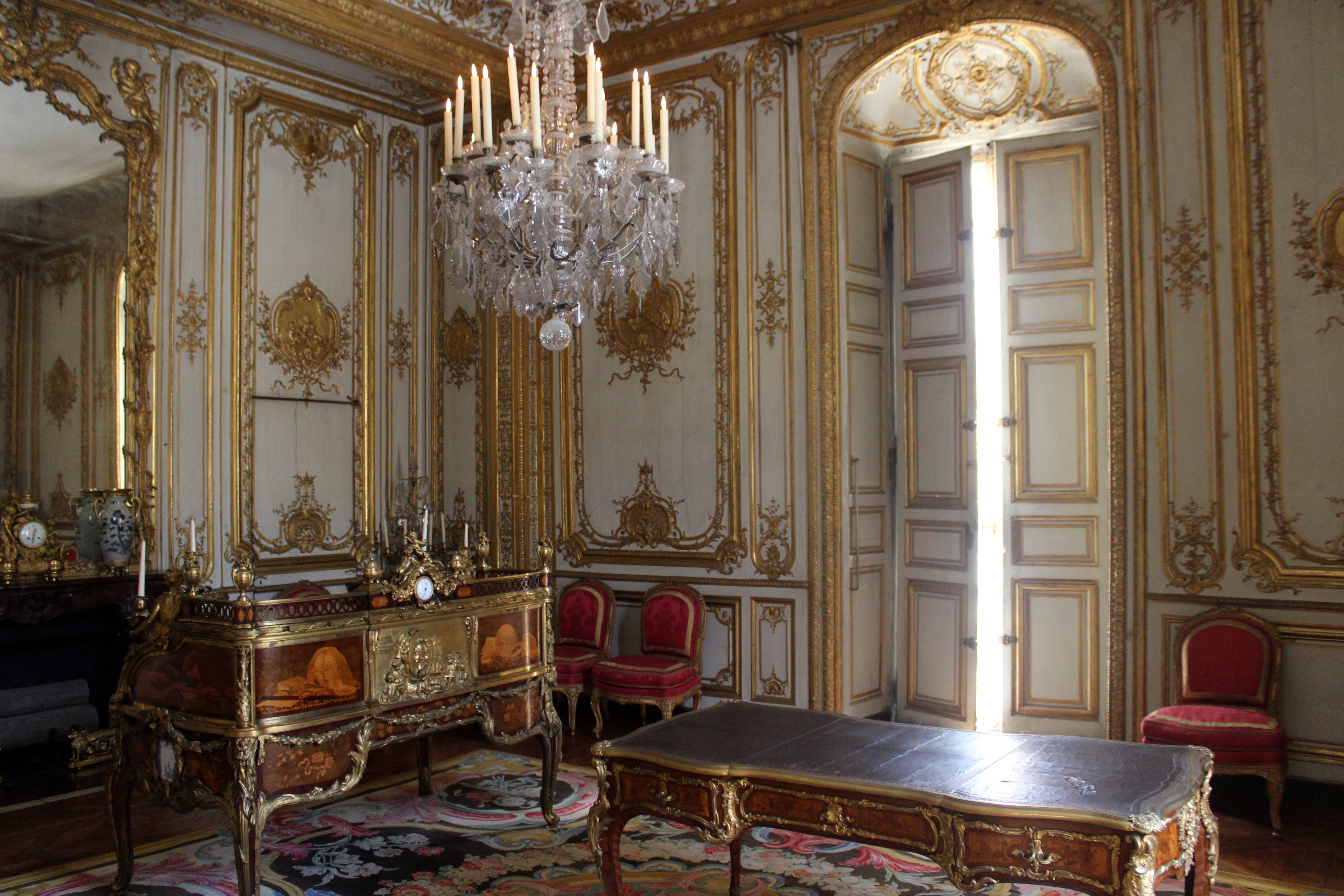

Gold draws the eye towards the surface. Conservation asks it to travel in the other direction. At Versailles, the gilded object is the end of a sequence of decisions about what survives underneath: which fragments can be kept, which losses need filling, and how a repair can support a surface without erasing its history.
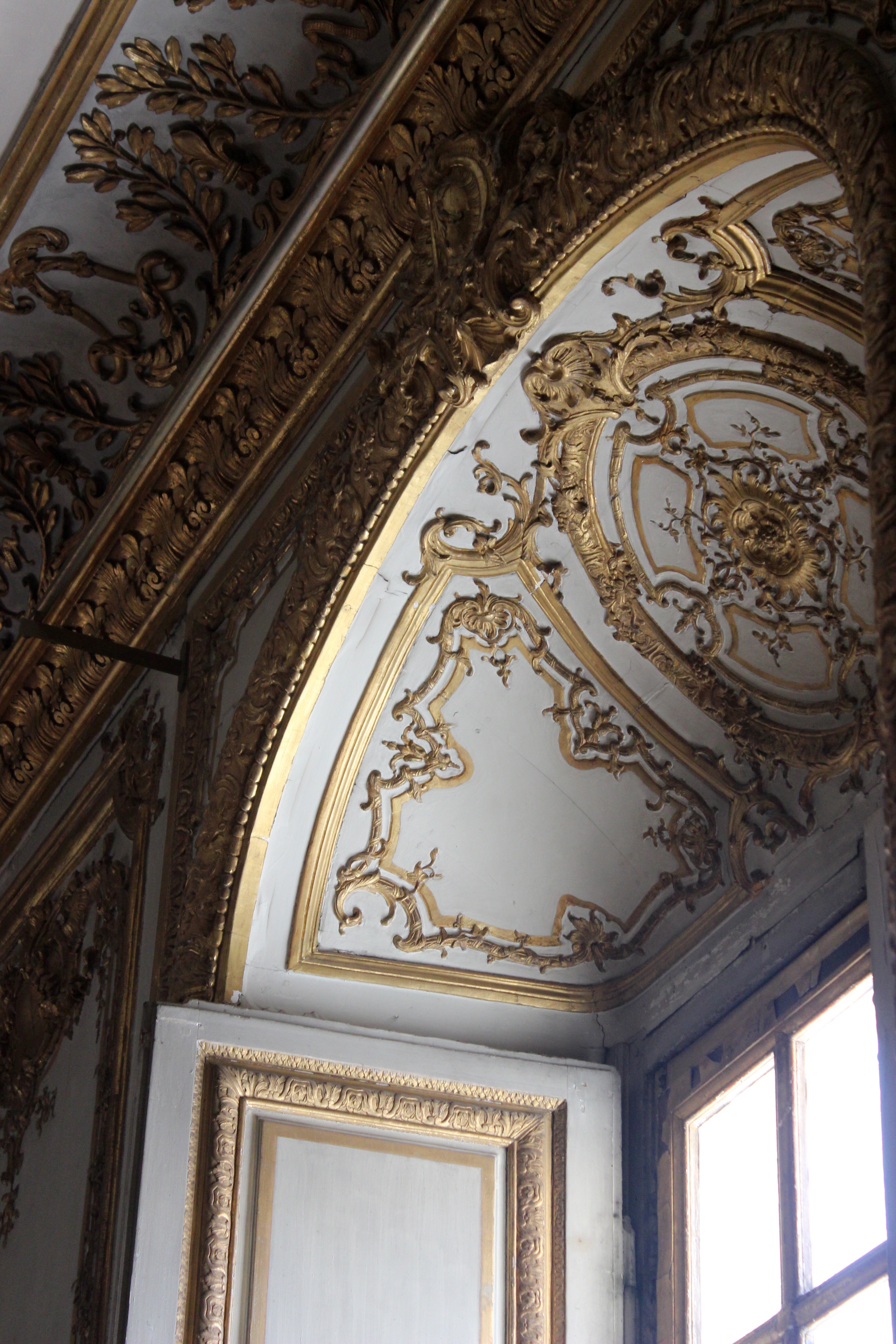
The palace’s account of its gilding workshop puts repair before brilliance. Its restorers work on giltwood furniture and frames as well as interior woodwork. Missing or damaged elements must be addressed before the leaf goes on. In the workshop’s commonly used water-gilding process, the support receives repeated coats of a chalk-and-animal-glue preparation, followed by a clay-based ground. Gold is applied with water, then selected areas are polished with agate. What looks like one precious material is actually a carefully organised relationship between several.[1]
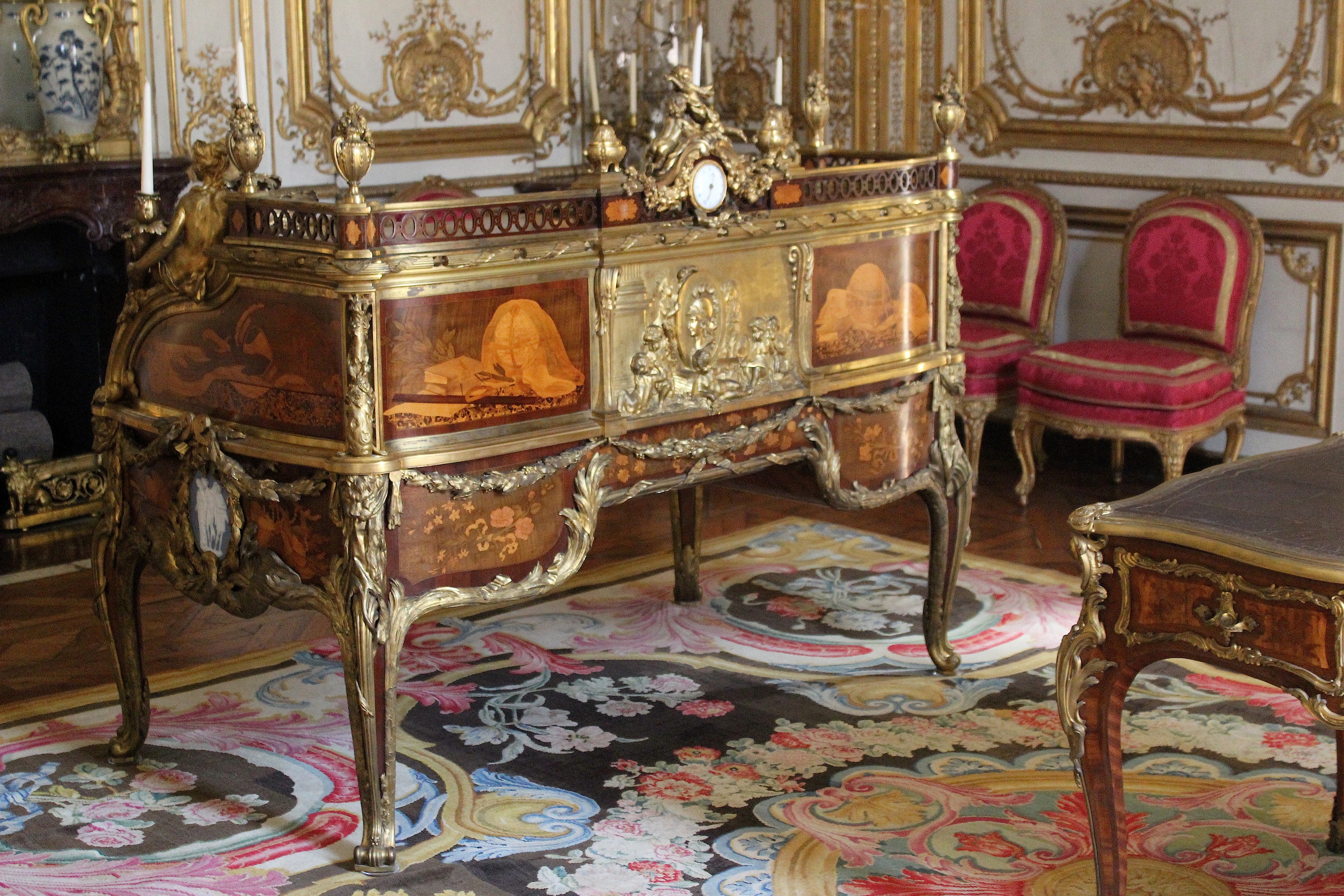
Consider the king’s corner study. Its carved decoration, associated with Jacques Verberckt, took shape through changes in 1753 and 1760. The room was a working space for Louis XV and Louis XVI, rather than simply a ceremonial backdrop. In the restoration undertaken in 2019, the palace described work on the woodwork, paint, gilding, floor, plaster and fireplace marble. Removing panels and flooring also allowed structural consolidation and the concealment of lighting and security networks. Old gold was cleaned and supplemented; missing carved passages were to be recovered from surviving evidence.[2]
That last distinction matters. A surface can look renewed because material has been preserved, because something has been repaired, or because an absent finish has been recreated. The palace’s 2019 record of work on the Royal Chapel windows makes those alternatives unusually clear. Inside, surviving gold could be consolidated and conserved. Outside, where the old gilding was absent, the metal required a complete new gilded finish. The same gleam could therefore describe quite different interventions.[3]
An inherited interior is never maintained by a single reverential gesture. It demands investigation, practical access and the willingness to distinguish old material from a necessary addition. The gold leaf announces the result, but the responsibility sits in those less conspicuous judgments. Versailles becomes more intelligible when we look past the reflection and ask what, exactly, has been kept.
The details
The photographs on this page date from 2013 and show the king's corner study before its 2019 restoration. The gilders belong to the palace's own craft workshops, the métiers de Versailles, whose trades maintain the estate in-house.
Sources · 3 sources
- Château de Versailles — The palace's guide to the gilding trade (les métiers de Versailles)
- Château de Versailles — Restoration of the King's corner cabinet
- Château de Versailles — Restoration of the Royal Chapel
Photography
Photographs: Miguel Hermoso Cuesta / Wikimedia Commons / CC BY-SA 3.0
- The king’s corner study at Versailles, with gilded wall panelling, furniture and chandelier, photographed in 2013. Historical photograph before the 2019 restoration.
- Furniture and gilded panelling in the king’s corner study, photographed in 2013. Historical photograph before the 2019 restoration.
- Carved and gilded decoration above a window in the king’s corner study, photographed in 2013. Historical photograph before the 2019 restoration.