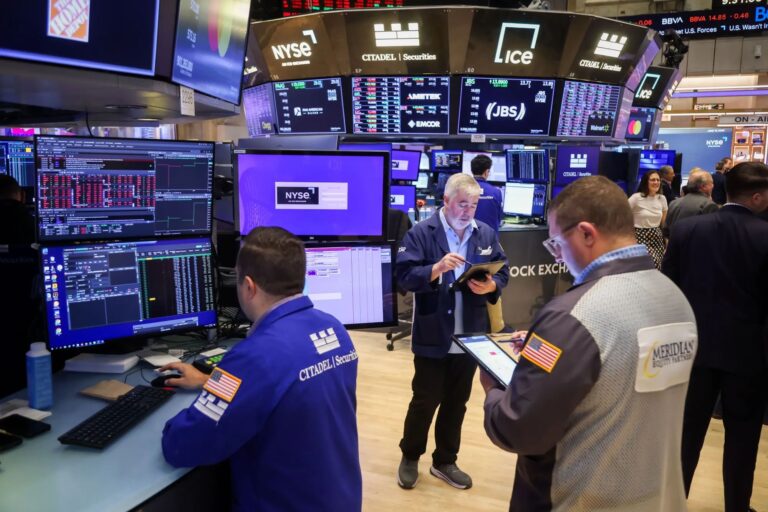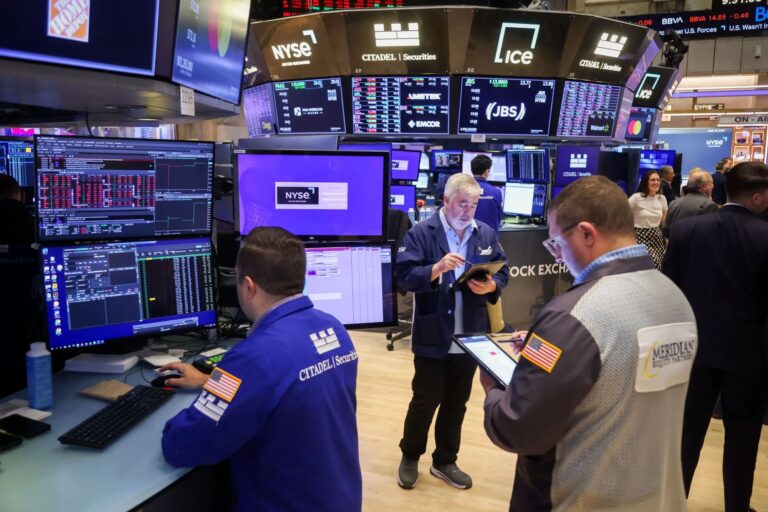
Monday was the Nasdaq's party. The tech-heavy index closed at its 23rd record of 2026, and the S&P 500 watched from the rope line, finishing about 0.3% shy of its own record. Tuesday, the S&P decided it wasn't waiting for an invitation. The index jumped about 0.7% in early trading to a fresh intraday all-time high above 7,830 — its first record since mid-August — and if it holds into the close, it'll notch its 28th record close of the year, with the Nasdaq on track for back-to-back records of its own.
On Monday, all three indexes had jumped to start the week, with the Nasdaq setting intraday and closing marks while the S&P finished within 0.3% of its closing record, even as Treasury yields kept surging — that's your one line of context. Everything after this is Tuesday, and Tuesday has been a stampede.
How Tuesday happened
The setup was simple: the two things that have been strangling this market finally loosened. Treasury yields, which hit their highest levels since 2002 on Monday, pulled back. Oil prices, which spent the last week flirting with triple digits, fell hard. The Nasdaq climbed about 0.8%, the S&P 0.7%, and the Dow added nearly 300 points, or 0.5%, in early trading, per Investopedia and Investor's Business Daily. Yesterday morning's futures were already pointing this way — by Tuesday's open, the market just went ahead and did it.
Utilities and industrials led the S&P's advance, per IBD — a welcome change from a market where tech has been doing nearly all the lifting. Over the past month, tech is the only S&P sector with gains, CNN reports; real estate, financials, materials and utilities have each dropped more than 5% as borrowing costs bit. Tuesday's breadth was a small but real improvement.
The bond market exhaled
The 10-year Treasury yield — the number that sets the price of everything from mortgages to corporate debt — slipped about two basis points to 5.29% on Tuesday after touching above 5.35% on Monday, its highest since April 2002. The 30-year, which hit 5.70% Monday, eased as well. A $58 billion auction of three-year notes is on the docket Tuesday, and with yields this juicy, buyers are expected to show up, Barron's reports. What's unusual, the Journal notes, is that yields and stocks have been rising in tandem for weeks — normally one kills the other. This time, the market has decided that if borrowing costs 5.3%, earnings had better grow like it.
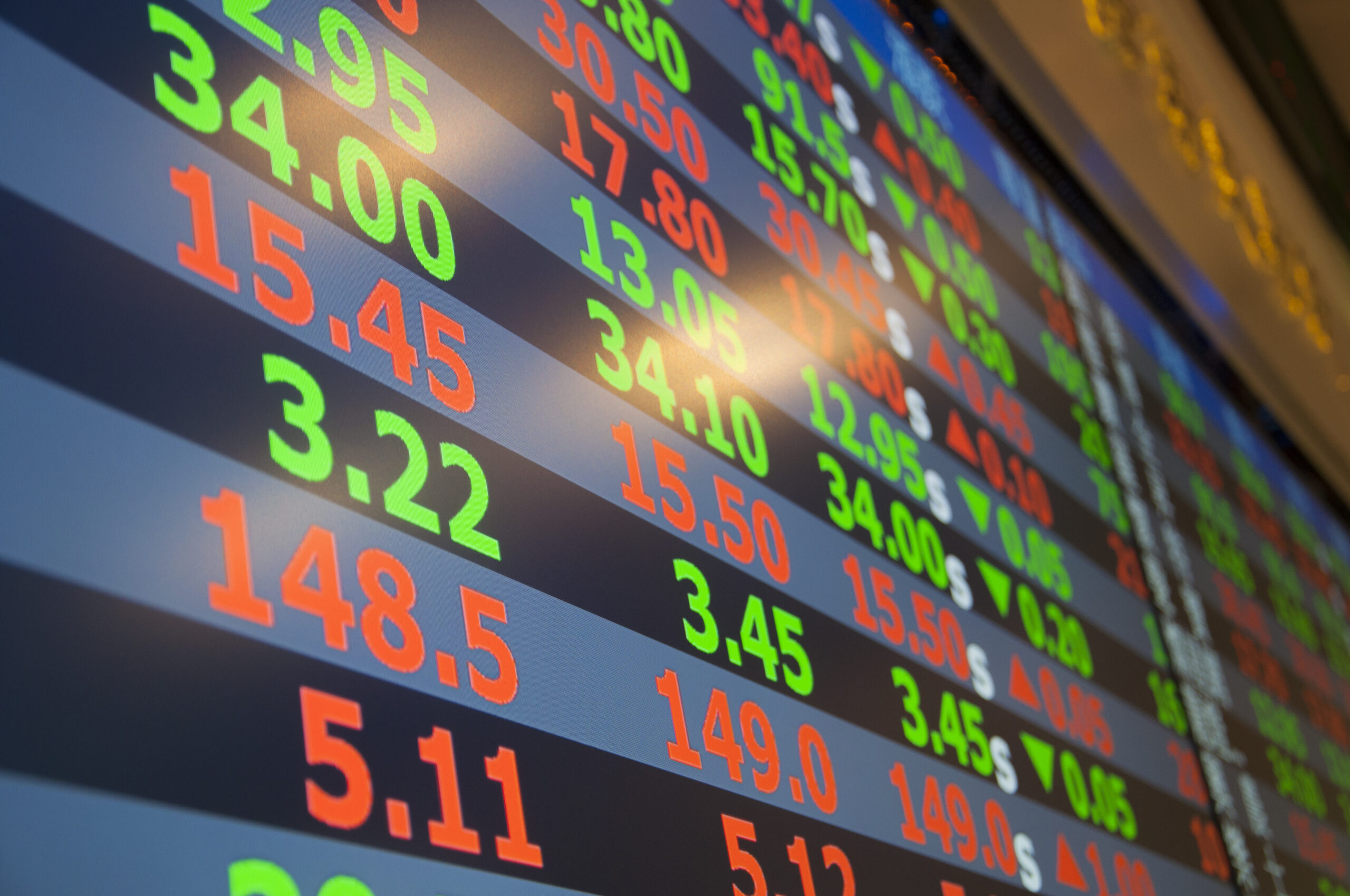
Friday's weak payrolls report did the heavy lifting here: traders now see a 78% chance the Fed holds rates steady this month, per the CME FedWatch tool cited by Reuters, though a December hike is still largely priced in. The Fed's meeting minutes land Wednesday, and earnings season kicks off next week with the big banks — the next real tests of whether this rally has legs or just momentum.
Oil's turn
Crude got crushed in the best possible way. WTI fell nearly 2% to around $88 a barrel, and Brent dropped 1.8% to about $98.50 — back below the psychologically important $100 mark. The driver: a pickup in shipments through the Strait of Hormuz, easing fears that the Israel-Iran war would choke off the world's most important oil chokepoint. Reuters adds a second relief valve: a G7 emergency stockpile release. This is still a market one headline away from panic — Brent is up more than 30% since the war started, per CNN — but for one Tuesday morning, the inflation boogeyman took a nap.

The AI carry trade keeps carrying
And then there's the engine of the whole thing. Nvidia rose 1.5% Tuesday — its second straight intraday high and first closing record since May — and it's now knocking on the door of a $6 trillion market capitalization, the most valuable public company on Earth, accounting for more than 8% of the S&P 500 all by itself. The Roundhill Magnificent Seven ETF was up 0.7%. Meta, Tesla and Amazon each climbed around 0.6% in the early going, per Reuters. SpaceX — Space Exploration Technologies, the private one — tacked on another 2.5% after surging more than 7.5% Monday, a move Investopedia notes made Elon Musk a trillionaire again, per Forbes.

The honest version: this rally has a concentration problem, and everyone on Wall Street knows it. One company worth nearly $6 trillion is 8% of the index. When the trade works, records fall. When it doesn't — well, that's a story for a different Tuesday. And the AI boom has a courtroom subplot now, too: McDonald's was just sued over AI menu pricing, a reminder that the technology lifting this market is also drawing the lawyers.
Not everything is green
The biotech corner of the market had a genuinely terrible morning: the SPDR S&P Biotech ETF, XBI, plunged nearly 4%, slipping below both its 21-day and 50-day moving averages, per IBD's MarketSurge analysis. In the Dow, Caterpillar led with a gain of nearly 3%, followed by Nvidia and Cisco up 1–2% each — while Boeing lagged, falling more than 1%. And in the land of digital gold, bitcoin held around $86,000, down a touch from Monday's $87,000 high, per Investopedia. Gold, for the doomsday preppers and the merely cautious alike, rose 1% to $4,205 an ounce.
What comes next
Records are nice, but October is the market's haunted house — the month of 1987, of 2008's worst days, of every volatility spike your advisor warned you about. The bull case from here: earnings season starts next week, the AI capex cycle is still accelerating, the Fed is probably done hiking, and corporate dealmaking is back — the $110 billion Paramount Skydance–Warner Bros. deal just closed this week. The bear case: 5.3% yields, $98 oil, and a stock market priced for a perfection that wars and central banks rarely deliver. For now, though, the tape is the tape: two indexes at all-time highs on the same day, and a bond market that finally stopped yelling. Enjoy it. Check back Wednesday.
Reporting this story is based on
- Stock Market Today: Nasdaq, S&P 500 Set Fresh All-Time Highs as Treasury Yields, Oil Prices Fall
Investopedia — 2026-10-06 - Stock Market Today: Dow Rises As Oil Plays Fall; Chip Players, Tesla Shares Rally
Investor's Business Daily — 2026-10-06 - Tech Rally Steams Ahead as AI Fever Builds on Nasdaq's Record High
Barron's — 2026-10-06 - US stocks hit record high, shrugging off bond market turmoil
CNN — 2026-10-06 - S&P 500 Hits New Record High
The Wall Street Journal — 2026-10-06 - Wall St futures rise as yields, oil dip
Reuters — 2026-10-06