There are programs that rebuild, and there are programs that go home again. Syracuse spent the 2025-26 season wandering — a 15-17 record, 6-12 in the ACC, and a fifth straight year of March without the Orange in it — and answered by hiring the purest symbol of its own golden age. Gerry McNamara, the starting point guard on the 2003 national championship team and the engine of one of the most beloved teams in program history, is the head coach of Syracuse basketball, taking over after Adrian Autry's three-year tenure ended and arriving fresh off a MAAC championship and an NCAA tournament appearance at Siena. Nobody has to explain to McNamara what the Dome means on a Saturday night in February. He lived it.
Autry's exit was the punctuation on a slow erosion. A Syracuse lifer — McDonald's All-American, four-year star, longtime Jim Boeheim assistant — Autry inherited the program in 2023 and went 20-12 in his first season, raising hopes that the transition would be seamless. It wasn't. The Orange slid to 14-19 in 2024-25, then 15-17 last winter, and the program that once defined March consistency hadn't reached the NCAA tournament since 2021. Athletic director John Wildhack had called for "meaningful games in March" before last season; when March brought nothing, the change came. McNamara's hiring isn't just a coaching move — it's a restoration of identity for a fan base that had started to forget what this program is supposed to feel like.
The roster McNamara inherits is the most talented raw material Syracuse has had in years, and the name on everyone's lips is Kiyan Anthony. The son of Carmelo Anthony — the freshman phenom who carried the 2003 title team — Kiyan arrived at his father's school as a celebrated recruit and averaged 8.0 points as a freshman in 2025-26, shooting 39.9 percent from the field and 25.4 percent from three. The numbers were modest, but the flashes were unmistakable, and a sophomore leap from Anthony would change the geometry of the entire ACC. He is joined by Aiden Tobiason, the Temple transfer who broke out as a sophomore with 15.3 points, 3.7 rebounds, and 2.0 assists per game on 48 percent shooting, declared for the 2026 NBA Draft, tested at the G League Elite Combine, and then withdrew to play for McNamara — a wing with a 7-foot-3¾ wingspan and legitimate 2027 draft buzz. Two potential NBA draft picks in the starting lineup: that's a sentence Syracuse fans haven't been able to say in a long time.
The rest of the core is experienced and proven. Donnie Freeman, the sophomore forward who led the team at 16.5 points and 7.2 rebounds a night last season on 47.4 percent shooting, gives the Orange a frontcourt anchor. Naithan George, the transfer point guard who ran the offense at 10.9 points and 5.4 assists per game, brings steadiness to the backcourt. Nate Kingz added 12.2 points a night, and William Kyle III anchored the paint at 8.4 points, 7.1 rebounds, and 2.5 blocks. This is not a rebuild-from-scratch situation — it's a talented group that underachieved its way out of a coach, now handed to a coach who knows exactly what the standard looks like.
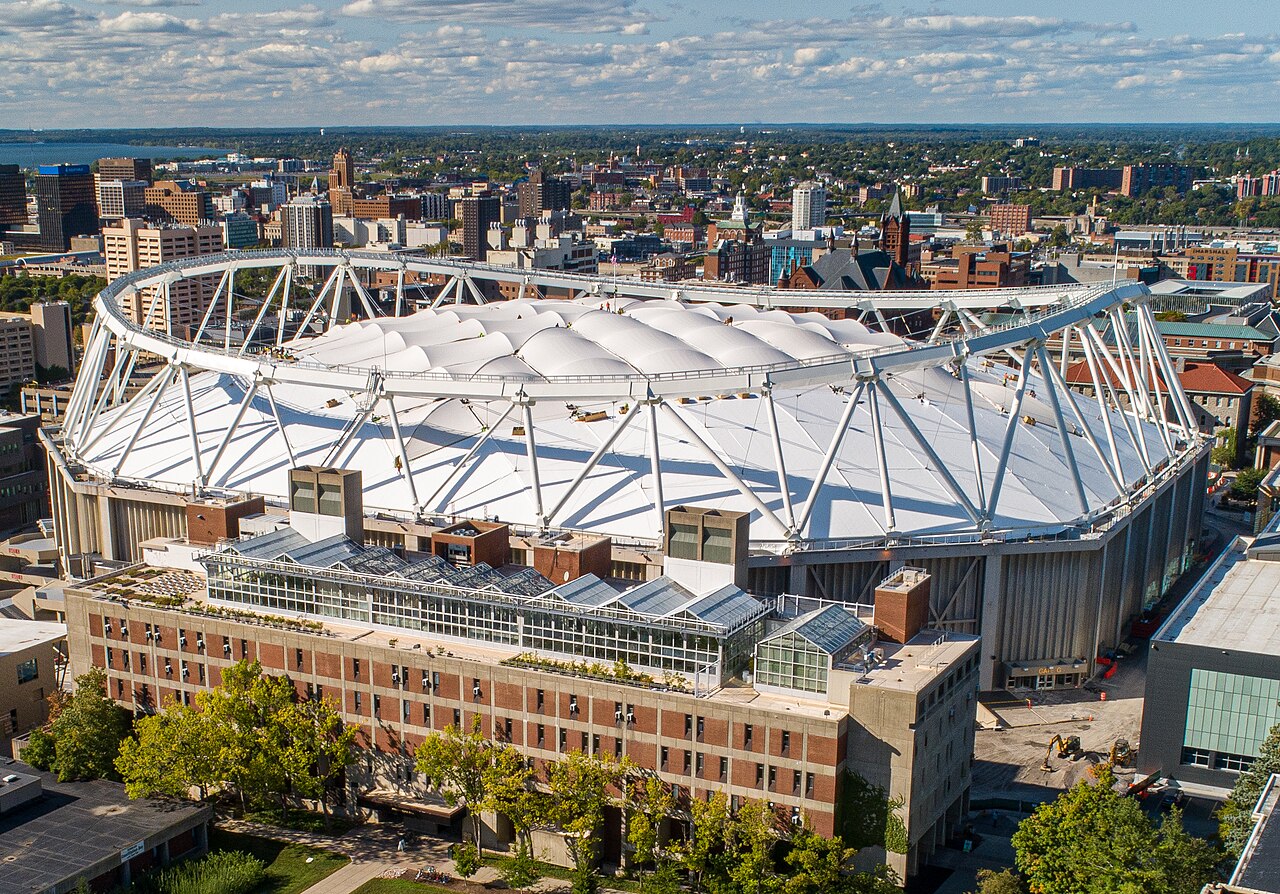
Because the standard at Syracuse was once the highest in the sport. Jim Boeheim's 47-year run produced the 2003 national title, five Final Fours, and a 2-3 zone defense that became a cultural institution. The Dome — 35,000 seats for the big ones, the loudest building in college basketball when it's rolling — hosted generations of stars: Carmelo, Pearl Washington, Derrick Coleman, Sherman Douglas, Lawrence Moten, Hakim Warrick, Gerry himself. McNamara's teams played with a particular ferocity that Syracuse fans still talk about like scripture: the four-overtime thriller against UConn in the 2009 Big East tournament, with McNamara going the full 70 minutes, remains the signature performance of the modern Dome era.
McNamara spent his post-playing career climbing the coaching ladder — assistant under Boeheim, then head coach at Siena, where he delivered the MAAC championship and the NCAA berth that made him the obvious candidate when Syracuse called. He understands the zone, the Dome, the recruiting terrain of the Northeast, and the weight of the name on the jersey. His first task is defensive identity: last year's team gave up 75 points a night and finished 15-17 despite real offensive talent. His second task is March. Five years is an eternity at Syracuse — the longest tournament drought of the modern era — and the 2026-27 season is framed as the year the Orange come home.
The ACC is unforgiving, and nobody is handing Syracuse anything. But there's a particular energy around a program when the right former player walks back through the door — think of the jolt that ran through college basketball when similar homecomings happened elsewhere. The Dome will be packed for McNamara's first game, the student section will be deafening, and somewhere in the building Carmelo Anthony will be watching his son play for his coach's old teammate. Syracuse basketball has been waiting five years for a reason to believe. It just hired one.