
GM beat the quarter, raised its cash outlook — and the stock fell anyway. General Motors handed Wall Street the kind of quarter that is supposed to send a stock up, then watched it fall almost 7% instead. A day later, the argument over what the numbers actually mean is only getting louder, and Wednesday brought the first analyst move of the fallout: UBS trimmed its price target on GM to $109 from $112 while keeping its Buy rating, a small cut that neatly captures the Street's mood. The quarter was good. The road ahead, investors decided, looks expensive.
Start with what GM actually reported on Tuesday. Revenue came in at $50.02 billion, up 2.9% year over year and ahead of the roughly $48.69 billion analysts had penciled in, according to StockStory's breakdown of the results. Adjusted earnings per share hit $3.70 — up about 32% from $2.80 a year earlier, and above consensus estimates that clustered between $3.55 and $3.63 depending on the survey. Adjusted EBIT reached $4.1 billion, with North America contributing $3.6 billion of it, and net income was $3.3 billion. By any normal scorecard, that is a beat.
Zacks, in its post-earnings analysis, put the market's reaction plainly: shares fell 6.84% despite the earnings jump, the higher revenue and a new $20 billion multi-year share repurchase authorization — the steepest one-day slide for the stock since July 2025, according to market data cited by ScanX. The stock had traded at $82.75 just before the report; StockStory noted it changing hands at $77.20 afterward, and it was still under pressure on Wednesday.
The beat was real. So are the bills.
To understand the sell-off, you have to read past the headline numbers into the cost lines, because that is where this quarter's story flips. Zacks reported that GM expects commodity inflation, logistics and memory costs to create roughly a $2 billion headwind in 2026, with $1.3 billion already incurred through the third quarter — including $700 million in the quarter itself — driven by higher prices for copper, steel, fuel and DRAM. If those pressures persist, management sees a possible additional $1 billion to $1.5 billion EBIT headwind in 2027. That is the kind of sentence that makes a portfolio manager reach for the sell button even while the income statement in front of them looks great.
Tariffs add another layer. Gross tariff costs are expected near the low end of the range GM has guided to for this year, Zacks reported, alongside $1 billion to $1.5 billion of 2026 spending tied to onshoring production, supply-chain improvements and software investment. Then there is the electric vehicle reset: EV sales have fallen as GM trimmed production following the expiration of federal purchase incentives, and the restructuring has been costly — $11.2 billion in EV-related charges since the second half of 2025, including $7.4 billion in cash costs, with roughly $1 billion more in payments expected in the fourth quarter.

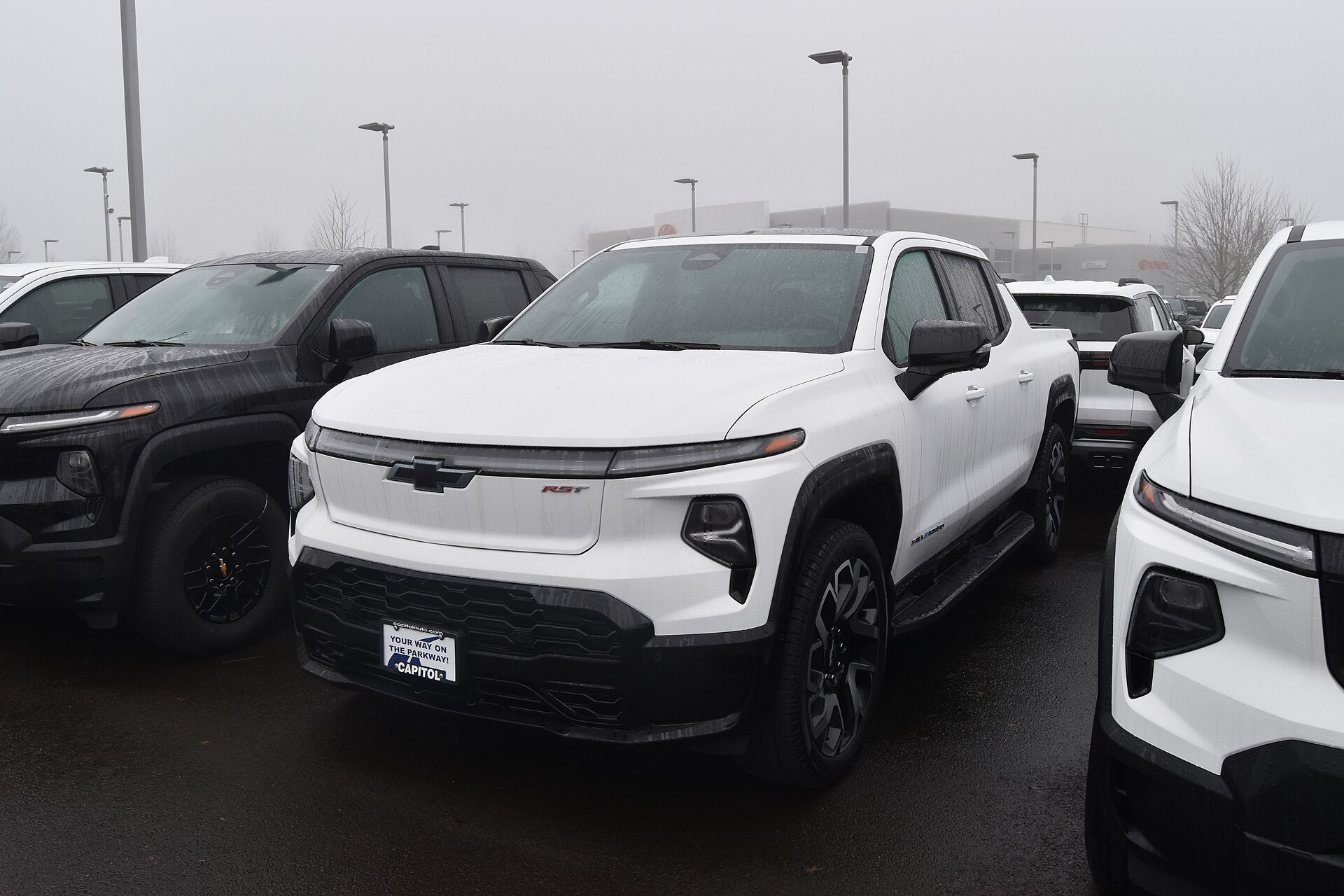
The vehicle mix tells the same two-sided story. GM sold 670,974 vehicles in the United States in the third quarter, down roughly 6% year over year, with electric vehicles the soft spot. But the profitable core of the business held up: trucks and SUVs stayed strong, fleet sales rose 10%, and Buick sales gained 8%. The next-generation Chevrolet Silverado and GMC Sierra launches are central to the plan — and to the near-term pain, since changeovers across three assembly plants and three engine plants are expected to cut fourth-quarter full-size pickup output by about 35,000 units, with production broadly flat in 2027 before new capacity arrives in 2028.
Guidance that giveth and taketh away
Management's updated outlook managed to be both encouraging and disappointing in the same breath, which is a neat trick. GM narrowed its full-year 2026 adjusted EBIT guidance to $14.5 billion to $15.5 billion and raised its adjusted automotive free cash flow guidance to $11.5 billion to $12.5 billion, up from $9.5 billion to $11.5 billion — a genuinely bullish move on cash. But the full-year adjusted EPS guidance midpoint of $13.25, within a $12.75 to $13.75 range, sat below the $13.42 consensus. In a market hunting for reasons to worry, that gap did a lot of work.
UBS analyst Joseph Spak's Wednesday note, reported by TipRanks via TheFly, shows how the worry is being modeled: rising commodity costs could drive an 8% downward revision to GM's 2027 EBIT consensus to about $15 billion, making earnings growth increasingly dependent on fixed-cost savings. In other words, the analysts are not doubting GM's present. They are marking down its future, one input cost at a time.
There is a real counterweight, and it is cash. GM repurchased $5.3 billion in shares through the third quarter and another $1 billion in October, exhausting its prior authorization before the board approved the new $20 billion multi-year program, Zacks reported. The company also declared a $0.18 quarterly dividend, payable December 17 to shareholders of record on December 4. And underneath the metal, a quieter business keeps compounding: OnStar deferred revenue reached $6.8 billion, up roughly 40% year over year, recognized software and services revenue topped $800 million in the quarter, and GM expects digital revenue to surpass $3 billion in 2026. CEO Mary Barra, in remarks highlighted by StockStory, said: "We expect incremental benefits from warranty expense improvements, lower EV losses, growth in software and services revenue, and the launches of our next-generation Chevrolet Silverado and GMC Sierra light-duty pickups." China, long a headache, delivered $32 million in equity income — its eighth consecutive profitable quarter.
So is it a dip worth buying?
Zacks, which carries GM at a Rank #3 (Hold), landed where a lot of the Street seems to be landing: existing shareholders can stay put, new money might wait for clearer margin visibility. That is not a verdict on Tuesday's quarter, which was objectively strong — a 7.2% operating margin, up from 2.2% a year earlier, per StockStory, is not nothing. It is a verdict on how many known headwinds are stacked between here and 2027: commodities, tariffs, a truck changeover, an EV business being rebuilt in public.
The next data points arrive fast. Tesla reports its third quarter tonight, and Ford follows on October 28, giving investors the rest of Detroit's — and Austin's — cost picture within the week. If Ford tells the same inflation story, GM's drop will look like an industry repricing. If it doesn't, the questions get more specific to GM. Either way, Tuesday's lesson stands: in this market, beating the quarter is just the entry fee. You also have to convince people next year won't eat the winnings.