
PHOENIX
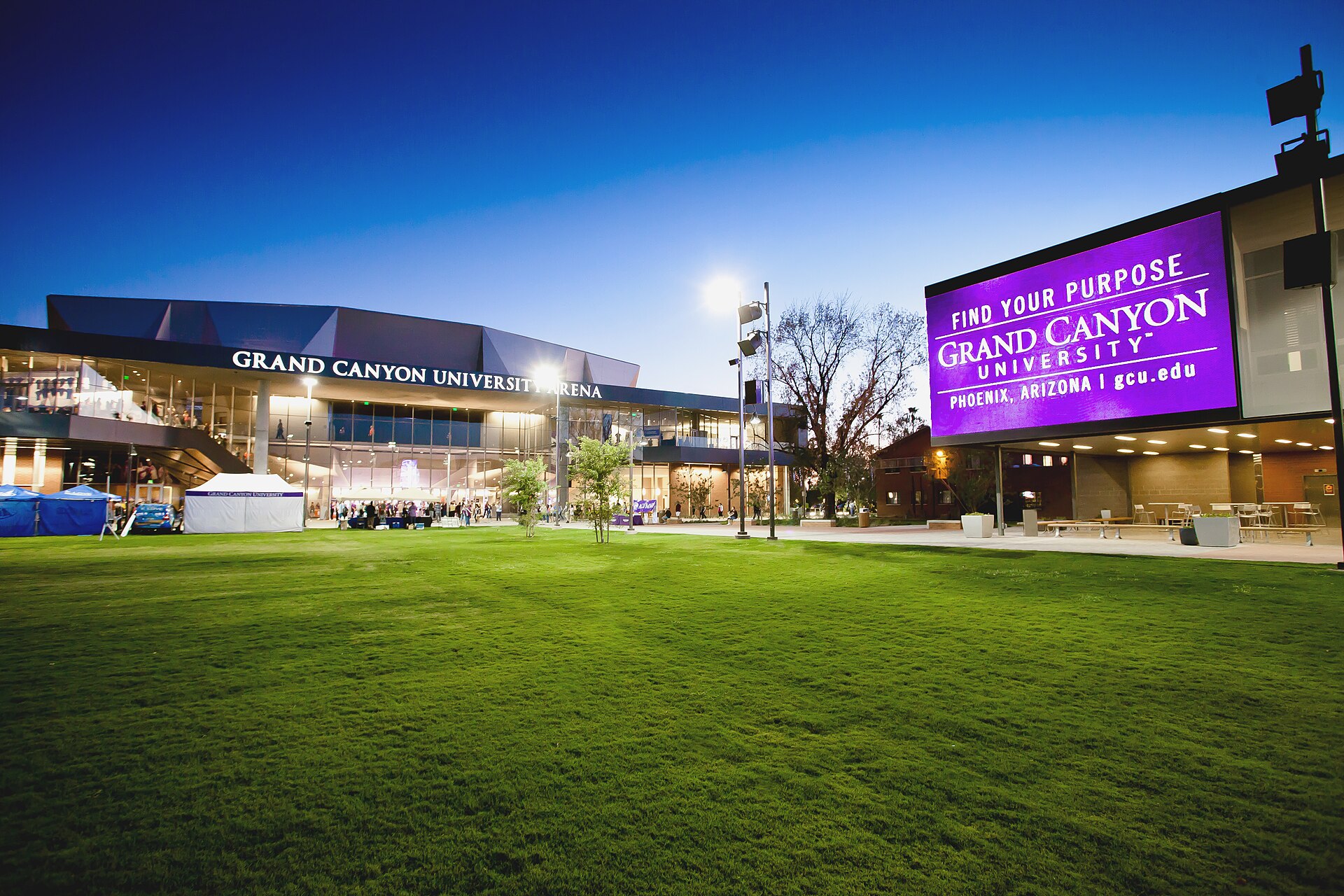
Arizona is about to get a law school unlike any it has had before. The Arizona Supreme Court on Thursday approved Grand Canyon University's new College of Law, making the Phoenix school the first in the state to win approval without accreditation from the American Bar Association — the body that has effectively decided, for generations, which law schools count in most of the country.
The decision, reported by Reuters and announced by the university, lands GCU in the middle of a national fight over who gets to train lawyers and who gets to say so. AZ Big Media, in its report on the decision, likewise described the approval as a first for Arizona legal education. According to Reuters, the court said the move would help address Arizona's shortage of lawyers — the problem the state's own high court pointed to in approving a different model for training attorneys.
What Opens, and When
GCU, the private Christian university founded in 1949 and based in Phoenix, says the College of Law is slated to open as early as fall 2027. The university unveiled its plans in August, and its founding dean is James L. Williams. According to GCU, the school will weave a Christian worldview through its curriculum while emphasizing constitutional law, free-market principles and the rule of law — an explicit identity pitch in a legal-education market where most schools compete on rankings and bar-passage rates.
The practical heart of the approval is licensure. Graduates of the new school will be eligible to sit for Arizona's bar exam and to apply for admission to practice law in Arizona. That is the credential that matters most to a new law school and its first classes: without a path to the bar, a law degree is an expensive certificate. Arizona's court has now supplied that path inside Arizona.
The Catch: Arizona First, and Mostly Arizona Only
Outside Arizona, the picture is very different, and prospective students will need to read it carefully. As Reuters reported, under the rules most states still use, admission to the bar generally requires a degree from an ABA-accredited law school, so a GCU law graduate would, under those current rules, largely be limited to practicing in Arizona. Reuters also noted that some states have begun relaxing that reliance on ABA accreditation, but the map is changing slowly and unevenly, and a degree's portability is a real consideration for any student who might one day want to move.
GCU says it intends to pursue ABA accreditation as well, and it frames the Arizona approval as flexibility rather than defiance: state recognition now, while the national accreditation landscape is in flux, and an ABA application on its own track. The university has already cleared one level of state review, holding approval from the Arizona Board for Private Postsecondary Education, and says its next step is approval from its national accreditor, the Higher Learning Commission.
Conditions, Oversight and a One-School Test
The court's approval is not a blank check. According to GCU's announcement of the decision, the approval carries conditions, with continued oversight by the court's Committee on Examinations and the Administrative Office of the Courts. The court will evaluate its new standards through GCU's school specifically, and it will not accept similar approval requests from other non-ABA schools while that evaluation is underway. In effect, GCU's College of Law becomes a closely watched pilot: if it produces graduates who pass the bar and serve clients well, it strengthens the case for the model; if it stumbles, the court has kept the experiment contained to a single school.
That structure matters because law schools are long games. The first class admitted for fall 2027 would not graduate until 2030, and the honest verdict on bar-passage rates and employment outcomes arrives years after the ribbon-cutting. The oversight conditions are the court's way of saying the approval is a beginning, not a conclusion.
The National Fight Behind One Phoenix School
Arizona's move does not exist in a vacuum. Reuters reported that the U.S. Department of Education is poised to revoke the ABA's status as the federally recognized accreditor for law schools, and that five Republican-controlled states, including Texas and Florida, have moved to end their near-exclusive reliance on the ABA in attorney admissions. Supporters of loosening the ABA's grip argue that its standards inflate the cost of legal education and restrict supply in places that cannot attract enough lawyers; defenders of the current system argue that a single national standard protects students and clients from weak programs.
Arizona's lawyer shortage is the local version of that national argument, felt most acutely outside the big metro areas, where smaller communities can struggle to find attorneys at all. A new law school in Phoenix does not by itself put lawyers in rural courtrooms, but it expands the number of graduates with Arizona roots and Arizona credentials, which is the raw material any solution starts with.
What Happens Next
Between now and a possible fall 2027 opening, GCU has to build a law school almost from the ground up: hire faculty, assemble a curriculum, recruit a founding class willing to be first, and clear the Higher Learning Commission step it has flagged as next. Its first students will be making a calculated bet — on Arizona, on staying in Arizona, and on a school whose identity, constitutional-law and free-market emphasis under a Christian worldview, is unlike the state's existing options.
For more from the Valley and the Southwest, see our news index and recent Arizona coverage, including Arizona Snowbowl's run-up to its November 20 opening. This story will be updated as GCU publishes admissions and curriculum details for the College of Law.